By Geoffrey Ménissier, published on , updated on .
Also available in: 🇫🇷 🇪🇸 🇵🇹 🇩🇪 🇮🇹 🇳🇱

In short
We spent a week in the Morbihan, not on the coast but in Quistinic, in the Blavet Valley. A chance to discover the river, see the Carnac stones again, explore the Quiberon peninsula, sail on the Gulf and spend a day on the Île d'Arz.
0 comments
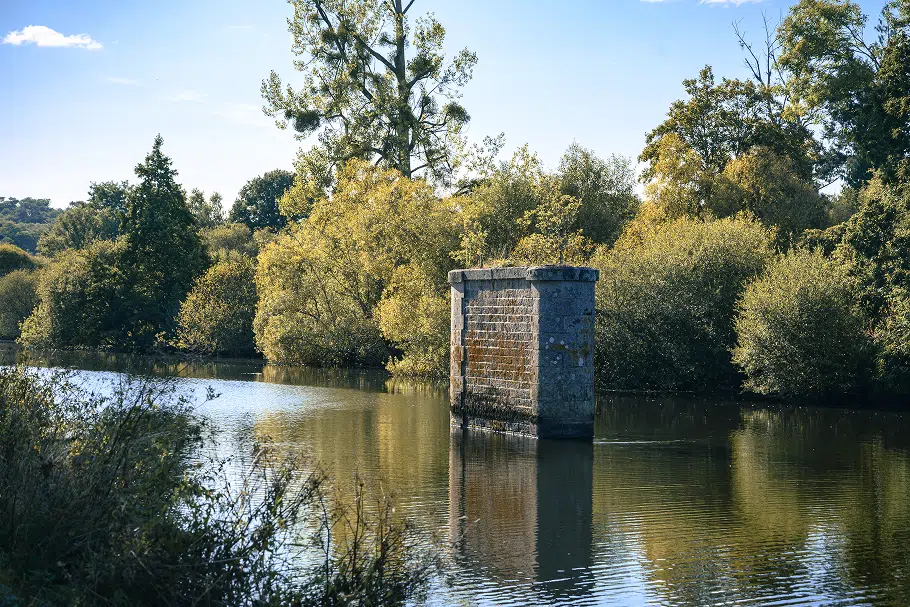
We had just spent a first week of holidays in Finistère, camping as a family near Landéda. For the rest of our trip, we wanted to stay in Brittany but discover another side of it. Instead of heading for the coast, we decided to turn inland, to the Morbihan. So we settled for a week in Quistinic, in the heart of the Blavet Valley.
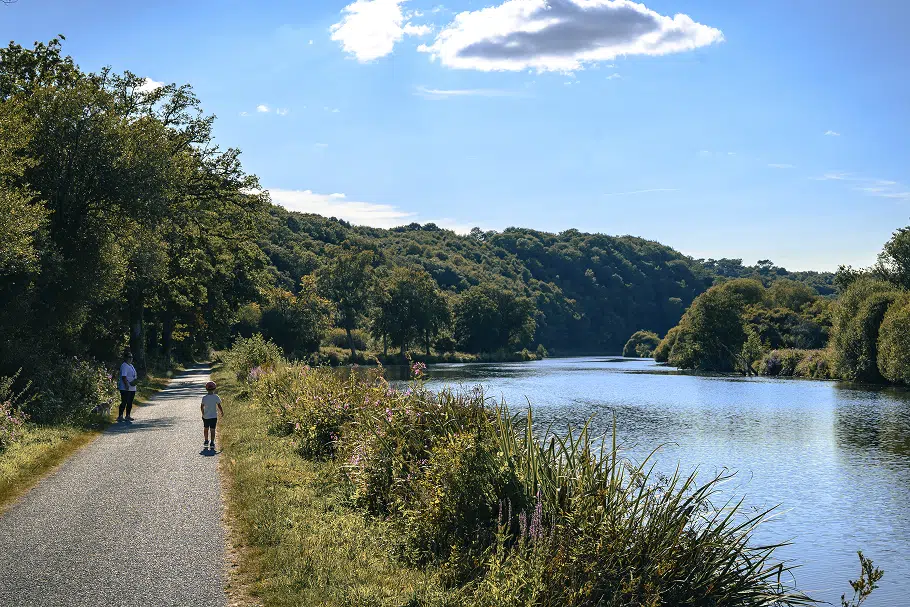
The Blavet is a 150 km river that winds through the countryside, lined with forests, old villages and walking trails. It flows into the ocean at Lorient. Along its banks, a greenway now attracts many walkers and touring cyclists, but it is also a valley steeped in history: Roman roads, medieval castles, mills and locks bear witness to its major role in river transport. Far from the summer crowds, we discovered a quieter Brittany, as a family and with our beagle Glasgow.
Our base was a characterful house dating from 1739, found on Airbnb. We fell for it as soon as we arrived: old stones, very tasteful decoration and a small garden with a barbecue. Glasgow quickly found her spot on the lawn. The inside is just as appealing. Thanks to its thick walls, the ground floor stays cool, which is pleasant in midsummer. Upstairs, a large, spacious bedroom awaited us, and the third level was a whole floor for Victor. The owners are lovely. They welcomed us with a few vegetables from the garden and offer canoes and bikes. Even if we did not get the chance to use them, you can really feel the spirit of Breton hospitality.
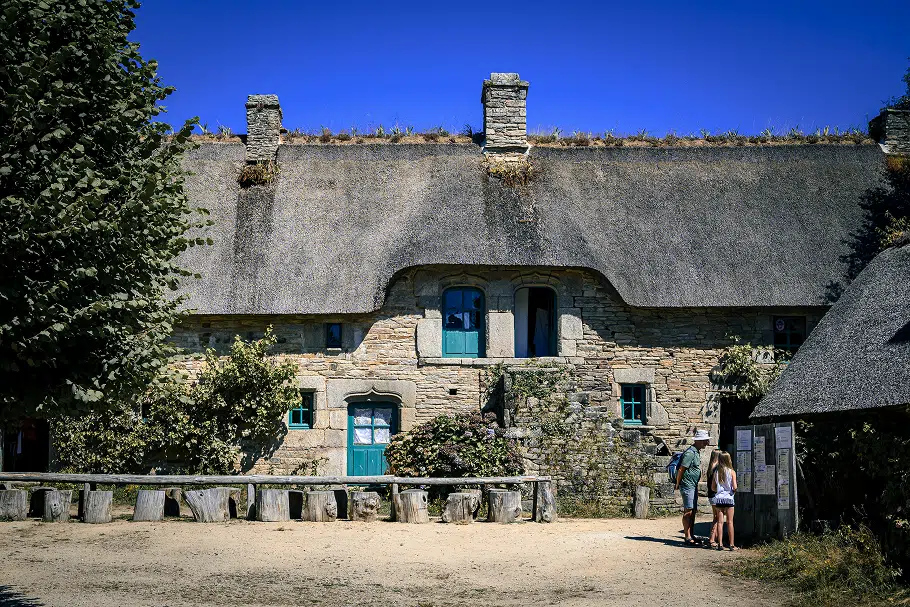
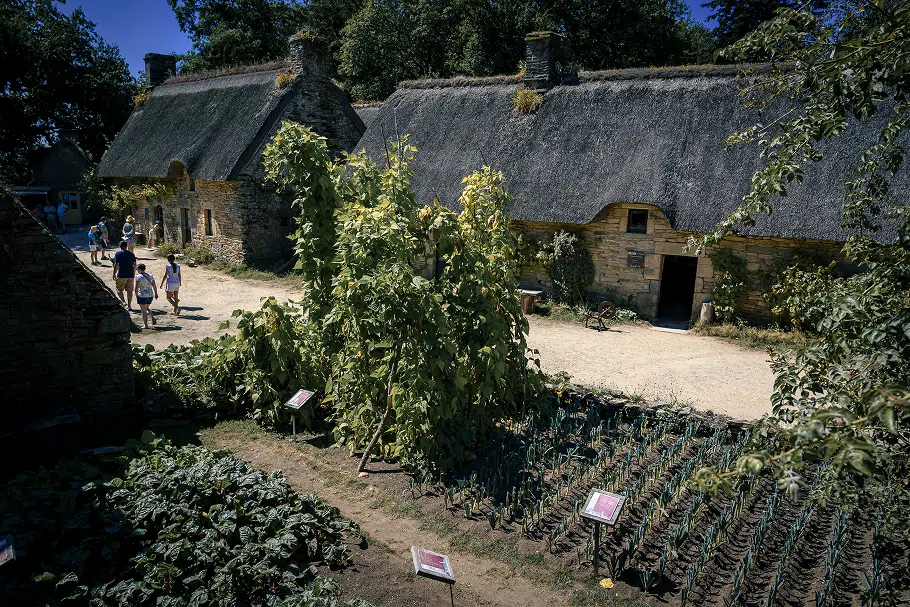
A few minutes from Quistinic, the village of Poul-Fetan is a living recreation of the Brittany of old. Everything here is designed to plunge visitors back into daily life in the mid-19th century.
We arrived in the late morning. The site was lively: craftspeople in traditional costume, demonstrations of old trades such as weaving, butter making, baking and candle making. The stone houses with thatched roofs feel like a setting frozen in time. Victor joined in a few old-fashioned games, met the farm animals and watched the bread being made with curiosity. We had brought sandwiches, but the smell of kouign-amann baked on site got the better of us. The village bakery still sells them warm, and they are hard to resist. We spent a good part of the day at Poul-Fetan. Dogs are allowed on the site (except indoors), which is handy. We came home feeling as if we had leapt back in time.
Nothing special that day: we wandered around the area and enjoyed the peace of the house. In the evening, we went to the Quistinic night market, with a friendly atmosphere, stalls of local produce and artists. We left with a few provisions and two paintings by Ronan Pincemin, an artist who blends regional heritage with a fantasy world.
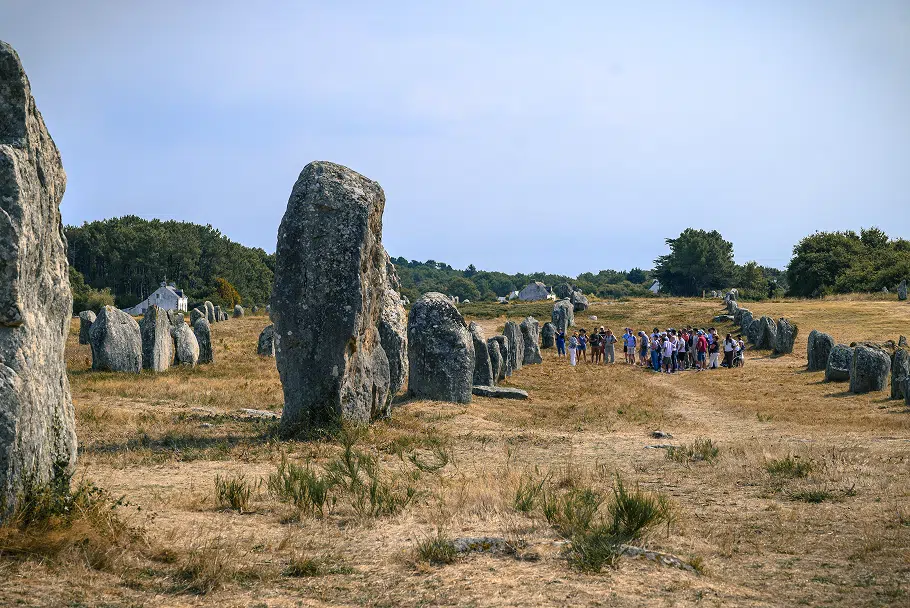
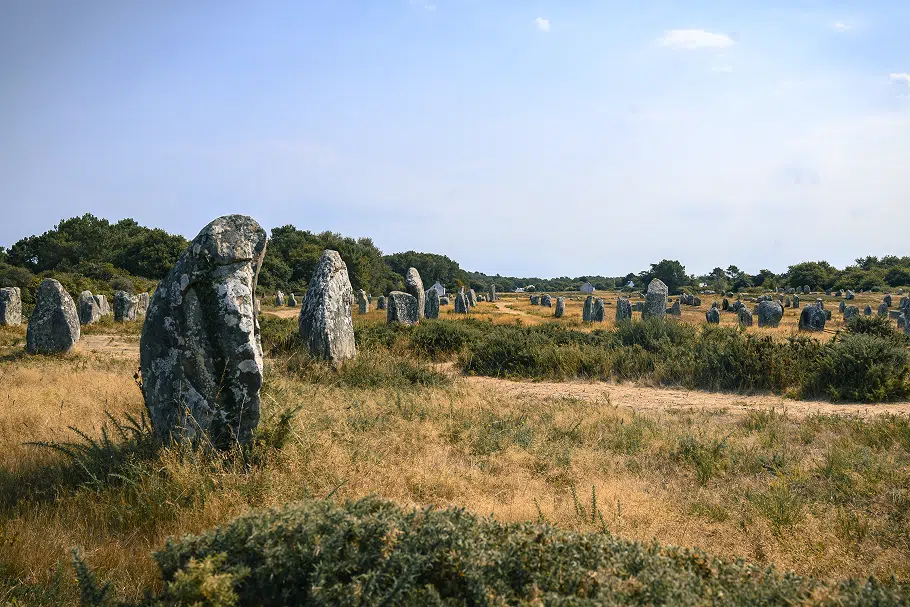
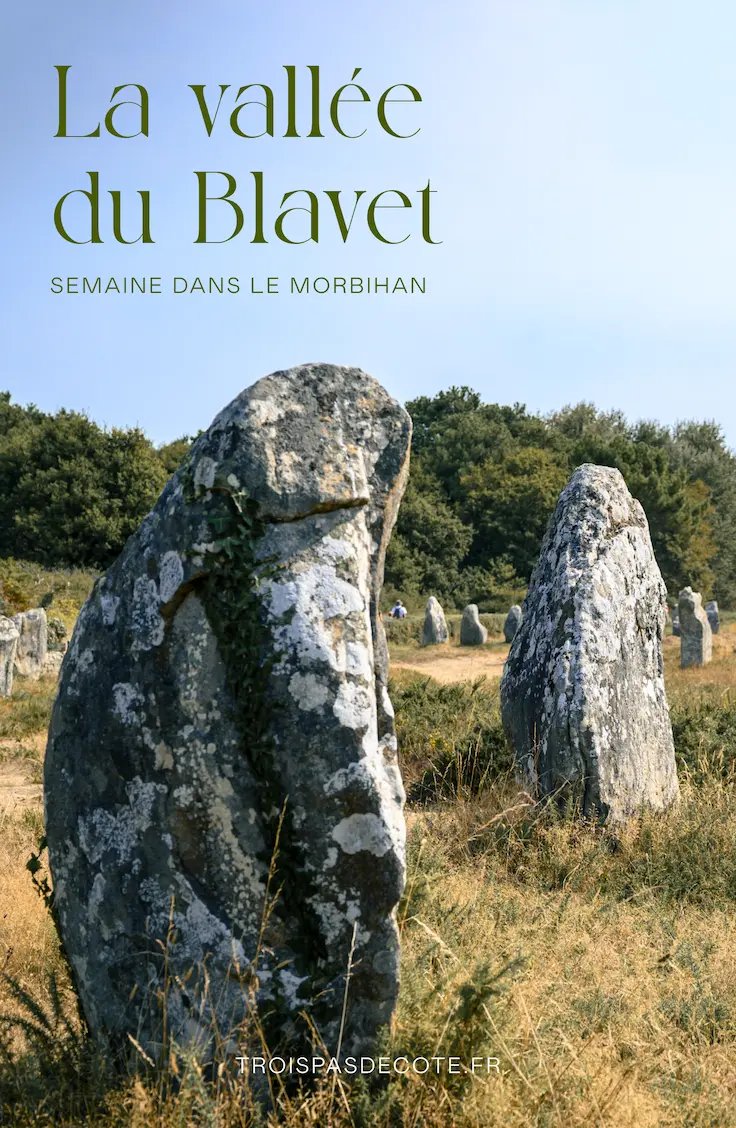
It is hard to stay in the Morbihan without going to Carnac. The megalithic alignments, famous all over the world, are impressive in their scale. Thousands of standing stones stretch over several kilometres. Their origin remains a mystery: tombs, religious monuments or astronomical calendars, there are many theories.
We started at the Maison des Mégalithes, which helps you understand the history of the site. With Glasgow, we then preferred to wander freely rather than join a guided tour. The Ménec alignment, with its perfectly ordered rows, is particularly striking.
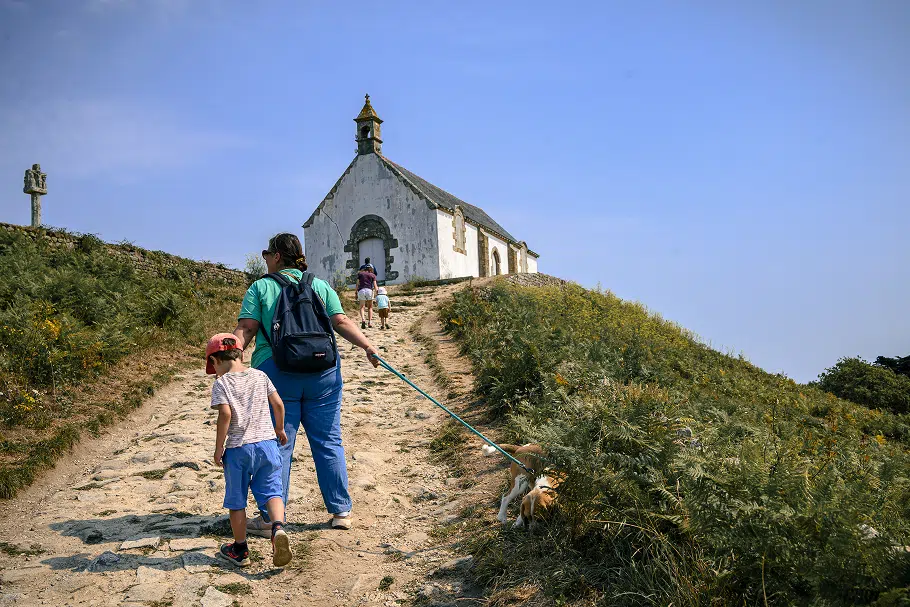
We then climbed up to the Tumulus Saint-Michel, not far away. This burial mound offers a panoramic view over the bay of Carnac. Built around 4500 BC, it shows how important the region was as early as prehistoric times.
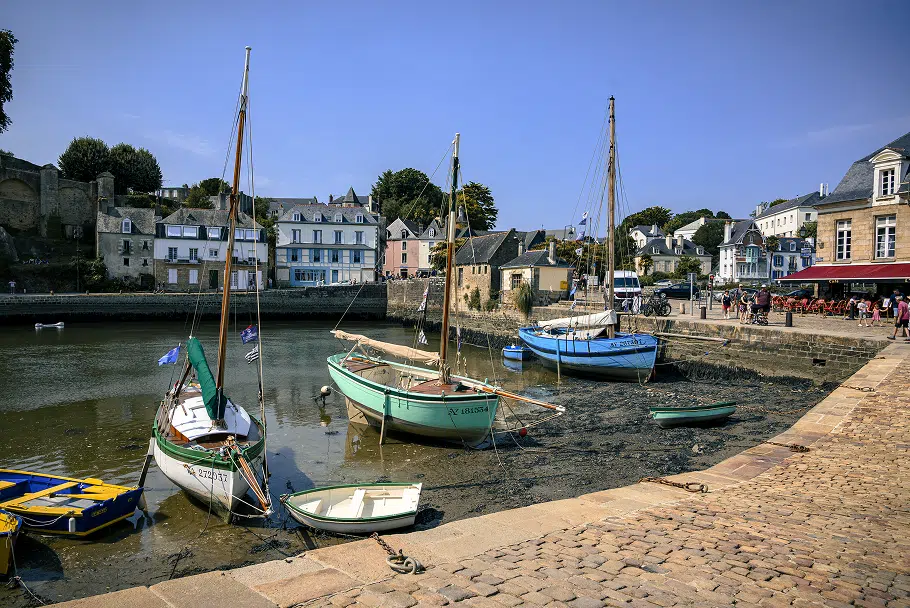
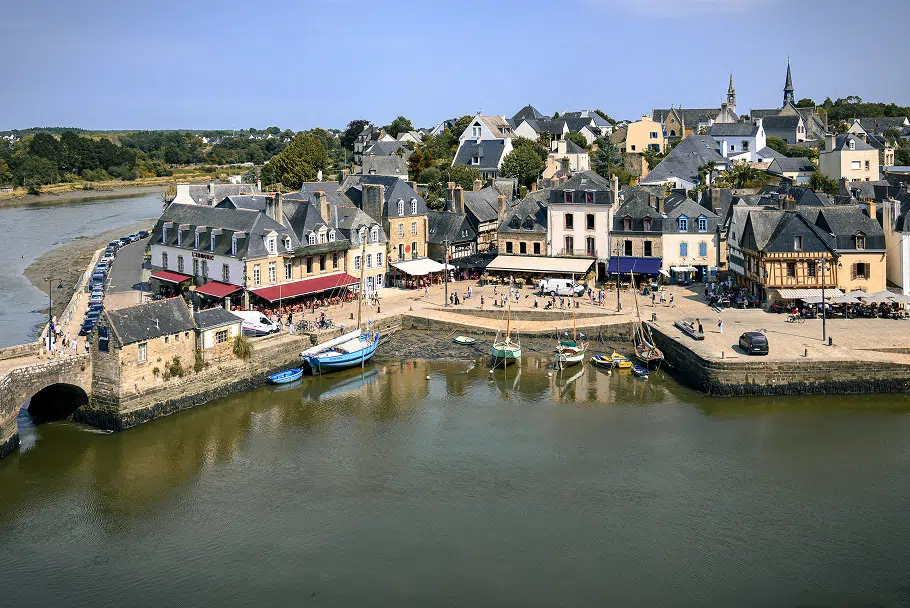
After this dive into ancient history, we headed for Auray. The town is charming, with its cobbled lanes and above all the Saint-Goustan quarter, an old port on either side of the bridge of the same name. The half-timbered houses, terraces and lively quays make you want to linger.
We had lunch at the L'Armoric brasserie, known for its mussels, sitting on the terrace and enjoying the pleasant setting. In the afternoon, we explored the church of Saint-Sauveur and the little streets around it.
Before heading back, Victor dragged us to the “Le P'tit Délire” leisure park. Slides, trampolines, tree-top adventure courses and suspended nets kept him busy until the end of the afternoon. He loved it so much that he made us promise to come back later in the week.
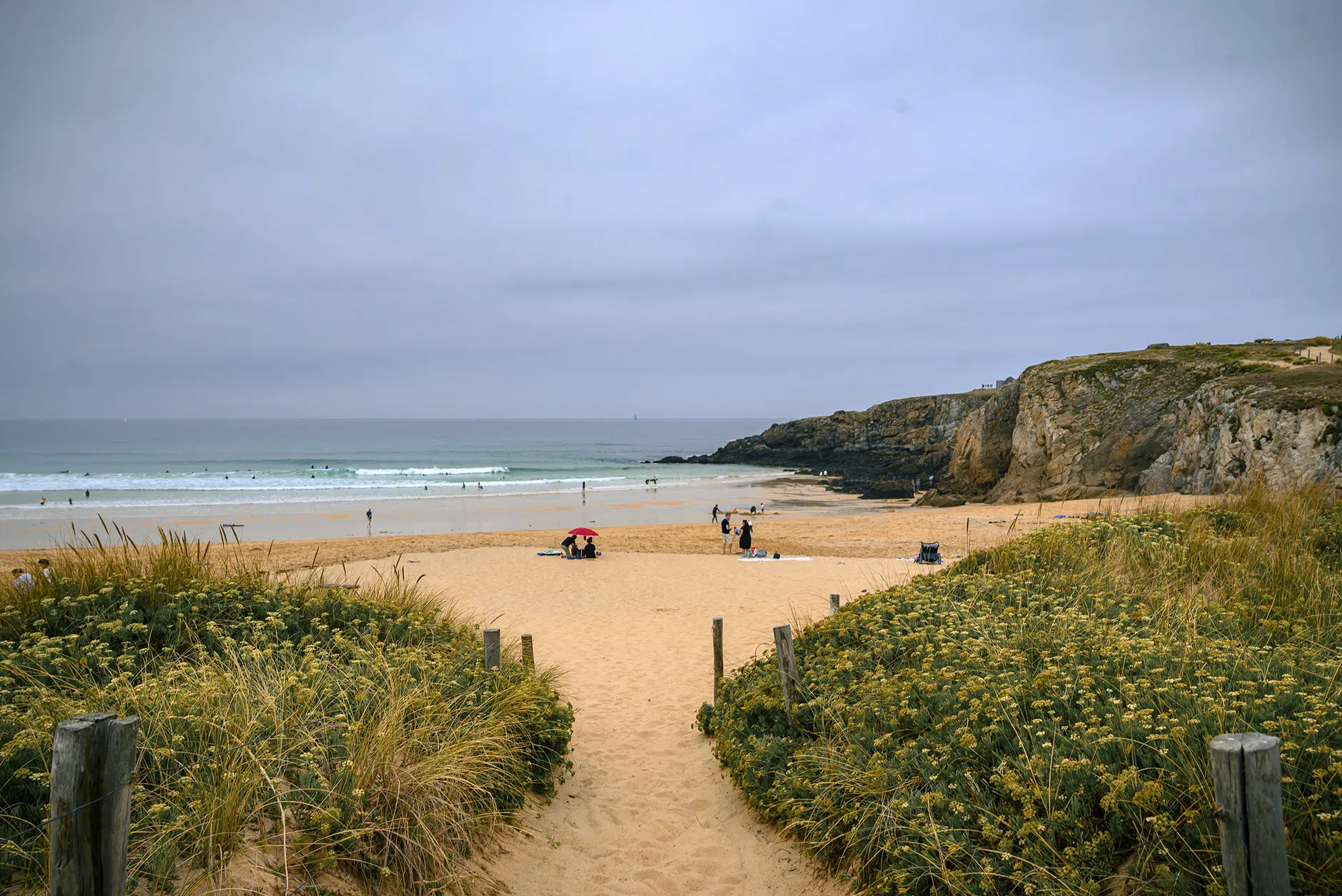
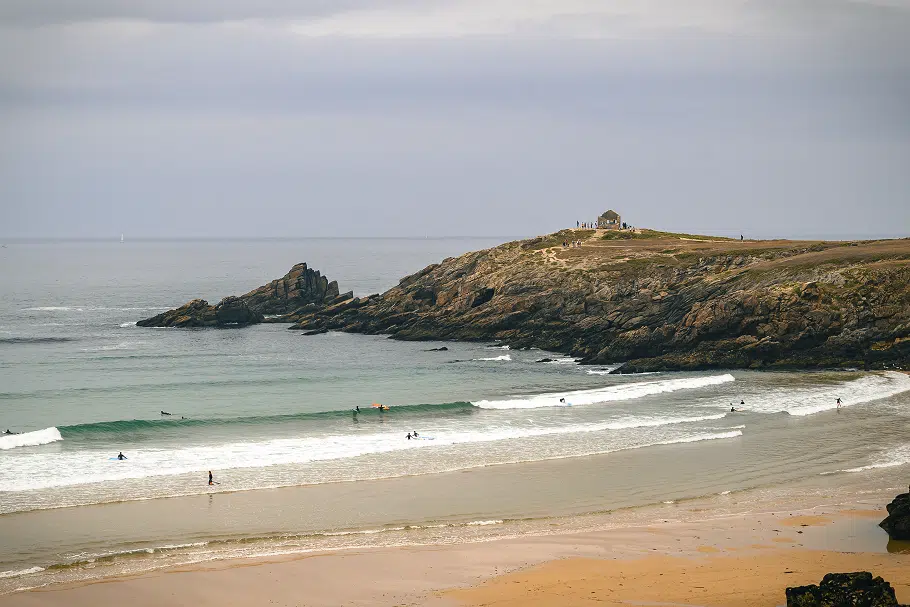
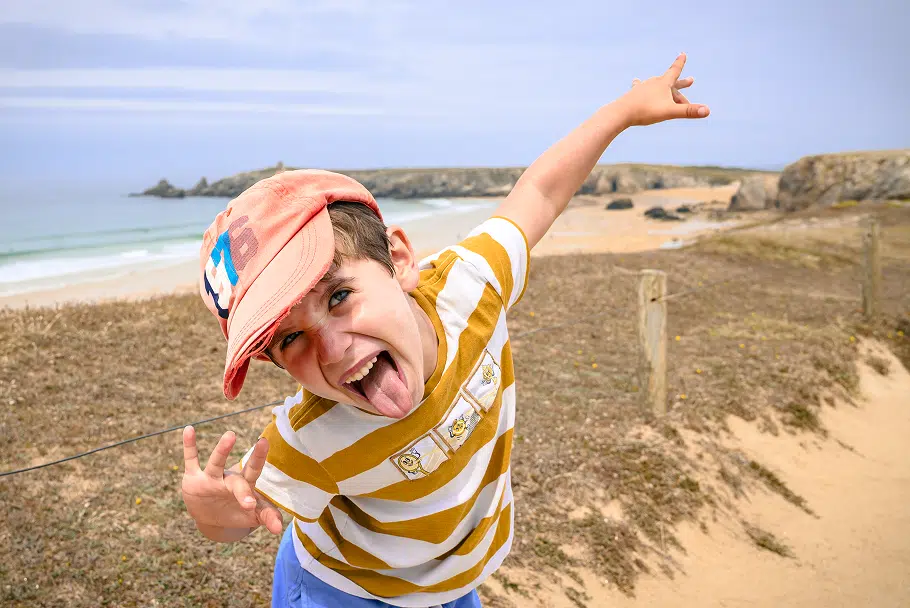
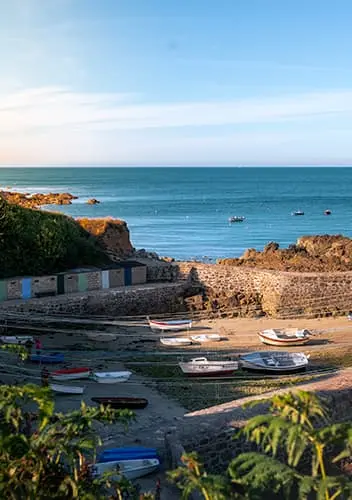
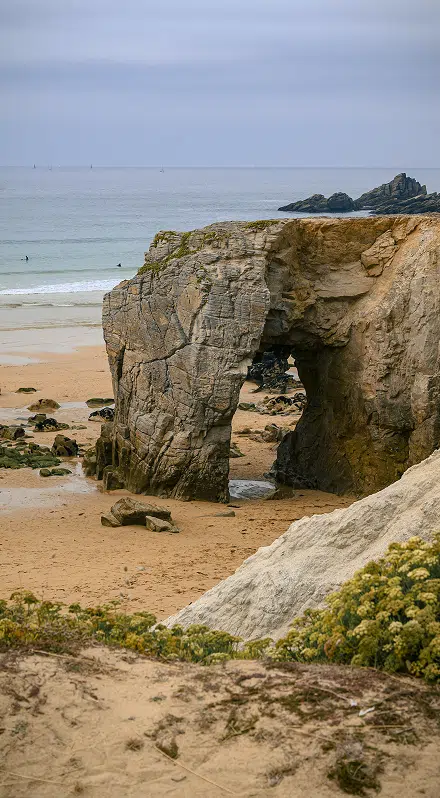
We returned to the ocean, heading for Quiberon. The peninsula is famous for its beaches and its wild coast. We focused our visit on the western side, around Port Rhu.
The walk along the coastal path is superb: jagged cliffs, natural arches such as the one at Port Blanc, and spectacular viewpoints. The waves crash against the rocks with a continuous roar. We saw lots of surfers, but note that dogs are not allowed on the beaches.
An incident in the forest: on the way back, we stopped in the Camors state forest to see the Roh Du dolmen. Unfortunately, an incident spoilt the end of the day: while trying to park, I got the car stuck on a tree stump hidden by the low sun. Impossible to move. We had to call a breakdown service, which fortunately came quickly. More fright than harm: the car was not seriously damaged, but it is an episode we will remember.
We devoted the day to the Blavet Valley. First stop: Baud, a pleasant little town where we had lunch at the “Au Bon Vieux Temps” crêperie. The galettes are excellent and the welcome warm.
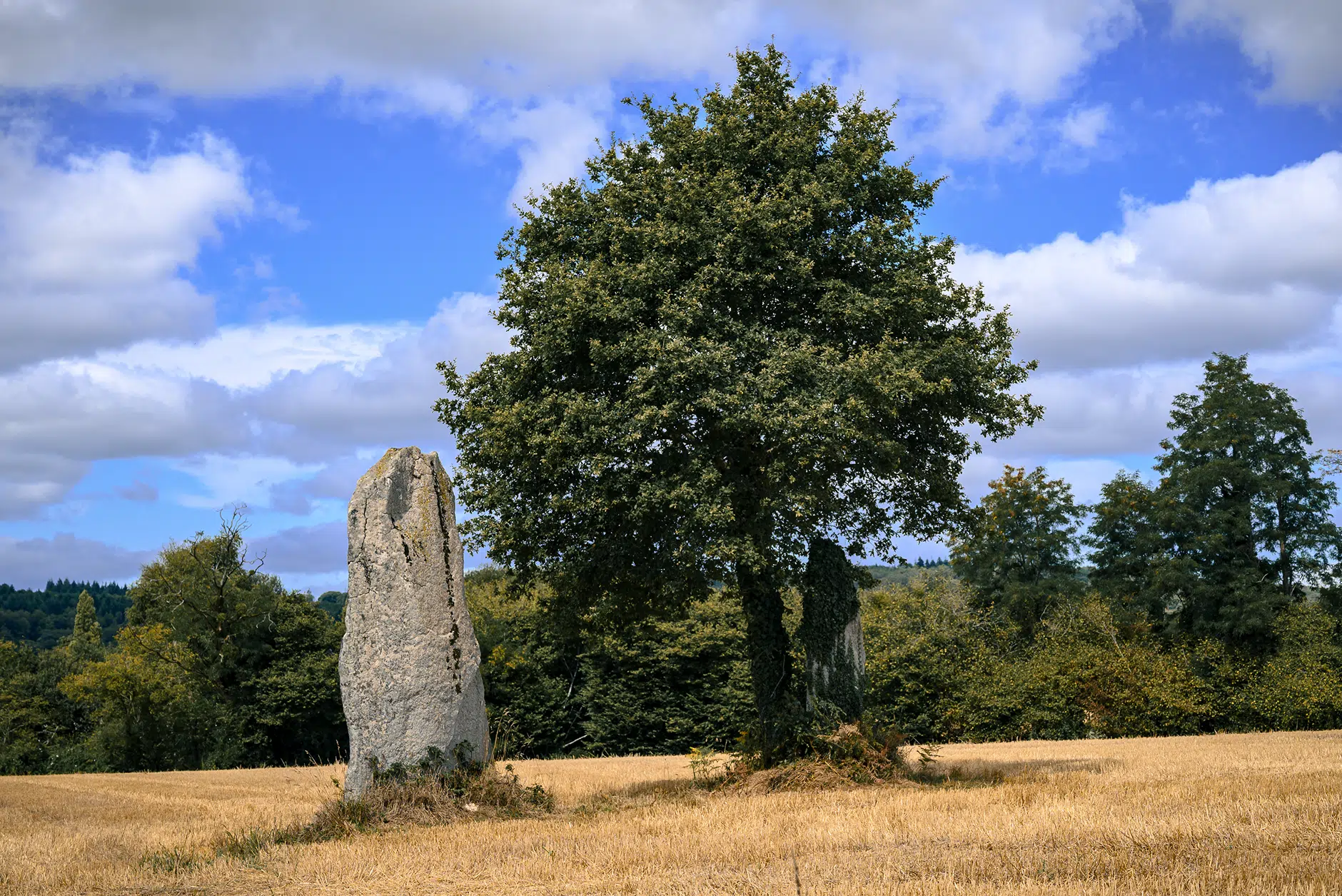
After lunch, we went to see the Kernars menhir. Standing at the edge of a field, it is yet another sign of the Morbihan's wealth of megaliths. But the visit was cut short: a bee stung me on the shoulder and would not leave us alone, to the point of chasing us back to the car. As we ran, we noticed a “dangerous bees” sign nearby. The tourist office guide did not mention that detail.
We carried on with a walk from Saint-Rivalain, along the river. The path is popular with touring cyclists, as the greenway along the Blavet is part of route V8 in Brittany (from Saint-Brieuc to Lorient). It is an ideal way to discover the Morbihan by bike.
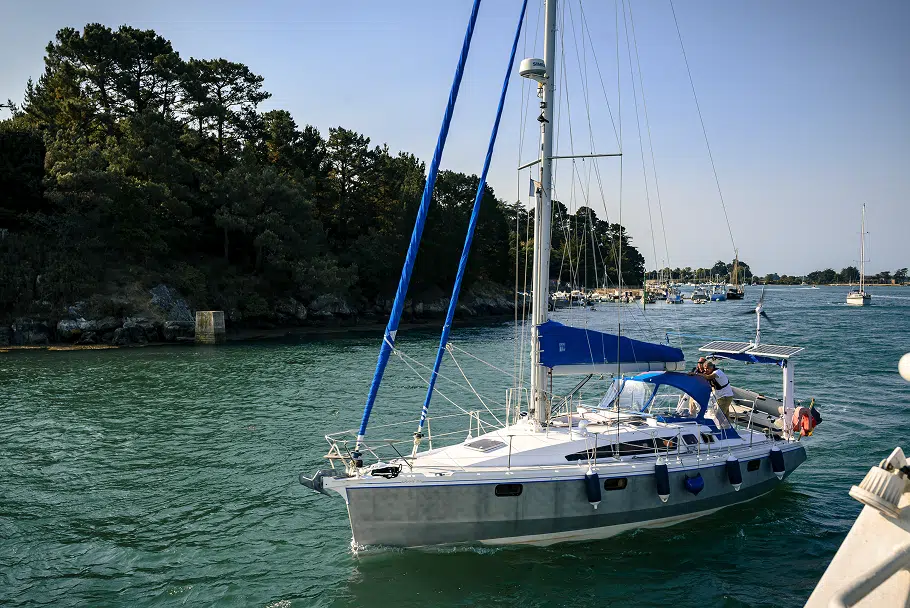
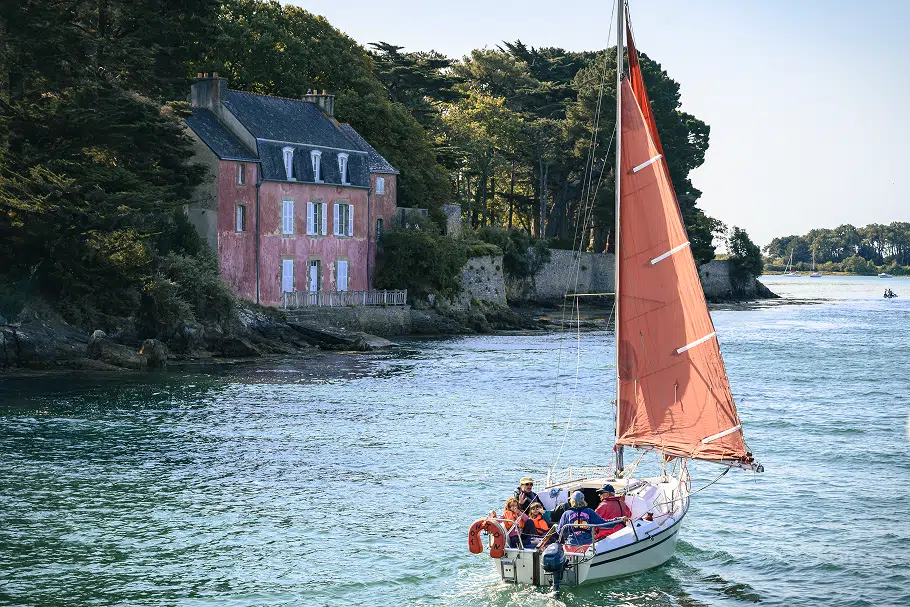
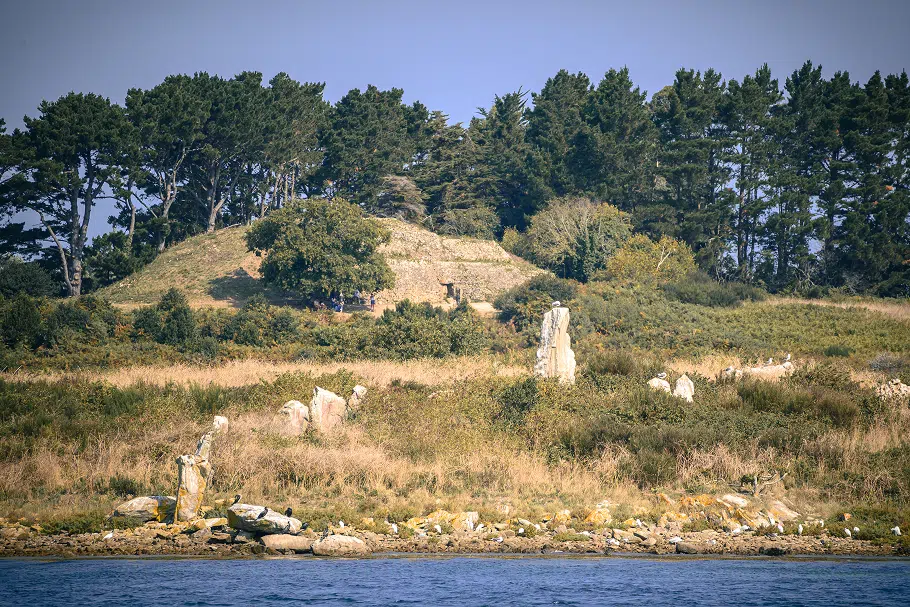
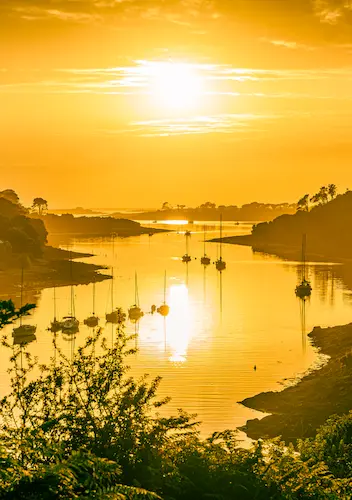
We left from Vannes with the Compagnie du Golfe for a two-hour cruise. The boat weaves between the islands, sails along the Île aux Moines and passes close to the Pointe de Kerpenhir. The captain comments on each stage, and you understand why the Gulf is sometimes called the “little inland sea”.
A highlight is passing the island of Er Lannic, home to two stone circles of menhirs. One is still visible, while the other is partly submerged, a reminder of the rising waters over the millennia. With the cairn of Gavrinis in the background, it is a striking sight.
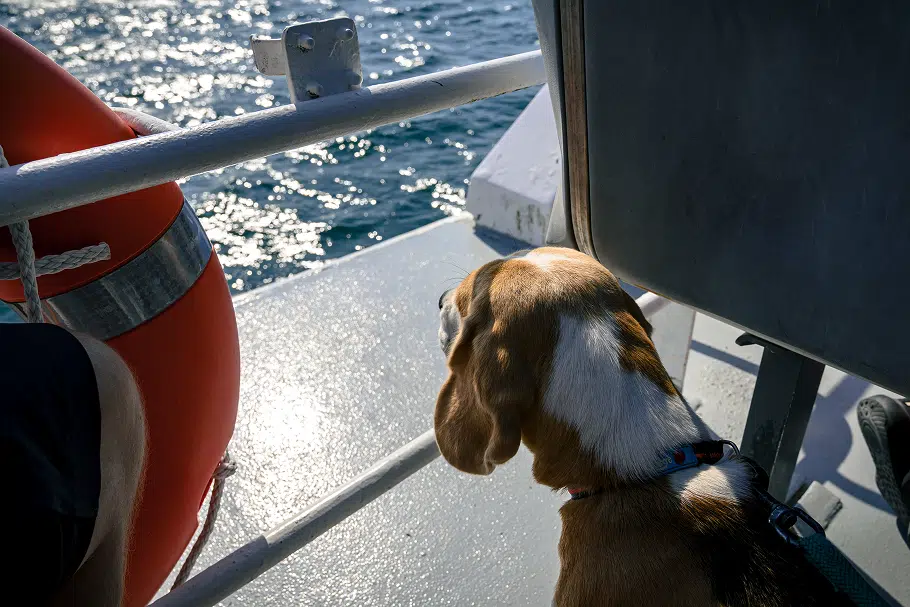
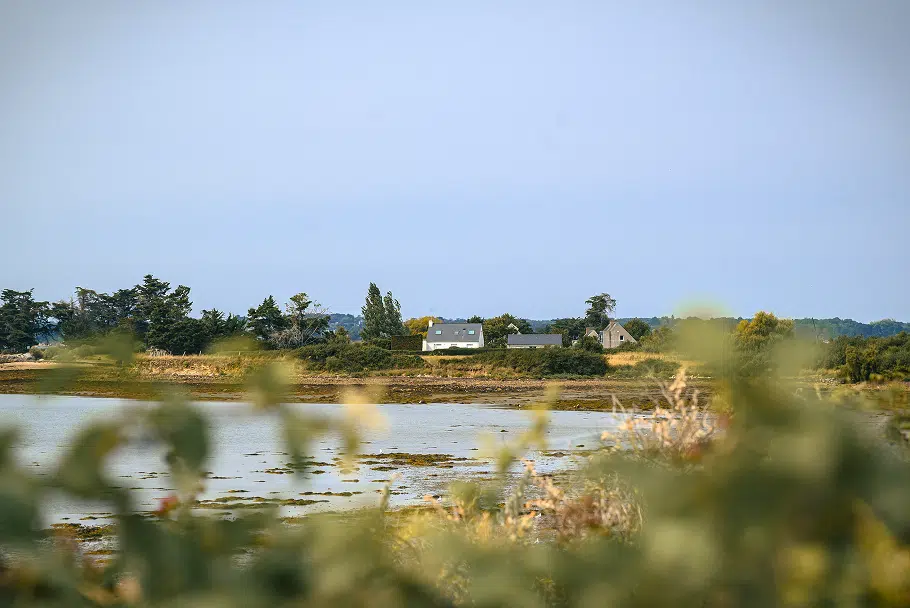
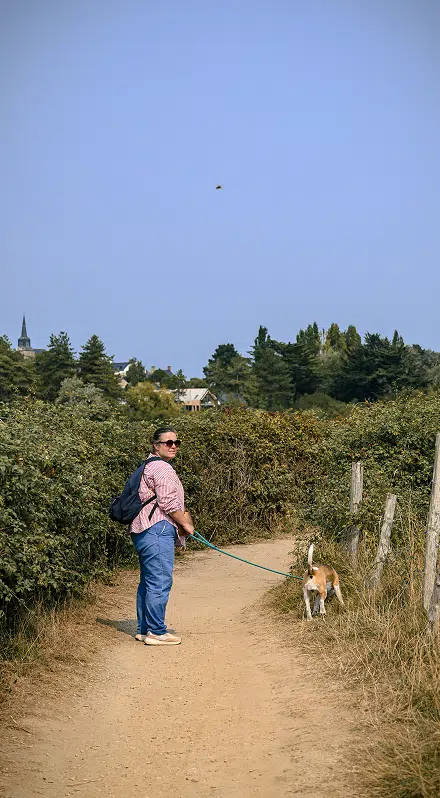
We then landed on the Île d'Arz. Wilder and quieter than the Île aux Moines, it is best explored on foot. After lunch, we crossed the island to Brouhel beach, picking wild blackberries on the way. Glasgow enjoyed the walk as much as we did. The boat back in the late afternoon rounded off this day at sea.
After a busy week, it was time to go home. The drive to Paris is long, but the memories we had gathered kept us company.
Conclusion: what to take away from a family week in the Morbihan
This stay let us discover another side of Brittany. Far from the seaside resorts, the Blavet Valley offers a restful setting of rolling landscapes, authentic villages and riverside walks.
Travelling with a family and a dog is easy here: the paths are accessible, the rentals suitable, and many activities suit children. Between historical heritage, as in Carnac or Poul-Fetan, relaxing moments in the countryside, and trips to the coast and the islands, the balance is perfect.
For a week in the Morbihan, choosing Quistinic proved ideal. You get peace and quiet while staying close to must-see sites such as Quiberon, Auray and the Gulf of Morbihan. A destination we recommend to anyone looking for a balance between cultural discovery and a family holiday, without forgetting that even the dog is welcome.
Enjoyed this article? Pin it on Pinterest.
Follow us on social media to hear about our next trips. Feel free to leave a comment or ask a question at the bottom of the page. See you soon.