By Geoffrey Ménissier, published on , updated on .
Also available in: 🇫🇷 🇪🇸 🇵🇹 🇩🇪 🇮🇹 🇳🇱
In short
We spent a week in Normandy, in Port-Bail-sur-Mer: a chance to explore the west coast of the Cotentin and the Chausey Islands as a family. Here is what to do in the Cotentin for an unforgettable family trip.
0 comments
This summer, we went to the Cotentin as a family. While researching this article, I realised that not everyone agrees on what the Cotentin is. For some, it is only the northern third of the Manche department, so Port-Bail-sur-Mer, where we were staying, is not part of it. For others, what I have just described is the “Cotentin peninsula”, while the Cotentin itself is larger and stretches down to Granville. So it is hard to be categorical: feel free to give us your view in the comments at the bottom of the article. For those who do not know the region at all, we are roughly halfway between Mont-Saint-Michel to the south and Cherbourg to the north.
Edit: thanks to the Cotentin Tourist Office for their answer: “Historically, the Cotentin matched the boundaries of the Manche department. Today, the Manche department is divided into several groupings of communes: Le Cotentin, Côte Ouest Centre Manche, Coutances Mer et Bocages, Granville Terre et Mer, Mont Saint-Michel Normandie and Saint-Lô Agglo. The Cotentin covers a third of the department, with an imaginary line running from the Baie des Veys to Denneville. Port-Bail-sur-Mer is indeed part of the Cotentin.”
To take our time and enjoy each place, we only visited the western part of the peninsula. Here, the coast faces the Channel Islands (Jersey, Guernsey…) and the Chausey archipelago, which is French. We will come back another time for the eastern part (the D-Day beaches, Barfleur, Saint-Vaast-la-Hougue…).
We rented a small house in Port-Bail-sur-Mer through Airbnb. It is a stone's throw from the beach and has a lovely terrace. The Cotentin is sometimes compared to Scotland or Ireland for its wild side: its long beaches, charming little villages and coastal paths. It was our first visit to this corner of Normandy. On the photography side, I had recently bought a new lens for my Nikon Z5, the 40mm F2. It is less versatile than my 24-70, but much lighter, and with Victor that makes all the difference!
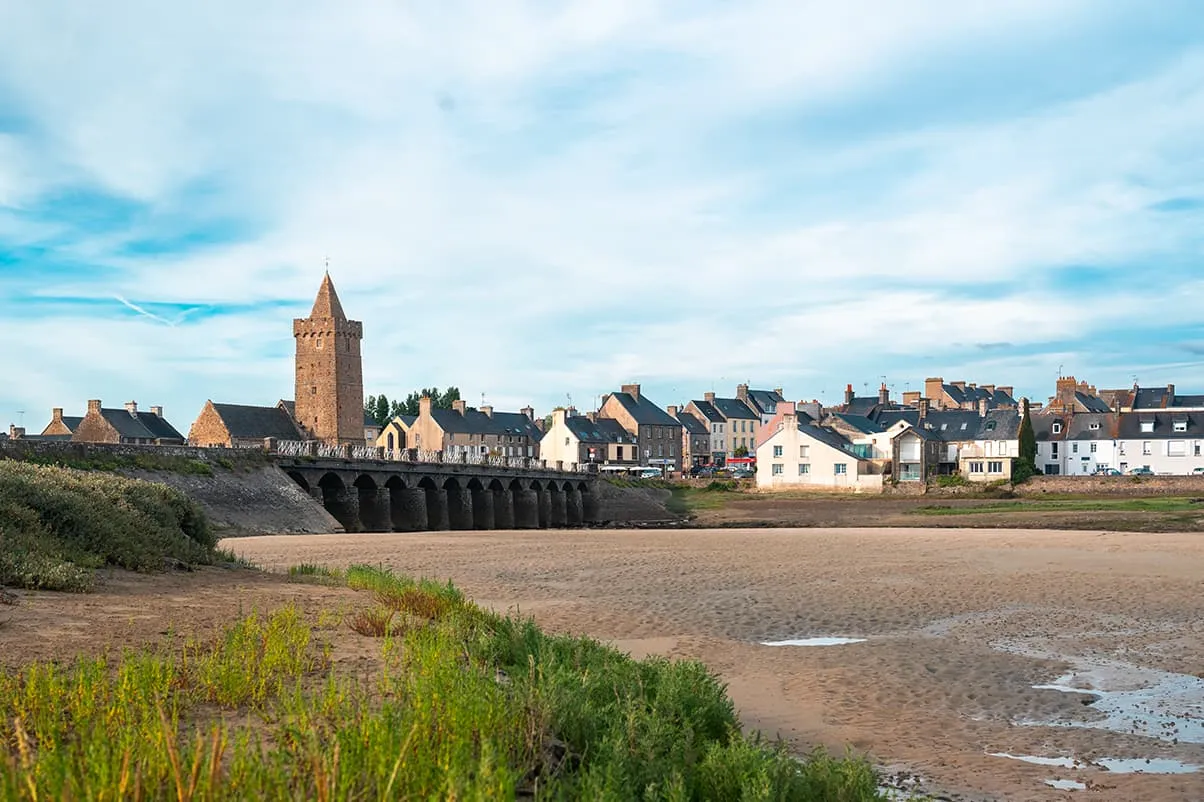
On our first day, we visited Port-Bail. The town is easy to recognise by its 13-arch stone bridge, overlooked by the church. In this estuary, the sea comes right up to the town at high tide. We came by bike: mountain bikes were part of the equipment in our rental, and it is 2 km from the town centre to the beach. Sunday morning is market day, and we found our lunch there.
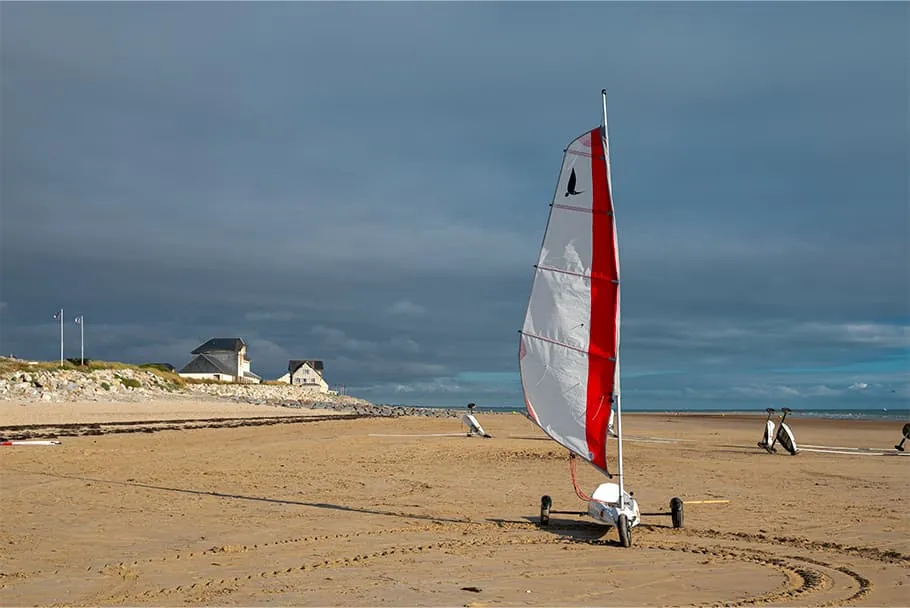
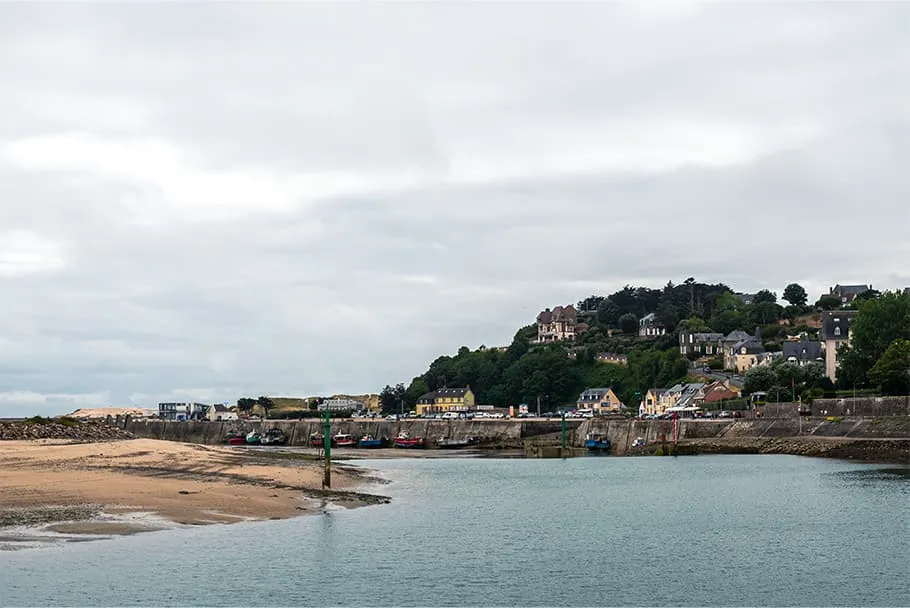
Port-Bail beach continues north for about 8 km to the Cap de Carteret. That was our visit for the afternoon. We followed the harbour to the beach, recognisable by its beach huts with blue doors. The tide was out, and Victor played in a small inlet. A shower chased us away and we took refuge in town, comforted by waffles for some and ice creams for others.
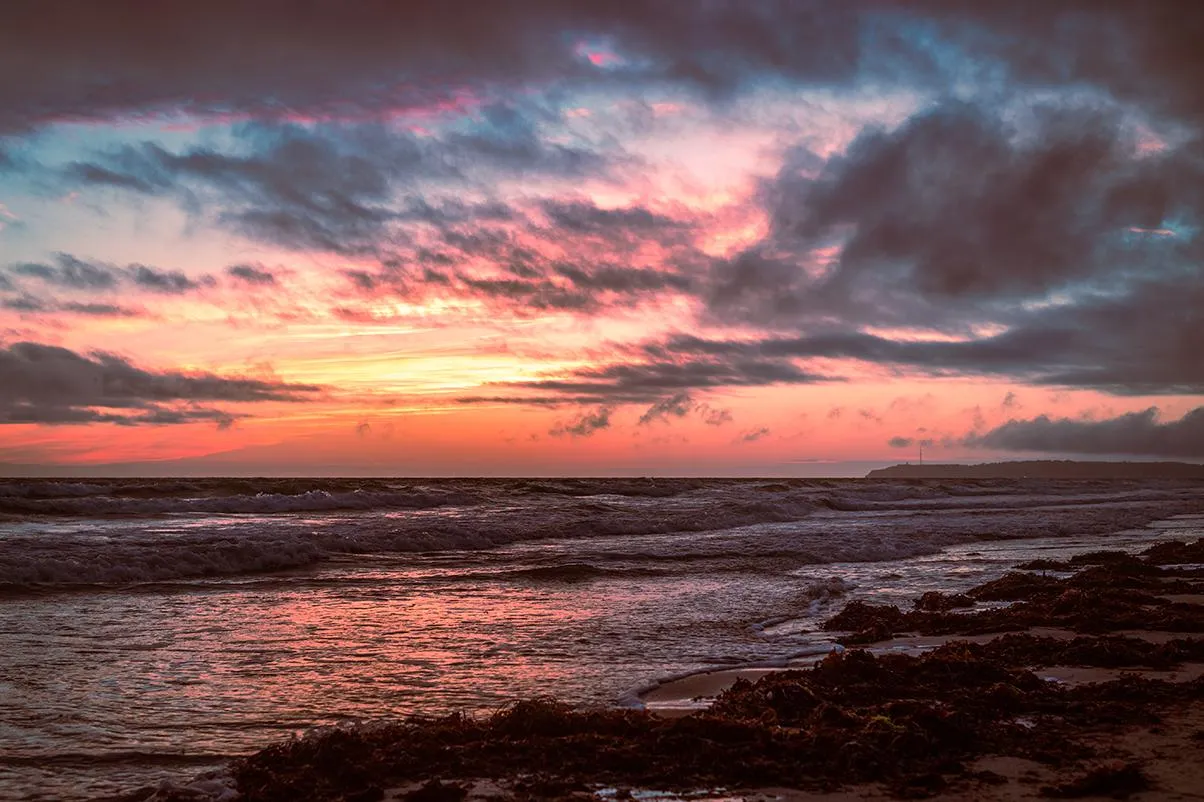
At the end of the harbour in Barneville-Carteret, there is a ferry terminal with boats to Guernsey. Remember that you now need a passport to travel to the Channel Islands. At the end of the day, we took a few photos of the sunset from the dunes.
On Monday morning, leafing through the brochures at our rental, we spotted an activity that Victor might like: “Autour de l'âne”. We cycled there again, as a greenway lets you avoid the main road. There, we chose a short ride with a donkey and its cart, with Pascale, who told us about the area and its animals. Victor rode in the cart at first, then climbed onto the back of “Jazz” for the last few metres. On the way back, we admired the Lindbergh dunes from Port-Bail, where the Olonde river meets the sea.
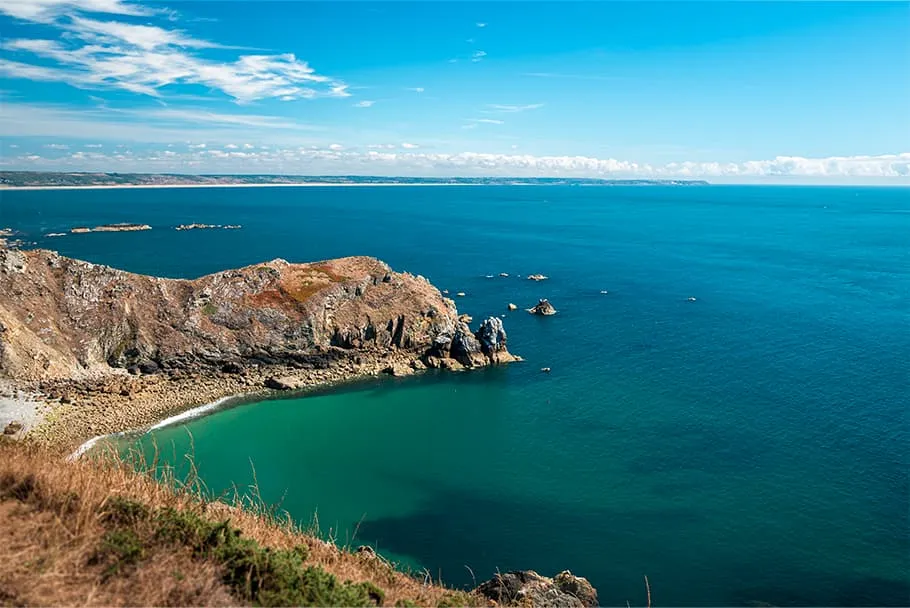
After lunch (and the nap), we headed north onto the Cotentin peninsula. Our first stop was the Nez de Jobourg, the most visited tourist site in the Manche after Mont-Saint-Michel. The cliffs are among the highest in Europe: at 128 metres above the sea, you can see the many Channel Islands nearby, including Alderney. We did a short walk on the Sentier des Douaniers (the GR223 coastal path), with Victor in the baby carrier we had bought for the Grand-Bornand. He had grown a lot since the previous year, and it was surely the last time I could carry him that way. Under the cliffs, there are caves you can visit at low tide, with guides from the association “A la découverte de la Hague”.
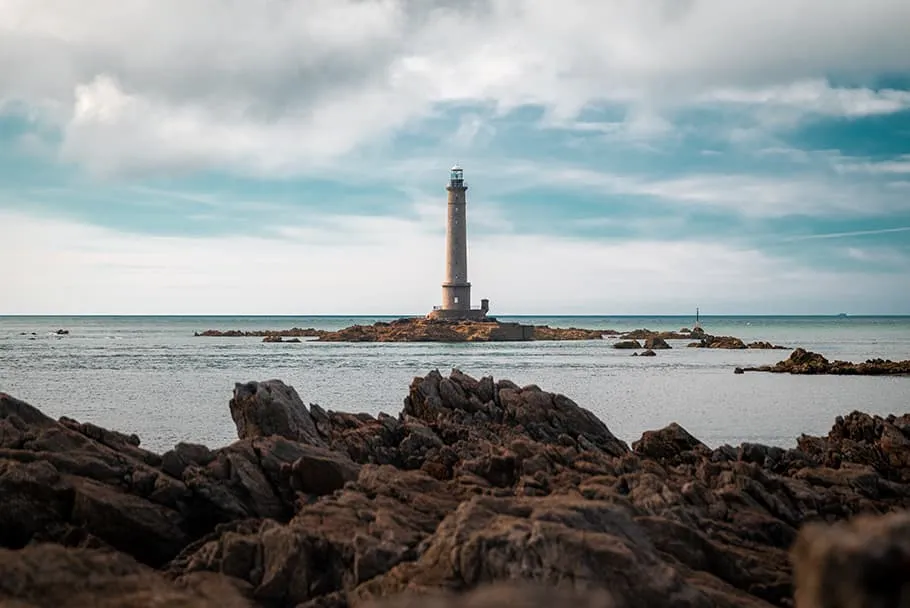
Our second stop was the Goury lighthouse (or La Hague lighthouse). It is built of dressed granite and is 50 metres high. We took a few photos from the rocks, then visited the building that houses the sea rescue station. A small restaurant serves fish and chips: even though it was mid-afternoon, I gave in. Sandrine and Victor had ice creams.
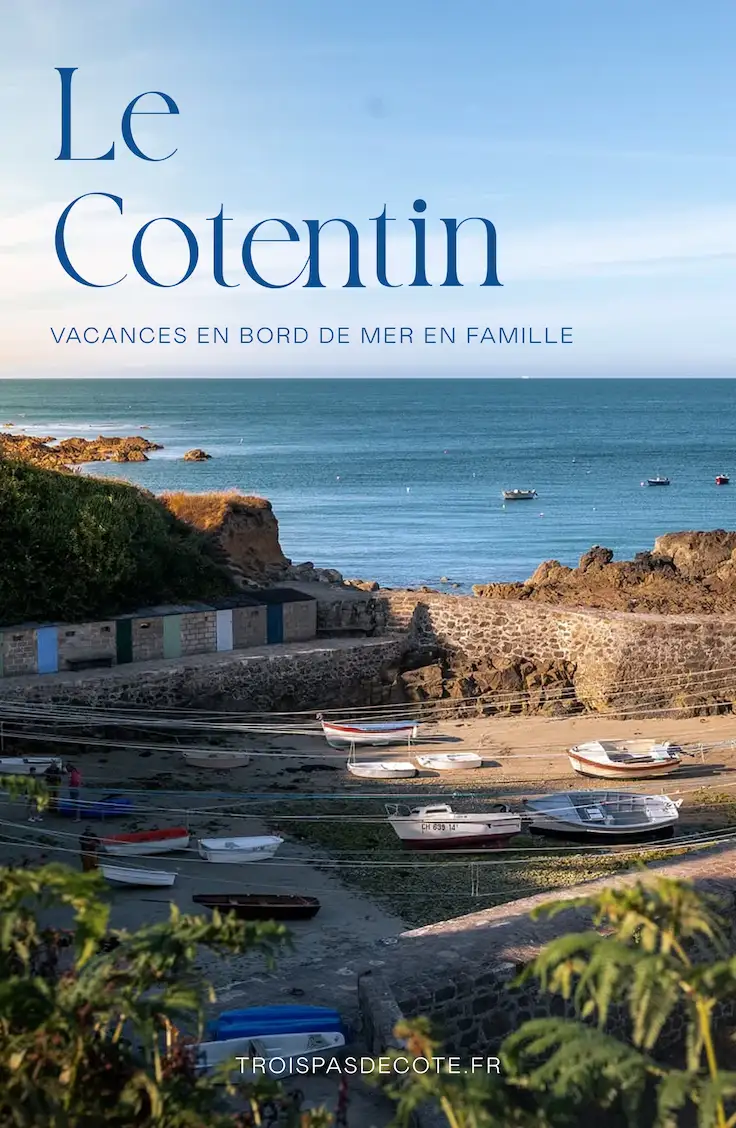
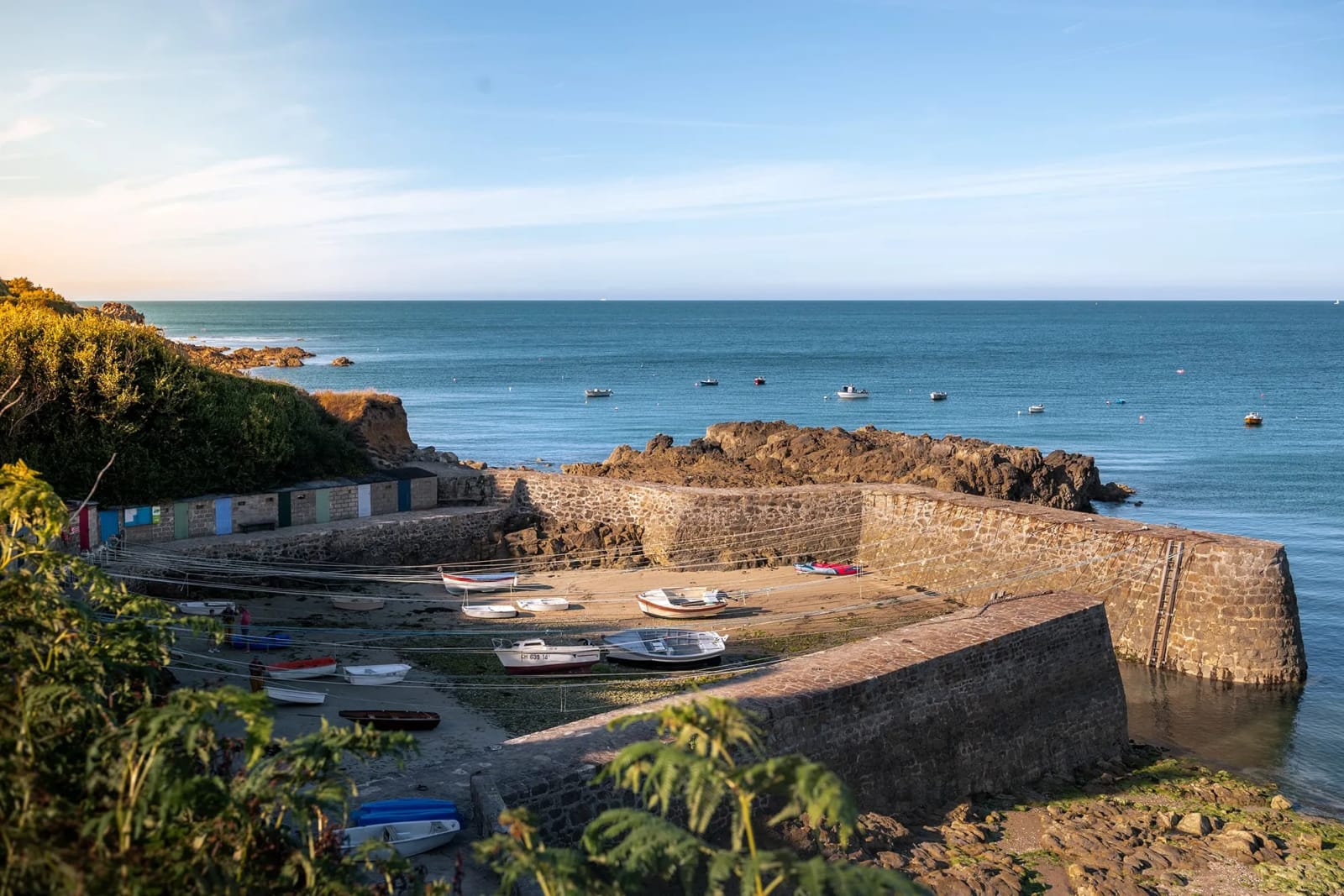
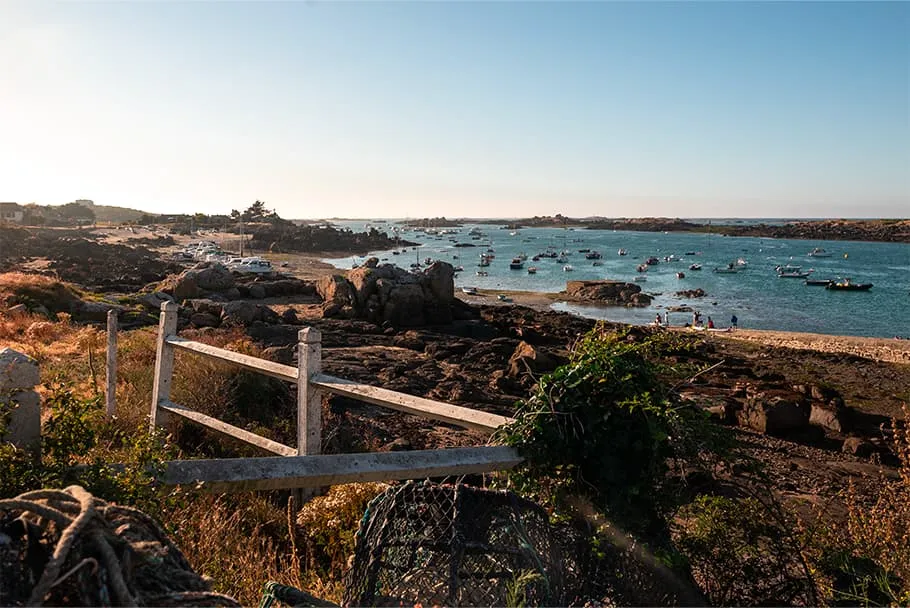
We made one last stop at Port Racine, often called “the smallest port in France”. I do not know whether there is any historical truth behind the nickname, but the place is charming. The small fishing and pleasure boats are moored to ropes stretched from one end of the jetty to the other.
On Tuesday, we headed for Granville. After lunch there and letting Victor enjoy a few merry-go-round rides, we boarded one of the “Jolie France” boats for the Chausey Islands. We left at 2pm, with a return ticket for 8:30pm. The crossing takes a little under an hour. I had read that you can sometimes see dolphins; unfortunately, not this time. At low tide, the Chausey archipelago has 365 islets, and 52 at high tide; the Grande Île is the only one inhabited.
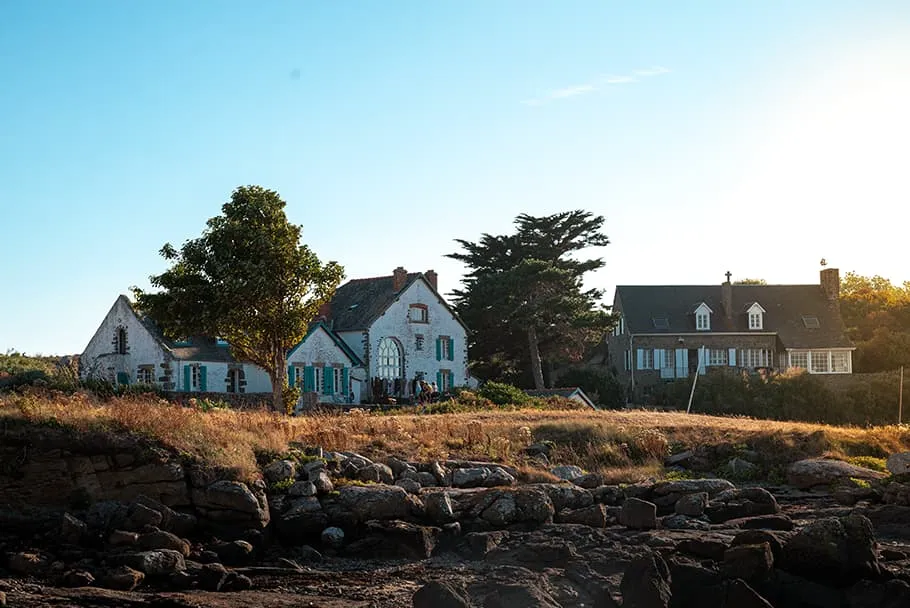
There are magnificent white sandy beaches. But before going there, we took the short walk that leads to the lighthouse and the fortress. We then crossed the island to the Grande Grève beach. On the way, we passed the old fort. Dating from 1550, it was renovated at the request of Louis Renault, founder of the car company. It is now private property and cannot be visited.
The tide was low, and Victor was thrilled to discover crabs. We had a short swim, and the water was quite pleasant. At the end of the day, we went back towards the landing stage. There are a few restaurants, hotels and gîtes. If you want to stay the night, you will need to book well in advance, as there are very few places. We sat on a terrace and enjoyed accras and prawns with white wine while waiting for the boat back. It was a good quarter of an hour late, which gave us time to watch the tide rise quite quickly over the small islets of the harbour.
On the way back, we could see Mont-Saint-Michel in the distance. The “Jolie France” boats also offer a guided cruise from Granville to the Mont. We did not have time to go during the week but, if you want to plan your visit, I recommend reading the “Carnets Vanille” blog (in French) on the subject!
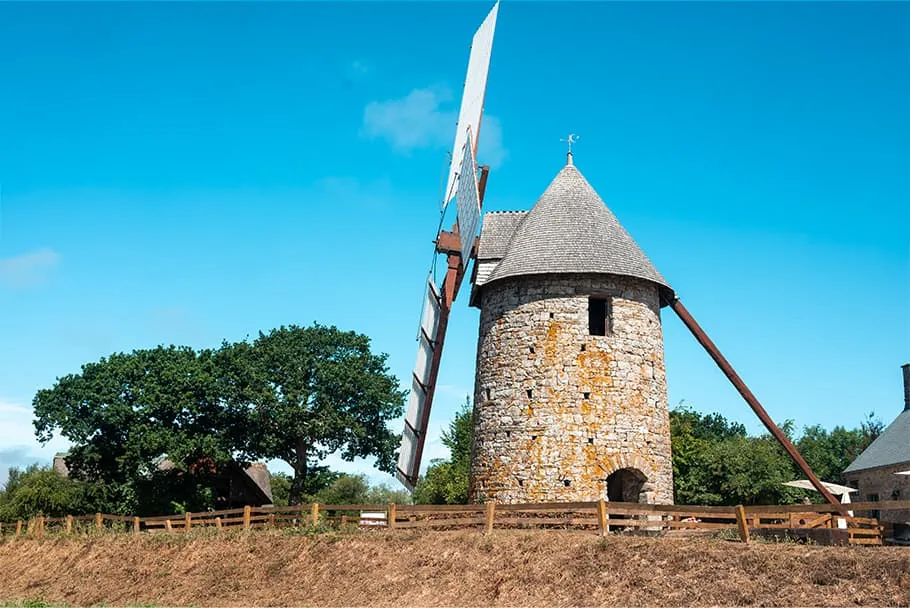
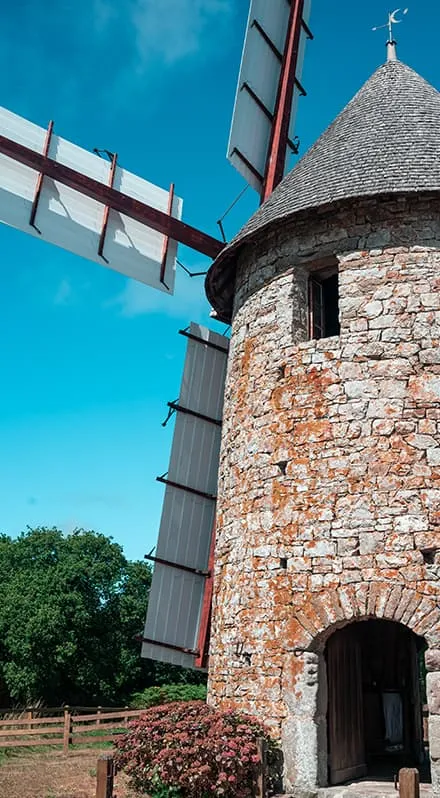
On Wednesday, we started the day by visiting a windmill that is still working. It is in Fierville-les-Mines and was built in 1744. It ran until 1848, before losing out to industrial flour mills. It was restored in 1997, with a new set of sails. Its roof turns 360° to follow the direction of the wind. We took a guided tour, climbing up into the roof to see the mechanisms, before buying flour milled on site in the shop. Victor left with a small paper windmill that kept him busy for the next few hours in the car. There is also a restaurant on site, and flour-making activities for children.
We then headed for Cherbourg, with a stop in Sortosville-en-Beaumont at La Maison du Biscuit. It is an artisan biscuit maker whose shop recreates an early 20th-century street scene. The company claims 8,000 fine food products and a wide selection of Normandy specialities!
We then had lunch in a brasserie in the centre of Cherbourg before visiting La Cité de la Mer. It is a former transatlantic ferry terminal turned into a museum, and it is also the largest Art Deco monument in France. We started with the exhibition on the Titanic, which made its last port of call in Cherbourg in 1912. Among other things, the interactive exhibition lets you discover the profiles of migrants to the United States, which reminded us of our visit to Ellis Island in New York in 2017. At a terminal, you can enter your name and find out whether one of your family names crossed the Atlantic about a hundred years ago.
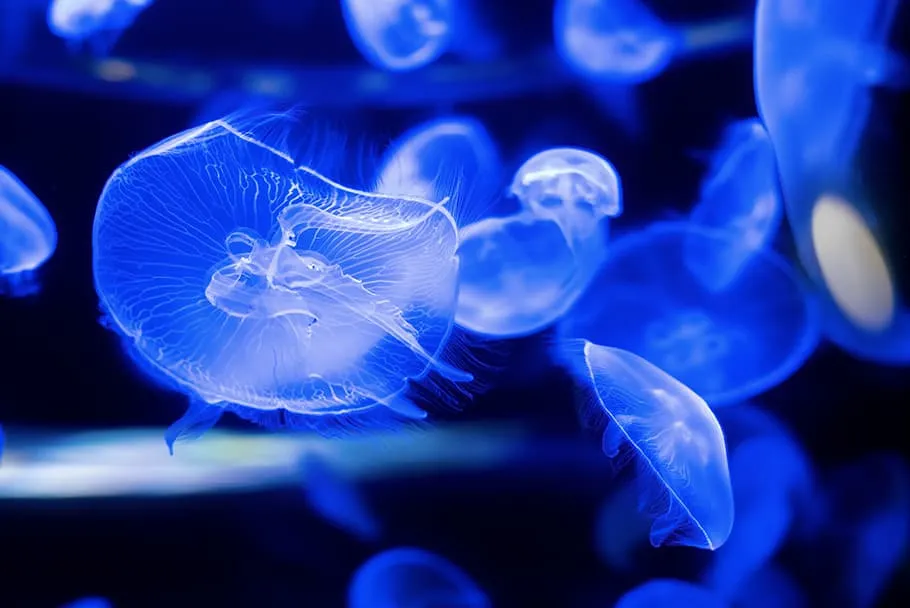
We then moved on to the aquarium and, before leaving, Victor had (a long) fun on the bouncy castles set up in the courtyard. During the visit, you can also go aboard the nuclear submarine “Le Redoutable”. We skipped that part, as it was not open to children under 5, and also because we had visited “L'Espadon”, another submarine, in Saint-Nazaire a few months earlier.
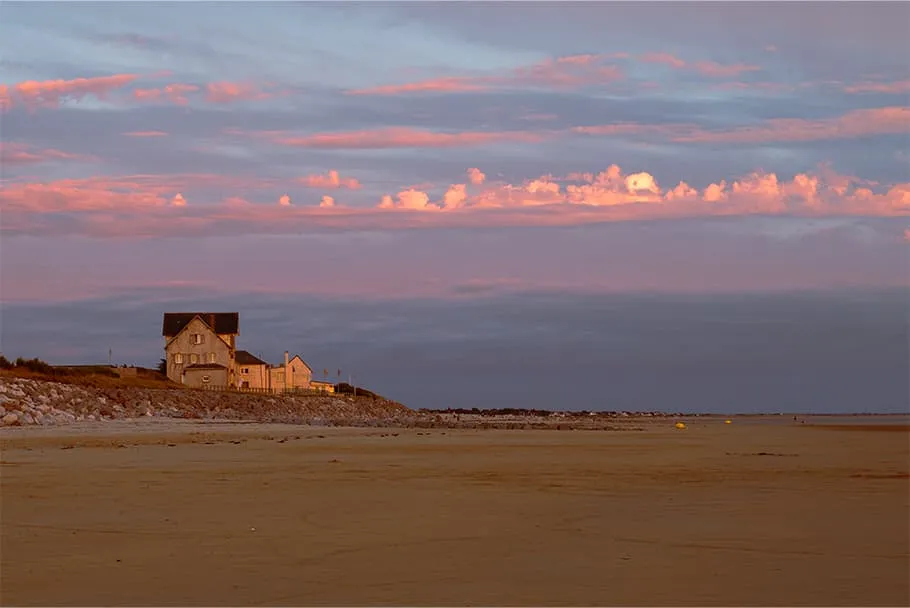
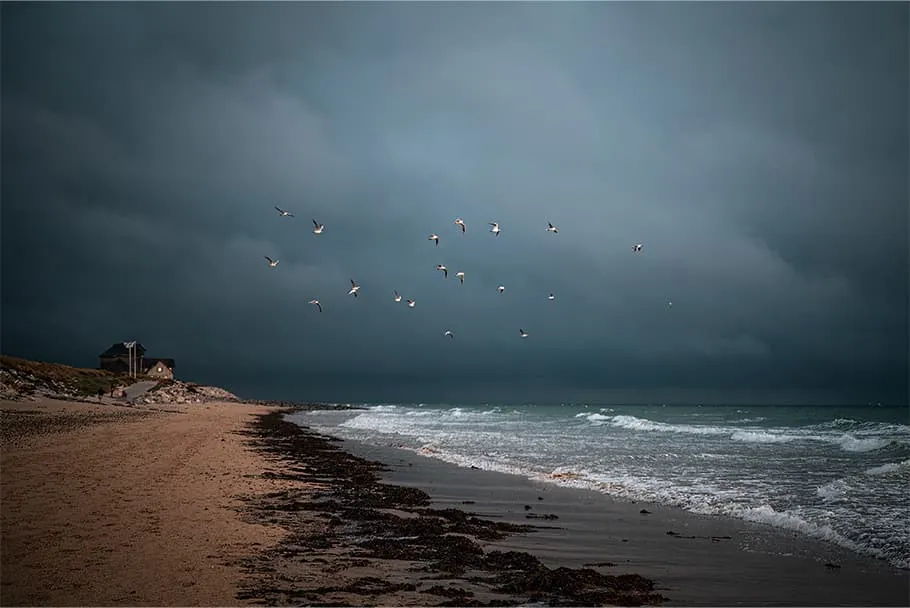
On Thursday, we stayed in Port-Bail to enjoy the beach. We spent the whole morning there: first a little swim, then we introduced Victor to sandcastle building. The morning's activities tired him out, so he slept almost all afternoon, which let us rest too. At the end of the day, we played Mölkky in the little garden, the three of us, before going back to the beach to watch the sunset. What's more, our castle had survived the tide!
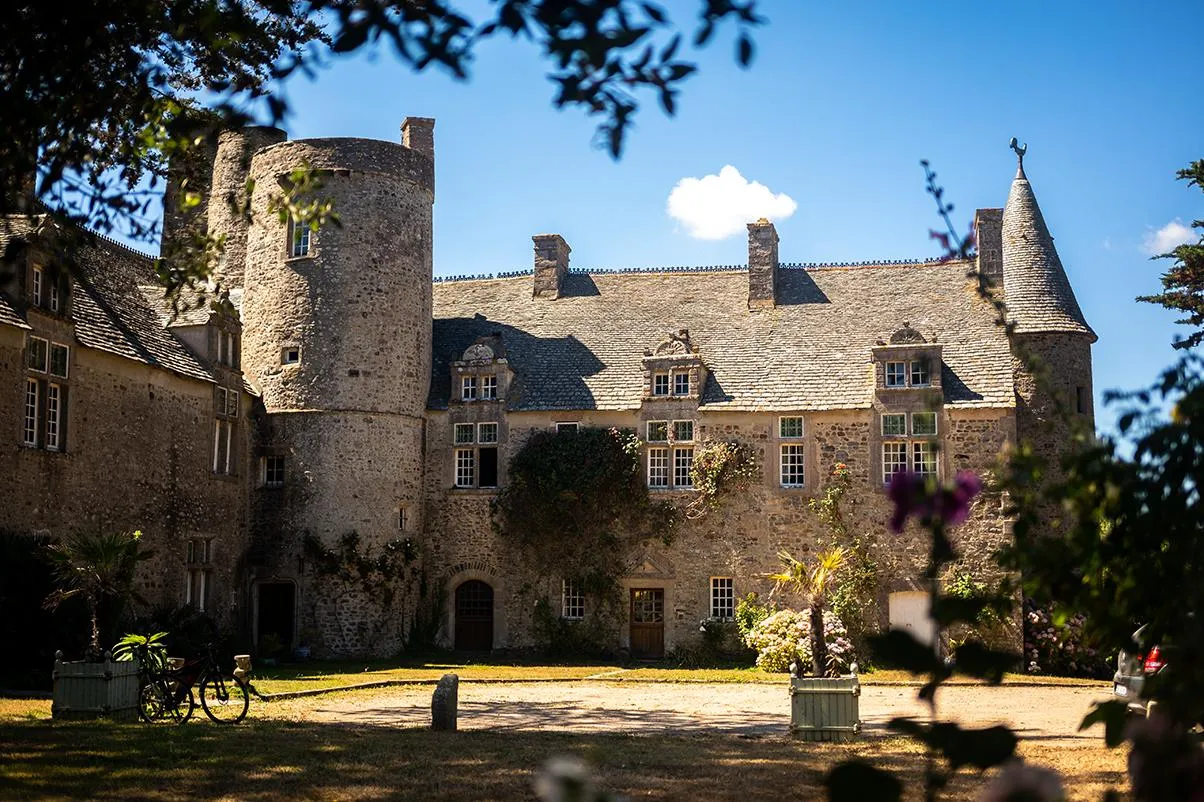
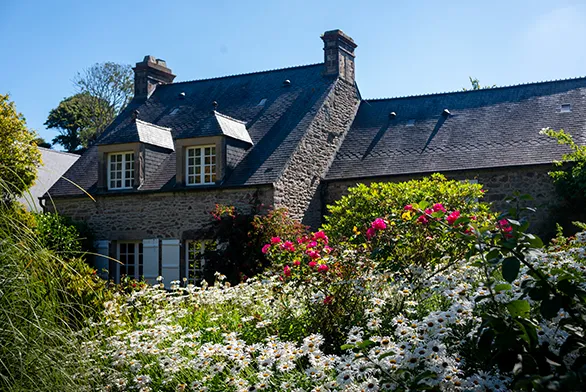
Earlier in the week, at Port Racine, we had seen that Jacques Prévert's house was open to visitors and, as we had loved this stretch of wild coast, we went back on Friday. It is in the Hameau du Val, in La Hague. We visited the small house where the poet spent the last years of his life, as well as his beautiful garden. We then had lunch in Omonville-la-Rogue, after a quick stop at the Manoir du Tourp.
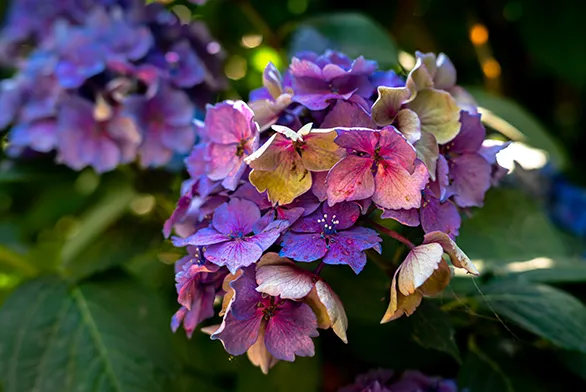
The afternoon was devoted to the Vauville botanical garden and its small farm. It is home to about 1,000 plant species, in a park of about 4 hectares. It was designed by the botanist and perfumer Eric Pellerin in 1948, and his son carries on his work today. Note that the château itself cannot be visited. At the farm, Victor was happy to stroke the goats, hens and rabbits, then to admire the cows, sheep, ponies, donkeys…
In the evening, we wanted to eat at the “Bac A Sable”, a bar-restaurant in the Lindbergh dunes. But we arrived a little late and it was full. We had a quick drink there before falling back on plan B, “Le Repère”, on the harbour in Port-Bail. With our feet in the sand, we had a lovely sea view and ordered sharing boards to nibble on. They also do takeaway pizzas.
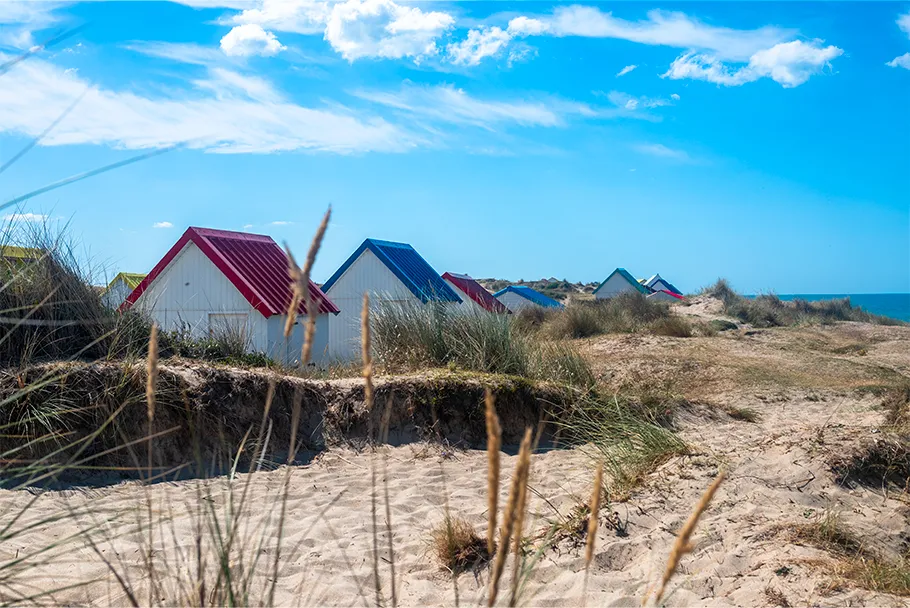
Saturday was departure day. After meeting and chatting a little with our hosts, we set off for a few days in Tours to visit the Loire Valley châteaux. Before leaving the region, we made one last stop in Gouville to admire the famous colourful-roofed huts on the dune.
Read our interview on the Wikidstravel blog (in French), where you will also find inspiration for other family destinations. Feel free to leave a comment or ask a question at the bottom of the page. See you soon.
Enjoyed this article? Pin it on Pinterest.
Follow us on social media to hear about our next trips. Feel free to leave a comment or ask a question at the bottom of the page. See you soon.