By Geoffrey Ménissier, published on , updated on .
Also available in: 🇫🇷 🇪🇸 🇵🇹 🇩🇪 🇮🇹 🇳🇱
In short
A week discovering part of Provence: Saint-Rémy-de-Provence, the arena in Arles and the Camargue Regional Natural Park. Here is what to do in the Alpilles for an unforgettable family trip.
0 comments
After the Dordogne last summer, this year we spent our holidays in Provence, more precisely in Saint-Rémy-de-Provence, close to Arles, Avignon and Nîmes. To the south lies the Camargue Regional Natural Park.
It was our second year travelling with Victor, who was now just over a year and a half old. Because of his age, the heat and our wish to enjoy ourselves and rest, we chose not to rush around. We stuck to the town of Saint-Rémy and its surroundings, with a trip to Arles. We also visited the Camargue (Aigues-Mortes and Saintes-Maries-de-la-Mer).
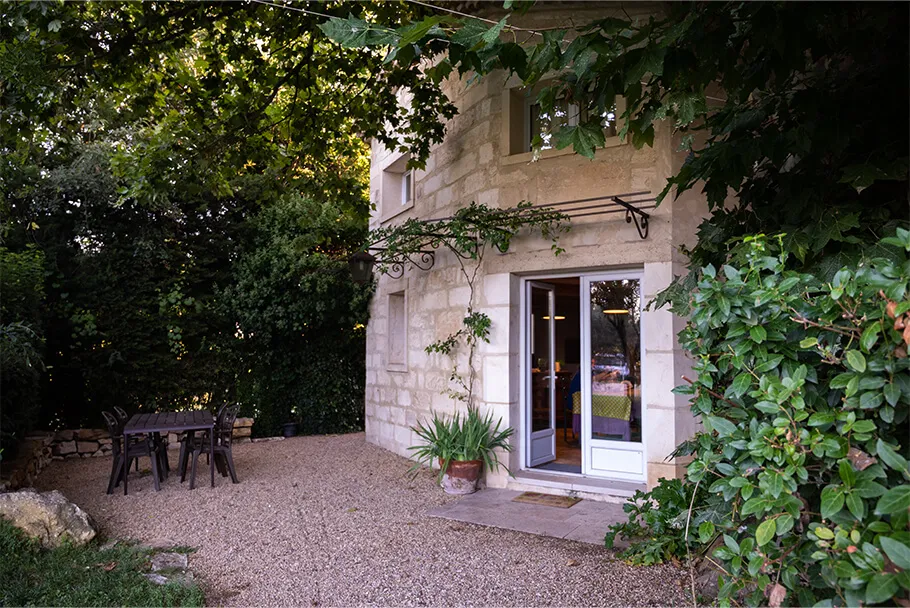
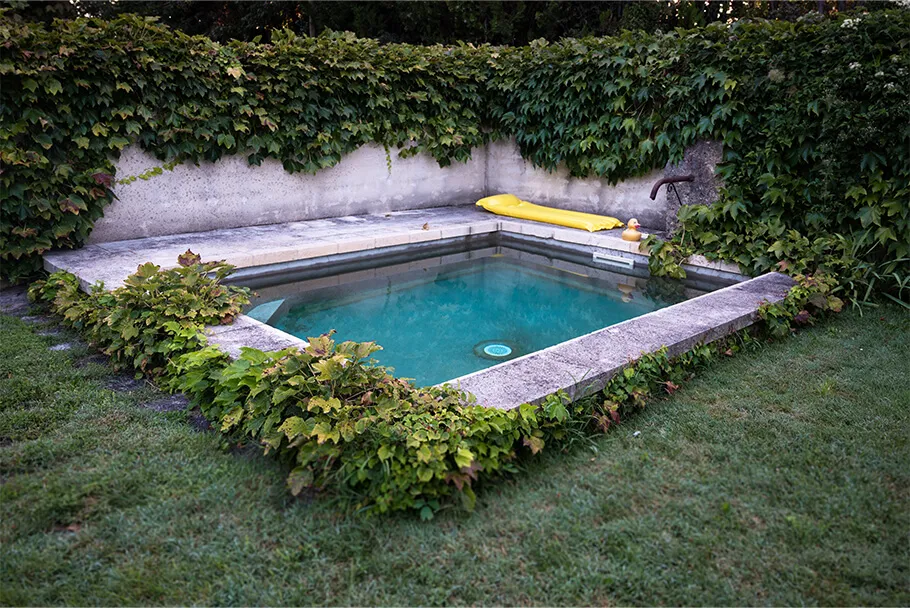
We are keeping Avignon, Nîmes, the Pont du Gard and Châteauneuf-du-Pape for another visit… Our accommodation, found on Sawdays, was supposed to be “Le Cabanon” at the Mas de la Croix d'Arles, but the owners of the B&B offered us another of their properties, larger and free for the week. The estate is superb, with a large olive grove, a view of the Alpilles and access to the swimming pool. Outside, a small irrigation canal leads to the centre of Saint-Rémy. We rented bikes for the week for getting around locally: Telecycles drops off and collects the bikes where you are staying at no extra cost. Handy!
The drive from the Grand-Bornand, where we had spent our first week of holidays, was long: about 8 hours for less than 400 km… So on Saturday evening we rested after unpacking. We had to take a detour to reach the Mas de la Croix d'Arles because of the feria: bulls had been released in the streets in the late afternoon, and many streets were still closed.
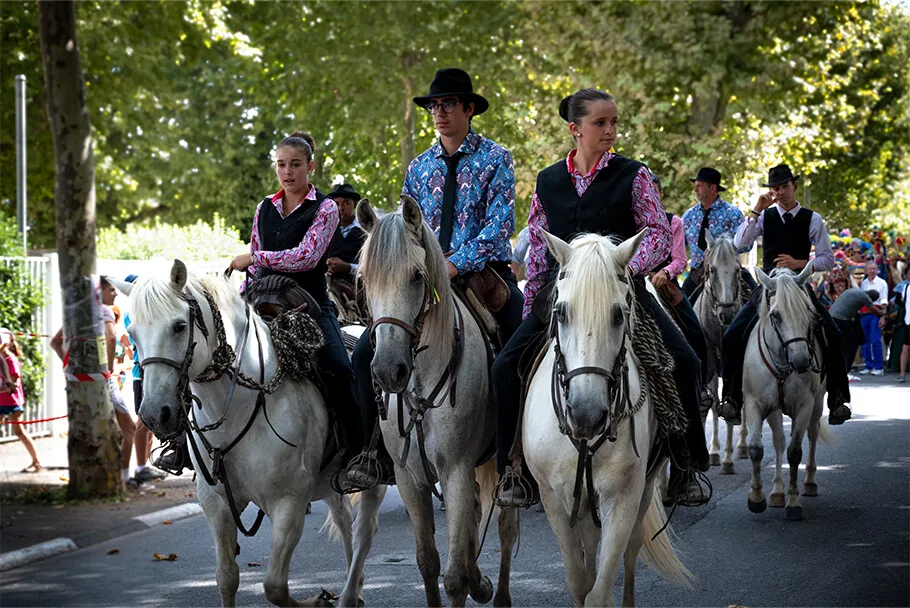
The next day, Sunday, we watched another event, the “Carreto Ramado”. It is a parade of about forty Camargue horses, followed by a cart pulled by draught horses. The cart is decorated with fruit and vegetables representing the farm produce of Saint-Rémy and the surrounding area. It is led by a carter in traditional dress and followed by a procession made up mainly of women and children in the costume of the Arles region. The atmosphere was festive, with many tourists sitting at café terraces. The parade goes round the town 3 times.
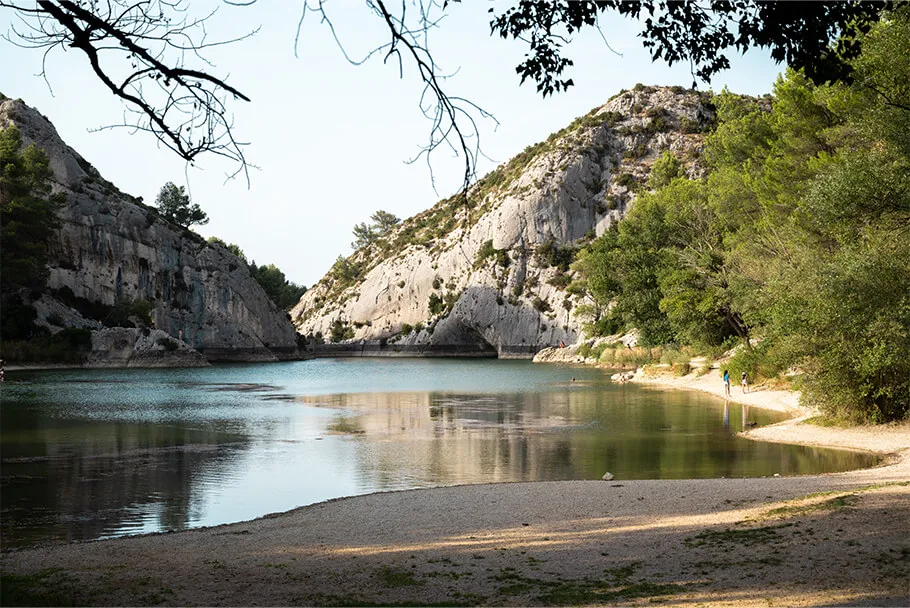
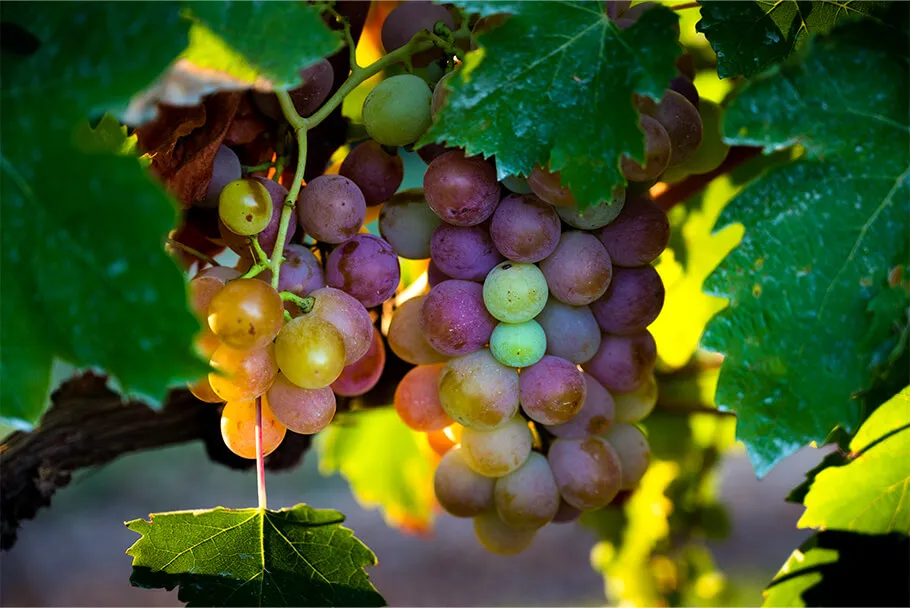
After that, we did some shopping for the next few days and walked back to the Mas along the canal. In the early afternoon, Victor had a short nap, which also let us rest given the heat, then we set off to explore the area. Our hosts gave us (organic) grapes freshly cut from the vines in the garden, perfectly sweet. We walked to the Peiroou lake; we would have had no other choice anyway, as the road was closed to cars because of the extreme fire risk in the Alpilles. It is a small artificial lake dating back to Antiquity: the dam was built to supply water to the Roman town of Glanum, which we visited at the end of the week. The lake is in the Alpilles, a range of modest height (500 m) that is home to many picturesque villages, the best known being Les Baux-de-Provence.
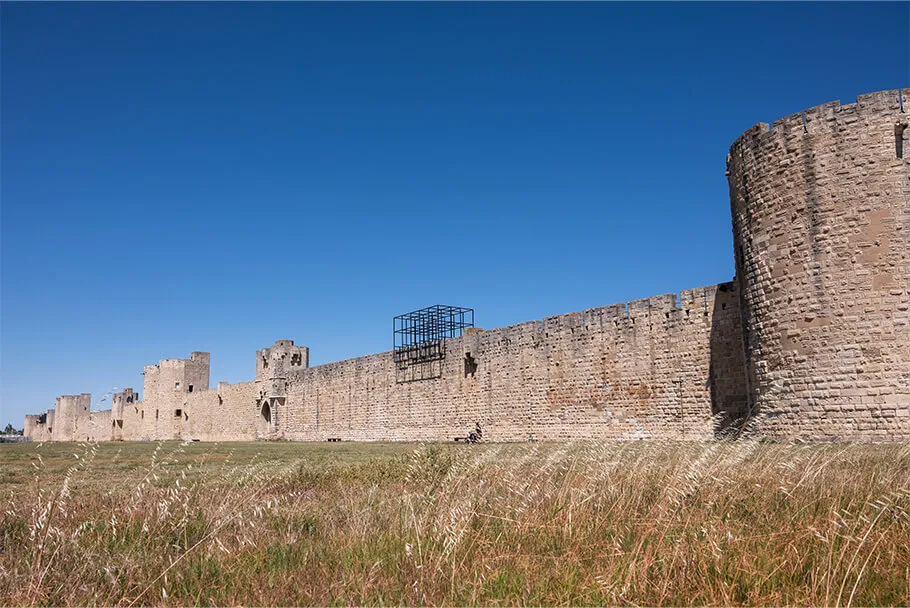
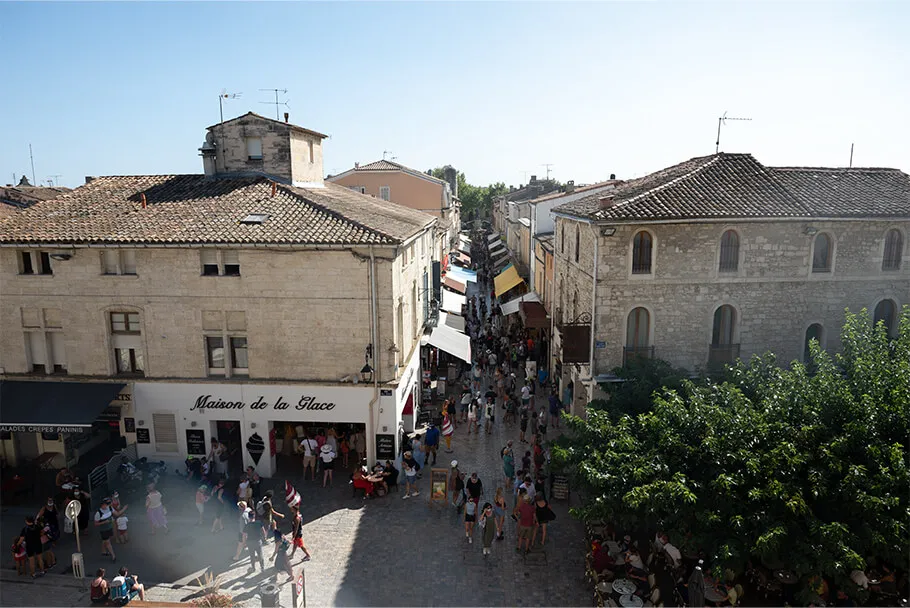
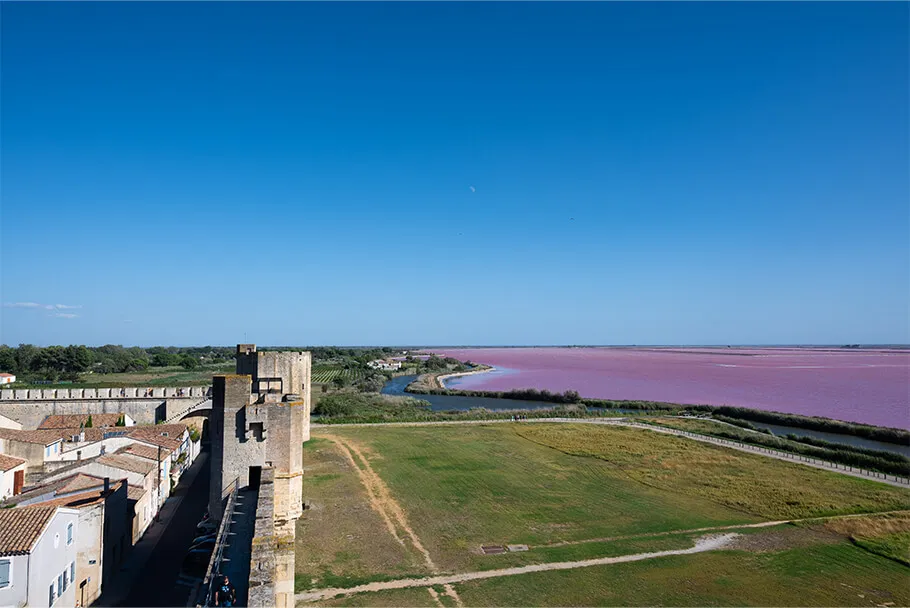
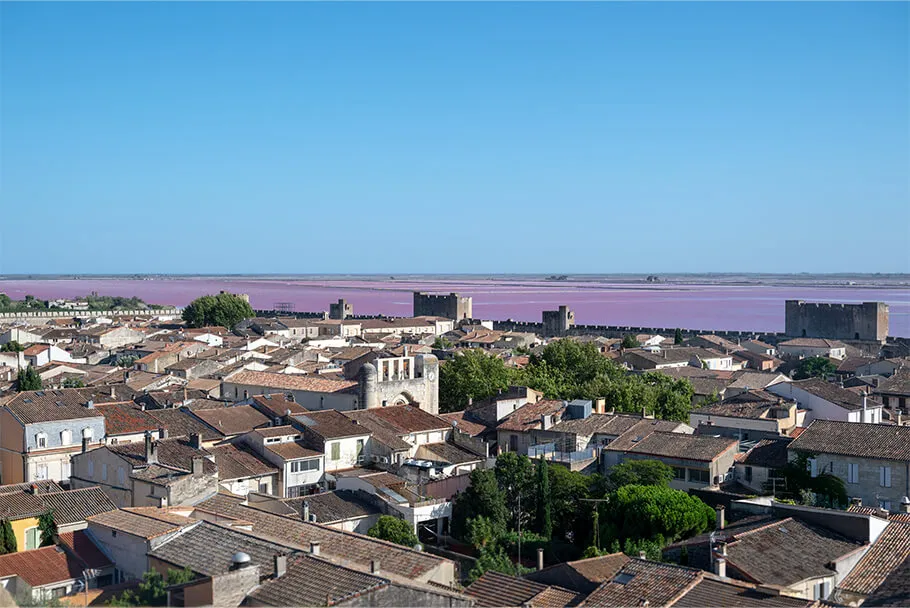
On our second day, we set off to discover the Camargue and Aigues-Mortes. The town is surrounded by ramparts that offer a magnificent view over the salt marshes (the Peccais marshes), which are tinted pink. Saint Louis (Louis IX) fortified the town and built the port that became the departure point for 2 crusades, in 1248 and 1270. We first wandered around inside the town, with Victor in his pushchair; the narrow streets were very crowded.
Then we had lunch at a restaurant called Casa Toro Luna. Victor had fallen asleep, so we could enjoy our meal while taking in the atmosphere of the Place Saint-Louis. The restaurant terrace has misting fans that bring a little coolness. Later, we went back to the car to swap the pushchair for the baby carrier to walk the ramparts. It takes an hour to go all the way round, and the visit gives a new perspective, with a view over the town's rooftops. It is a bastide, like the ones we had seen in the Dordogne the previous summer. We also learned that the town served as a prison for the Templars and then, after 1685, for Protestants. At the end of the walk, you can visit the Tour de Constance. The spiral staircase is quite narrow, but the view from the top is worth the effort.
Before heading back to Saint-Rémy-de-Provence, we made a detour towards Le Grau-du-Roi to see the marshes a little closer and photograph a few pink flamingos. With the sun going down, the colours were magnificent. We read that in summer 2020, more than 20,000 pairs of flamingos nested in the salt marshes of Aigues-Mortes. You can see them there all year round.
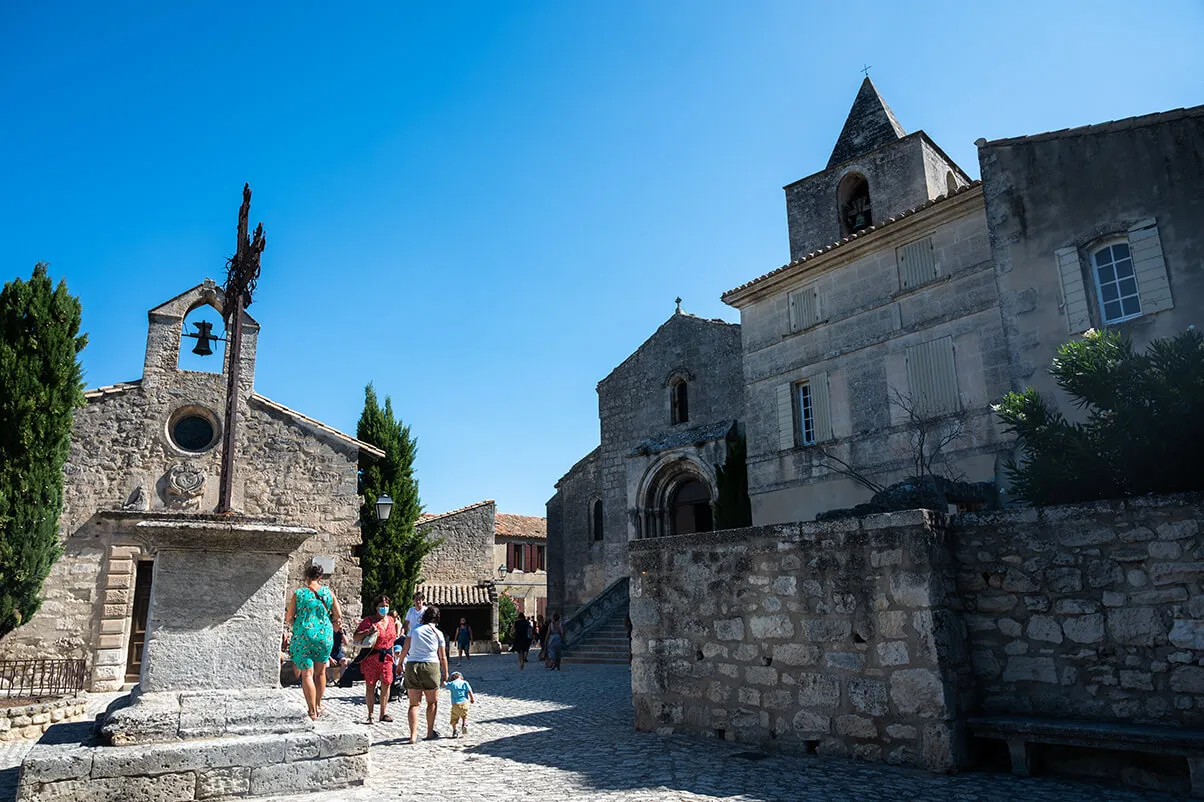
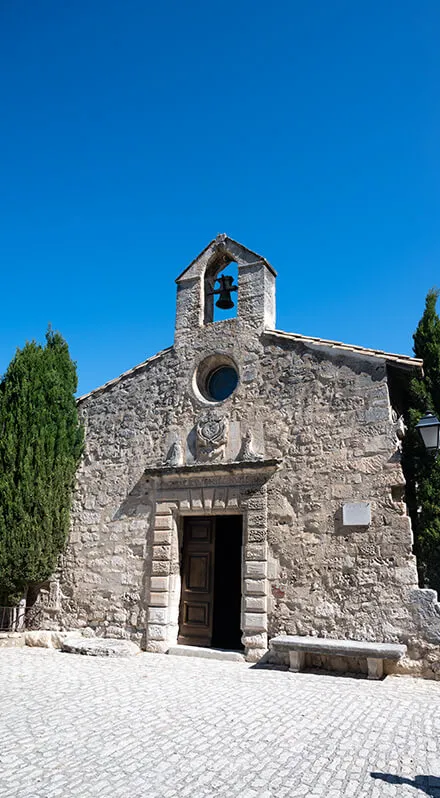
On Tuesday, we set off to visit the village of Les Baux-de-Provence. It is a very touristy place, and parking is a bit tricky. We could have cycled there, as it is only 8 km away, but the climb and the weight of the baby carrier put us off. Les Baux is not very big: we wandered through the crowded lanes before reaching the heights, near the entrance to the castle. There, the mistral was so strong that it was even hard to stand steady to take a photo. Yet the view over the Alpilles and the plains is magnificent. With Victor, we decided not to visit the castle towers but to admire them from a distance. The village only appeared in the Middle Ages, but human occupation is thought to go back to the Neolithic (6000 BC). Some of the town's mansions were built during the Renaissance.
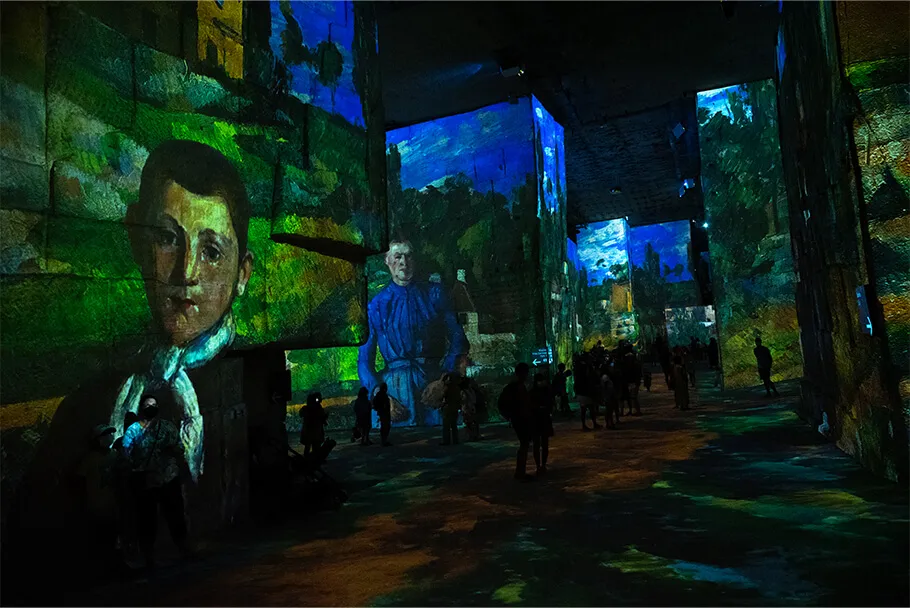
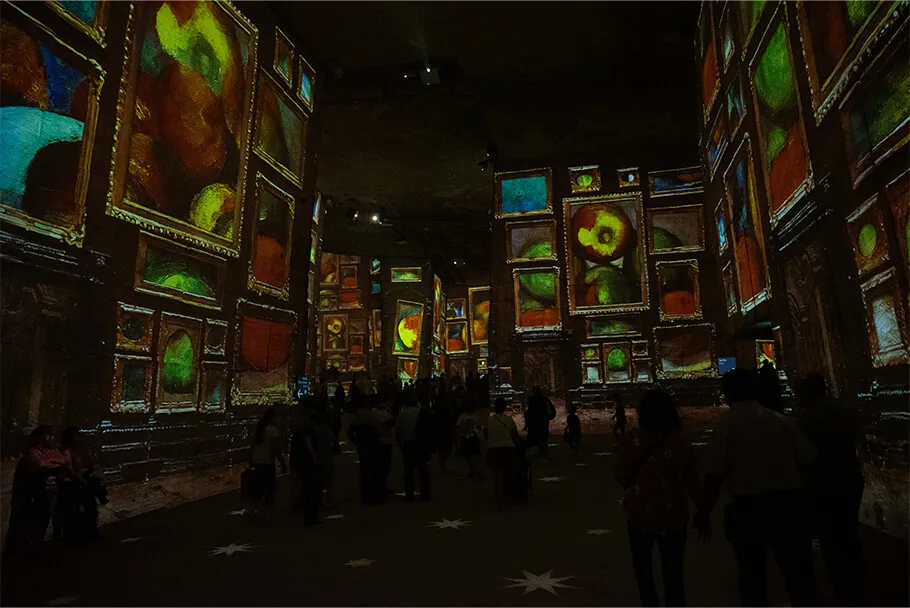
A few hundred metres from Les Baux-de-Provence are former limestone quarries that have been a digital art centre since 1975. First called the “Cathédrale d'Images”, they became the “Carrières de Lumières” in 2012. Before that, the stone quarry was worked from 1800 to 1935. This year, paintings by Cézanne and Kandinsky were animated and projected onto the limestone walls; the programme changes every year. It was busy: we had booked our tickets online the day before, which saved us time by skipping the ticket office. Once inside, we admired the sound and light show, in which about a hundred video projectors cast the works onto more than 7,000 m² of surfaces. It works even with young children: Victor seemed fascinated by the paintings and was not afraid during the almost completely dark passages.
In the late afternoon, we went back to the Mas de la Croix d'Arles to enjoy the pool. In the evenings, we ate inside despite our lovely terrace, as there are quite a few mosquitoes in the area.
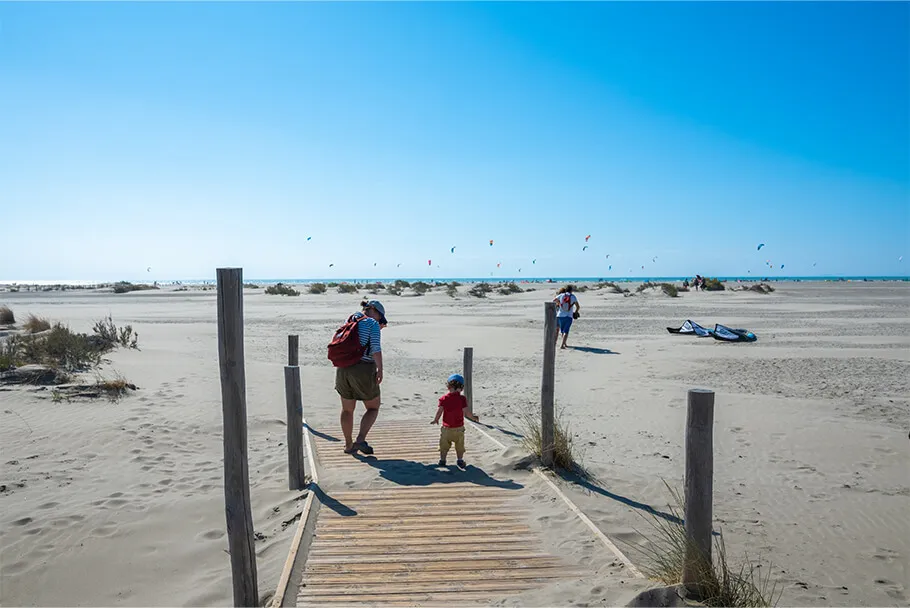
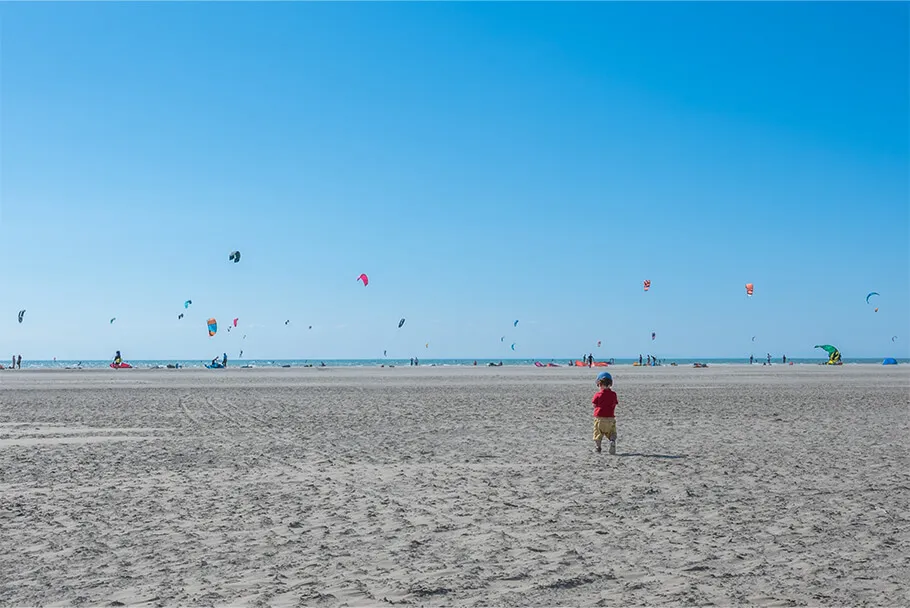
Saintes-Maries-de-la-Mer is the capital of the Camargue. It is known both as a seaside resort and as a place of pilgrimage for the Gitano community (with festivities in May). The town grew up around its fortified 11th-century church. We first had a picnic on the beach, then explored the town's lanes around the church. There are lots of restaurants, and the atmosphere must be lively in the evening.
We walked along the beach again and on a short section of the “Digue à la Mer”, a sea wall that offers 12 km of walking along the lagoons (so 24 km there and back for the bravest). You can do it on foot or by bike. From the town to the Gacholle lighthouse, you can see many species of birds, including pink flamingos. The sea wall was built in 1859 to protect the Camargue from erosion. Water flows between the sea and the lagoons through sluice gates called “pertuis”.
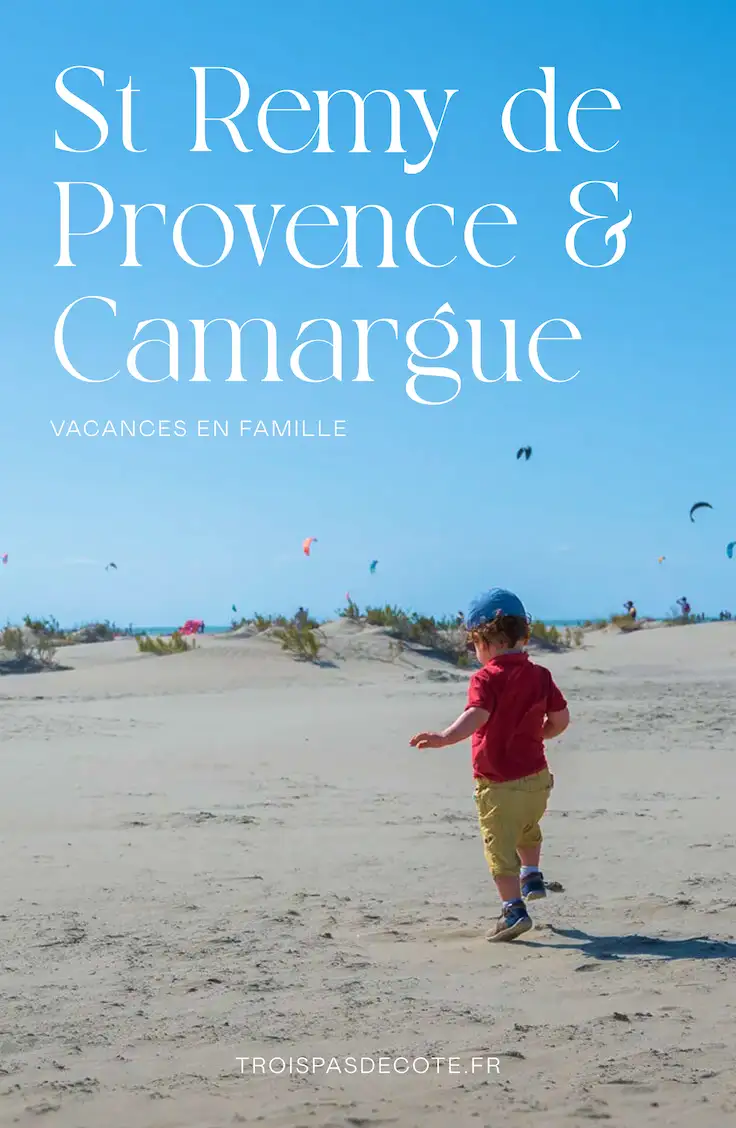
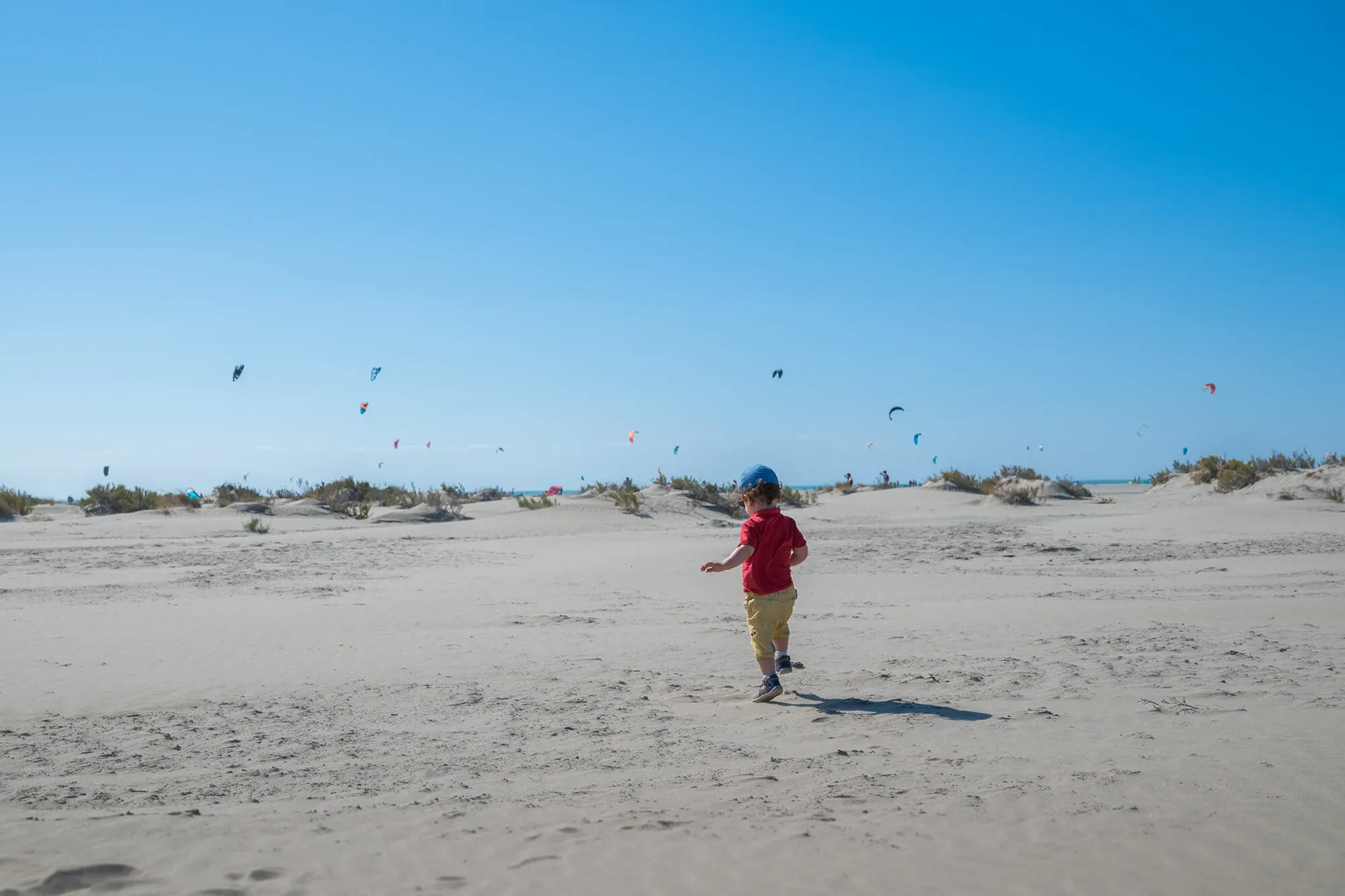
We then decided to go to Beauduc beach, on the other side of the sea wall. By bike, it is about thirty kilometres but, by car, you have to go round the Étang de Vacarès and then come back down towards Salin-de-Giraud, which still means 60 km. The last few kilometres are on an unpaved road full of potholes, which reminded us of Iceland. The track between the lagoons does not even exist on the GPS, but it let us see pink flamingos again. We also stopped to see Camargue bulls and horses. The beach car park had turned into a wild campsite, with lots of tents and converted vans: it is a renowned kitesurfing spot, and I counted about fifty kites on the water. Everything here is wild: the beach is huge, the sea fairly calm despite the wind, and the water gets deeper quite gradually, perfect for Victor, who jumped in without any fear. We stayed until the late afternoon before heading back to Saint-Rémy.
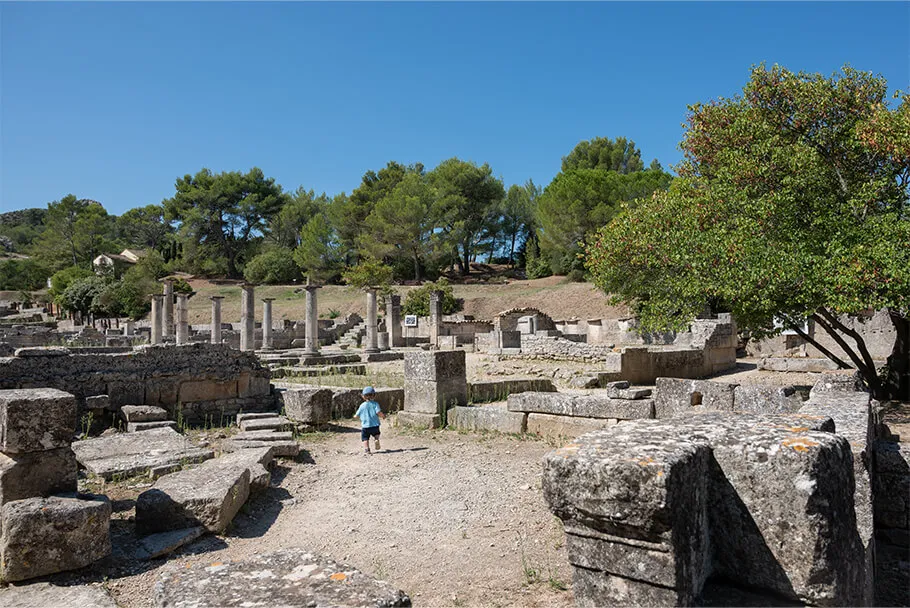
We cycled to Glanum, an archaeological site only 2 km from the Mas de la Croix d'Arles. Victor switched very easily from his bike seat to his carrier, then wandered freely around the ruins too. It was a Gallic town with Greek and then Roman influences. It developed thanks to the protection of the Alpilles and then its proximity to the Via Domitia, a Roman road linking Italy and Spain (118 BC). We learned that Glanum was only discovered late, at the beginning of the 20th century, and that archaeological work only began in 1921. It is impressive to see how much has been uncovered in just a century, and how well preserved many of the buildings are. The name comes from Glanis, a Gallic healer, and became Glanum under the Roman Empire. The visit reminded us of Ostia, near Rome.
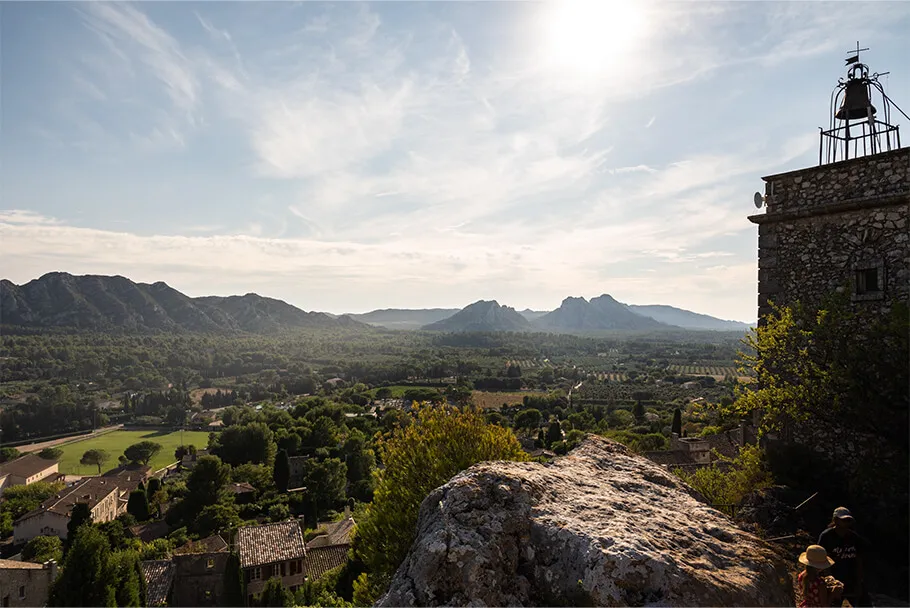
In the afternoon, we visited Eygalières, a small village in the Alpilles. It is known for having kept its authentic character, with many farmhouses built of local stone. In the centre of the old village, on a hill, stand the ruins of a feudal castle. From there, you get a magnificent view over the Alpilles, the olive groves and the vineyards. The main street is lined with many beautifully decorated restaurants. Seeing the prices, we guessed the clientele here is fairly well-off. That did not stop us from enjoying a good ice cream from “Raimo”… an ice-cream maker right next to where we live in Paris. Amused by the coincidence, we asked around: Maison Hache is a hotel, restaurant and bakery in Eygalières. Its chef, Christopher Hache, has a Michelin star, and its ice creams come from Raimo, the oldest ice-cream maker in Paris (1947). The bakery's bread is also very good: we bought some to go with the seafood platter planned for the evening. But before this feast, we went back to enjoy the pool again.
(You sometimes need to zoom in quite closely on the area you are looking at for activities to appear.)
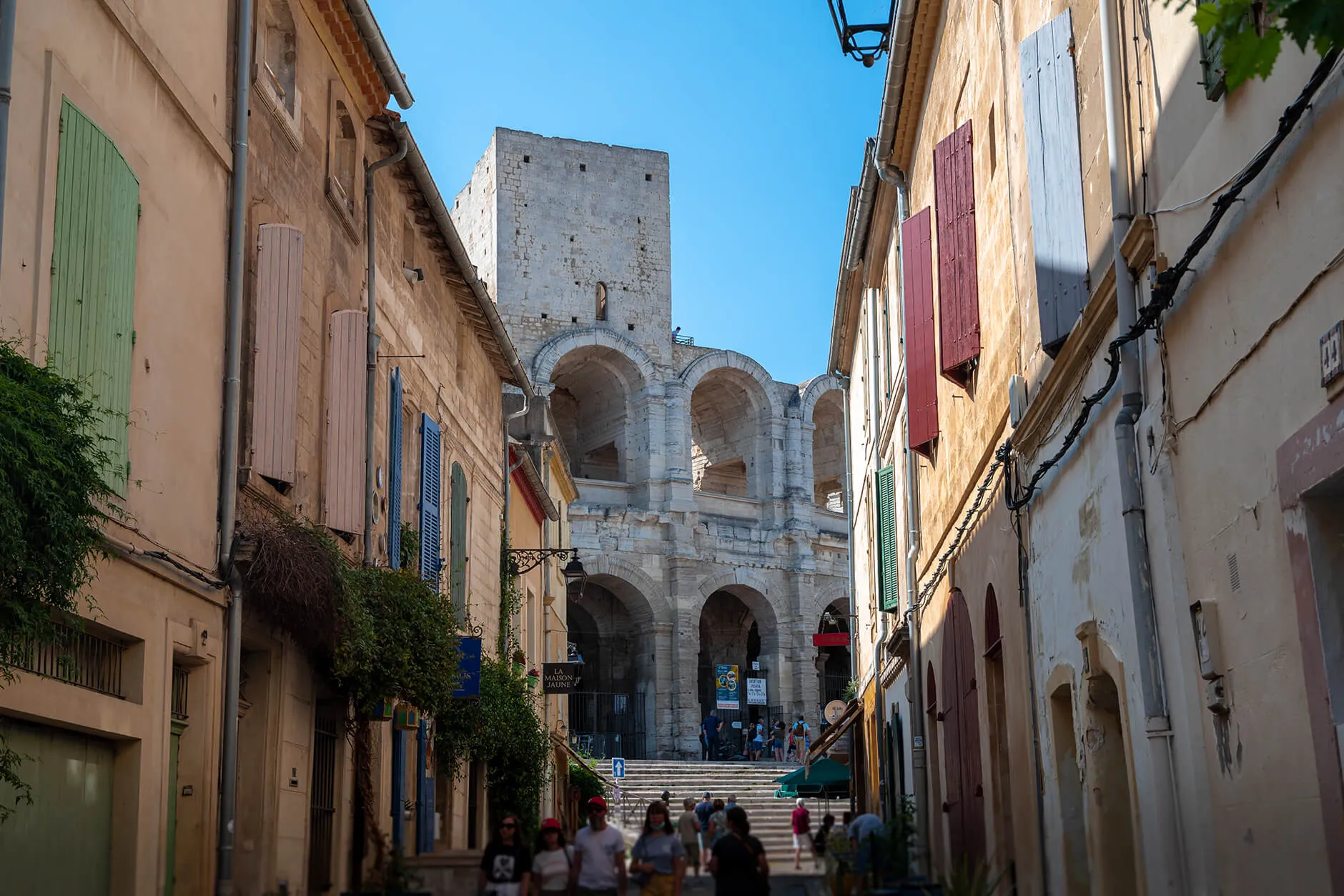
Friday was our last day before hitting the road. We set off to visit Arles but, just as we arrived, Victor was sick in the car. And, as luck would have it, it was the only day we had not brought a change of clothes. So our visit to the town started at Monoprix, to buy him shorts and a T-shirt. We then took the Rue Voltaire, which leads straight to the Arles arena. The Roman amphitheatre dates from the year 80 and follows the design of the Colosseum in Rome, on a smaller scale. On two levels, it could hold 25,000 people. The arena is still used today during the ferias, for bullfights and Camargue-style “courses camarguaises”.
We then strolled through the lanes, past the ancient theatre and the Place de la République, home to the Cathedral of Saint-Trophime, the church of Sainte-Anne and the Archbishop's Palace. These monuments (and many others) host the “Rencontres d'Arles” photography festival every summer since 1970. The town is nicknamed the capital of photography, and you can see about forty photo exhibitions there each year in exceptional heritage sites. In Arles, you can also visit the Fondation Vincent van Gogh, which combines original paintings by the master with contemporary art.
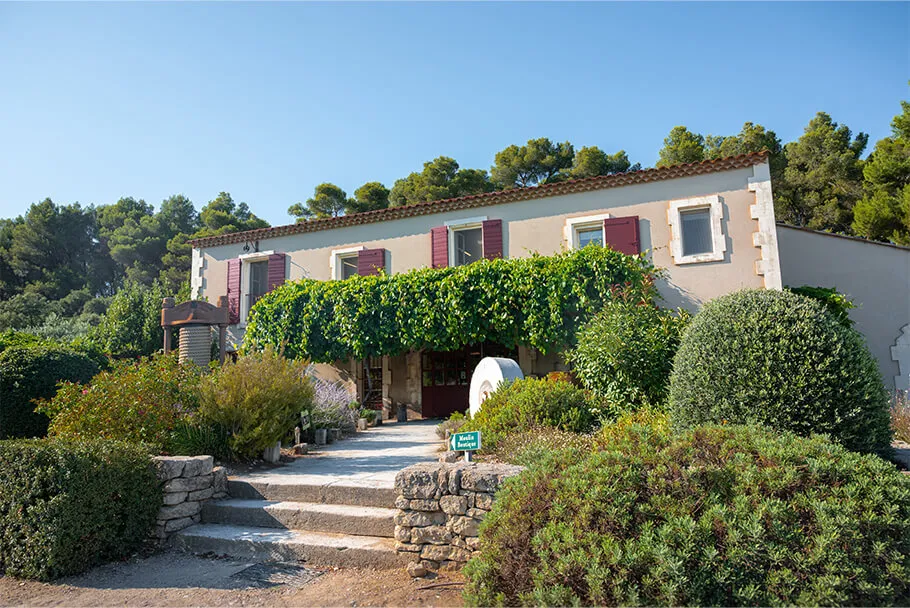
Back in Saint-Rémy, we chatted again with the son of the owners of the mas, who looks after the fruit garden and especially the olive trees. He suggested we visit the Moulin du Calanquet, where he presses his olives. We cycled there, a little under 4 km away. A (free) tour of the facilities taught us more about olive growing. We feasted at the tasting, with olives, tapenades, jams and mustards made on site. On the way out, we stopped at the mill's shop to bring back a few souvenirs.
At the end of the day, we went back to the mas to return the bikes and spend our last evening in Provence. If this article has made you want to discover the region, or if you have a question, feel free to leave a comment at the bottom of the page. See you soon.
Enjoyed this article? Pin it on Pinterest.
Follow us on social media to hear about our next trips. Feel free to leave a comment or ask a question at the bottom of the page. See you soon.