By Geoffrey Ménissier, published on , updated on .
Also available in: 🇫🇷 🇪🇸 🇵🇹 🇩🇪 🇮🇹 🇳🇱

In short
A week in Ceillac, at the head of the Mélézet valley, in the Queyras Regional Natural Park. On the programme: Lac Miroir and Lac Sainte-Anne, the Balcons du Cristillan, a solar eclipse and the Perseids, with a 6-year-old and our beagle.
0 comments
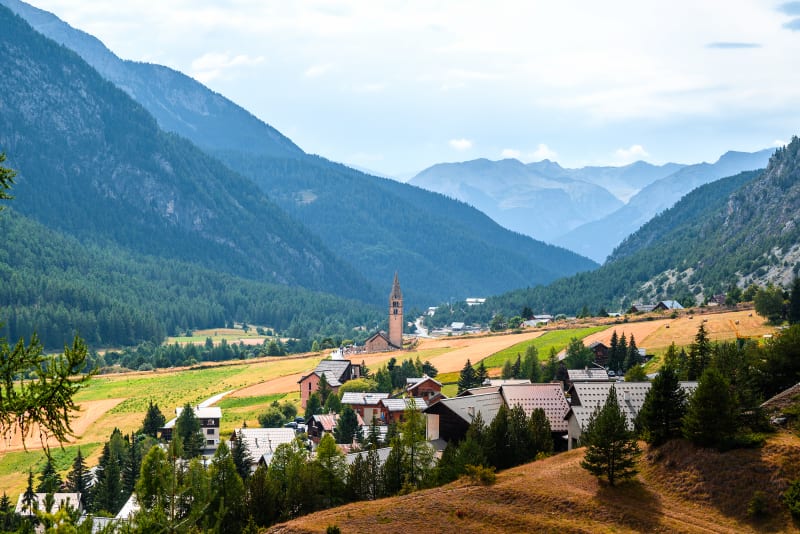
We headed for the Hautes-Alpes, in the Provence-Alpes-Côte d'Azur region, and the Queyras Regional Natural Park, more precisely Ceillac. We were with our son Victor, who is 6, and our dog Glasgow, an 18-month-old beagle. We had just spent a week in the Cantal, in Vèze, and were setting off for a second week in the Alps. Although it is not that far geographically, the drive is quite long: Clermont-Ferrand, then Lyon, Grenoble and Briançon, arriving at the end of the day.
Watch your GPS: we had not checked before leaving, but the chosen route took us through the Fréjus tunnel into Italy, then back via Montgenèvre. Cost of the tunnel: €50, ouch. It probably did this to save time, because of the traffic from earlier holidaymakers.
Also, I did not have the right cables to charge my phone in the car my mother had lent us. The battery died from using the GPS for the whole journey, and with it the exact address of our rental and the code to collect the keys… So we stopped for a drink on the terrace at the Farnien'thé, where they kindly let me use a socket.
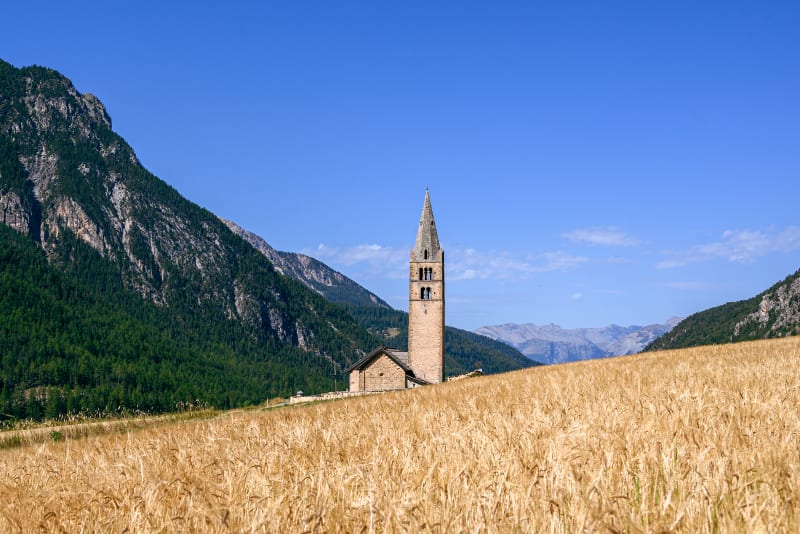
Sunday morning was our first day in the Queyras. We set off to discover the village of Ceillac. As it sits at the head of a valley with many trailheads, it is quite busy during the day, and quieter in the evening. Although small, the village has about 5 restaurants and a few sports and craft shops, as well as a bakery and a grocery. All day long, you can watch paragliders land near the church, a little outside the village.
We took the opportunity to find out about the week's activities. The morning featured a kite demonstration and shows for children (jugglers, diabolo, giant bubbles and so on).
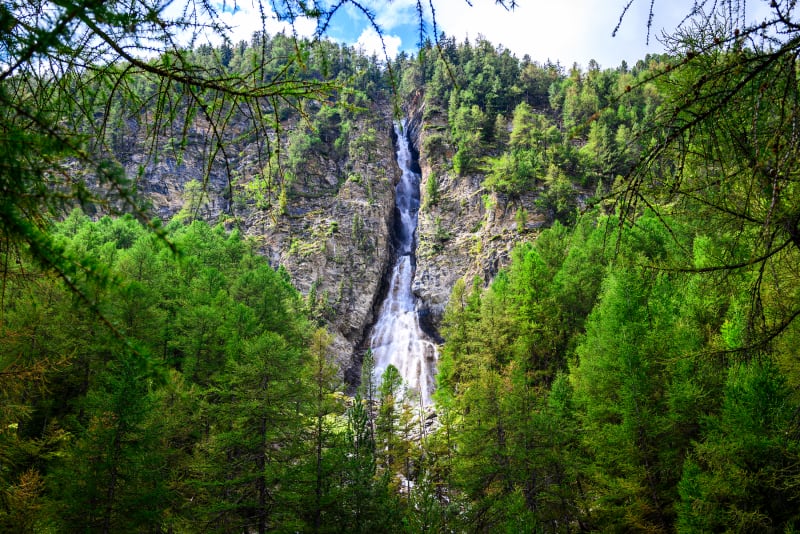
At lunchtime, we ate quietly at the chalet we had found on Airbnb and rested a little after the previous day's drive. Around 4pm, we went to the area near the Les Mélèzes campsite, where several walks start, including those to Lac Miroir and Lac Sainte-Anne. The goal was not to go up, as it was already a bit late, but to see what the terrain was like and look at the “cascade de la Pisse”, a 280-metre drop. In the end, we still climbed for 45 minutes before hearing a storm coming. By the time we had turned back, the downpour and the storm caught up with us just as we reached the car. The storm did not last, but it rained all evening.
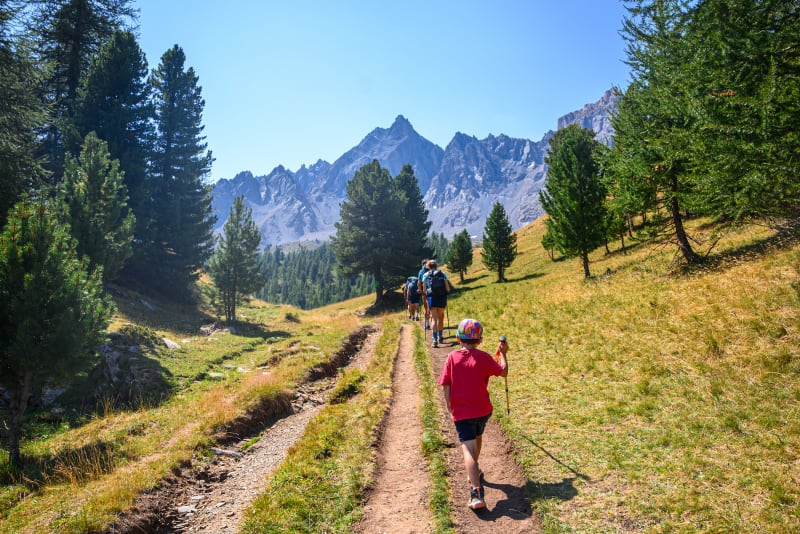
Today, the goal was to go all the way and reach Lac Miroir. We left around 9:30am and made a quick stop in Ceillac to buy sandwiches and trekking poles, as we only had one pair. This time, everyone would have their own. We were lucky to have a big blue sky, with no risk of storms this time.
The day before, Glasgow had had great fun going up, coming down and exploring the edges of the path. Above all, she had learned very well to recognise raspberry bushes and help herself. However, we expected the steep path to be much busier in the morning, so we chose to leave her at the apartment this time. We met lots of dogs, but she is still a little young and playful for narrow trails like this one.
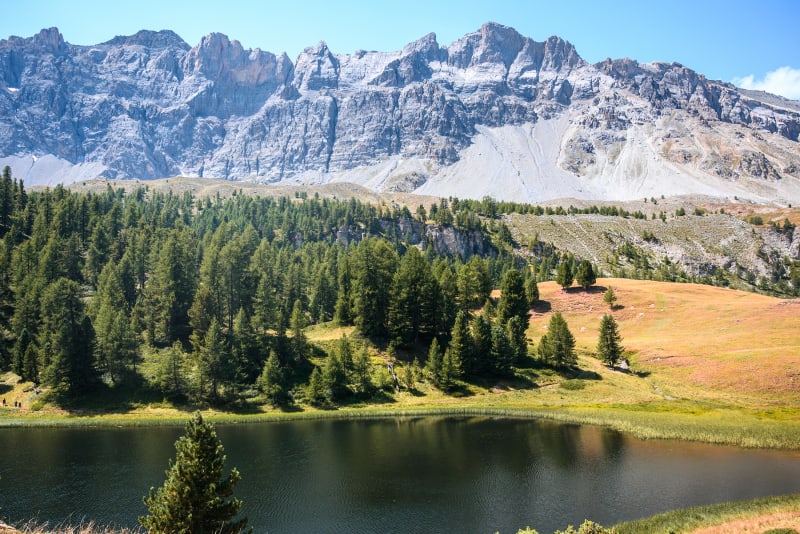
The climb is given as 550 metres of ascent over about 3 km, with an estimated walking time of 1 hour 15 minutes. With Victor, 6, and a few breaks, it took us about 2 hours to go up and a little less to come down. The hardest part is the first section. We had lunch above the lake. Here, you are at 2,214 m, among larch trees, very handy for sitting in the shade and eating quietly in the grass. If you carry on to Lac Sainte-Anne, with its more mineral setting, add about 250 m of ascent and 1 hour of walking. Lac Miroir is also called the Lac des Prés Soubeyrand. The climb follows the GR5, the Grande Traversée des Alpes, which links Lake Geneva to the Mediterranean.
In the evening, we had dinner at the Le Matefaim restaurant. Outside, there was a deluge and a thunderstorm. So why not give in to a raclette in August?
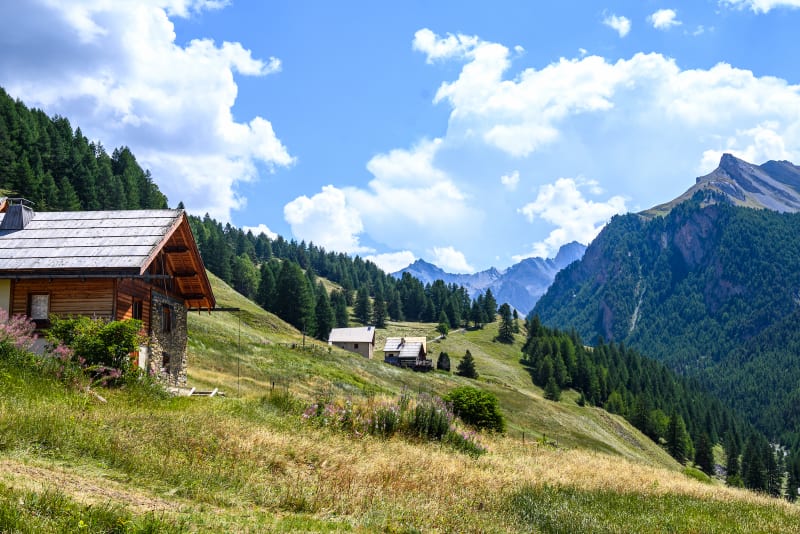
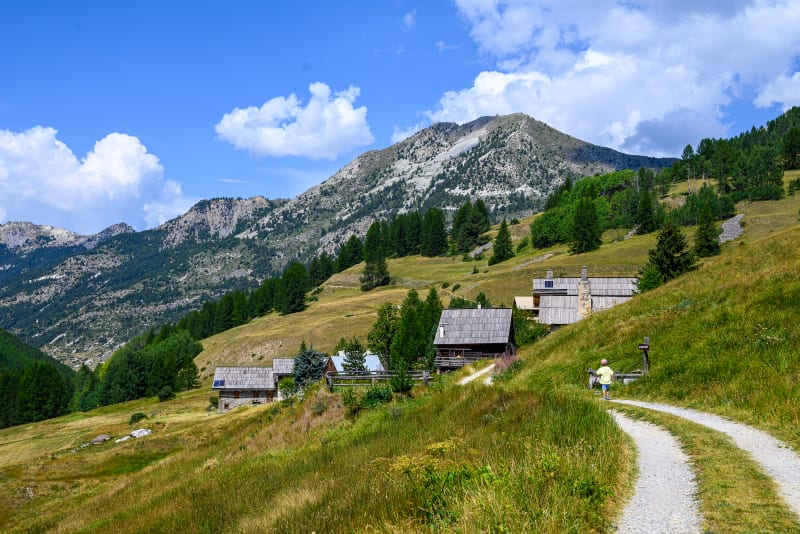
We woke up late: between the climb to Lac Miroir and the previous evening's raclette, Tuesday morning was rather quiet. We still did a short walk along the Mélézet stream, ideal for children, with no climbing at all. Victor and Glasgow dipped their feet and paws in the icy water. The “Chemin des contes et légendes” (Path of Tales and Legends) is a trail dotted with wooden sculptures created by the sculptor Gérard Ducruet. There is also a fitness trail, and in summer you walk along part of the roller-ski track.
In the afternoon, we walked part of the Balcons du Cristillan trail, which follows the stream from above. It is a 14 km loop through seven hamlets in the Cristillan valley, and some of the chapels can be visited. In Villard, we learned that the village was partly destroyed by an avalanche in 1978, and that the houses were partly rebuilt in keeping with tradition. Along the way, you get a fine view of the peaks of the Cristillan mountain, the Tête de la Cula and the Tête du Longet. We turned back before the storm, but we did not escape the rain.
On Wednesday, we had breakfast at the village café before setting off on a short walk. We went up to the head of the Ceillac valley, to the hamlet of La Riaille (it is a dead end, with no road pass leading anywhere else). One of the walks to Lac Sainte-Anne starts here. We walked a short stretch of it before crossing paths with a flock and its guardian dogs; with Glasgow, we preferred not to go near. A barbecue with bouncy castles for the children was planned in the village that evening, but it was cancelled because of the rain.
The evening was devoted to astronomy. It was 12 August, the day of the solar eclipse. We could have gone higher up, but the recommended spots were more than 45 minutes' drive away; we preferred to stay on the Ceillac plateau, which opens to the west. From France, the eclipse was partial, with 94.5% of the Sun covered in the Hautes-Alpes and the maximum around 8:23pm. We took a picnic and drinks and watched part of the eclipse. The real challenge was not the percentage but the height of the Sun: about 3° above the western horizon at the maximum, with sunset about twenty minutes later. At that height, a simple ridge, the edge of a forest or a band of cloud is enough to hide everything, and that is exactly what happened to us: unfortunately, a fairly thick cloud on the horizon spoilt most of the show. We made up for it with a NASA live stream on YouTube.
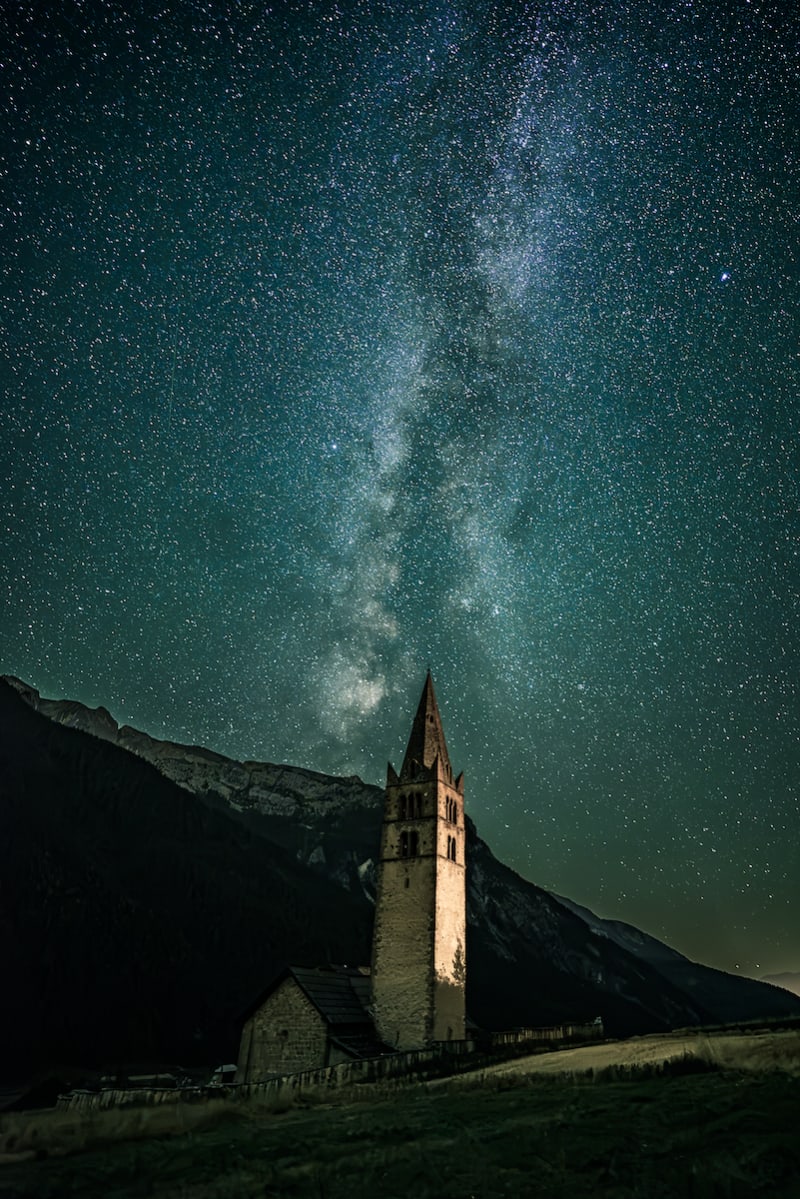
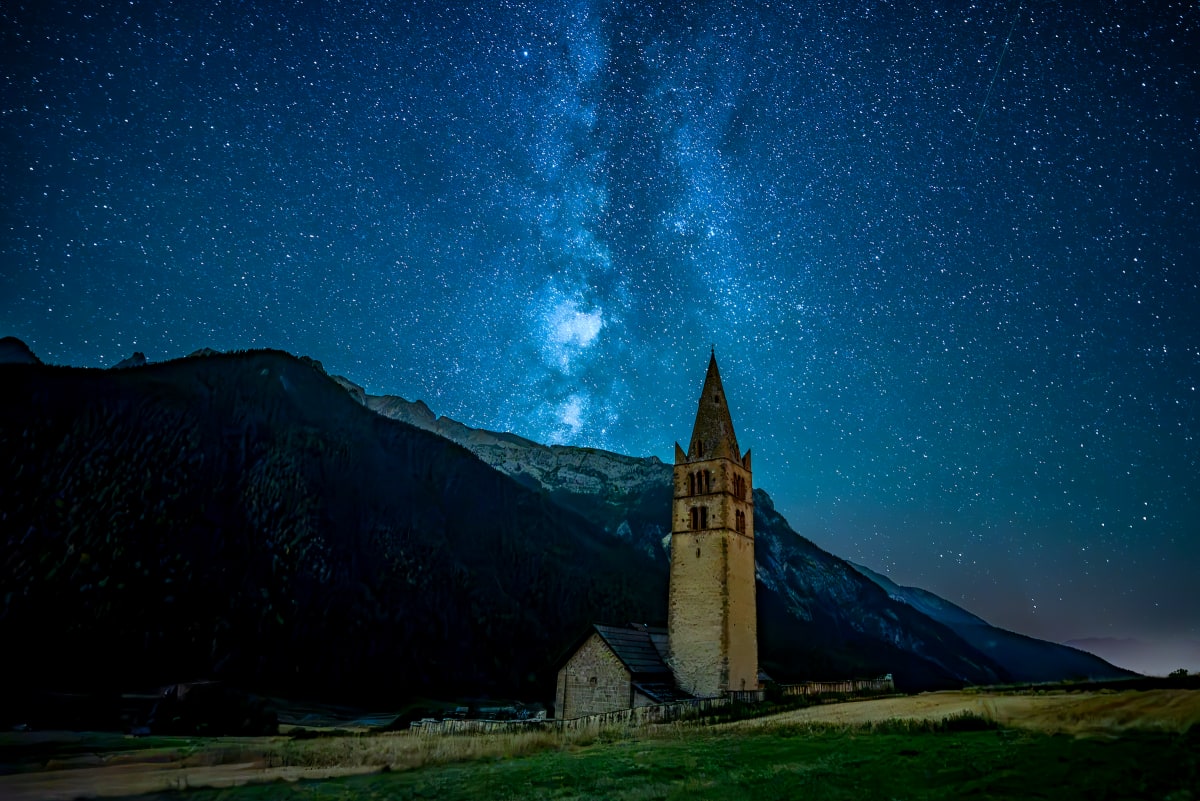
Then, a little later in the night, the Perseids streaked across the sky, with the peak forecast for that evening. We watched them, and I took the opportunity to photograph the Milky Way above the church of Ceillac. Here, in summer, the street lights go off at a quarter past midnight. As in the Cantal the week before, I had my tripod, my Nikon Z5 and my Viltrox 16 mm f/1.8 lens.
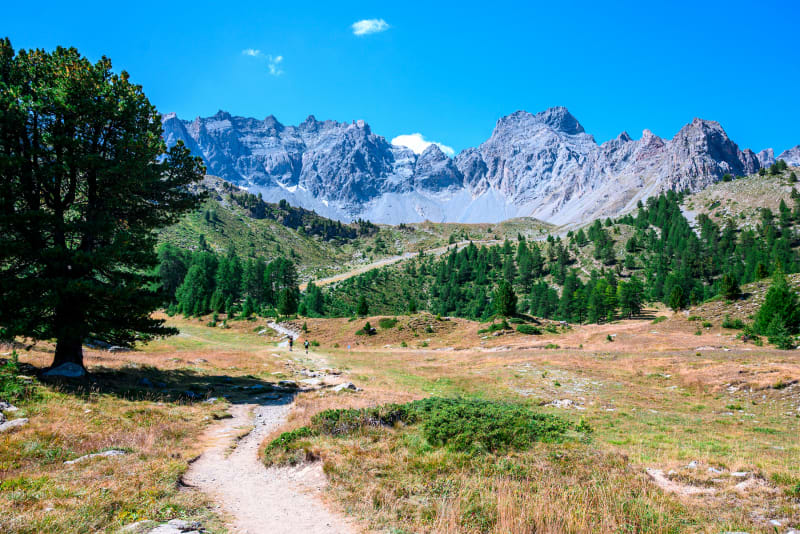
I set off alone for the climb to Lac Sainte-Anne: it was a bit too much for Sandrine and Victor, who preferred to stay in the village. Rather than repeating Monday's walk via Lac Miroir, I opted for a new route. At the head of the valley is the Fond de Chaurionde car park, a few kilometres above La Riaille, where we had been the day before. From there, the lake is signposted at 2 hours 20 minutes' walk for a little under 500 m of ascent, or 6.44 km there and back. Being alone and not taking many breaks, it only took me 1 hour 15 minutes to go up and 45 minutes to come down.
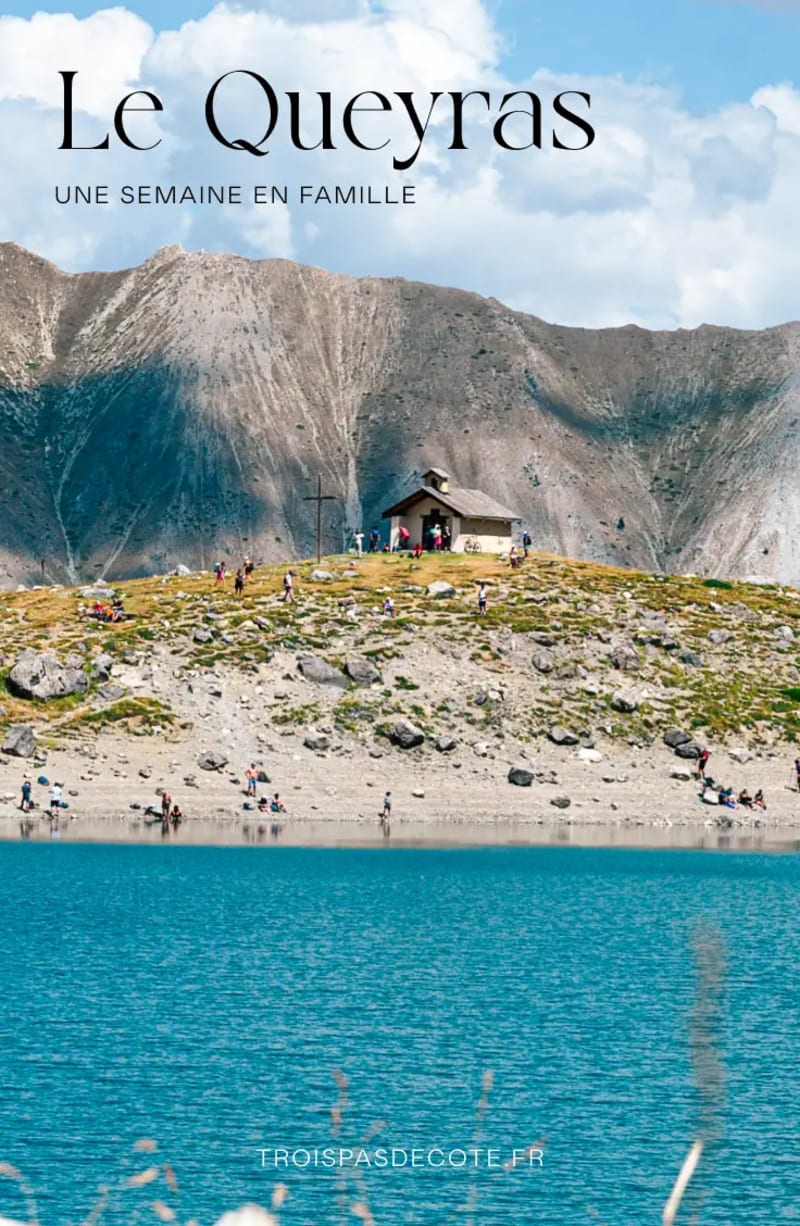
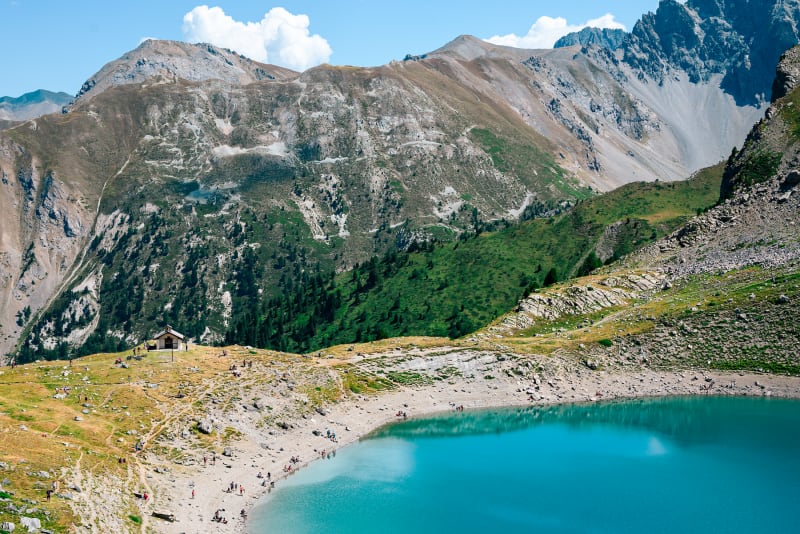
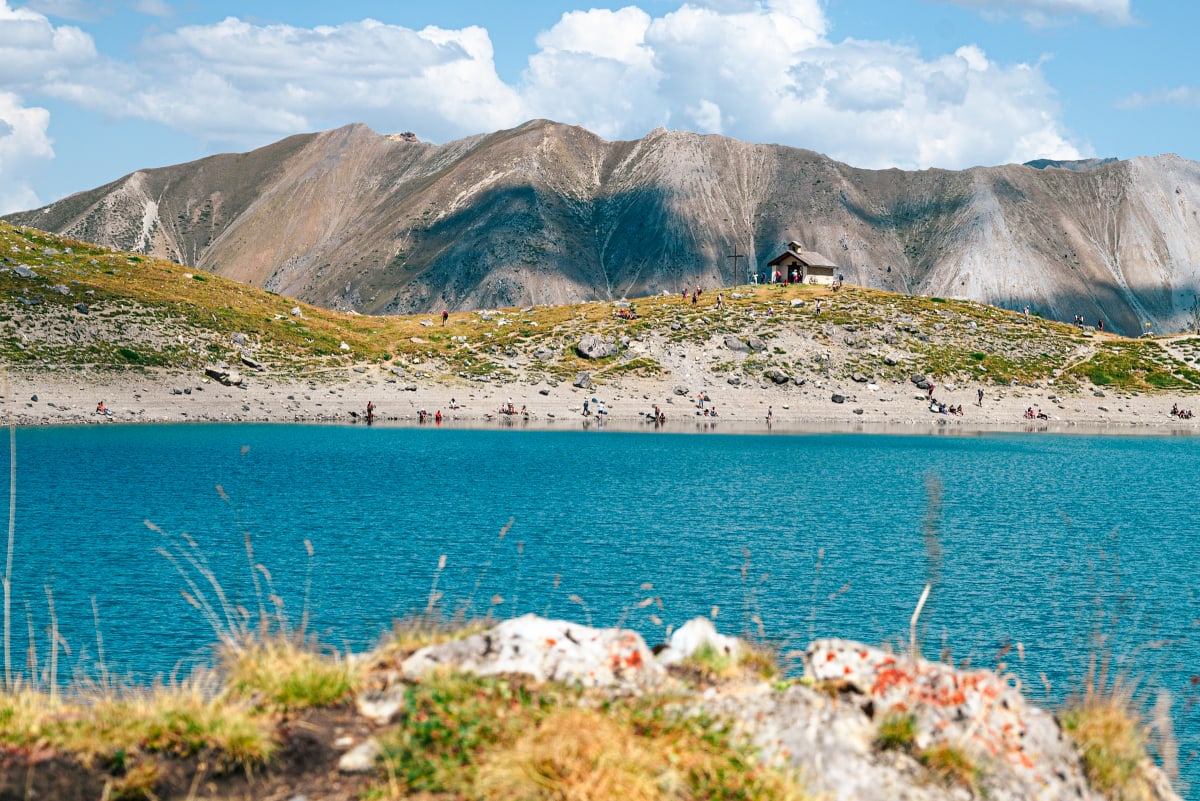
The lake itself is very beautiful, with its turquoise waters. It lies at 2,414 m, at the foot of the north peak of the Font Sancte. It is not very far from Lac Miroir, and yet they are very different: here, there is no meadow or little larch forest, everything is very mineral. I read that the lake is full of trout and that you can buy a fishing permit online or at the tourist office. I stayed by the lake for about an hour before heading down, walking round part of it to photograph it with the chapel above. On that side of the lake, there are far fewer people. Moving away a little to photograph the other shore (towards the path back to Lac Miroir), I came face to face with a marmot that had not heard me coming. It calmly went off to hide behind some large rocks. Note that you can bivouac here, without crossing certain limits reserved for the herds' resting areas, which are watched by patous. Also, this quieter side of the lake is infested with tiny flies reminiscent of Scottish midges.
At 8.5 hectares, Lac Sainte-Anne is the largest lake in the Queyras. It owes its existence to glacial overdeepening with a thick terminal moraine, and it has no outflow: its waters seep straight into the permeable moraine dam. The chapel is built on this moraine, and a pilgrimage has taken place there every 26 July since the 17th century, linked to the unexpected rescue of two young shepherds. The lake used to be called the Lac de l'Adoux, from a Gallo-Roman word for a spring.
To sum up, there are 2 routes up to Lac Sainte-Anne:
From the Chaurionde car park, at the head of the Mélézet valley, as I did.
From the Pied du Mélézet, combined with Lac Miroir.
For a little more challenge, you can also start from Ceillac and first walk up the valley, which adds a few kilometres; this is the route of the GR5. Note that the full loop from Ceillac to Lac Miroir and Lac Sainte-Anne and back is given as 12.6 km with 721 m of ascent: allow 6 hours, and it is rated difficult. It is Ceillac's “queen loop”, but it is out of reach with a 6-year-old, judging by Victor's experience.
In the evening, we tried the L'Étape Gourmande restaurant: very good, and we recommend it as much for the food as for the setting and the welcome. No Perseids that night, too many storms. We were right to watch them the evening before.
On our last day, we went back to continue the Balcons du Cristillan walk. This time, we drove a little further, as 14 km would have been too ambitious for the end of the week. We parked near the stream, then walked between Les Chalmettes and Le Tioure. We then spent some time by the water. Glasgow dug up the skull of a goat… yuck.
We were right to go out in the morning and early afternoon: the weather was awful at the end of the day.
A week in Ceillac is the right length if you come to walk. The village is enough to fill seven days without having to take the car every morning, and there is enough left for a second stay: the full Balcons du Cristillan loop that we never completed, paragliding, mountain biking, and the whole northern part of the Queyras that we did not touch.
What gives the place its character is that it is a dead end. The Mélézet valley does not lead to any road pass, so nobody passes through Ceillac by chance: the people there have come to be there. As a result, the village keeps a real village life, with its five restaurants, its bakery, its grocery and events running all week: a kite demonstration, children's shows, a village barbecue. Victor found plenty to do on the days we were not hiking.
It climbs fast. Lac Miroir means 550 metres of ascent over 3 kilometres, and Lac Sainte-Anne a little more. It is not a place for gentle strolls, even if there are a few: the walk along the Mélézet stream is flat, and it was actually Victor's favourite. Above all, no chairlift runs in summer. Unlike the Plomb du Cantal the week before, there is no way here to ride up and only walk down. Everything has to be earned on foot.
Over our seven days, the pattern hardly changed: a clear morning, clouds building after lunch, a storm in the late afternoon. Two of our outings were cut short because of it, and the village barbecue was cancelled. The rule is simple: set off early and plan quiet ends to the day.
With a dog, Ceillac works well for a week. The Queyras is a regional natural park, not a national park, so dogs are allowed on a lead. That difference matters, because the neighbouring Écrins national park bans them from its core zone, even on a lead. In practice, Glasgow walked with us almost every day: up towards the Pisse waterfall on Sunday, along the Mélézet stream on Tuesday, to La Riaille on Wednesday and on the Balcons du Cristillan on Friday. She spent the week on a lead without it bothering her (we have a 10-metre long line). There is water everywhere, shade under the larches, and enough ground on either side of the path to keep a beagle busy. She even learned to spot raspberry bushes on her own.
Two exceptions, both deliberate. On Monday, we left her at the apartment to climb to Lac Miroir: the path is steep and we expected crowds in the middle of August. Looking back, that was probably over-cautious. And on Wednesday, heading up to La Riaille, we turned back when we came across a flock and its guardian dogs. That is the main constraint in the area: the patous are there, and a walk up the valley floor can stop dead. There are some near Lac Sainte-Anne too, around the herds' resting areas, which is worth knowing before planning a bivouac with your dog.
In return for the storms, the sky clears at night. We picked the right week, with the 12 August eclipse and the peak of the Perseids on the same evening, but even without that, the street lights go off at a quarter past midnight and the valley becomes very dark.
If you are looking for a quiet mountain village, with demanding walks starting from your front door and high-altitude lakes less than two hours' walk away, Ceillac ticks all the boxes. If you are looking for easy strolls and ski lifts to save you the climbing, look elsewhere in the Queyras.
Ceillac offers enough to do for a week. We have not mentioned it, but you can also go paragliding or rent mountain bikes. If you have 2 weeks, you could visit the northern part of the Queyras, in particular Fort Queyras, a former fortified castle from the second half of the 13th century, remodelled by Vauban. You can also visit Saint-Véran, at 2,042 m, known as the highest commune in Europe and listed among Les Plus Beaux Villages de France (the Most Beautiful Villages of France). Above it stands the Paul Felenbok observatory, at 2,930 metres, one of the highest in Europe, behind the Sphinx Observatory at the Jungfraujoch in Switzerland, at 3,571 m. I had tried to book a night of stargazing there with the telescopes but, as soon as the ticket office opened in March, the places were gone before I managed to get one.
The observatory nights, run by the AstroQueyras association, sell out extremely fast. If you are planning a stay, set a reminder for when bookings open (they have a newsletter), usually in March. Otherwise, the Maison du Soleil in Saint-Véran, devoted to observing the Sun, is open during the day and works very well with children.
Ceillac is a village in the Hautes-Alpes, in the Provence-Alpes-Côte d'Azur region, in the Queyras Regional Natural Park. It lies at the head of the Mélézet valley, a dead end with no road pass, which explains how quiet the area is.
From the Massif Central, the route goes via Clermont-Ferrand, Lyon, Grenoble and then Briançon. Check the route suggested by your GPS before leaving: ours took us through the Fréjus tunnel and Italy, at a cost of €50. Another route goes further south via Gap.
Ceillac suits children who already walk well, as the climbs are steep. Our 6-year-old son reached Lac Miroir in a 2-hour climb. For quieter days, the walk along the Mélézet stream is flat.
The climb is given as 550 metres of ascent over about 3 km, with an estimated walking time of 1 hour 15 minutes. With a 6-year-old and a few breaks, allow about 2 hours up and a little less down.
Lac Miroir lies at 2,214 m among larch trees, handy for a picnic in the shade. Lac Sainte-Anne, at 2,414 m at the foot of the north peak of the Font Sancte, is much more mineral. At 8.5 hectares, it is the largest lake in the Queyras.
There are three options: from the Fond de Chaurionde car park, with a little under 500 m of ascent and 6.44 km there and back; from the Pied du Mélézet, combined with Lac Miroir; or from Ceillac, walking up the whole valley on the GR5.
Yes. The Queyras is a regional natural park, not a national park, so dogs are allowed on a lead. You do, however, have to deal with the flocks and their guardian dogs: we gave up on a walk towards Lac Sainte-Anne for that reason.
The pattern was the same almost all week: fine weather in the morning, clouds building in the afternoon, showers and storms in the late afternoon, then a sky that clears again during the night. It is best to set off early for high-altitude walks.
Enjoyed this article? Pin it on Pinterest!
Follow us on social media to hear about our next trips. Feel free to leave a comment or ask a question at the bottom of the page. See you soon.