By Geoffrey Ménissier, published on , updated on .
Also available in: 🇫🇷 🇪🇸 🇵🇹 🇩🇪 🇮🇹 🇳🇱
In short
We set off on a 4-day trek in the Alps. There were 6 of us, and the goal was to do the Tour du Beaufortain from Arêches. One night would be spent in a mountain hut, the other two bivouacking.
0 comments
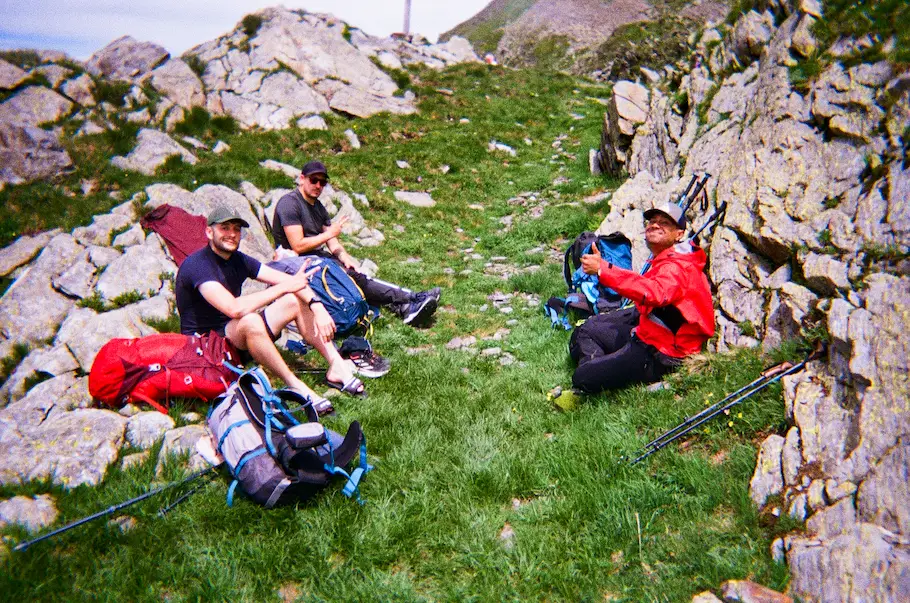
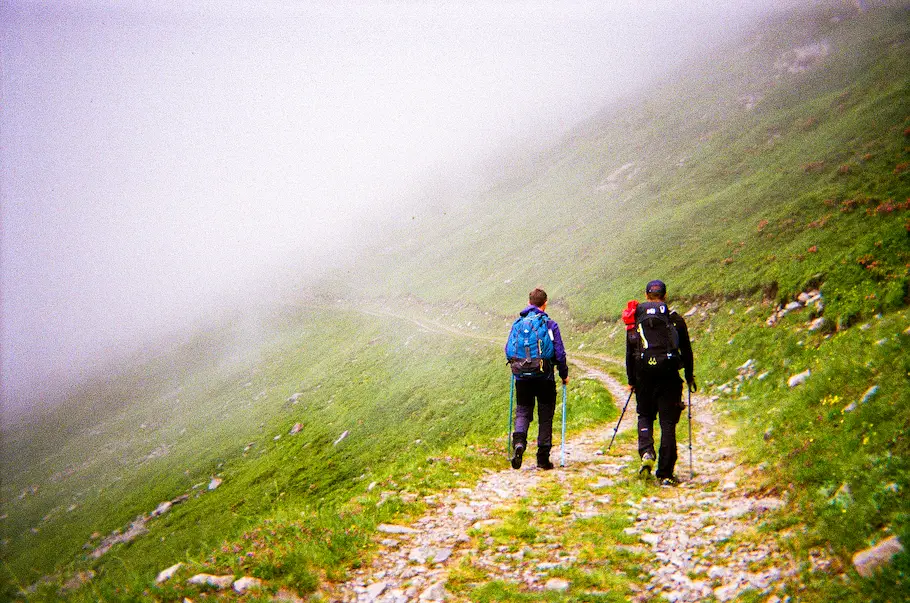
This article is a little different from the rest of the blog, as this time I went without Sandrine and Victor, in a group with 5 friends.
We were going to do the Tour du Beaufortain trek in the Alps, in 4 days. We contacted the mountain huts around March for July and, even so, two of them were already full. So the first night would be in a hut and the other two bivouacking (on half board), which meant we did not have to carry food and a stove.
So we set off for 4 days of walking. Having no trekking experience, I prepared for this hike about 2 months in advance. Trek Magazine rates this route as very difficult. In the first month, I simply got back into running and walked a bit more often. In the second month, I avoided alcohol, paid a little more attention to what I ate and trained a bit more (a run at least once a week, between 12 and 18 km). I would say that, in terms of cardio and legs, I was well prepared. On the other hand, with the weight of the backpack, the more the days went by, the more my neck hurt. Do work on strengthening your trapezius muscles.
Contents:
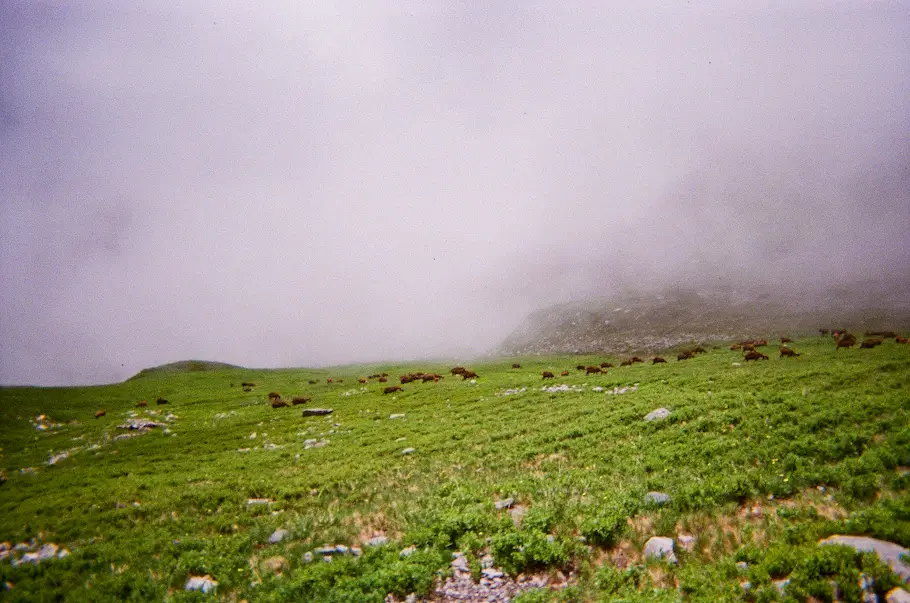
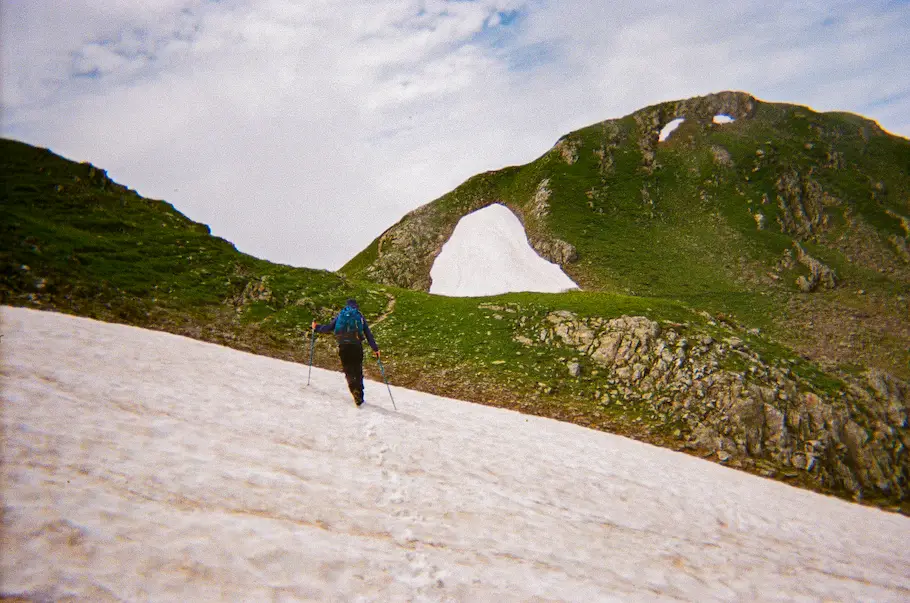
I already had some cold-weather gear from our trip to Norway. Even though it was July, the huts told us that snow and temperatures close to 0°C were not impossible.
So I had two fleeces, a sleeping bag, a 50-litre backpack, my windproof jacket and a few accessories. I bought new walking boots, trekking poles, a rain cover for my backpack and merino wool leggings.
For the bivouac, to keep costs down, I rented a lightweight tent and a comfortable trekking mattress through the Bivouac-location website. Both were delivered to my home a few days before departure: very handy.
As a bonus, I took some extra equipment such as a first-aid kit, a power bank and a survival blanket to insulate the tent. The goal was a backpack under 8 kg (water included); in the end, it was closer to 11 kg.
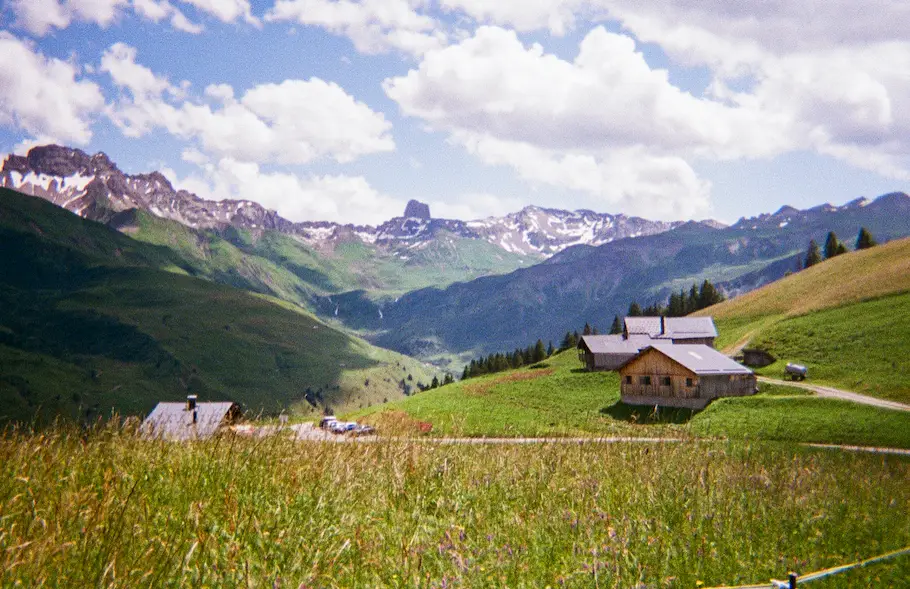
As my camera was too heavy, I bought a disposable Kodak for this trip, whose look reminds me of the holiday photos of our childhood. Hence the vintage feel of the photos in this article.
As for logistics, I took a regional train (TER) from Paris to meet Daniel, Simon and Christian in Troyes. We drove to Chambéry to pick up Stéphane, then on to Arêches to meet Guillaume. Once the group was complete, we spent the night before the start in a hotel. Good to know: you do not need a car for this trek, as free shuttle buses run from Albertville station up to Arêches. Regional trains from Chambéry to Albertville start at 5 euros, if you are coming from Paris or Lyon, for example.
You will find my complete bivouac checklist at the bottom of the article.
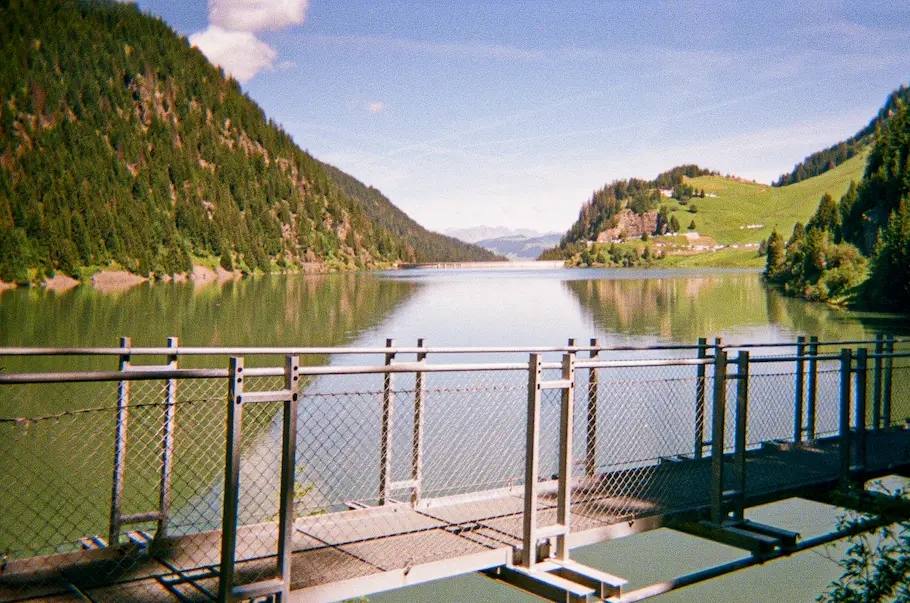
We had arrived the day before and slept at the Hôtel Viallet, where the welcome is very friendly. The start was planned for around 8am, and we first stopped at the bakery for sandwiches before tackling the trek.
The distances and elevation figures come from Trek Magazine; on the ground, we used the GPS track in the Komoot app (links in the comments below). For water, I filled my bladder according to the difficulty of the day, between 1.5 and 2.5 litres.
The climb starts hard from the very beginning, in a forest still in the mist. We then had a calmer stretch, where we came across three Patous guarding the flocks. They are impressive, and you are strongly advised not to try to approach these dogs. Then we started the climb to the Pas de l'Âne, where we had our picnic. The view was magnificent and the weather had cleared. The early afternoon began with a long descent, with a few snowy sections, before passing the Col des Lacs and then the Col de la Bathie. The late afternoon was an easy walk among the cows, but watch out for the last kilometre: it is a little trap, with a steep climb at the end.
With Stéphane and Guillaume, I reached the Refuge des Arolles around 6pm, and we had a beer before showering. The hut's terrace has a magnificent view of the sunset over Mont Blanc.
Simon arrived some time later. But Christian and Daniel arrived nearly 3 hours later, after struggling on the first snowy descents. In the evening, we had good lasagne. That night, I did not sleep much given the volume of snoring in the dormitory: bring earplugs.
At breakfast, it was a cold shower: Christian, Daniel and Simon gave up, given the difficulties they had met on the first day. Stéphane, who had organised the trek, decided not to carry on if we were not all doing it together. So, from the second day, only Guillaume and I were left.
The first part of the morning ran along the mountainside: beautiful and full of flowers, crossing a few streams and waterfalls. Then came a trickier stretch, down through the woods towards the Lac de Saint-Guérin; lots of roots and mud meant we made rather slow progress.
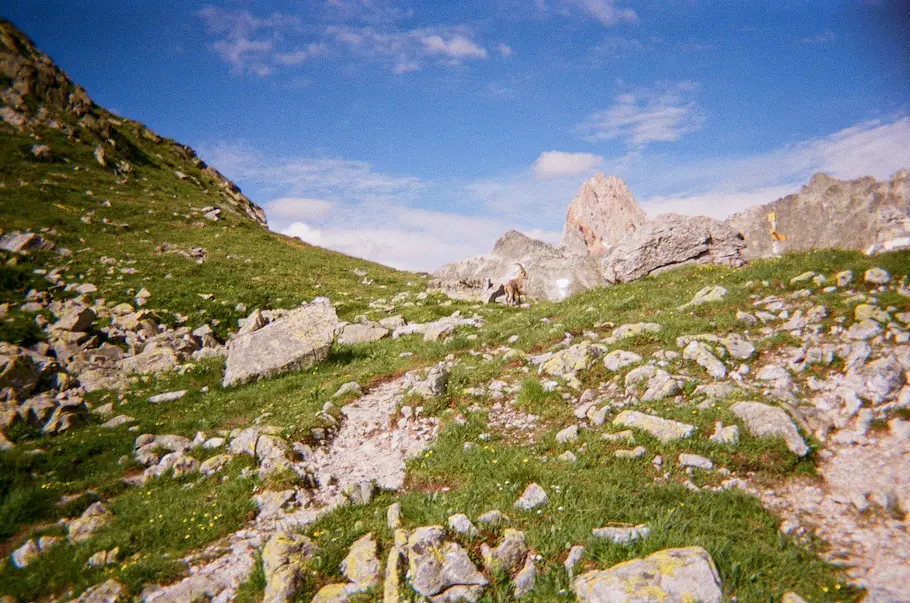
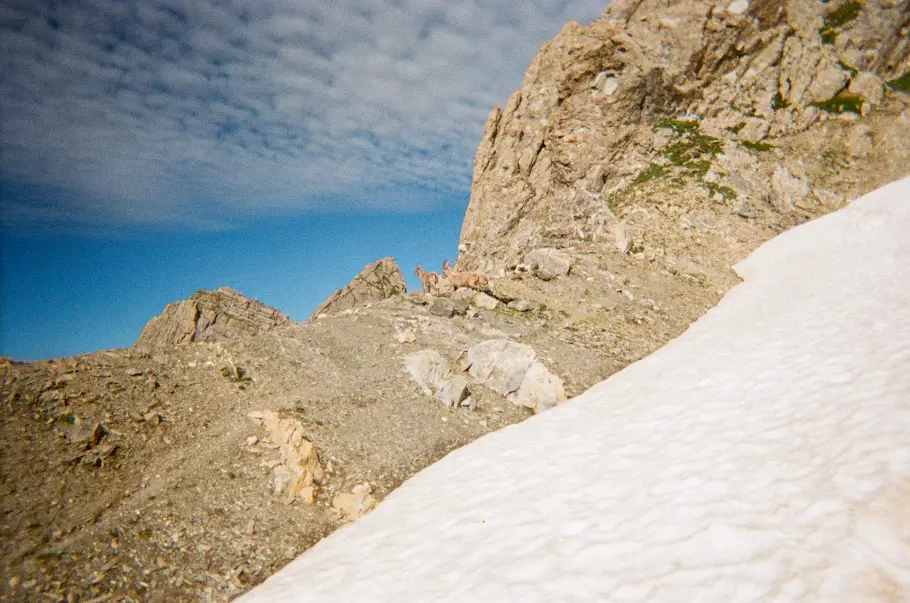
From the lake, after a short break, we climbed back up to the Lac des Fées, where we had our picnic. The climb was quite gruelling in full sun. We then carried on towards the Cormet d'Arêches (2,107 m) and the Col du Bresson (2,469 m). Once at the top, there is a little more air. The end of the day was hard: there was no real path any more, and we climbed through the rocks. When you reach the top, you can see the hut, only about ten minutes away. I was greeted by two ibexes watching me go by.
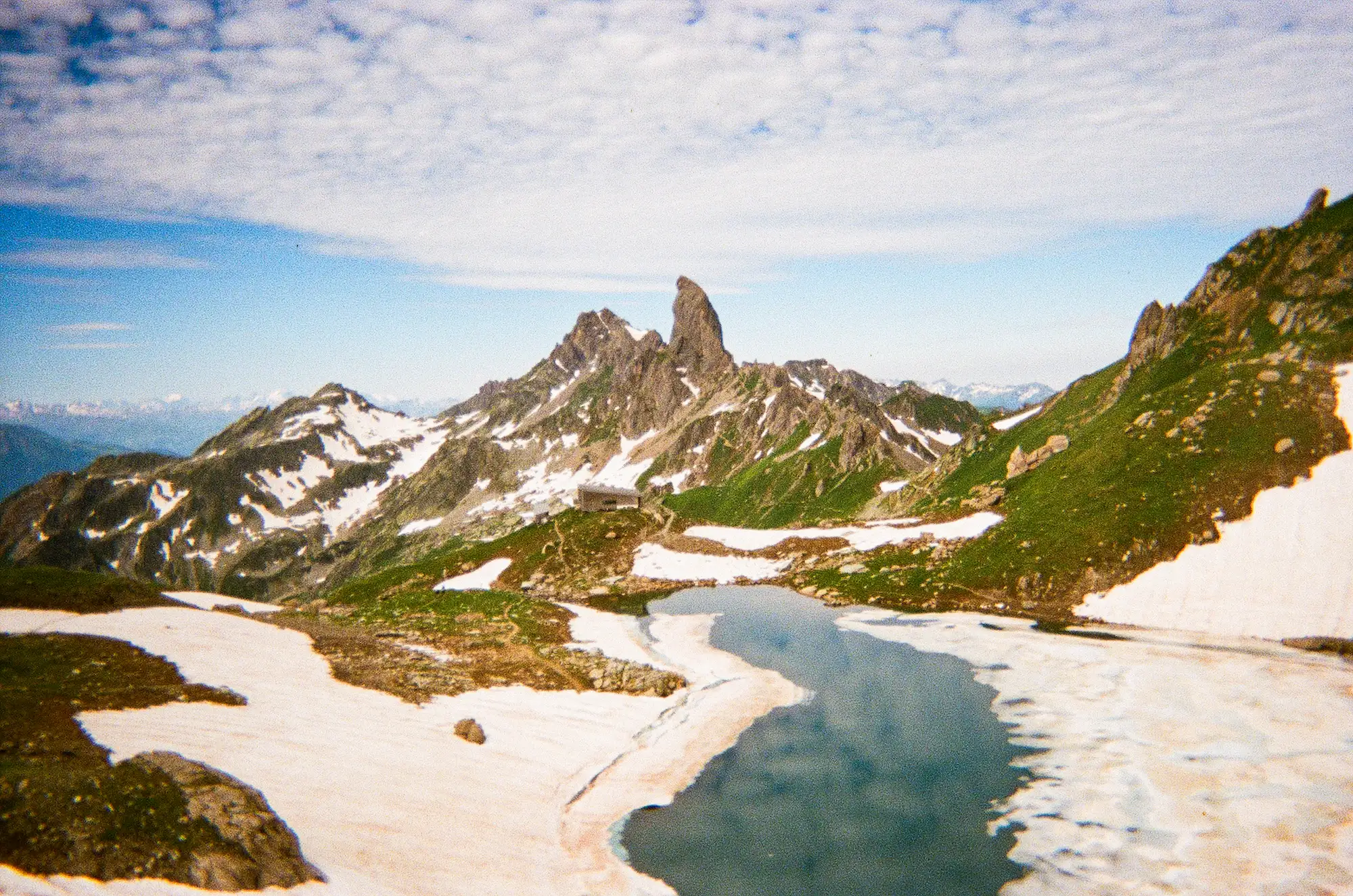
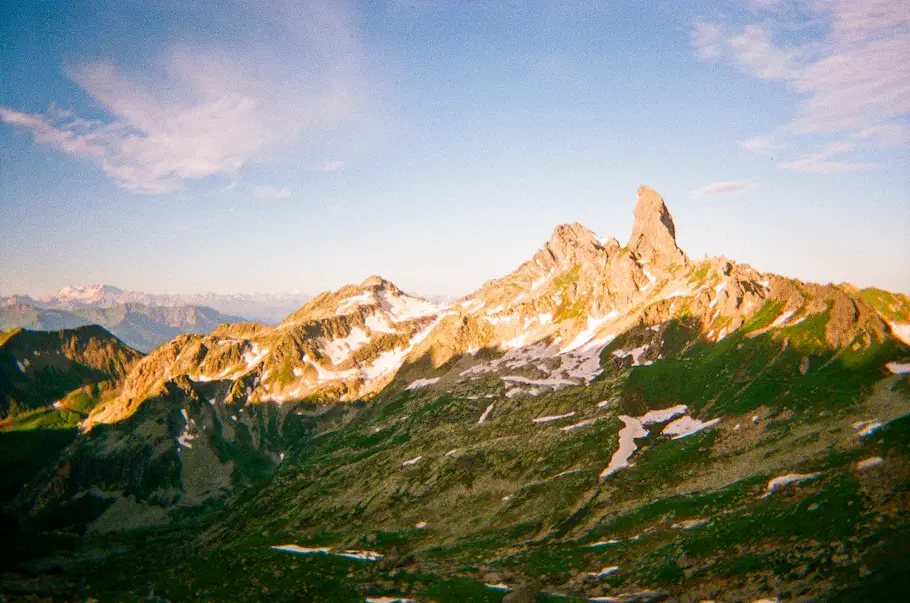
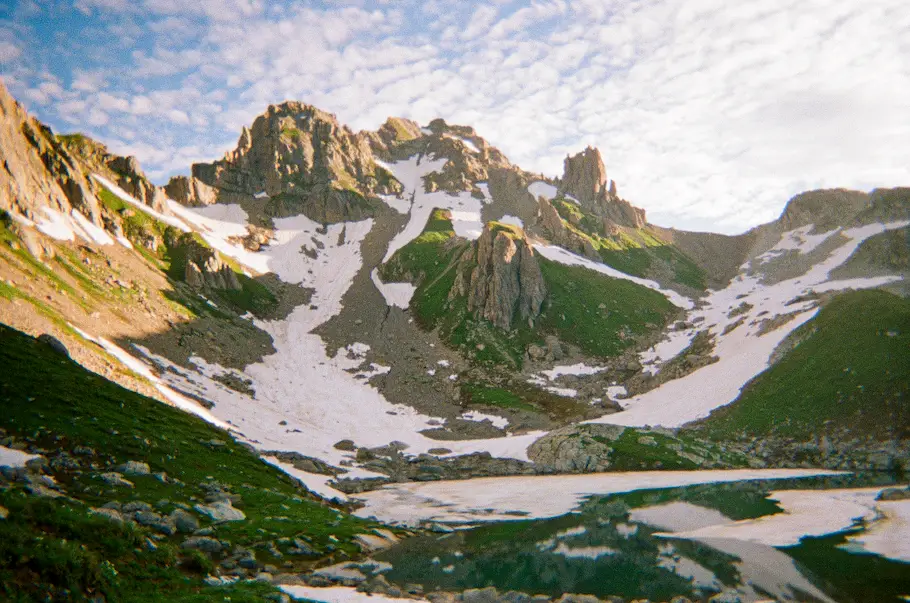
The hut is the most beautiful of the trek, with large picture windows looking out on the Pierra Menta. It sits on the edge of a small lake that was still partly frozen. However, there are no showers here, only washbasins for a quick (and cold) wash. At dinner, we chatted with other hikers over a mafé before pitching our tents for the night. For me, it was the hardest of the 4 days.
Having no experience of mountain huts, I discovered a rather military organisation; they have no choice, given the number of meals to serve in a short time. Afterwards, the seasonal staff clear and tidy up, then prepare the next morning's breakfasts and the packed lunches. During the day, they clean (hut, showers, toilets), make the beds, restock food supplies and serve the new arrivals (dessert and drinks in the afternoon).
In the morning, I got up before Guillaume and, from the hut's terrace, I watched at least 6 ibexes coming close to the tents. I did not use the merino leggings I had brought: in the end, the sleeping bag and the survival blanket (to insulate me from the damp) were enough to keep me warm. The rented mattress was good quality, except that the ground sloped slightly and I felt as if I was sliding several times during the night.
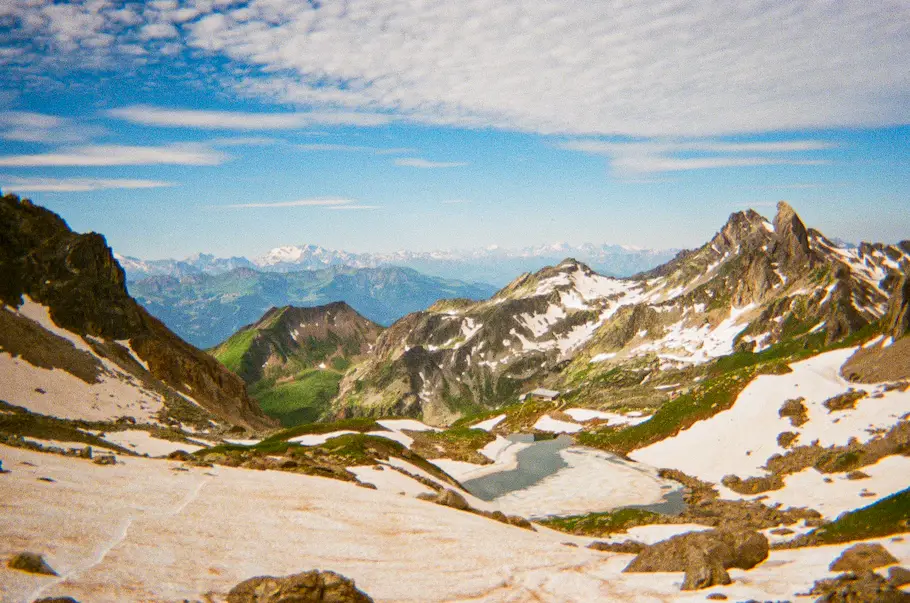
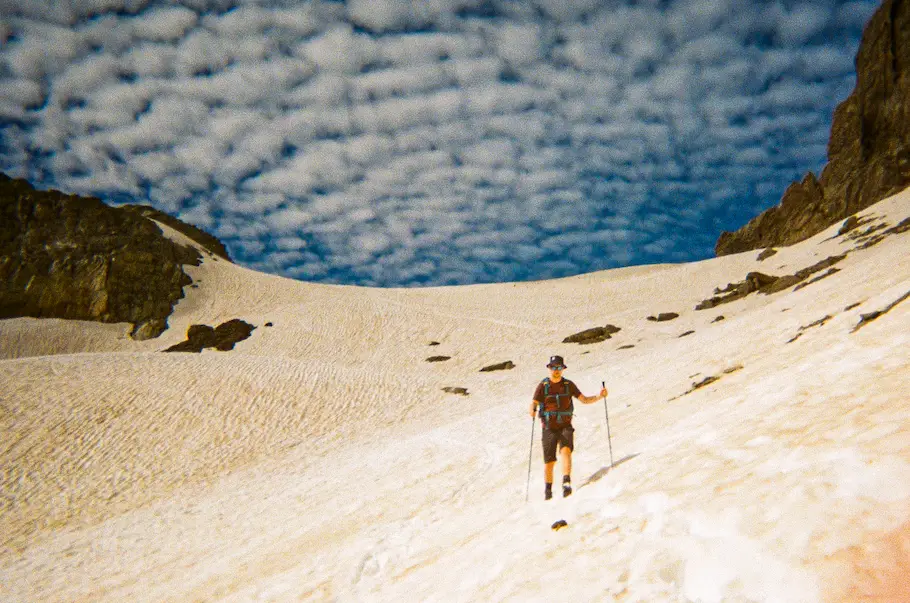
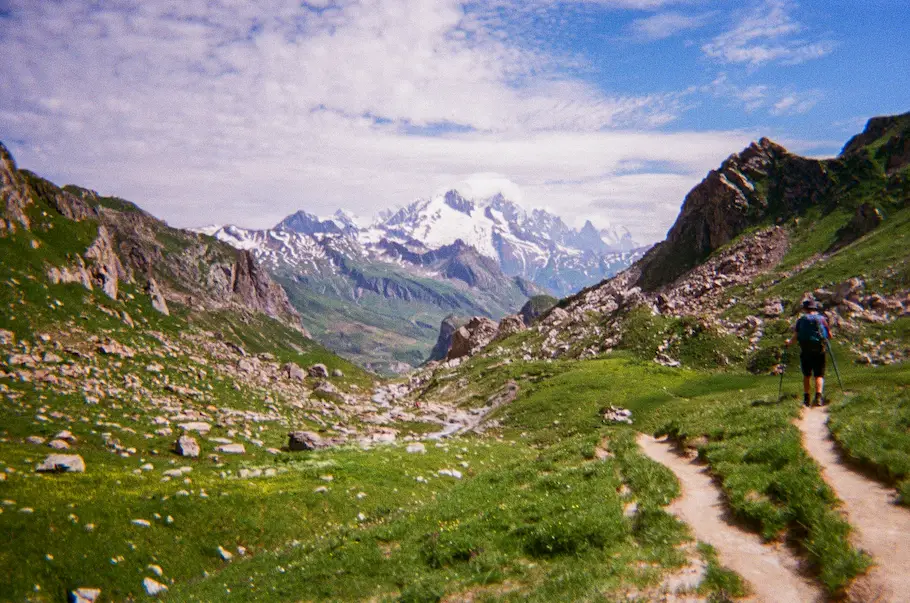
It was almost a “rest” day compared with the others, with only 13 km to cover and much less climbing than the first two days. However, we started hard by climbing the Col du Grand Fond, which overlooks the Lac de Presset. This is the highest point of the trek: 2,671 m.
Before going down the valley (the Combe de la Neuva), we had a good 45 minutes entirely in the snow. The descent is fairly easy, the view magnificent, and we crossed the Neuva stream several times. Towards the end, before lunch, we chatted with hikers doing it the other way round. The signs gave them 3 hours of climbing, which is almost the time it took us to come down. Some had not expected the pass to be under snow.
After lunch, we followed a short stretch of the D902 road towards Les Chapieux (the Raja chalets). Then came the climb to the pass and the Refuge de la Croix du Bonhomme. In the end, the day was not so easy: the climb seemed endless among the sheep!
At the hut, we took the opportunity to shower; here, showers cost extra. As we were on a section of the Tour du Mont Blanc route, there were many more people, and many foreigners. The Refuge du Col de la Croix du Bonhomme can sleep 115 people in summer. As storms were forecast for the night, we tried to pitch our tents somewhere that seemed a little sheltered from the wind.
We shared the evening croziflette (a tartiflette made with crozets, small Savoyard pasta squares) with Estonians, Spaniards and a Frenchwoman, with whom we walked part of the way the next day.
The night was a little restless, as the storms did come. I slept peacefully from 10pm to midnight before being woken by the lightning. One of my tent poles broke; I managed to plant what was left of it in the ground to finish the night almost sheltered but, as I was in a sort of hollow, the floor of the tent let in some water, and I felt as if I were floating on a raft on my mattress (which held up perfectly). The survival blanket kept the damp away, and the sleeping bag stayed almost dry. I went back to sleep until 6am. After packing up the tent, I joined the others at the hut in the mist. Breakfast is served quite early, around 7:30am.
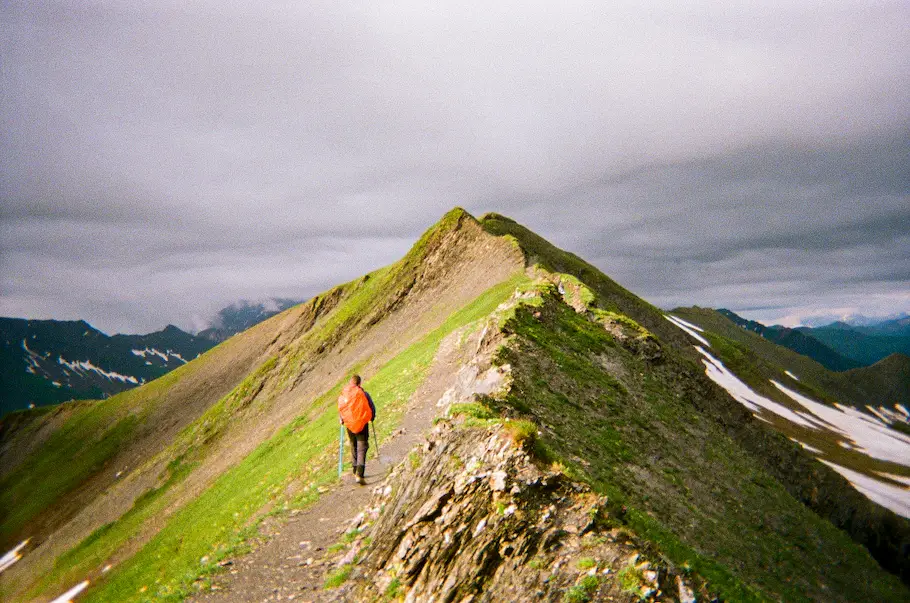
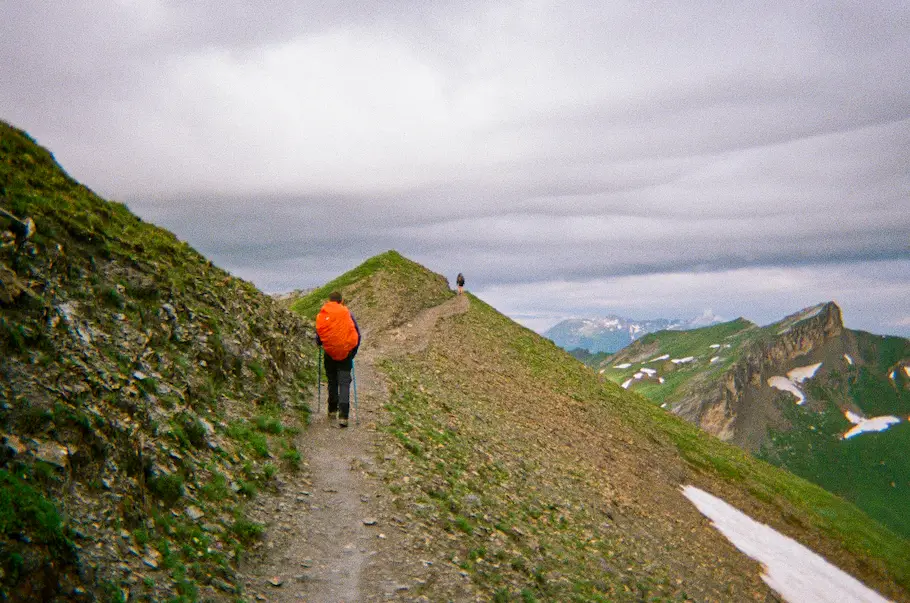
This was the day with the most kilometres to cover, but much less climbing than the first two days. With 2,000 metres of descent, it is downhill for almost the whole way back to Arêches. Trekking poles really help to protect your knees.
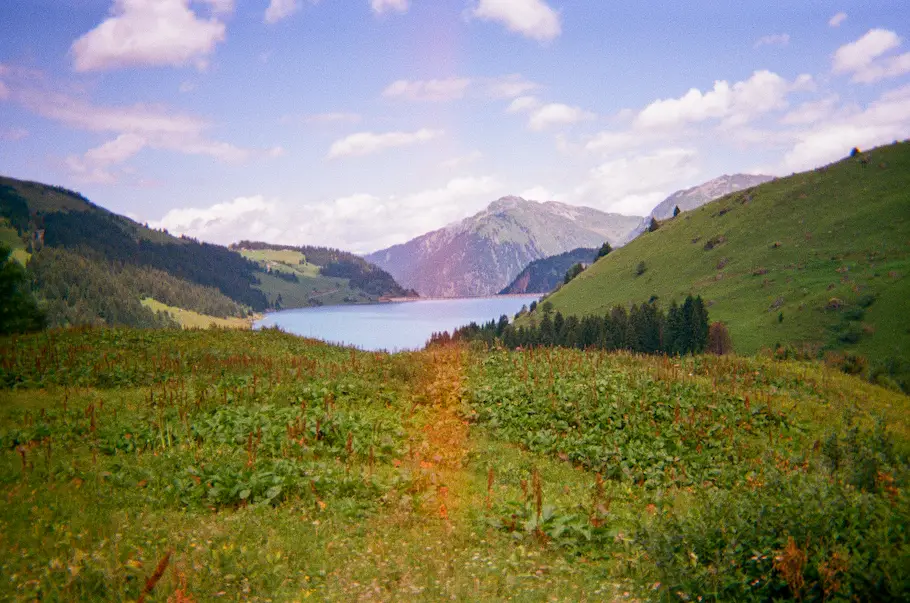
A few showers were forecast for the morning, so I set off in leggings and a rain jacket, glad in the end that I had not carried them for nothing. We set off along the Crête des Gittes, watching our feet, as the path is quite narrow in places. But the view is worth it on both sides of the ridge. The descent took us to the Plan de la Lai, and from there we climbed to the Grande Berge viewpoint, which overlooks the Lac de Roselend. We went back down to Treicol to follow the lake to its dam. We took the opportunity to change back into shorts and T-shirts, then had lunch with a view over the lake.
With my socks and shoes wet for almost two days, I was starting to get some nasty blisters. Plasters were no longer enough; fortunately, I had brought adhesive tape, which let me carry on without too much pain.
We climbed one last time from the lake to the Col du Pré, passing the hamlet of “Boudin”. I was doing quite well, even though the 23 km was taking its toll, but after a stop to chat with some hikers, I felt my knee lock up, and I did the last 3 kilometres really slowly. Guillaume got ahead of me, until I saw him coming towards me: he had taken the wrong path and treated himself to an extra kilometre by walking a loop!
When we finally reached Arêches, we went back to the hotel from the Friday night, where Guillaume had left a bag during the trek. As it was market day, we also bought some saucisson. We had a bare minimum of energy left, and we still had to cross the village to reach the Airbnb that had been booked for 6. With just the two of us, we each had our own room with a bathroom: bliss. In the evening, we went out to a wine bar, “L'Accord”, which also serves good sharing boards.
Here is my checklist for a bivouac trip:
Apart from the sunglasses and the gloves, I used everything. I could have left the thick fleece behind, but we were rather lucky with the weather. It was very pleasant to have clean, warm clothes after the shower to relax on the huts' terraces, where the temperature drops very quickly in the evening.
To round off this trek in the Beaufortain, in the morning I bought a clean T-shirt and socks so as not to smell too much on the journey. I also took the opportunity to bring back some Beaufort cheese as well as the saucisson, to share with Sandrine and Victor! A free bus took us to Albertville, where we took a regional train to Chambéry and had lunch opposite the station. I then caught a second train to Lyon and the TGV to Paris. At the end of the day, I found a bit of strength to stop at Nation Photo in Châtelet and drop off the films from the Kodak.
Feel free to comment on the article with any remarks or questions. See you soon.
Enjoyed this article? Pin it on Pinterest.
Follow us on social media to hear about our next trips. Feel free to leave a comment or ask a question at the bottom of the page. See you soon.