By Geoffrey Ménissier, published on , updated on .
Also available in: 🇫🇷 🇪🇸 🇵🇹 🇩🇪 🇮🇹 🇳🇱
In short
We set off by train to Munich. From there, we went on a road trip through southern Bavaria and crossed the Tyrol (Austria and Italy) to reach the Dolomites.
0 comments
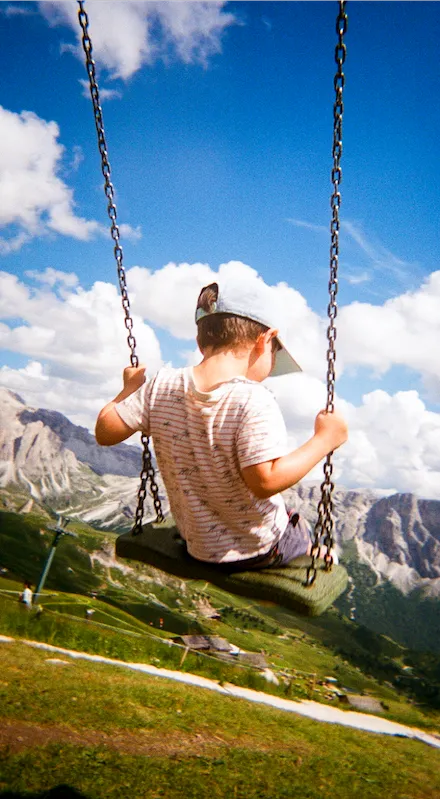
In recent years, we have travelled a lot in France: the Dordogne, the Lot, the Manche, the Camargue, Haute-Savoie… Victor had not really discovered Europe yet, apart from a weekend in London and another on the Belgian coast. So we were very keen to go abroad, and this two-week road trip between the Tyrol and the Dolomites had appealed to us for a few years.
For this two-week trip, we chose a more responsible way to travel, taking the train from Paris to Munich rather than flying. Once in Munich, we would rent a car through BSP Auto, a solution we have already used successfully several times.
We planned to spend a day visiting Munich, then head into southern Germany, on the Austrian border, to discover Bavaria. Next, we would quickly cross the Tyrol (Austria and Italy) to spend a week and a half in the Dolomites. This road trip is a loop: we would return to Munich to take the train home. We had thought about going on to Venice and leaving from there, but that would have added quite a lot of driving.
Contents:
We left Paris on Friday morning, hoping not to miss our train: it was the day of the Olympic Games opening ceremony, and the capital was pretty much locked down. In the end we were on time but, after about ten minutes, we learned that several arson attacks were blocking high-speed trains all over France. We were lucky to be able to leave, as thousands of travellers whose trains were later in the morning were stranded in stations. Ours left the high-speed line and carried on towards Strasbourg, where we arrived almost 3 hours late. So we missed our connection in Mannheim; the conductors advised us to get off at Karlsruhe instead and take another train (which we also missed by a few minutes). In the end, we took the next one and arrived in Munich almost 6 hours later than planned. Cooperation between the French and German operators was really good, and we did not have to do anything about our tickets. The conductors we met knew about the situation and simply told us to take any train to reach our destination at no extra cost.
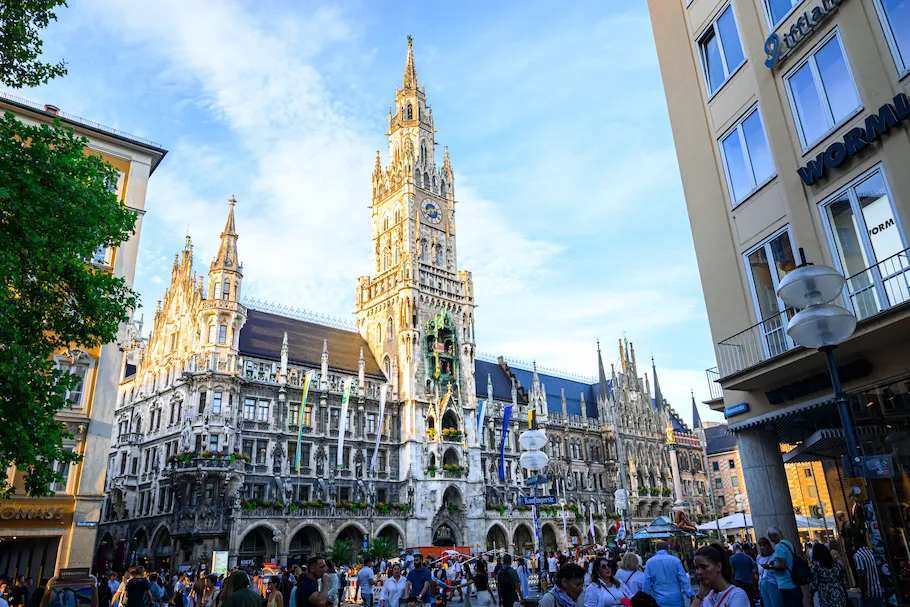
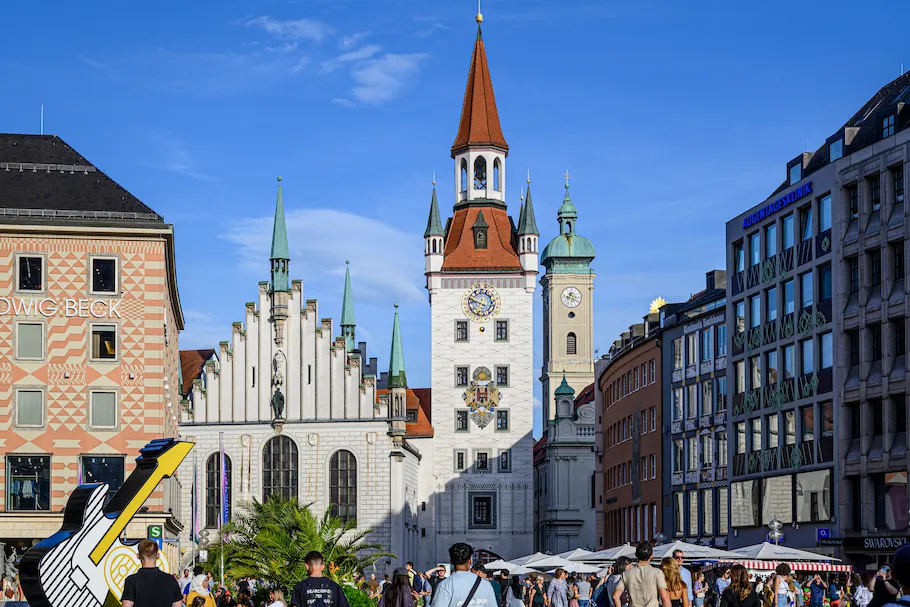
Munich was the starting point of the road trip. We had planned to visit the Bavarian capital but, with half a day less than planned because of the delays, it was a whistle-stop visit. On Friday evening, we made do with the historic centre around Marienplatz, then ate at the “Biergarten”, the famous open-air beer garden where you can enjoy Bavarian beer with traditional sausages or pretzels. The square is part of the Viktualienmarkt, a 200-year-old food market.
We did not have time for the visits we had originally planned: the “Englischer Garten” park in the north of the city and the “Munich Residenz”, the palace of the dukes and kings of Bavaria. We collected our car on Saturday at noon from the Keddy agency near the station (a subsidiary of Europcar), and headed south to spend 3 days visiting Bavaria.
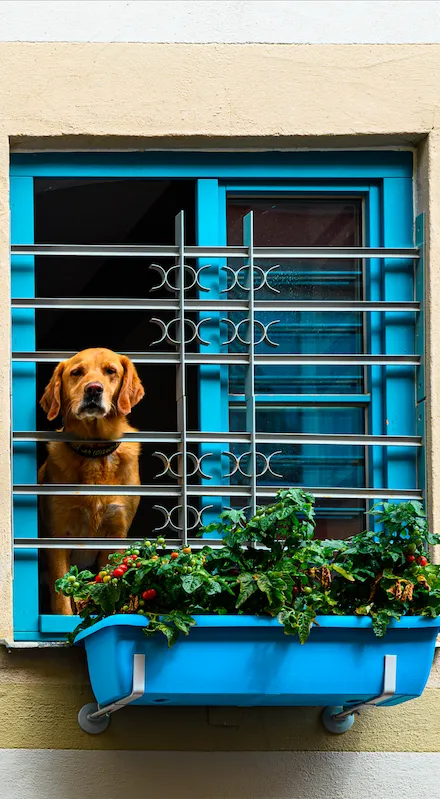
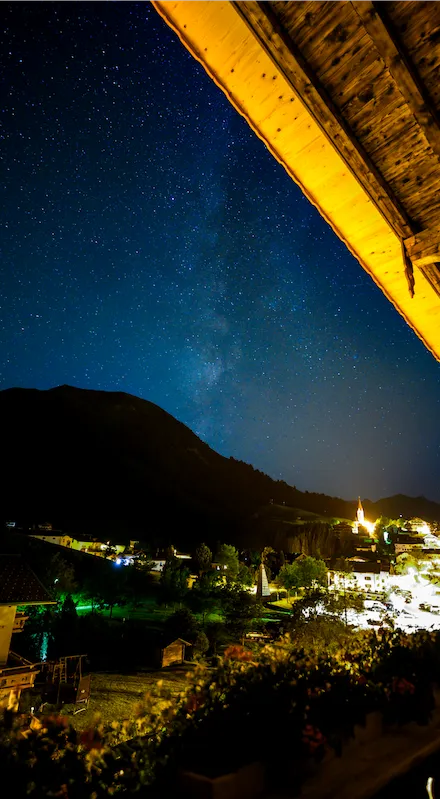
To visit Bavaria, we had looked around Füssen and Halblech, in the lake district, for somewhere to stay. In the end, we found what we wanted on the other side of the border, in Austria, in Berwang. It is a small ski resort in a beautiful setting, surrounded by mountains. We stayed at the Gästehaus Zugspitzblick, where the welcome is really very warm. Every morning, we had a hearty breakfast there before setting off to visit Bavaria and the Zugspitze.
That late afternoon, we simply explored the surroundings. We had a drink and a slice of cake at the “Café Pension Sprenger”. We discovered that we had free access to the village's outdoor pool, took a short walk to see it, and made sure to try it a few days later.
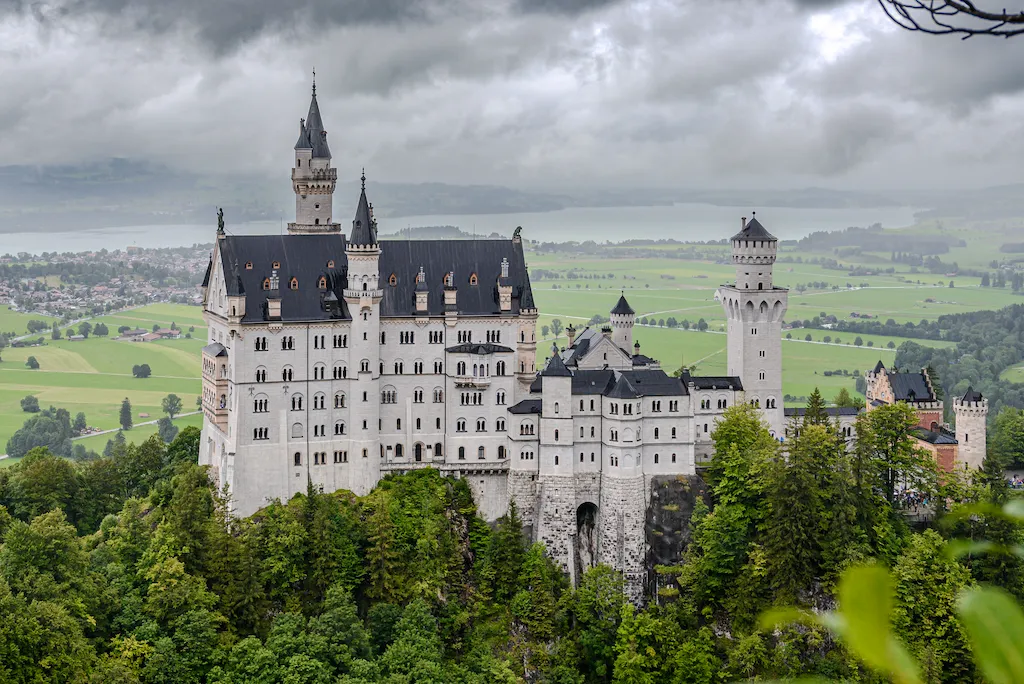
The first day (Sunday) was devoted to Neuschwanstein Castle, built for King Ludwig II of Bavaria from 1869. We had rather underestimated how popular it is, and we soon realised that tickets had been sold out for several weeks. You can get some in the morning for the same day, but you have to arrive early. We were offered tickets for mid-afternoon, a bit late for us, so we settled for seeing it from the outside. To get close to the castle, you can go by bus or horse-drawn carriage. We preferred a short walk through the forest (20 minutes, uphill). Once at the foot of the castle, add another 10 minutes to reach the Marienbrücke bridge, which offers a magnificent view of the castle, even if, as you can see in our photos, the weather was misty that day. Book your tickets in advance.
From there, you also get a fine view of a second castle, Hohenschwangau, built by Maximilian II of Bavaria, where the future King Ludwig II spent his youth.
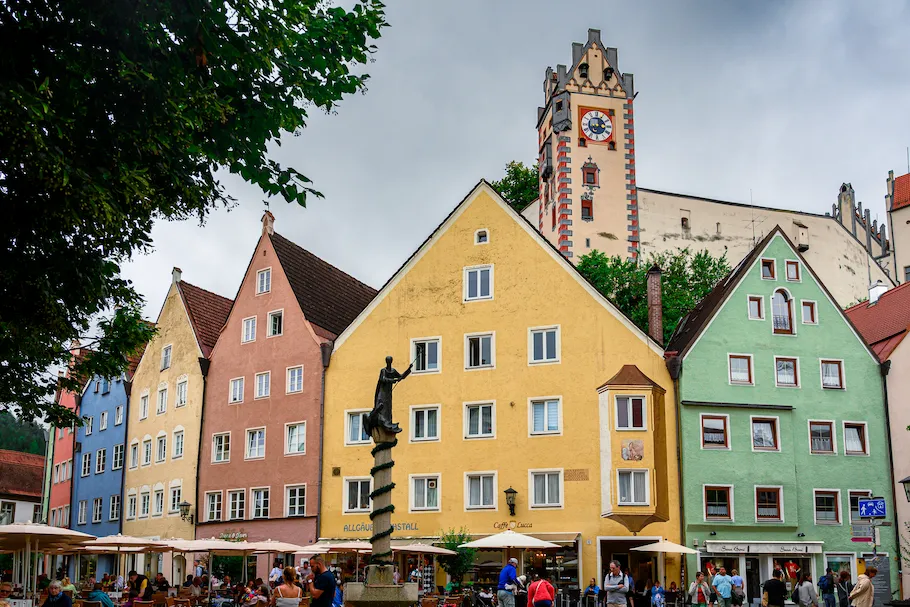
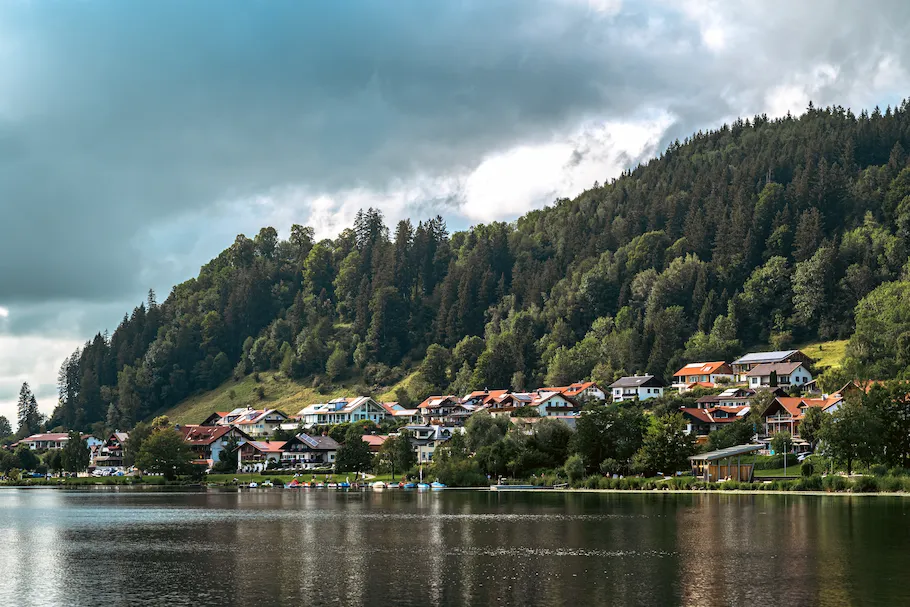
We then headed to Füssen for lunch at a traditional brasserie, “Zum Hechten”. After lunch, we explored the fortified town, whose façades are all in pastel colours. We walked up to St Mang's Abbey, which overlooks the town. After the visit, we drove north to walk around the Hopfensee lake; Victor went for a swim, but he was the only one in the water.
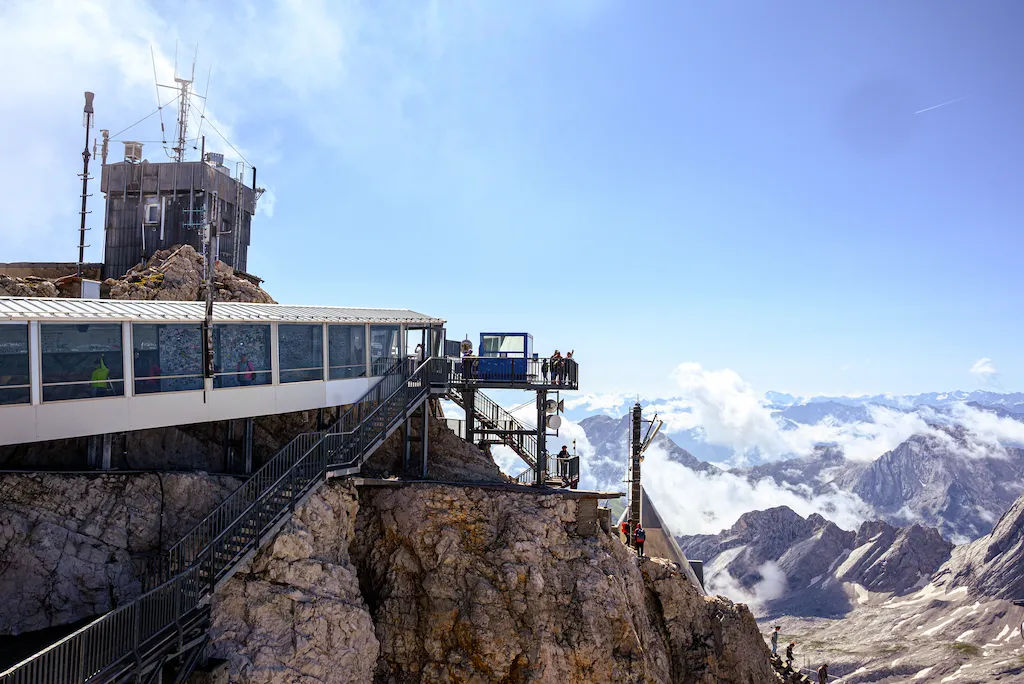
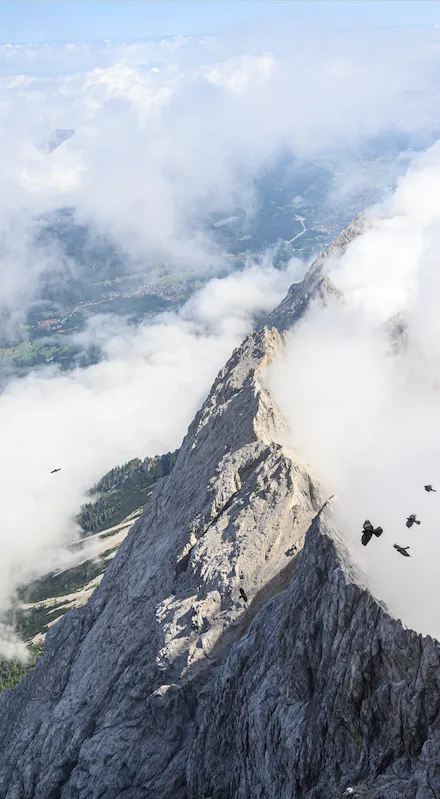
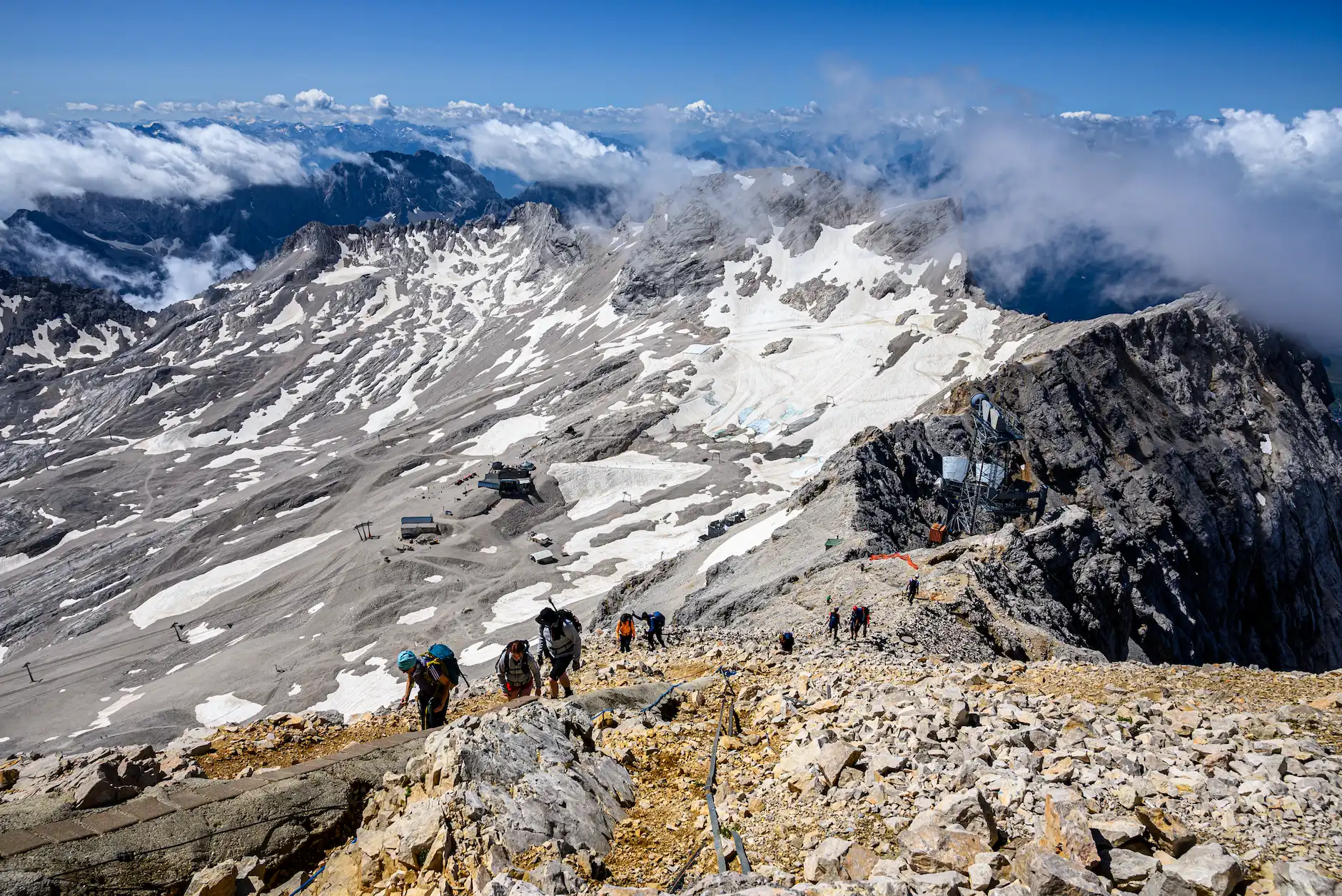
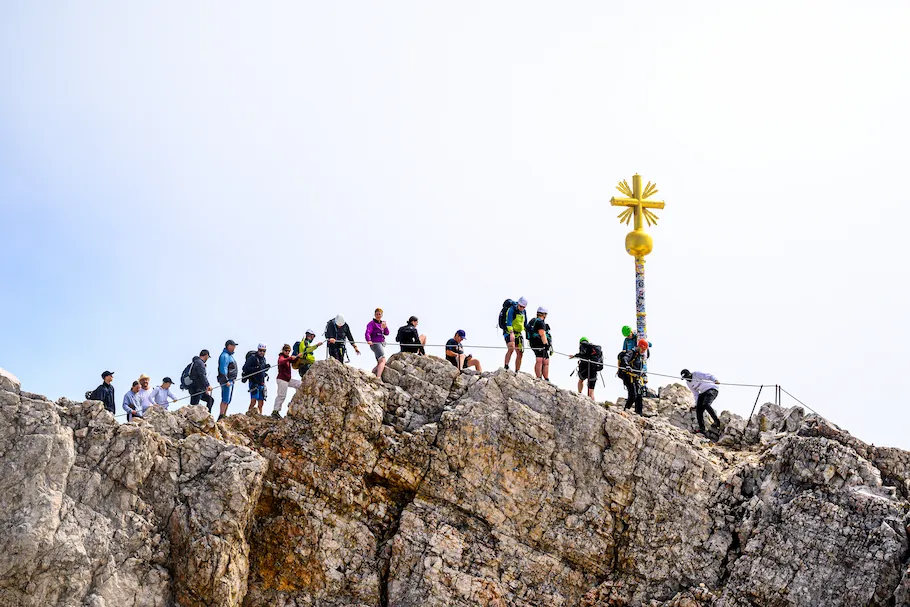
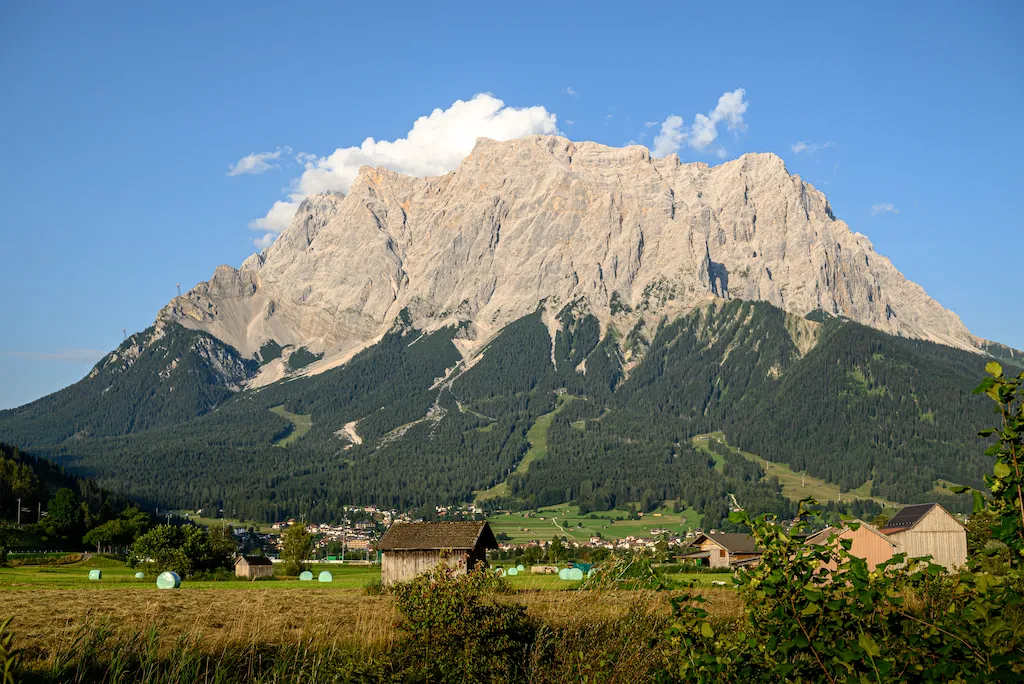
Our second day in Bavaria (Monday) was devoted to the Zugspitze. The summit of this mountain is in Austria, but it is also the highest point in Germany. From Ehrwald, we took a rather impressive cable car up to the summit, at almost 3,000 m. It is the cable car with the greatest height difference in a single section in the world. The prices are dizzying too: allow €60 per adult for a return ticket. If you want to hike at the top, we recommend a combined ticket with another cable car that takes you to the glacier (the Gletscher Rundreise).
Victor loved the view and being “higher than the clouds”, and he also enjoyed playing on a patch of snow that had survived the summer. At the top, we took time to admire the 360° view over the two countries. We saw the Eibsee lake, climbers and alpine choughs (mountain crows).
We then had lunch at the summit restaurant before visiting the museum and going back down.
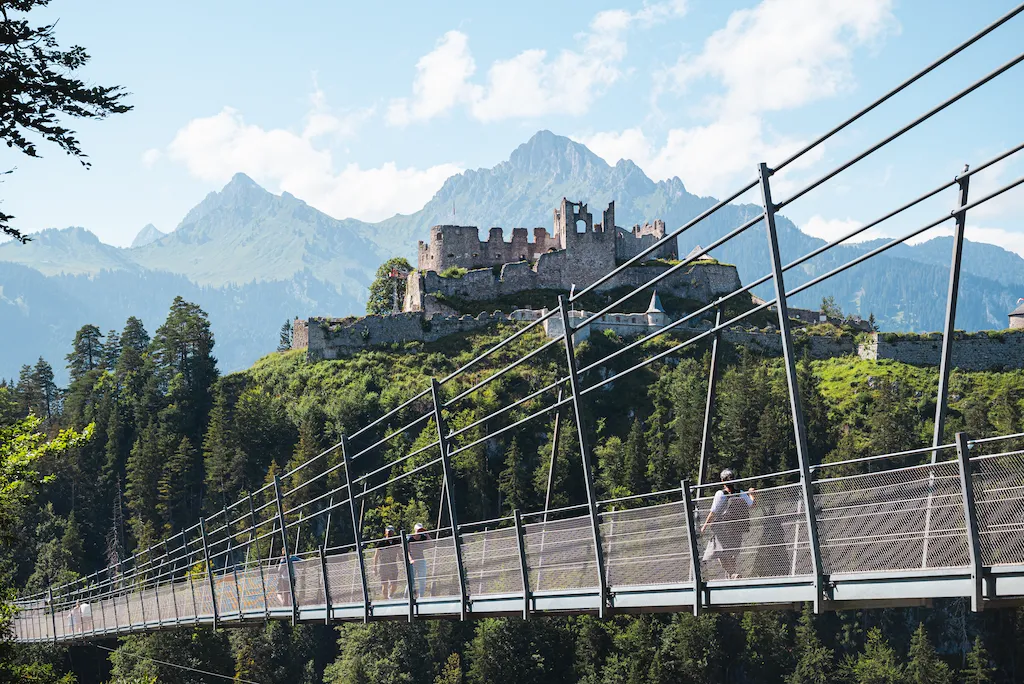
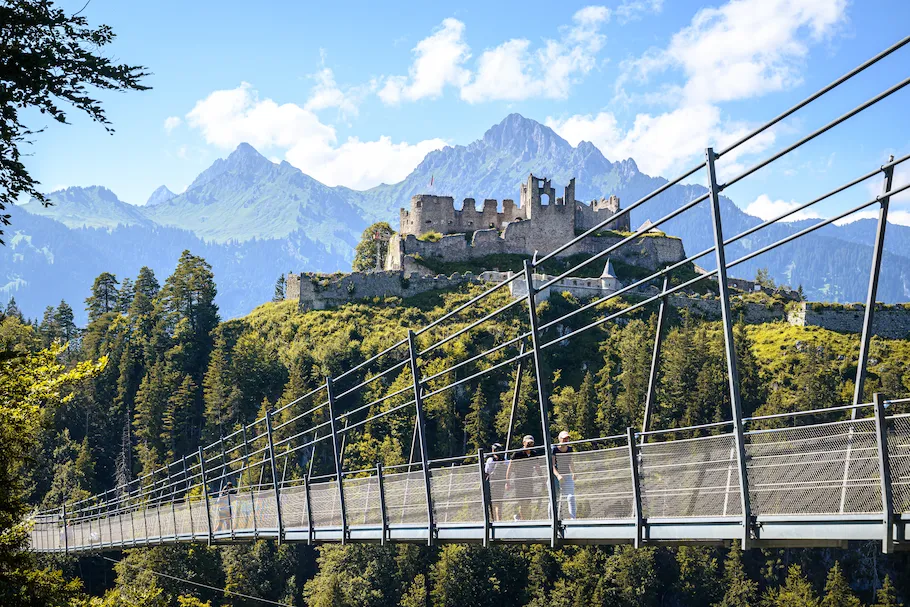
In the afternoon, we stopped to visit the ruins of Ehrenberg Castle. The special thing about the site is that Fort Claudia stands on the other side of the valley, and the two are linked by a suspension bridge, the “Highline179”. At 400 metres long and 115 metres high, it is the longest pedestrian suspension bridge in the world. Sandrine is a little scared of heights, but Victor seemed to enjoy it.
At the end of the day, we enjoyed Berwang's outdoor pool, with a view of the mountains. The place is really pleasant, and there are even inflatables for the children. We then ate at “SonnAlpin”, a very good brasserie in the village. Generally speaking, in Germany and Austria (in the Tyrol), restaurants are very welcoming to children, with children's menus, outdoor games or colouring pages.
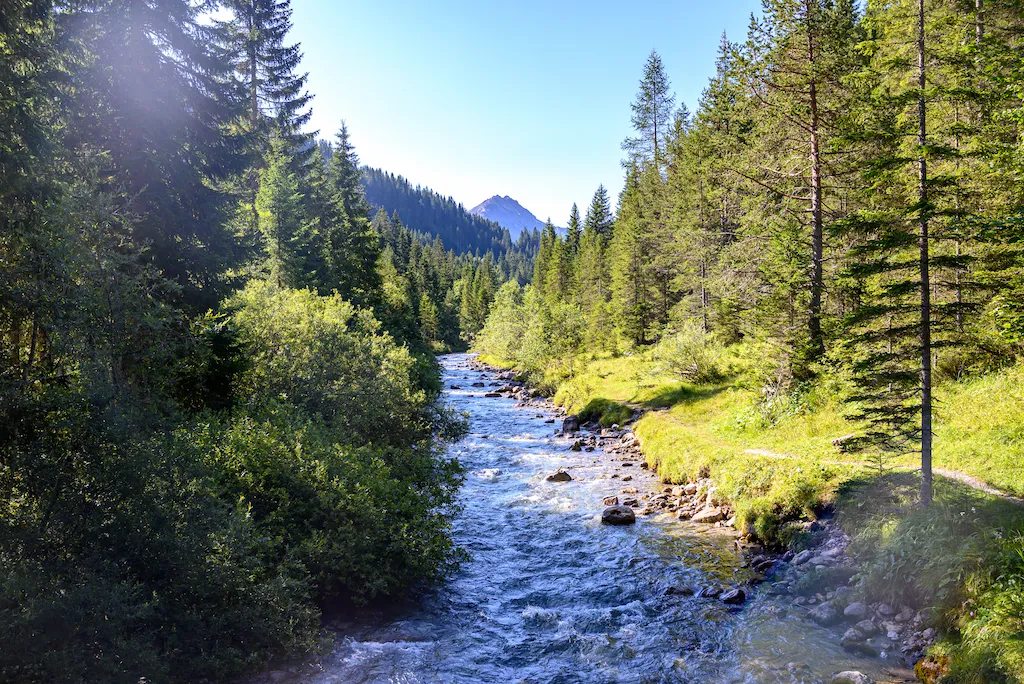
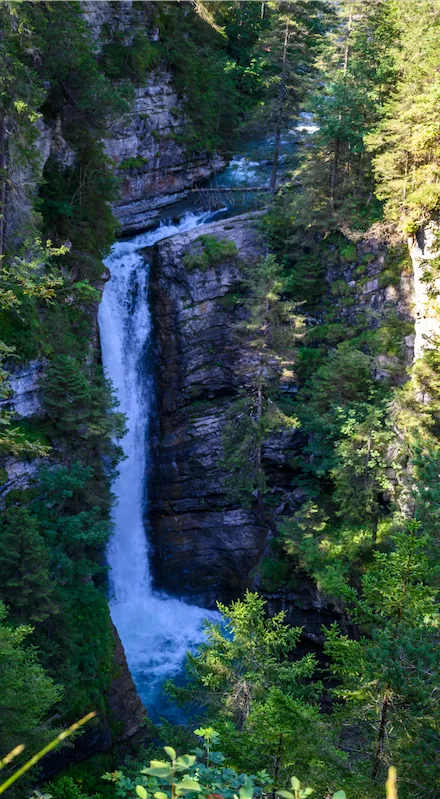
For our last day there (Tuesday), we decided not to go back down into Bavaria but to explore the Austrian Tyrol around us. Our first stop of the day was in Rinnen, a few kilometres above Berwang. We headed for the Rotlech waterfall, which we saw from a viewpoint, before driving towards the Stausee Rinnen reservoir. But halfway there, the road was closed because of a rockfall. We fell back on Mitteregg, not far away either. It is a fun trail with lots of games for children: gold panning, water games, a slide, a wooden marble run, skittles and more. We met a few French families there, also with young children.
At lunchtime, we ate in Berwang at the Hotel Singer, a Relais & Châteaux. The inside of the chalet is huge and beautifully decorated.
In the late afternoon, we went back near the Zugspitze for a picnic and a few sunset photos.
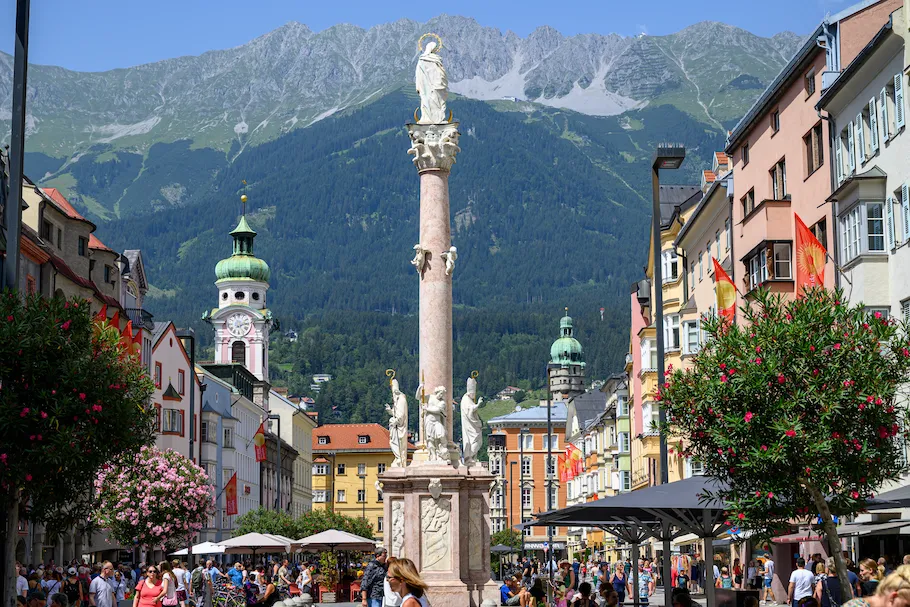
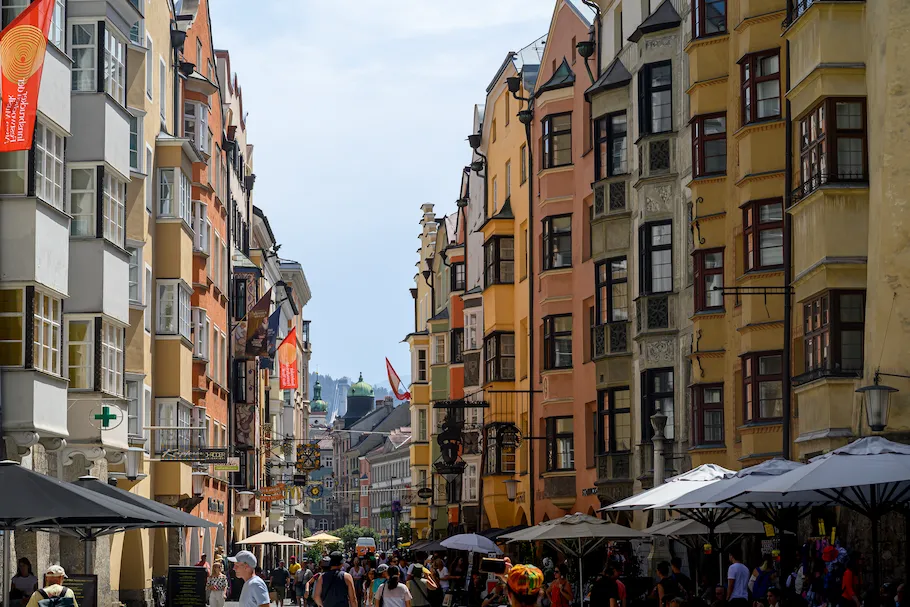
On Wednesday morning, we left Berwang for the second part of our trip: the Dolomites in Italy. To get there, we crossed the Austrian Tyrol. As our destination was only 3 hours away, we stopped on the way to visit Innsbruck, nicknamed the capital of the Tyrol. After a stop at the Markthalle, we had a picnic in the Hofgarten.
The early afternoon was devoted to the imperial palace, the Hofburg. Along with the Imperial Palace in Vienna and Schönbrunn Palace, it is one of the three major cultural sites in Austria, and one of the must-see visits in the Austrian Tyrol. It was a chance to brush up on the history of Austria-Hungary and the Habsburg monarchy. It is frustrating not to be allowed to take photos, as the palace is so magnificent.
On the way out, we set off again towards Italy, after a stroll along the touristy Maria-Theresien-Straße and its St Anne's Column, which offers a fine view of the city with the mountains in the background.
Our accommodation was in Velturno, or “Feldthurns”, as German is the majority language here: this part of the country has only been Italian since the end of the First World War. We rented an Airbnb on the heights above the town, on a small farm shared between several rentals. The apartment is spacious, with a long balcony and a magnificent view of the Odle mountains. Victor loved the hens and even the alpacas.
We were slightly outside the Dolomites, as in the middle of August everything fills up very quickly. If you can book earlier than we did, or travel out of season, try to stay closer to Ortisei or, even more centrally, Cortina d'Ampezzo.
After chatting with the owners for a while, we walked down to the village along a small path by a river, and ended the evening on the terrace of a pizzeria.
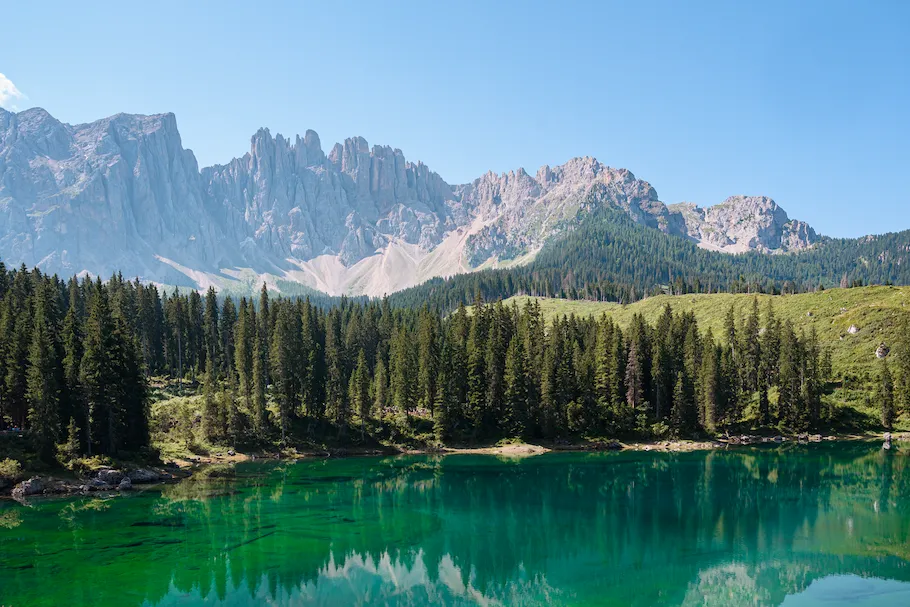
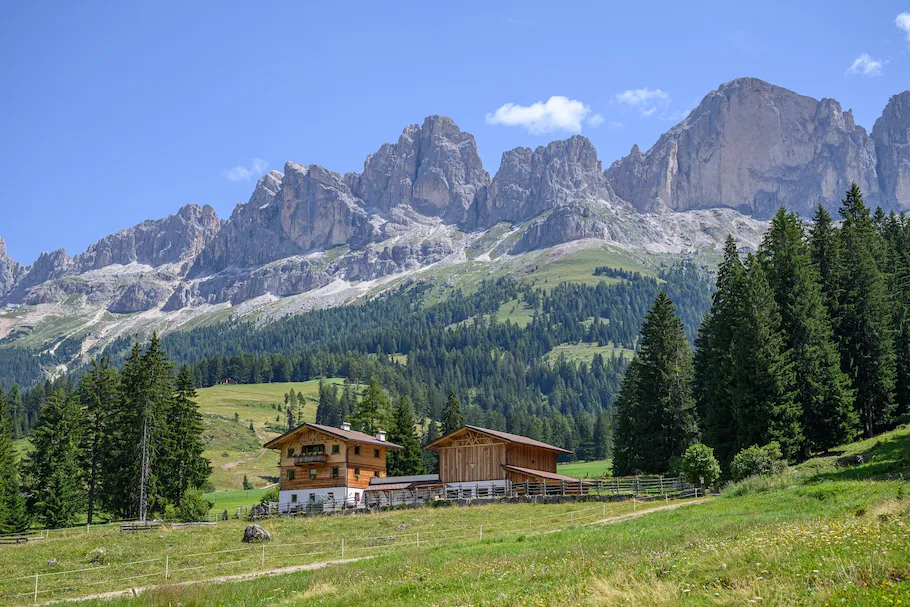
For our first day of sightseeing in the Dolomites, we headed for Lago di Carezza and its turquoise waters, which reminded us of our visits to Banff and Jasper national parks in Canada. It is surrounded by a fir forest and, after a few photos, we walked round it in about twenty minutes. The place is very touristy, but as soon as you move a little away from the shore, it gets quieter. We walked north to take the Tschein chairlift, then the gondola up to the Fronza alle Coronelle mountain hut.
From there, you can take the Hirzel trail along the mountainside and walk back down to the lake, either entirely on foot or using the Paolina chairlift. We only walked a short stretch of it, as Victor struggled a little on the rather slippery stones of the path. We had lunch at the hut, then, as a storm was forecast, started to head down. We walked down the equivalent of what we had come up by gondola, crossing a herd of cows, then took the Tschein chairlift again to finish the descent. On the path back to the lake car park, Victor took the chance to dip his feet in a small stream.
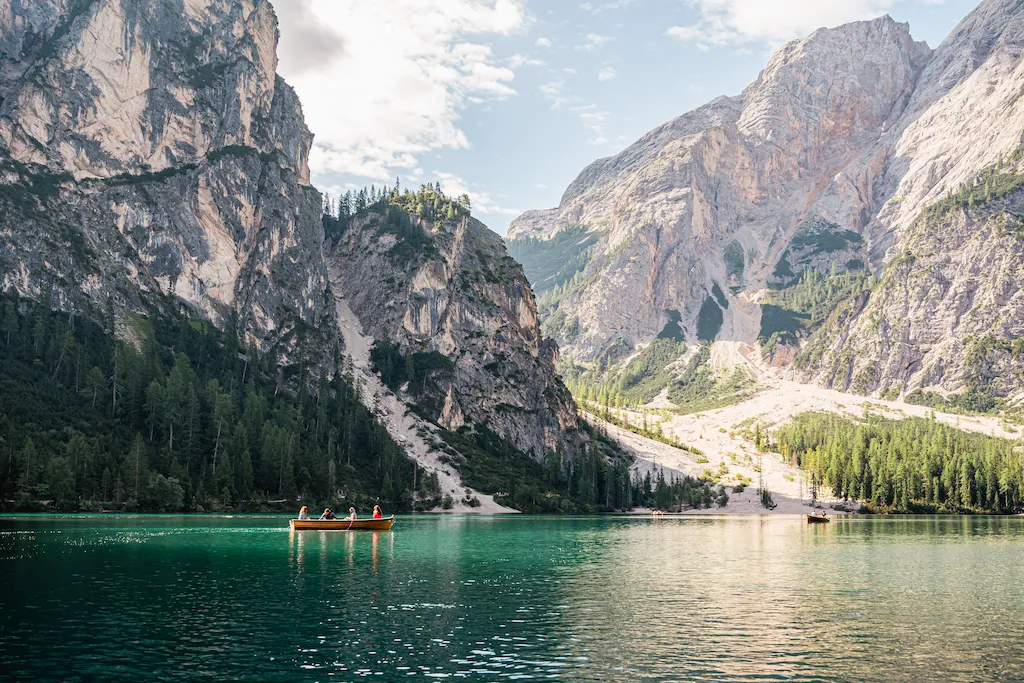
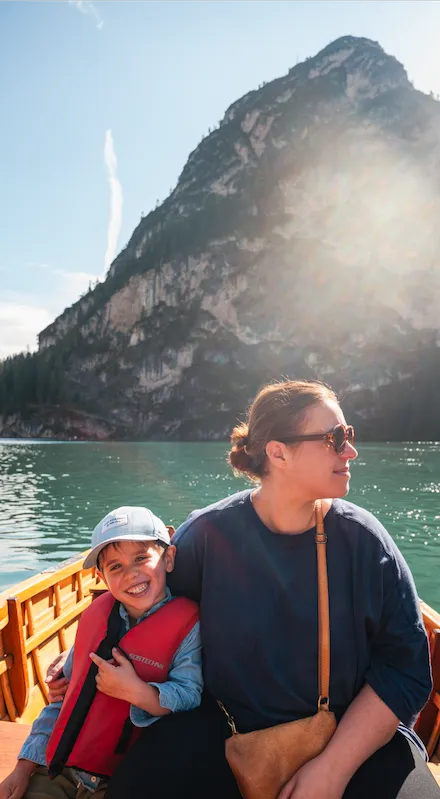
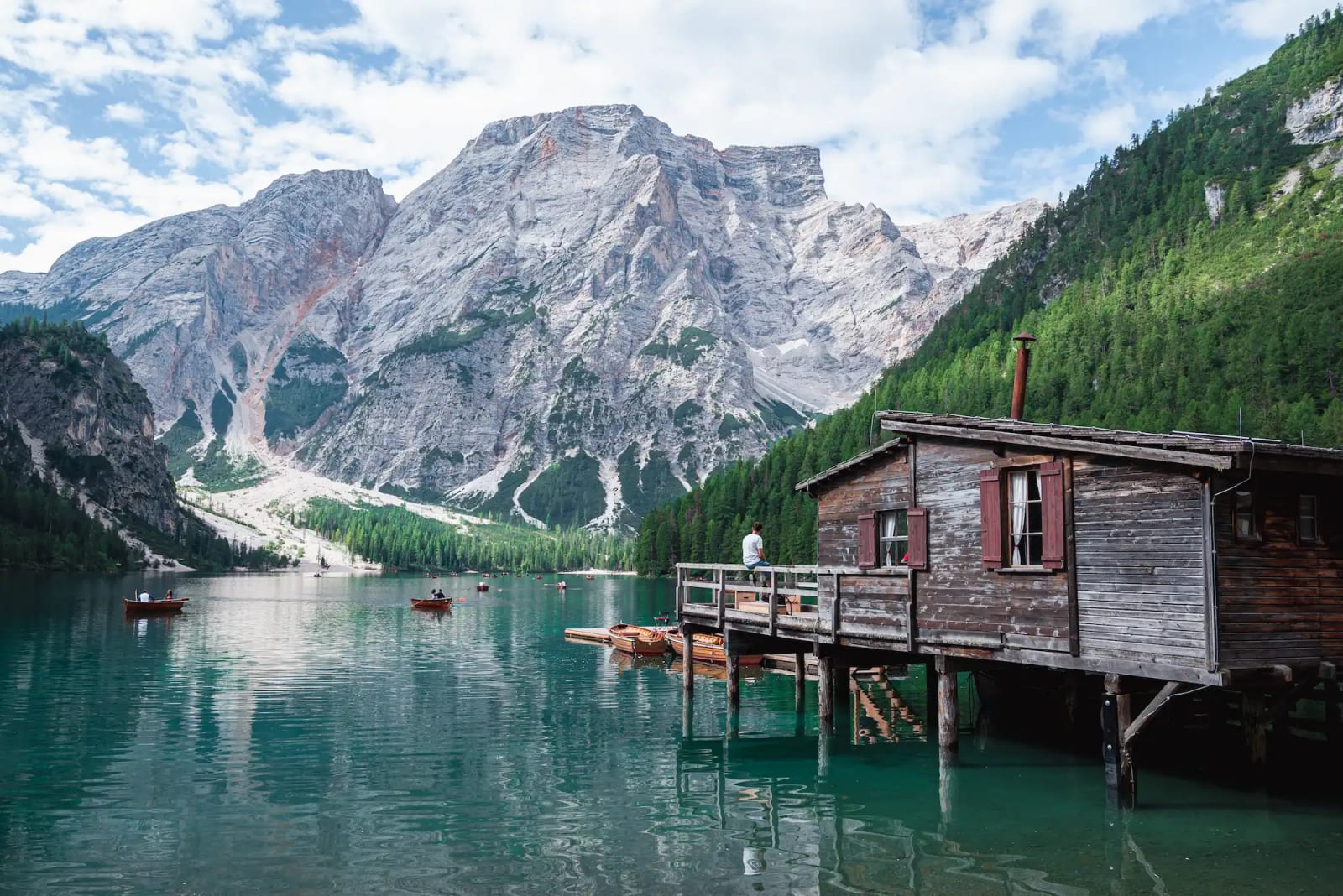
Second day, second lake: Lago di Braies. It is one of the most popular places in the Dolomites, so we set off early in the morning. All the more so because, when the car parks are full, the road closes and you have to take a bus up, exactly as we had done at Lake Louise in Canada. In fact, the layout is identical: behind the car park, you will find a huge luxury hotel on the lakeshore, where a few rowing boats are for hire, with the mountains in the background. We arrived around 8am, when it was not yet too busy, which let us rent a boat for about 45 minutes. They are quite big and therefore heavy, and rowing one on your own is not as easy as you might think! We left with two magnets and a postcard (included in the price), which delighted Victor. After this sporty but magnificent experience, we had a good breakfast at the café before walking round the lake, in about 1 hour 10 minutes.
We continued our Dolomites road trip, driving east. We had a picnic on the shore of Lago di Dobbiaco before taking the SS51 panoramic road and glimpsing the famous “Tre Cime”. They are one of the symbols of the Dolomites, but reaching them is also a demanding hike, and with Victor it was one of the famous climbs we chose not to do.
We drove through Cortina d'Ampezzo, the capital of the Dolomites. We were tempted to visit it but, after 4 full car parks, we gave up and headed for the Falzarego pass to admire the Cinque Torri. As the name suggests, it is a small chain of five rock towers. By then it was late afternoon: we took a short walk in the misty forest until the rain arrived. We heard thunder in the distance, which marked the end of the day.
On the way back, we stopped at a good restaurant, Köfererhof, eating on the terrace with a panoramic view over the vineyard.
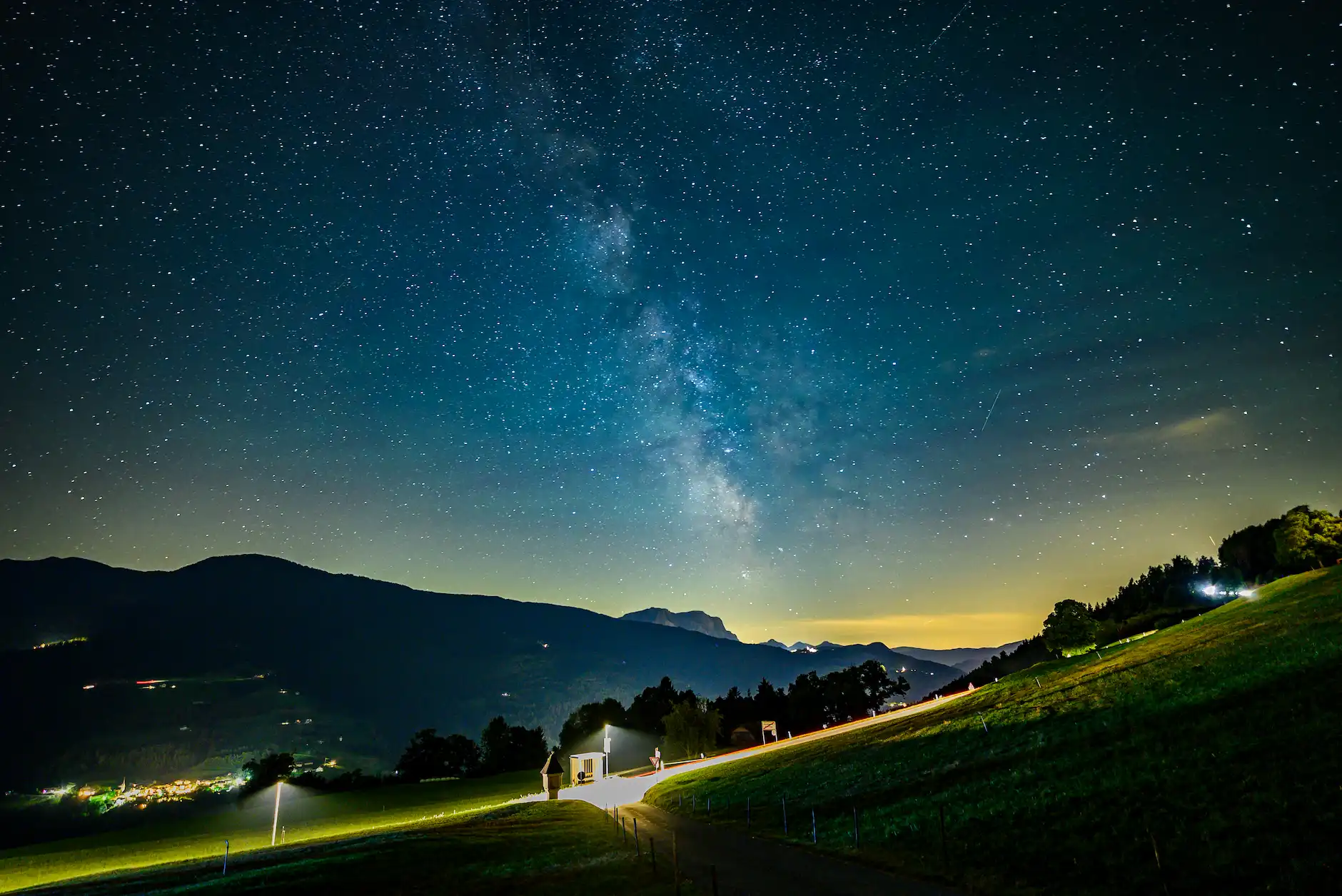
In the evening, I went out to take a few photos of the stars with a newly acquired lens, the Viltrox 16mm F1.8 for my Nikon Z5. But the clouds rolled in quite quickly, and I did not get another clear evening during the stay.
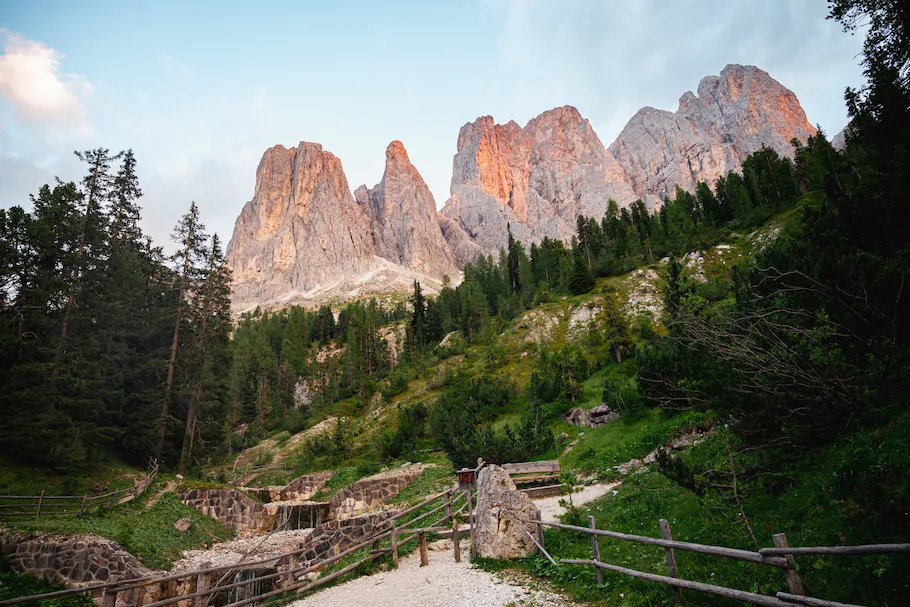
Saturday was a quieter day: we enjoyed the farm and the surroundings and went for a swim in the pool. In the afternoon, we set off to visit Chiusa, the small town south of Velturno, overlooked by the imposing Säben Abbey. The centre is not very big: a main street with a few art shops leading to a square with a small fountain. We took the opportunity to enjoy an artisan ice cream. We also visited the town museum, housed in a 17th-century monastery.
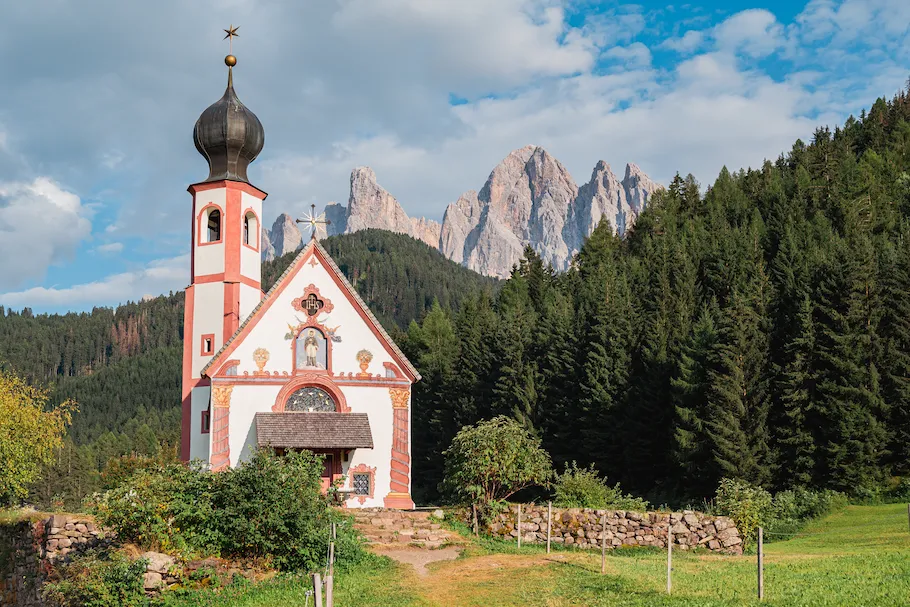
We then drove to the Val di Funes, one of the most beautiful valleys in the Dolomites, to visit the village of Santa Maddalena and its very “Instagrammable” church of St John (San Giovanni). It is a tiny Baroque chapel, typical of the region, with a bell tower topped by a copper dome. It is popular with photographers because the Odle mountains rise behind it; their name means needles, a reference to the pointed shape of the group's many peaks.
We carried on higher, to the Zanser Alm car park, from where we walked a short stretch of the Adolf Munkel trail, also one of the must-dos on a Dolomites road trip. You can follow an 8 km loop with magnificent viewpoints. As we were in the wooded section and it was getting late, the light was fading and we did not linger. We had a picnic on a bench and were soon joined by a small group of free-grazing cows. They were not afraid and came closer out of curiosity, even trying to steal part of our meal…
We headed for Ortisei for the day. The town is ideally located, as two must-do Dolomites walks start from here: the Alpe di Siusi, on the programme that Sunday, and Seceda, which we climbed on Tuesday. We parked in the gondola car park without really checking the prices. A big mistake, as it cost us 35 euros for the day (on a Sunday)!
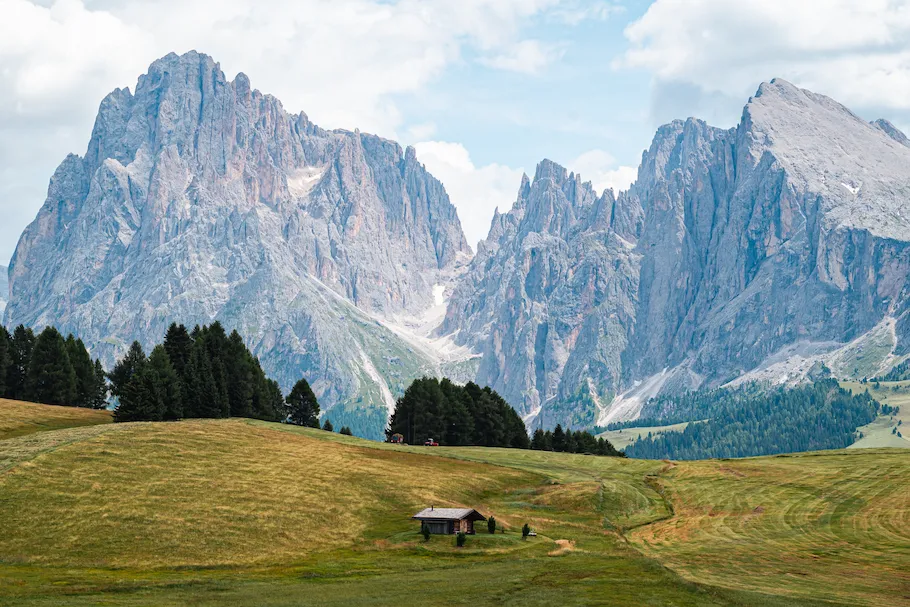
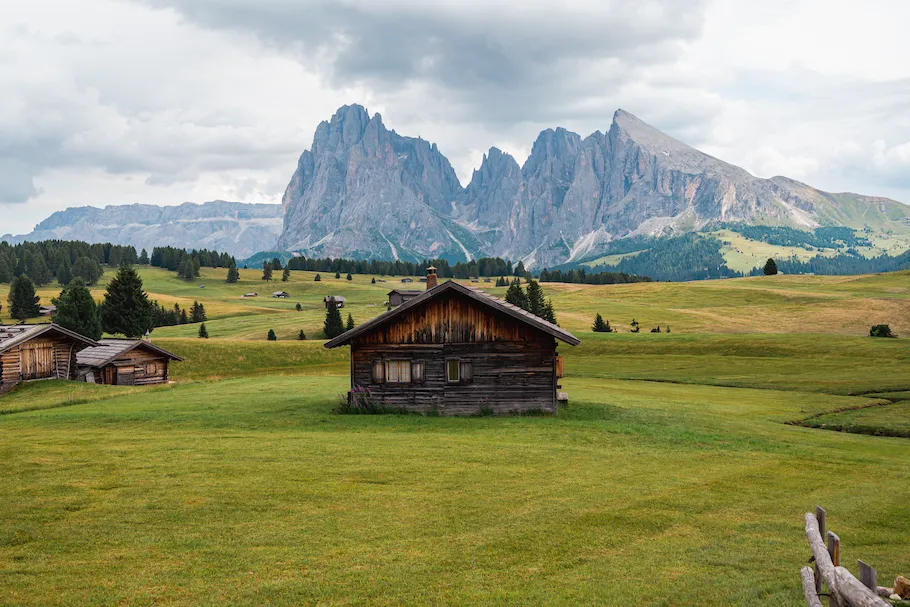
The Alpe di Siusi (Seiser Alm in German) is the largest high-altitude alpine pasture in Europe. It has kept its authentic character, and you can admire dozens of wooden huts and mountain refuges with a view of the peaks of the Sassolungo. You quickly understand why it is one of the must-sees of the Dolomites. At the top, there are several tiny villages, and we walked towards Compatsch. Many tourists get around by mountain bike, which lets them cover more of the pasture. Halfway round our loop, we stopped at a café, Malga Sanon, which serves, among other things, lots of homemade pastries. Victor took the chance to play with other children.
The Alpe di Siusi is an easy Dolomites walk for children: little climbing and magnificent scenery.
A little further on, one of the hotels has a small farm (horses, goats, alpacas, hens). There is a chairlift that takes you back up to the gondola down to Ortisei, but we decided to do it all on foot. It is a little frustrating, as the gondolas usually close around 6pm in the Dolomites, so you cannot stay up high for the sunset unless you walk down, which was not an option with Victor for now. There is, however, a chance once a week to have dinner at the mountain hut restaurant, but prices are rather high and places are few.
In the evening, on the way back, we stopped at a restaurant in Bressanone, probably one of the best of our stay, both for the quality of the pizza and for the terrace under the vines: the Hofkeller. What's more, there is a play area for children slightly apart, so everyone was happy.
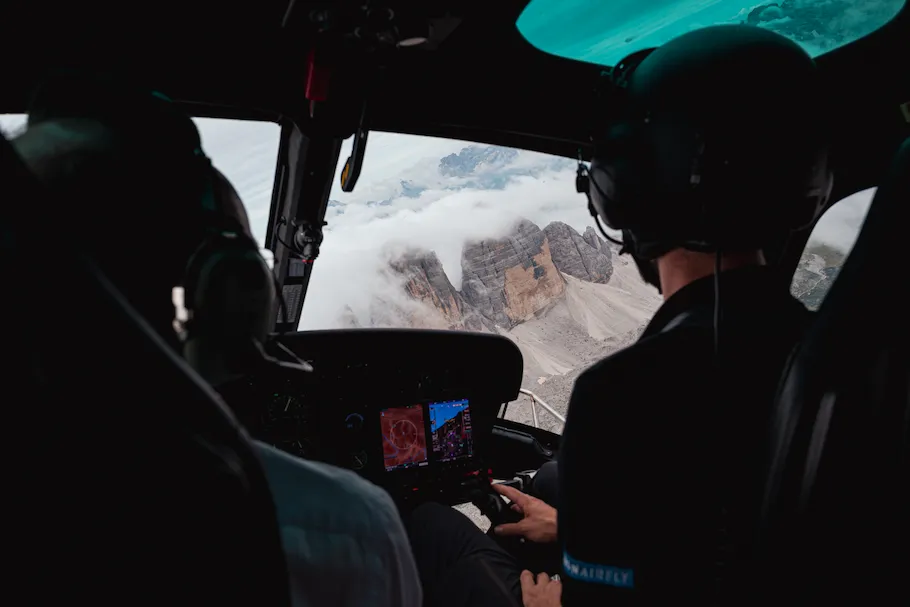
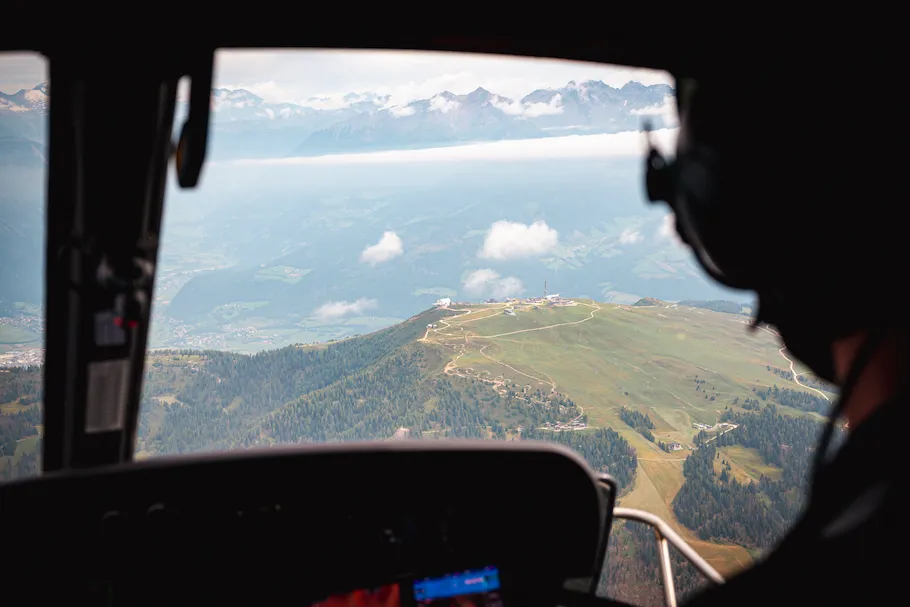
Last September, for my birthday, my friends had given me a first flight experience to use on a future trip. What better setting than the Dolomites to gain some altitude? Here, no microlights, but several companies offer helicopter tours. Having booked nothing, I looked on Instagram and came across Kronair, which I contacted on the Sunday, hoping for a slot during the week. They replied almost immediately that the whole week was full, except that Monday morning at nine o'clock. The booking was made, and there I was on the pad, listening to the final safety instructions before climbing aboard. The heliport is near Lago di Braies, one of the first places we flew over. It is not always easy to know where you are: from the air, you struggle to recognise the shapes of mountains you are used to seeing from the ground. But the pilot doubles as a guide and describes each place, and we went close to the Tre Cime, among others, on a flight that lasted about 45 minutes.
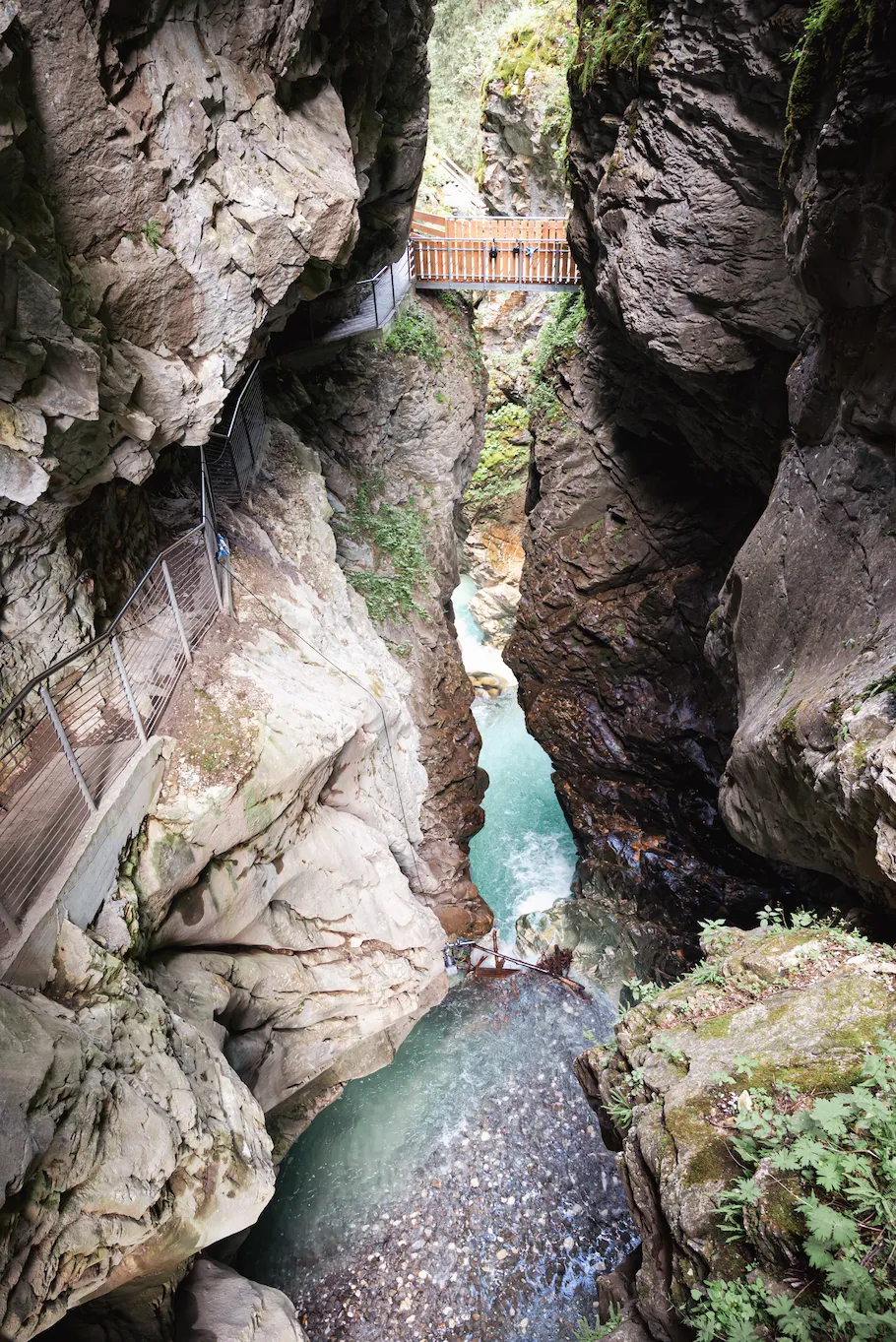
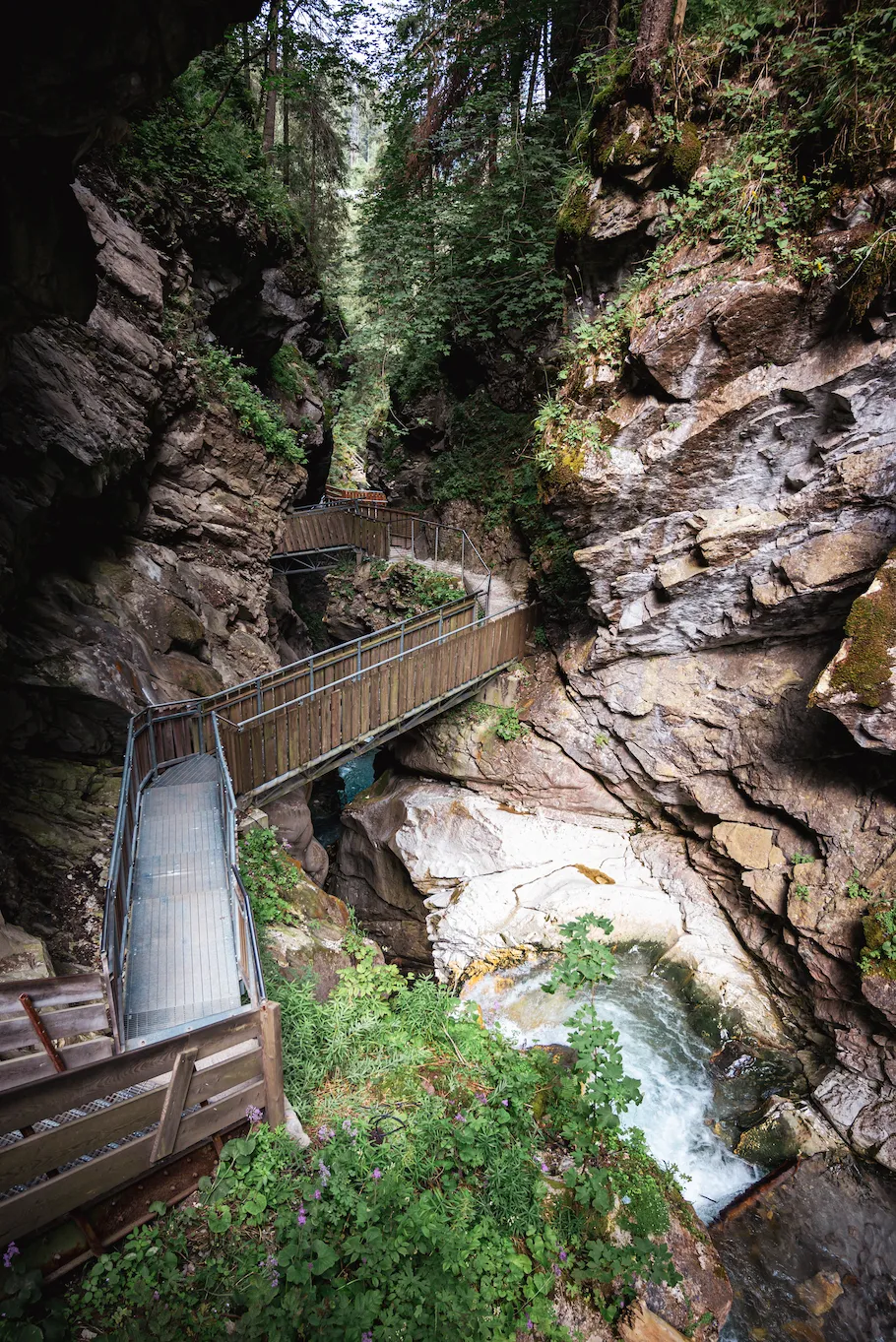
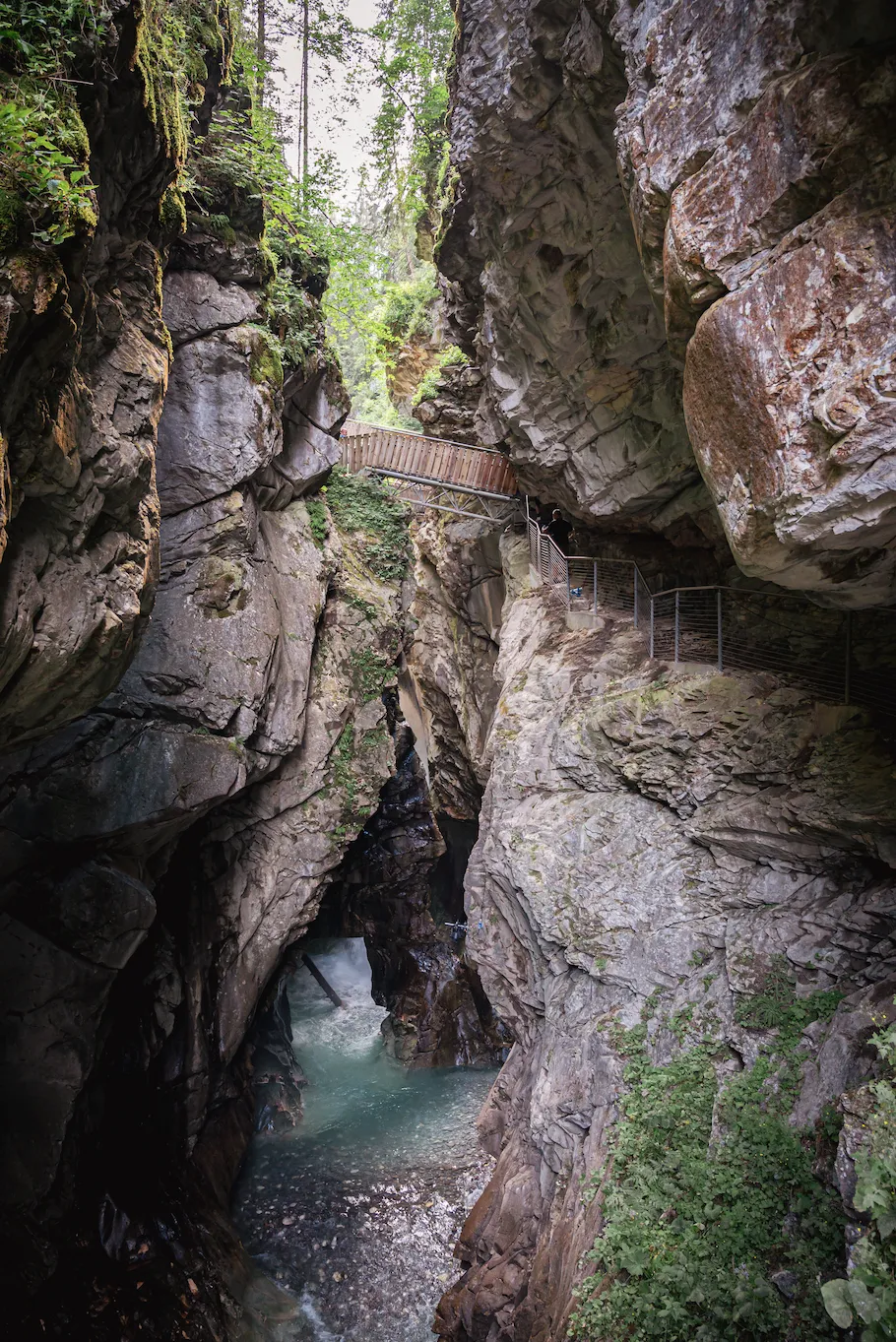
The afternoon was devoted to a short walk in the Gilfenklamm gorge. We drove north, away from the Dolomites, almost to the Austrian border. The walk through the canyon takes a little under an hour: you climb stairways fixed to the rock walls and watch the waterfalls and the carved rock. On the way back, Victor tried mini golf before we visited the town of Vipiteno, where we had another good pizza, at Kolping.
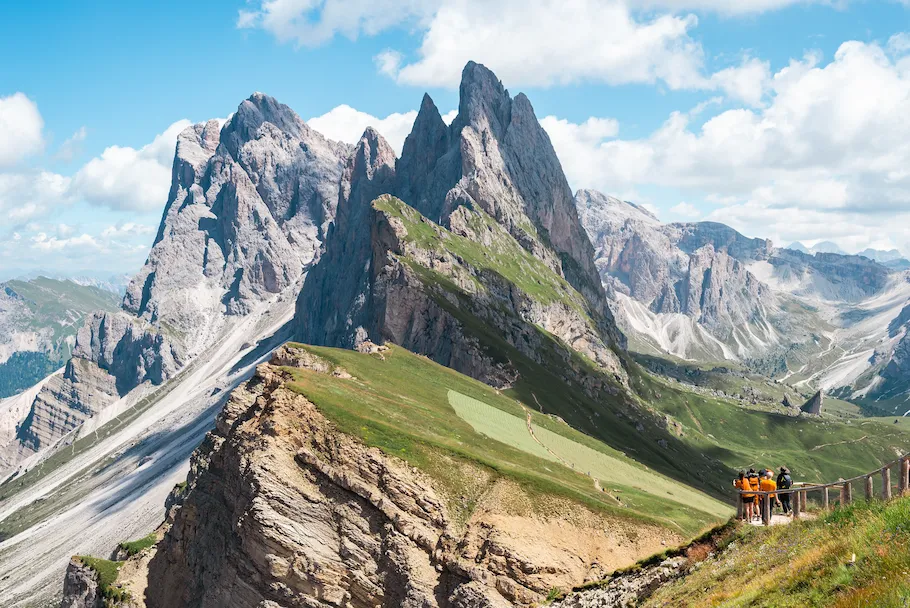
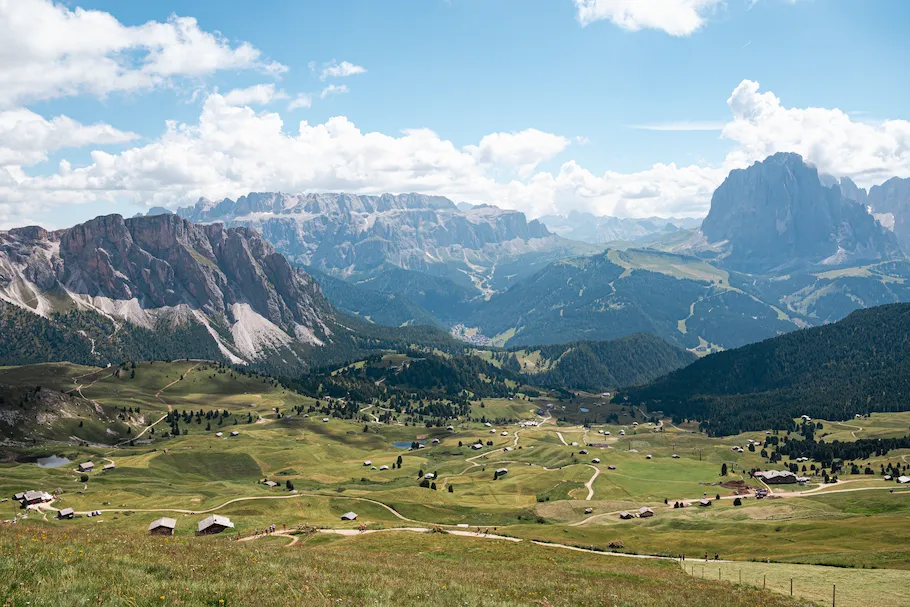
Back in Ortisei, this time we headed north of the town to one of the must-sees of the Dolomites: the Seceda mountain. We arrived a little later than planned, and there was something of a traffic jam in the resort, with everyone trying to find a parking space near the gondola. We had learned Sunday's lesson about the price of the covered car park and, after 20 minutes of driving around, we finally found a space at the bottom, along the river that runs through Ortisei. Good to know: you do not need to walk all the way back up, as there is a kind of tunnel under the town with escalators, probably designed to reach the ski slopes in winter.
Once at the top, the view is incredible: as well as the legendary ridge path, many trails criss-cross the alpine pasture, with, as on the Alpe di Siusi, those iconic wooden huts. Here, you are in the Val Gardena, just south of the Puez-Odle Nature Park, a UNESCO World Heritage Site.
Seceda is one of the best viewpoints in the Dolomites for photography. Although it was already famous, its fame soared when Apple used a photo taken here to present a new iMac in 2017. As it is a ski area in winter, you can see it in every season.
Before heading back, we had an afternoon snack at Café Corso, including a Kaiserschmarrn, one of Austria's culinary specialities. It is a thick pancake cut into strips, usually served warm, dusted with icing sugar and accompanied by apple or plum compote.
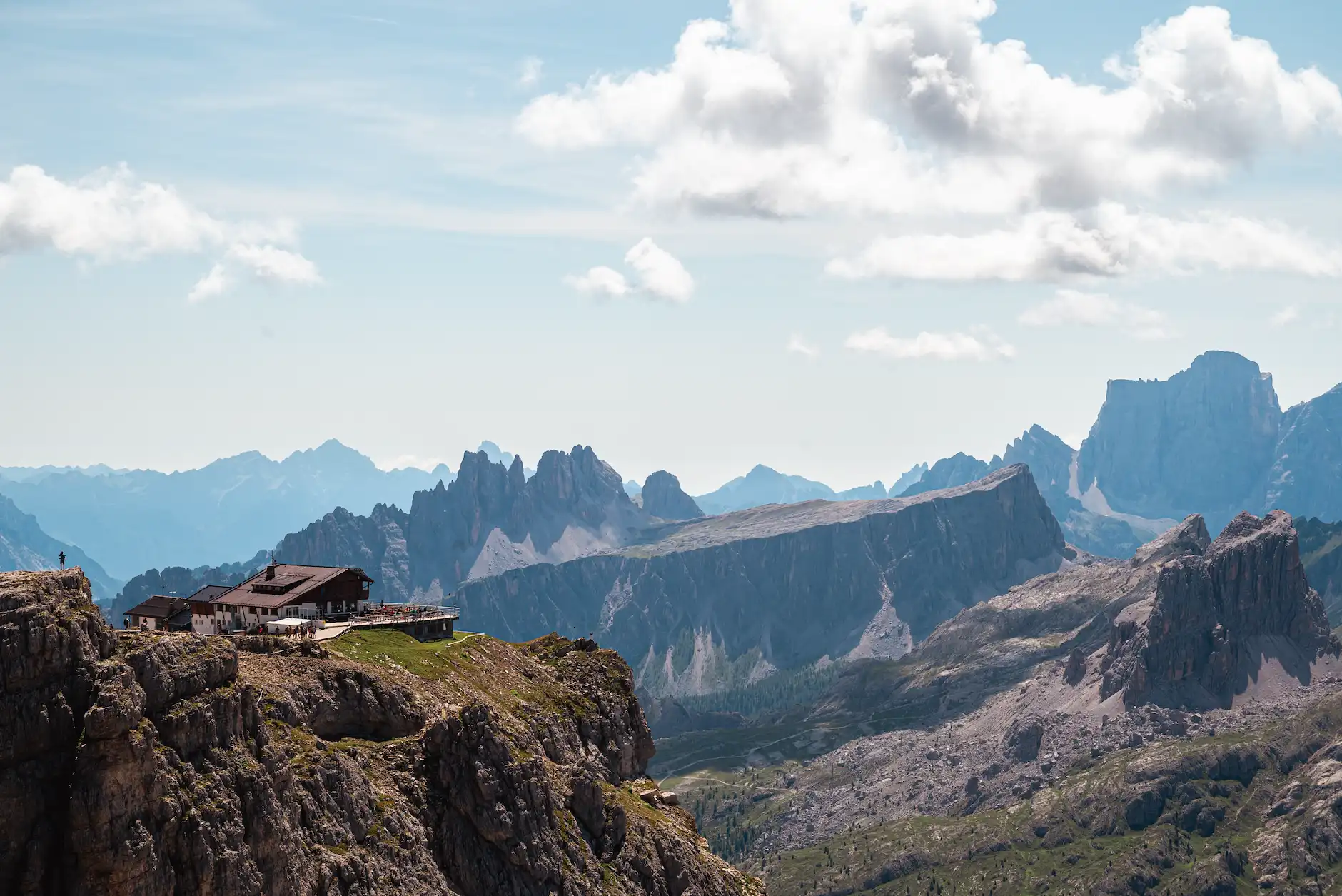
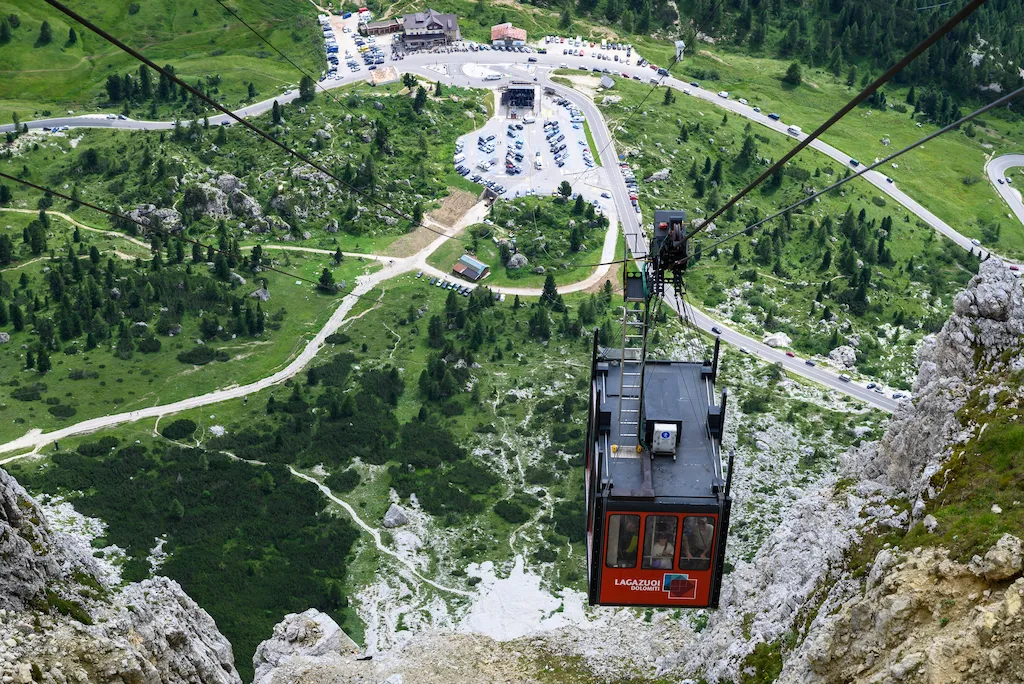
On Wednesday, we went back to admire the Cinque Torri, mentioned above, from closer up. After the Tre Cime di Lavaredo, this massif is surely one of the most iconic peaks in the Dolomites. This time the weather was on our side. We took the cable car from the Falzarego pass up to the Lagazuoi hut. Here the landscape is rather lunar, very rocky. While Sandrine had a coffee, I took a short walk to the “Monte Lagazuoi Piccolo” viewpoint, which offers a fine view of the Italian mountains.
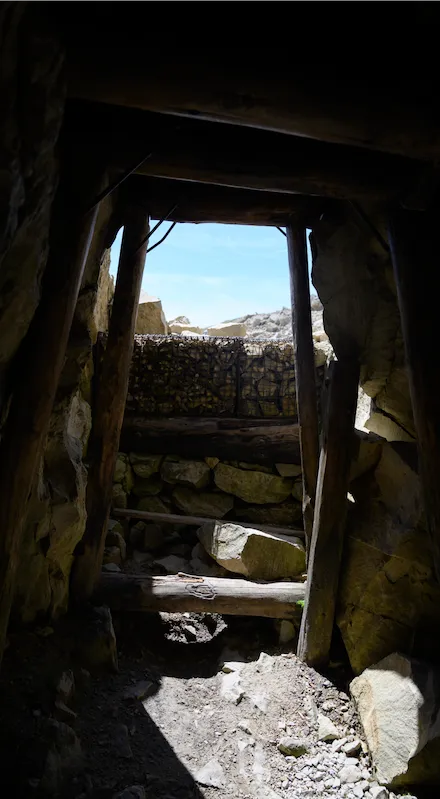
Here you meet lots of people wearing helmets, as you can explore many tunnels. Some are easy to access, others require more serious equipment. They were dug during the First World War: the pass was on the front line of the time, between Italy and the Austro-Hungarian Empire. As well as the tunnels, some pieces of weaponry and soldiers' living quarters have been preserved as they were. At the foot of the pass, you can also visit a museum devoted to the Great War.
This walk is not easy for young children: lots of stones and climbing, and no real path… Victor soon asked me to carry him, so we did not venture very far and turned back after our picnic.
In the late afternoon, we made a detour south to see a trail known for marmot spotting. We drove over the “Passo Pordoi”, which is also very beautiful and would deserve a closer look if your Dolomites road trip lasted a little longer than ours. On the way, the weather changed very quickly: a storm broke, and we found ourselves in a big traffic jam caused by the heavy rain. We decided to turn back; in any case, Victor had fallen asleep. We stopped in Ortisei for the third time of our stay, to eat at a bar that serves homemade burgers and brews its own beer, “LaBetula”.
That was the end of our adventure in the Dolomites: it was time to leave the Airbnb and drive back to Munich. We stayed in the same hotel as the week before, the Alpen Hotel München. After a few hours on the road and returning the car, we tried a ramen restaurant for lunch. Then we wandered around the city again with no particular aim. In the evening, we ate at Augustiner am Dom, a Munich institution for its Bavarian dishes and its beer. Inside, there is no privacy: you eat at long shared tables, a chance to exchange a few words with your neighbours.
The next day, Friday, marked the end of our road trip through three countries. We will remember the beauty of these mountains, from the Tyrol to the Dolomites. We took the train back from Munich, this time without delays or missed connections.
The holidays were not quite over: the very next day, we went to a women's football match at the Parc des Princes, the Olympic final of Paris 2024. And the following weekend, we left Victor with my parents for a week by the sea, a chance for the two of us to discover the Côte d'Opale over a weekend.
Enjoyed this article? Pin it on Pinterest.
Follow us on social media to hear about our next trips. Feel free to leave a comment or ask a question at the bottom of the page. See you soon.