By Geoffrey Ménissier, published on , updated on .
Also available in: 🇫🇷 🇪🇸 🇵🇹 🇩🇪 🇮🇹 🇳🇱

In short
The goal of our Norway road trip: to see the northern lights. We left in February to visit Tromsø, above the Arctic Circle, before a road trip to the Lofoten Islands.
0 comments
At the end of February, we went on holiday to northern Norway, with one goal for the trip: to see the northern lights!
We had wanted to go back to Iceland, in winter this time, but in the end we chose Norway, which we did not know. The trip lasted 9 days, split between the city of Tromsø and the Lofoten Islands further south. Tromsø lies north of the Arctic Circle and is quite a large city (about 70,000 inhabitants). It is nicknamed “the Paris of the North” for its lights. The city is also a good starting point for visiting the Lofoten Islands, the Scandinavian Alps (the Lyngen Alps) and the North Cape.
Above all, it is the ideal place to see the northern lights at this time of year: the season for seeing them runs from September to the end of March. So we decided to go from 23 February to 4 March, during the school holidays. Equipped for “extreme cold”, we also took gear to photograph the northern lights and downloaded a few apps to locate them.
The plane tickets had been booked since October: outbound Paris/London/Tromsø (easyJet) and return Tromsø/Oslo/Paris (Norwegian). To get around, we rented a car in Tromsø, fitted with snow tyres. You can compare car rental prices on Discover Cars. At this time of year, we expected quite a lot of snow and temperatures between -10 and 5°C. We had planned to take the night boat to reach the Lofoten Islands from Tromsø more quickly, and for the return journey too.
Trip taken in February 2019. Prices were rechecked in September 2026.
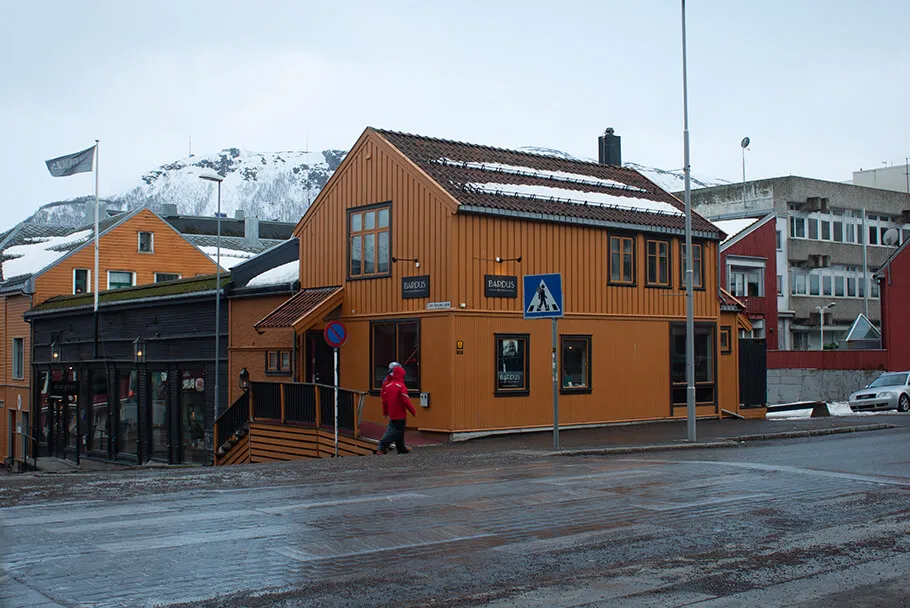
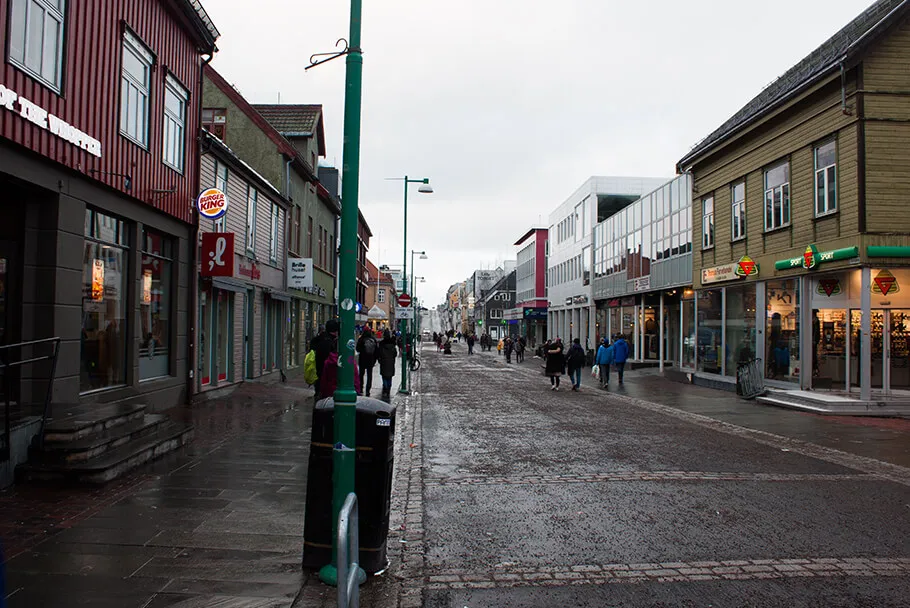
We left Paris on Saturday 23 February at 5am in a shared taxi booked the day before; the fare from Paris (Nation) to Charles de Gaulle airport was 35 euros. 2026 update: the taxi fare is now 56 euros from the Right Bank and 65 from the Left Bank, or 14 euros full fare by RER train. As the RER B is not the most reliable line in the world, we preferred to play it safe.
The stopover in London lasted 6 hours. To pass the time, we had a full English breakfast in one of the restaurants at Gatwick airport, then played a board game, Unlock. It is a great game that takes the idea of escape rooms and turns it into a card game.
We arrived in Tromsø at the end of the day, around 6pm, when it was already dark. The city is close to the airport, about 15 minutes by bus. From the airport, you can take city buses 40 and 42: it is the cheapest option, which we took on the way back, and I think it cost us less than 5 euros each. (Price checked in 2026 and still the same.) The bus stop is behind car parks P2 and P3.
On the way there, we took the Flybussen airport express bus, right outside the airport, for 10 euros each. (Price checked in 2026: the express bus has gone up a little, to 125 NOK, just under 12 euros.) In both cases, you can buy tickets on the bus in cash.
The bus dropped us in front of one of the hotels in the city centre. The apartment we chose on Booking for the night was only a few minutes' walk away. The road was very icy! A thin layer of gravel stops you slipping, but the owner had not cleared the path up to the house, which made getting in quite tricky. We still recommend it: it is pleasant and spacious, with a central hallway, a bedroom and a large bathroom with a washing machine, then a living room and a large, well-equipped kitchen. The house is cosy, warm throughout and brightened up by lots of lamps. But it was the next morning, after some rest, that we appreciated the view over the city, the fjords and the mountain. We went out for a quick look around the city and some shopping at the “Kiwi” supermarket, to make burgers at the apartment.
On Sunday, we used the morning to go to the tourist office on the harbour. We were supposed to go dog sledding that day, but the company cancelled because of the weather. We booked another dog-sledding trip for Monday morning (you have to take a ticket, and the wait was quite long). Unfortunately, the weather did not change, and that trip was also cancelled in the evening. We took the opportunity to walk around the harbour, where the ship “Viking” was moored, which would break down a few weeks later (article in French), and we could see the Arctic Cathedral and the cable car on the other side of the fjord. We then had lunch at a very good restaurant, “Bardus”: Sandrine had fish soup and I had ramen, with beers. Then we wandered at random through the city streets, past the library, the typical church and the shops, and went back to the tourist office to collect the car we had rented for a week from Europcar. We rented snowshoes for 48 hours from a Tromsø Outdoor shop, where they recommended several places for a walk. We drove to the Ersfjordbotn fjord, about thirty minutes from the city centre, through the four-lane tunnel under the city. At the fjord, we searched a little for the path recommended by the outdoor shop, which led us to a big waterfall, and we finally found it: you start from the Ersfjorden café, go up a little and follow the path to the right of the hut. The walk is nice, and you are soon above the town with a lovely view of the fjord. It was dark at 4:30pm, and we went back to Tromsø to our new hotel. We decided to have dinner nearby in an Indian restaurant, with a mango lassi and lamb masala.
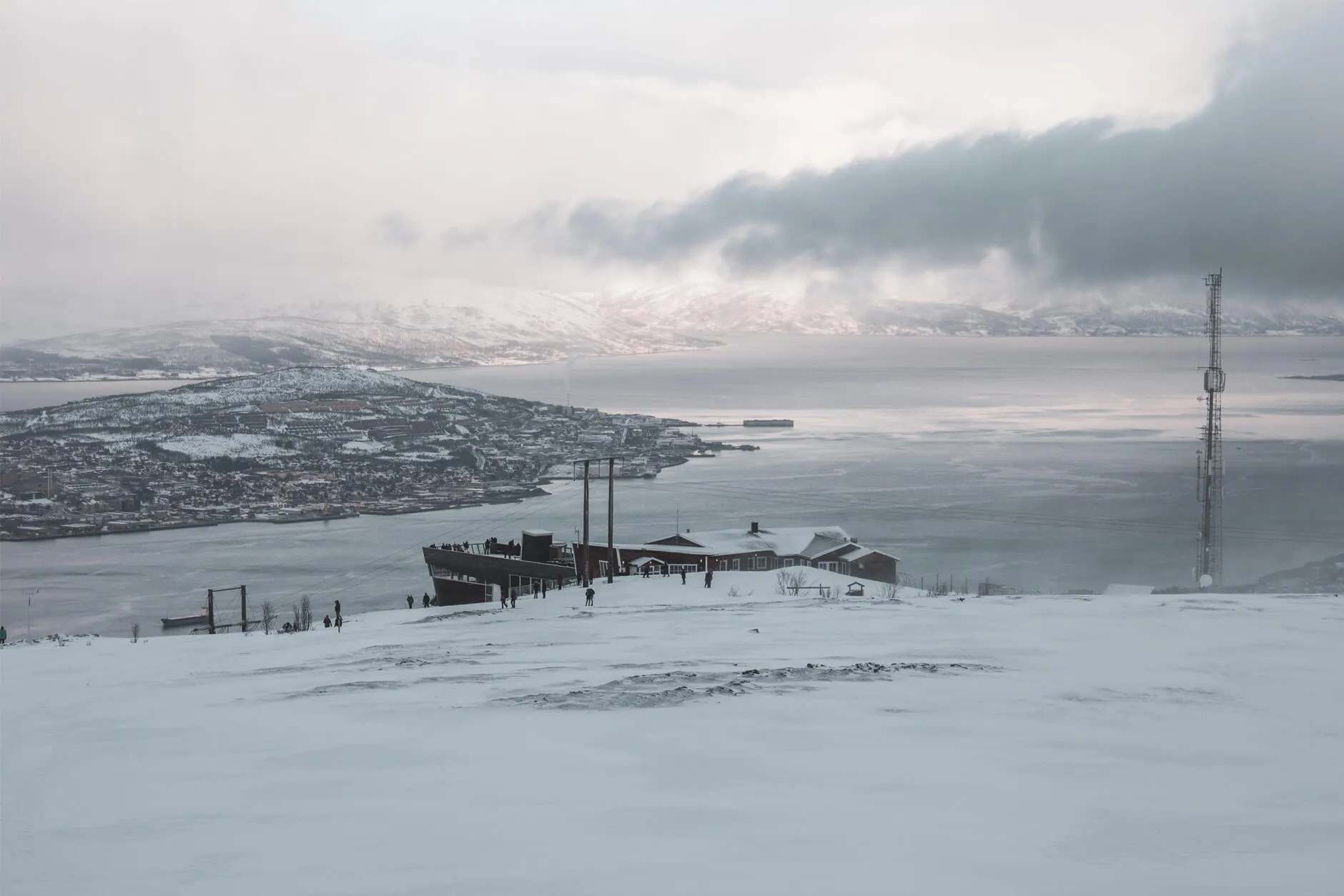
On Monday morning, we went snowshoeing again at the second spot recommended by the rental shop. We crossed the bridge opposite the Arctic Cathedral, then took the Tromsø cable car (Fjellheisen), on the other side of the water, and headed up to the summit. The return ticket cost 210 NOK per person. 2026 update: the price has risen considerably, to 645 NOK (about €55) return and 415 NOK single.
At the top of the mountain, we enjoyed the beautiful view over the city and the fjords, then wandered around on our snowshoes: we passed a hut buried under the snow and spotted what looked like a fox in the distance. On the way back, we had a picnic in the cable car station, which also has a heated café (a very important detail!), then went down and set off by car to explore around Tromsø, driving round the island of Håkøya. We carried on along route 858 for a few minutes, then stopped at a car park for another snowshoe walk through the forest (there is also a cross-country ski trail there).
In the evening, we returned the snowshoes and went for a beer at “Agenturet Øl og Vinbar”, then killed time until boarding the boat that was to take us to the Lofoten Islands. We left Tromsø at midnight. The 700-passenger Hurtigruten ship is a cruise ship that sails the whole Norwegian coast, and you can take it from port to port with a car. Too tired, we only had a quick look around the different decks before sleeping on the lounge benches: we had not booked a cabin and travelled as deck passengers.
(You sometimes need to zoom in quite closely on the area you are looking at for activities to appear.)
Here are a few ideas for activities around Tromsø.
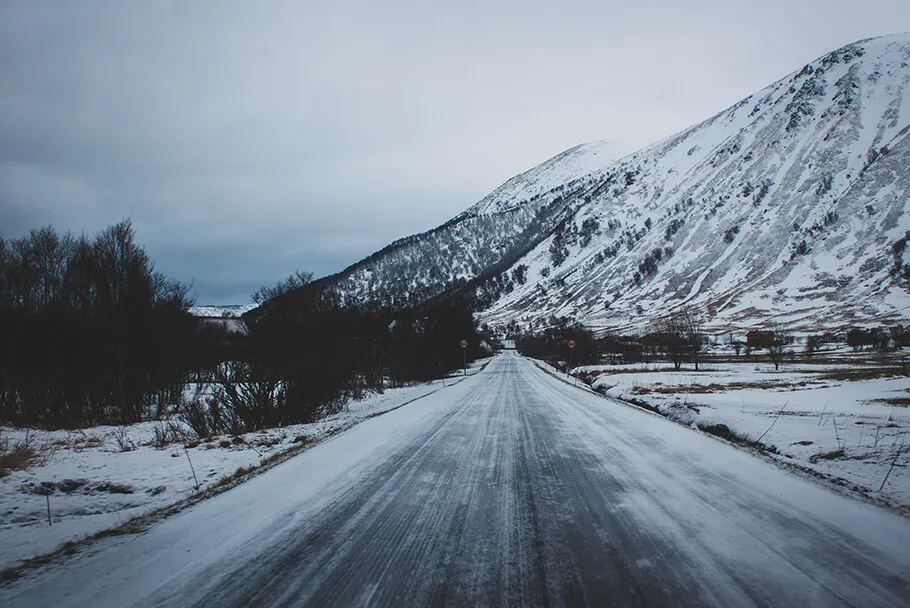
When we woke up on Tuesday, we could enjoy the magnificent view of the fjords as we sailed gently between them. We had the sauna and the jacuzzi on the rear deck all to ourselves. You can buy towels at reception, and the sauna has a changing room and showers, handy when you do not have a cabin. At 11am, we disembarked at Risøyhamn and took the scenic route along the west coast of the island of Andøya (Vesterålen archipelago). We turned inland to go round lake Anesvatnet, and spent the whole day exploring Andøya at a gentle pace. Our accommodation was in the north of the island; we had chosen it for its proximity to Andenes, where we had booked a whale-watching boat trip, but it was (again) cancelled because of bad weather. In the evening, we tried a restaurant in Andenes, “Arresten AS”, which turned out to be excellent and very cosy.
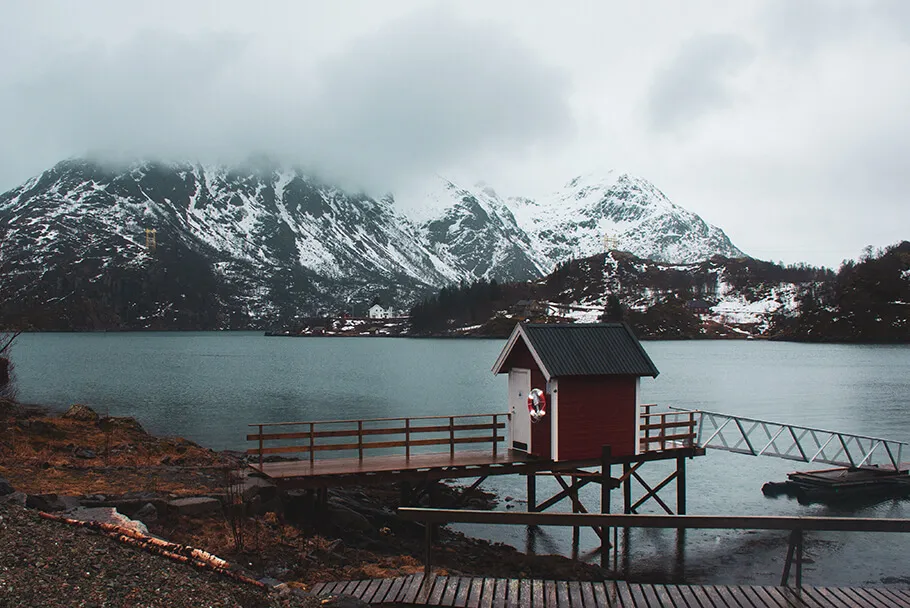
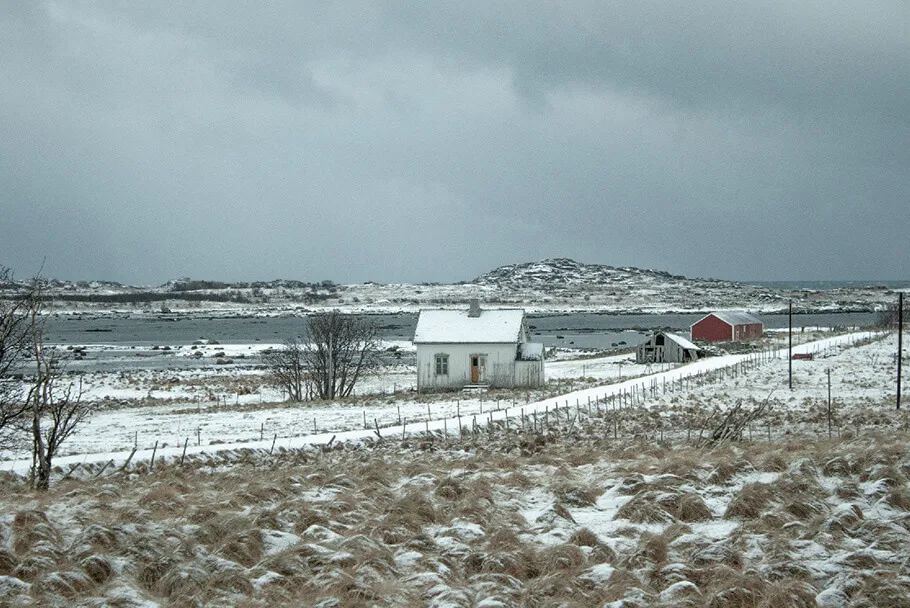
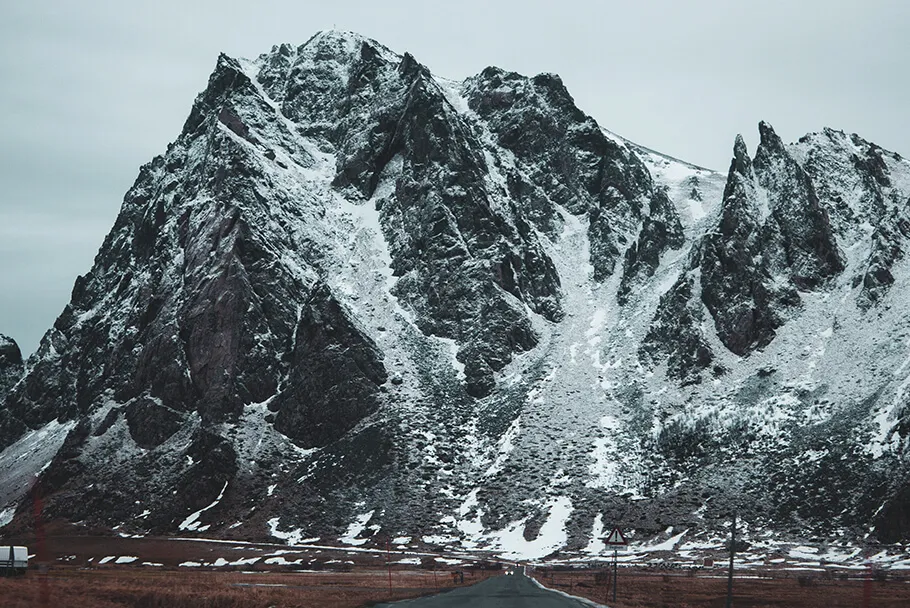
On Wednesday morning, we played a game of pool at the guesthouse over breakfast. Then we set off for the Lofoten Islands. On the way, we passed through the town of Sortland, then took the E10 towards Svolvær. We saw reindeer, and even two seals and an Arctic stoat at Møysalen, where we spent a little time on a small beach with turquoise water. Møysalen, on the island of Hinnøya, is the highest point of the Lofoten and Vesterålen islands, in the county of Nordland, in northern Norway. It rises to 1,262 m, and the summit is the heart of Møysalen National Park, created in 2003. When we got to Svolvær, we booked a boat trip to see eagles with the Lofoten Explorer company on the harbour, and warmed up in a café right next door, “Bacalao”. A few days earlier, the accommodation planned for that night had been cancelled because of a water leak, so we had to rebook quickly; in the end, we chose one of the town's rorbuer, which was great. I do not know whether we were upgraded or got whatever was left, but the place was huge, with two bedrooms and two bathrooms. Rorbuer are old fishermen's cabins renovated mainly for tourism; they are made of wood and painted red, green, mustard yellow or white. And the icing on the cake: from the car park, we saw the northern lights through the clouds. Who said you cannot see them with light pollution! We used the rorbu's kitchen to make dinner by the fire (yes, there is a fireplace too).
Here are a few ideas for activities in the Lofoten Islands.
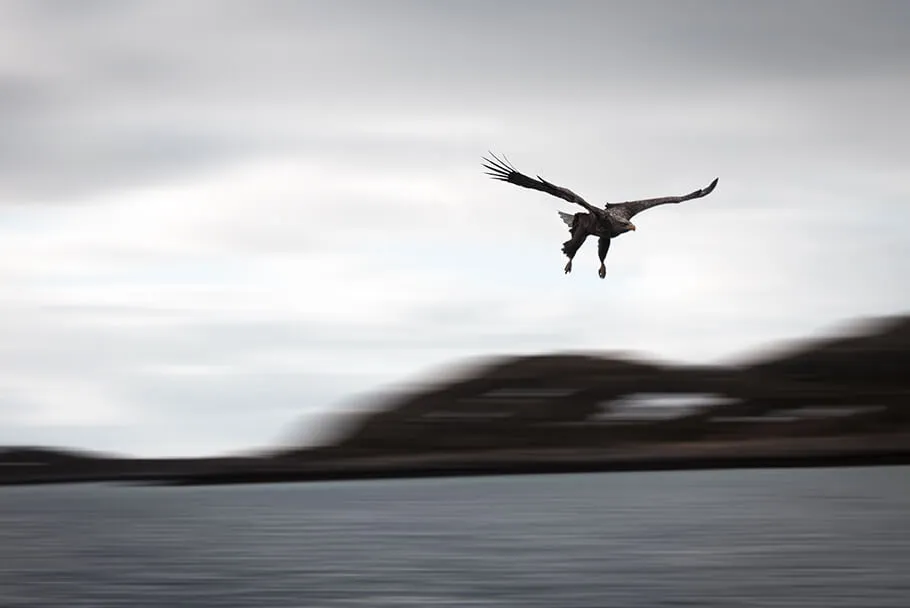
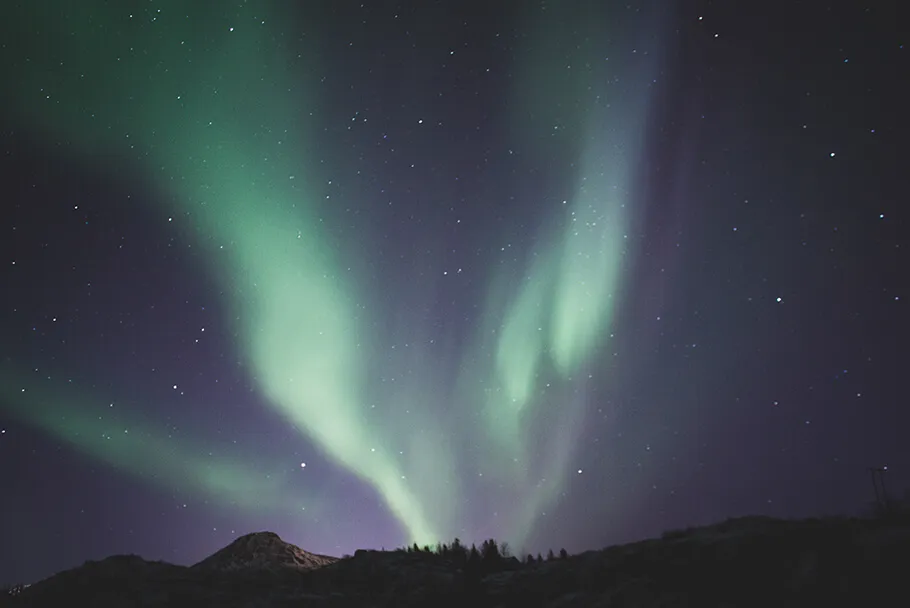
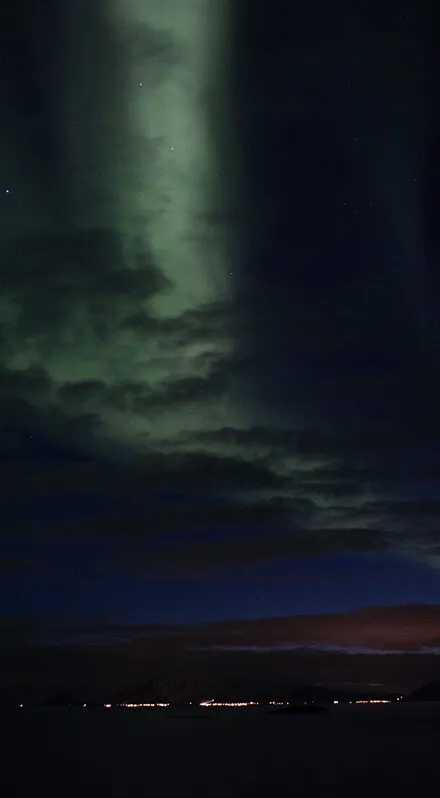
On Thursday morning, the eagle-watching trip was at 10am. The guide gave us cold-weather gear: gloves, goggles and an overall. There were about ten of us in the RIB. The boat took us through the fjords and we watched the eagles on the cliffs; then, as the guide threw fish to them, they came closer and swooped around the boat. We saw lots of them, very close up, mostly young eagles. The boat sped us to the Trollfjord. The guide stopped several times along the way to give a few explanations in English about these birds and the history of the area. The trip lasted two hours. On the way back, to warm up, we had lunch at the bar we had found the day before, Bacalao. It is a big restaurant with a cosy atmosphere, a stove and a lovely view of the harbour and the mountain. We set off again in the early afternoon to explore around the town and found an icy path leading to a frozen lake, Storkongsvatnet, surrounded by a few houses. In the late afternoon, we reached Henningsvær, where we had booked this room. The weather was right for the northern lights, so we set up by a fjord with the mountains in the background. We waited a few minutes and, very quickly, the first white streaks appeared in the sky. At first we were not sure it was an aurora, then the streak grew brighter and turned green. After that, the northern lights paraded across the sky all evening: some fleeting, others lasting a long time and dancing in the sky. We were even lucky enough to see a purple aurora that evening. After several days of bad weather, we were delighted to finally see this very poetic phenomenon. We then went back to Henningsvær; it was 8pm and all the supermarkets were closed, so we got a takeaway pizza and went back to the hotel. The room was small, but the view was magnificent: we could even see the northern lights from the window.
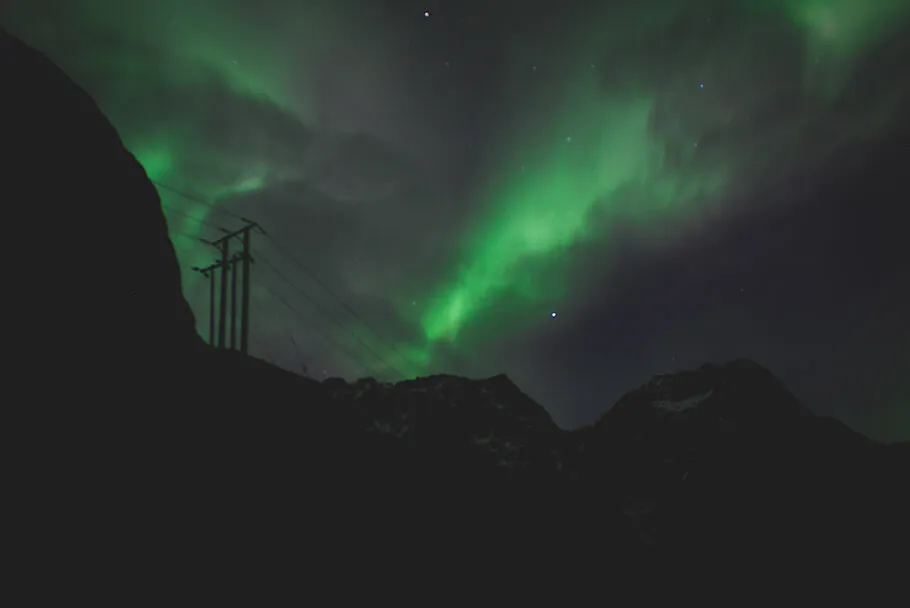
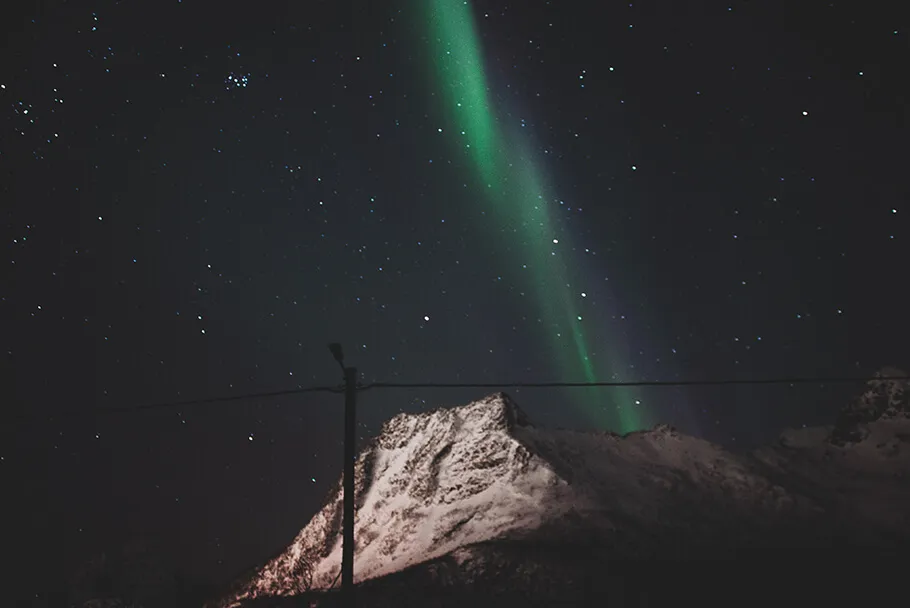
Tromsø and the Lofoten Islands are ideal spots for the northern lights: ideally, you need to be between 65° and 75° of latitude (Tromsø is at 69°). Three conditions must come together: it must be dark, the sky must be clear and solar activity must be strong enough. Get away from the light pollution of towns to see the northern lights better. The temperature does not really matter. Auroras occur between 100 and 300 km up, which is what makes their colours vary (reactions between the different atoms in the atmosphere and particles from the Sun).
To photograph the northern lights, you will need a camera with a proper body (DSLR or mirrorless) so that you can play with the settings. As I am not an expert, I may simplify the technical terms: feel free to comment at the bottom of the article if needed. Also note that batteries do not like the cold: I recommend keeping them in your pocket, close to your body to keep them warm, and only putting them in the camera at the last moment.
Feel free to read other photographers' blogs for more technical explanations about night photography. Wrap up warm, as you do not know how long you will wait in the cold before perhaps seeing the northern lights. Ideally, scout a spot in daylight and come back after dark. We had a head torch to get around in the dark and adjust the camera settings. Try to find a place with a clear sky, if possible facing north.
We were lucky enough to see the northern lights 3 times, early in the evening, between 7pm and 9pm. Between Tromsø and the Lofoten Islands, you can see them from nightfall until about 3am. Several websites and apps can help you find the northern lights. The one we used most was norway-lights.com, very easy to use; for apps, we had installed “My Aurora Forecast” on iOS. Some apps offer alerts, a service that is usually paid and that we did not try. Do ask: some hotels offer to wake you up if an aurora is visible!
If you want help seeing and photographing the northern lights, there are organised tours. Often by bus, an experienced driver takes you in a small group to where you have a chance of seeing them. There are several options: some tours focus on photography, with tips and equipment loans, others include a meal around a campfire, or just transport. Some tours will refund you or offer another date if you saw nothing, an important point to check before choosing a company. It is hard for us to recommend these offers or not, as we did not need them. I suppose we would have given in if, at the end of the trip, we had not managed to see the northern lights on our own. It can be a good solution if you are only staying a short time or do not have a rental car.
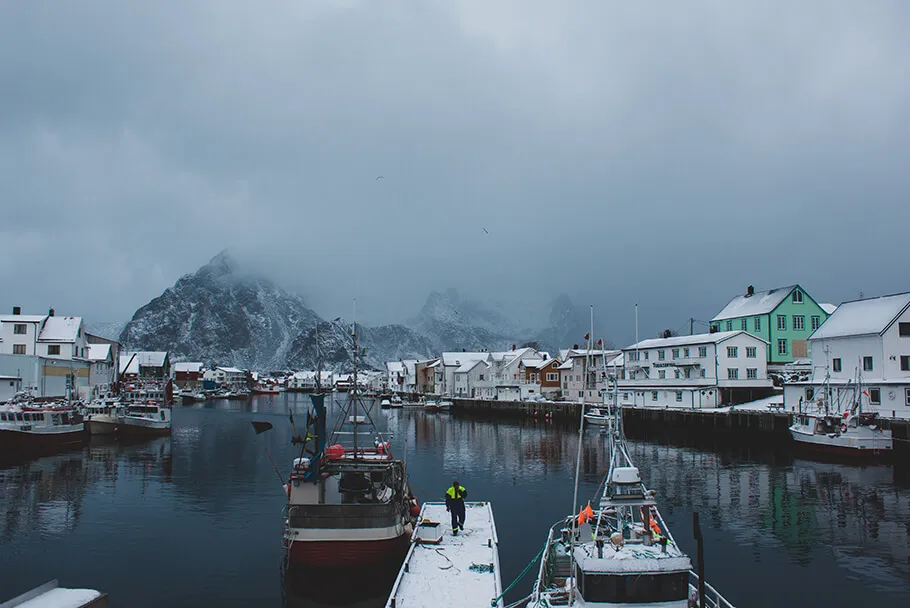
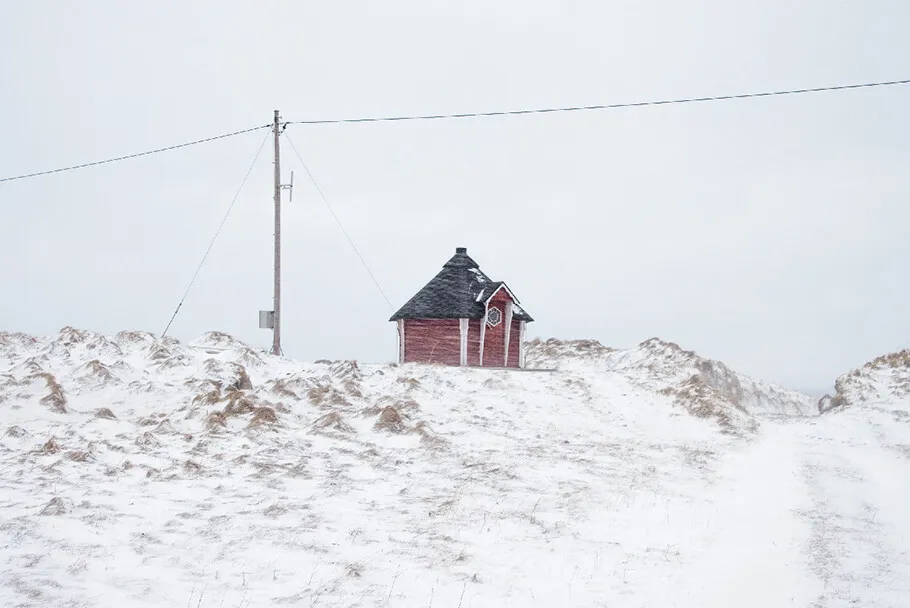
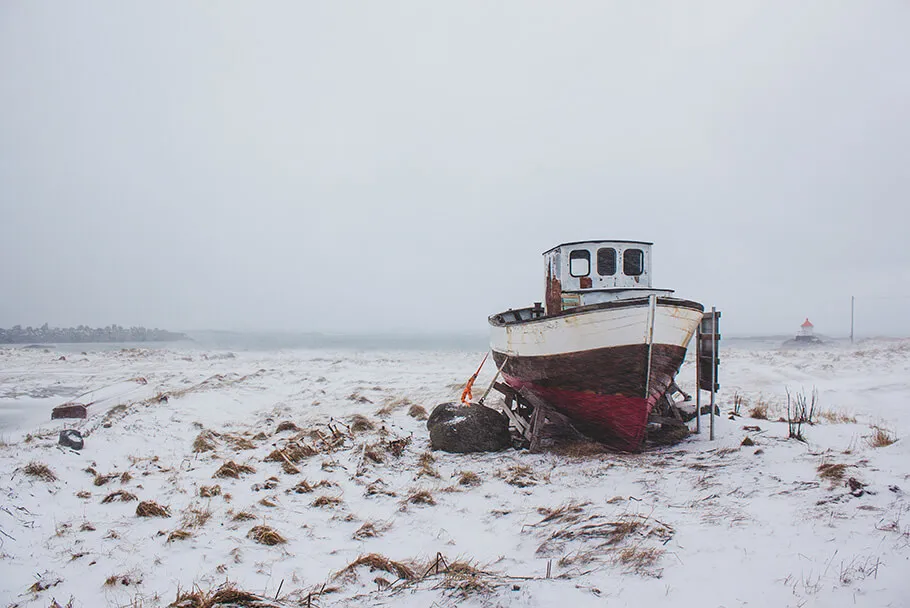
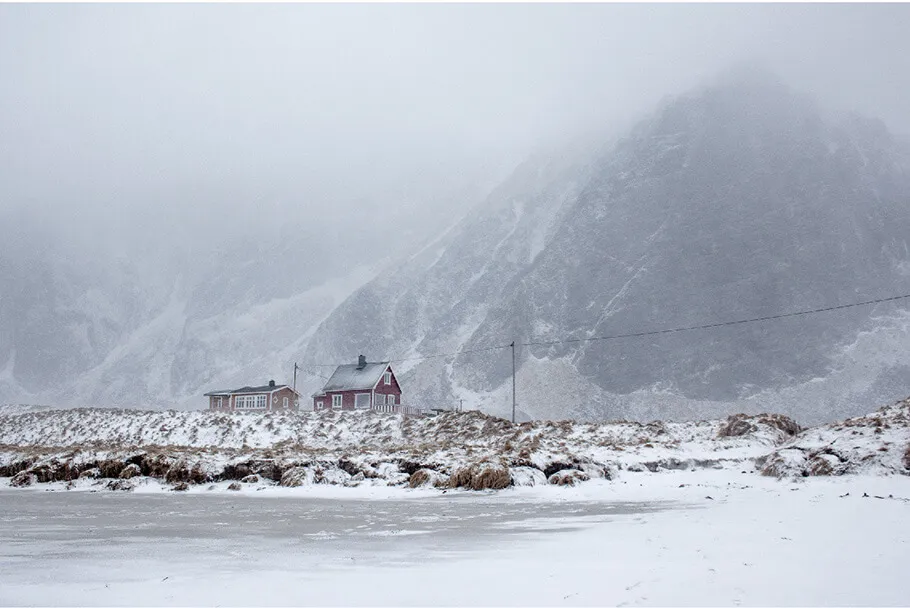
The next morning, heavy snow had covered everything. The hotel serves breakfast in a large room overlooking the harbour: the view is beautiful and, above all, we were warm while the wind and snow raged outside. Still, we had to go out and explore the village! It is a small, touristy harbour, very beautiful under the snow, spread over several small islands linked to the main island by bridges. We walked along the canal as the fishing boats were already coming back with their catch and mooring at the quay. That is where we saw our first fish-drying racks: the fishermen were hanging up the cod they had brought in a big tub on a tractor, and the whole process is done by hand. The racks are made of wood, and we saw different shapes, triangular or rectangular, with either only heads or only bodies! One of the islands is the size of the football pitch on it, and it is often photographed from above by drone.
We set off again by car, heading south towards Hamnøy and Reine, across the island of Vestvågøy. The snowstorm limited our visits a little: we only went to Eggum, a small village by the water, where we walked on the beach. On the way, we found a supermarket to do some shopping and had a picnic in the car. After several short stops, we reached Hamnøy in the late afternoon. Our guesthouse is a large, renovated 19th-century white house, with bedrooms and a shared lounge and kitchen. The bathroom is shared too, but it is very comfortable, large and well equipped, so it was rather pleasant. We quickly cooked dinner, then went out for a walk in the night. The guesthouse is just before Reine, which we could see in the distance during our walk. The smell of dried fish in this village is pretty unbearable!
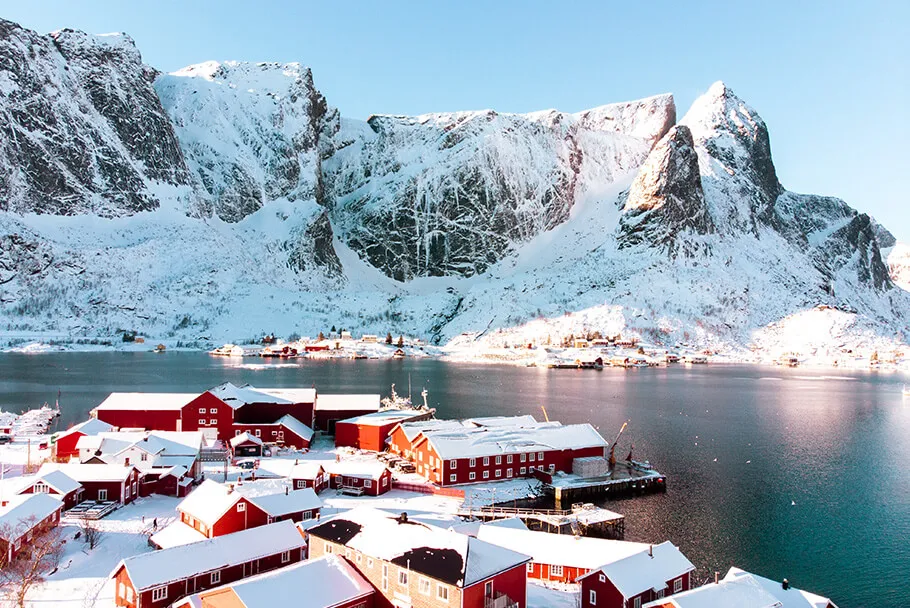
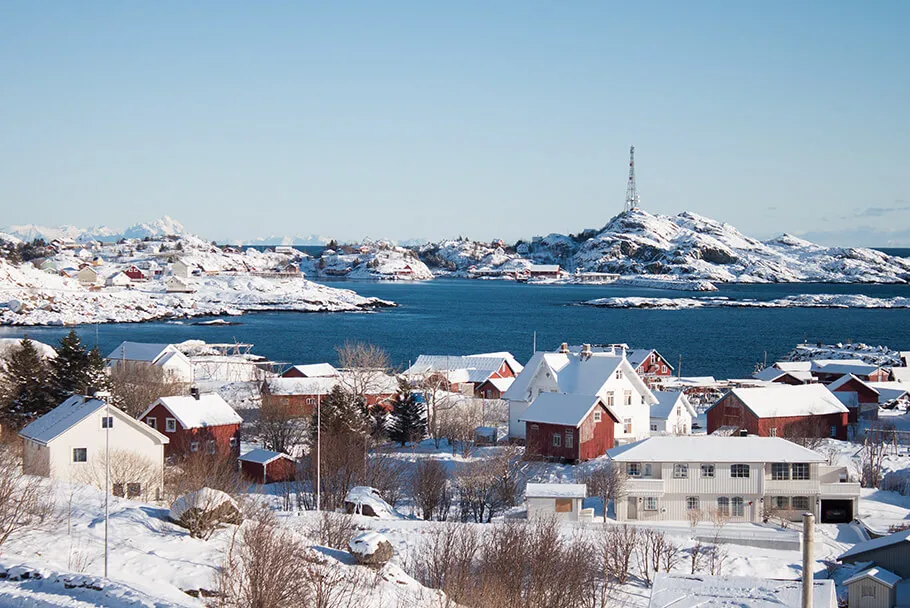
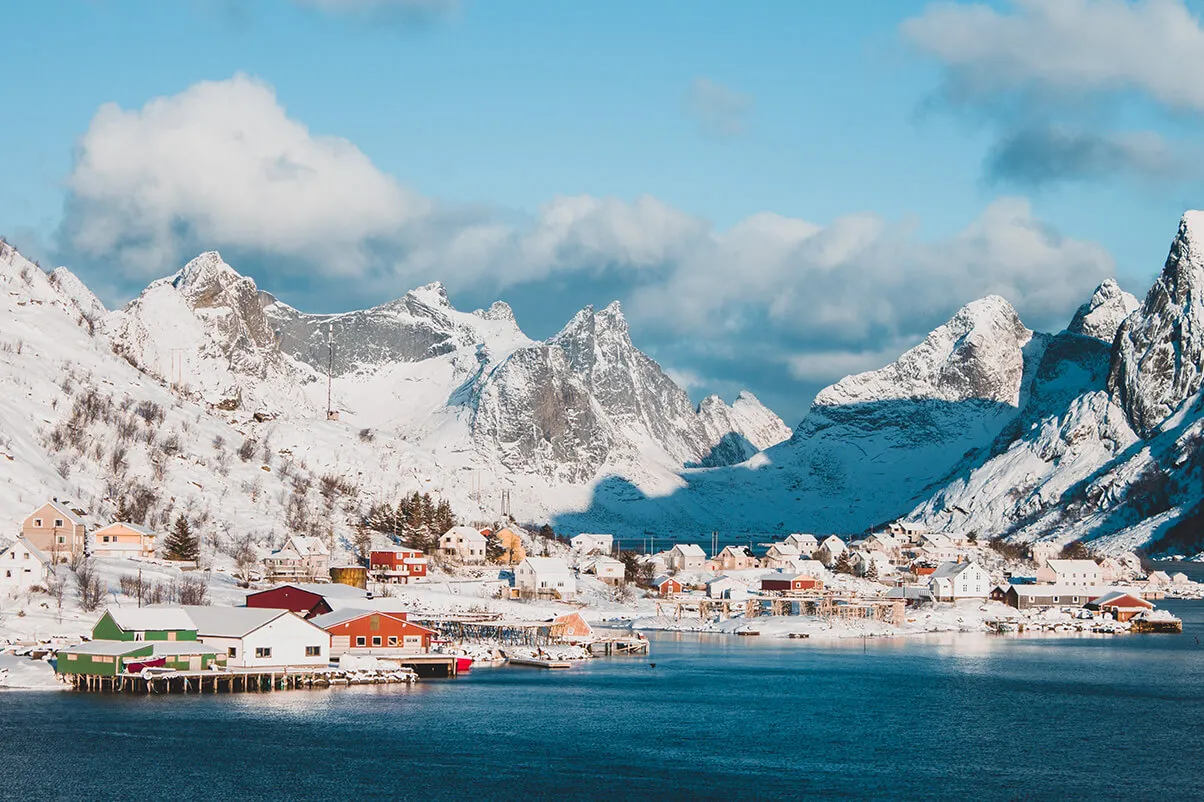
On Saturday morning, under a cloudless blue sky, we carried on exploring the southern Lofoten Islands. We went first to Reine, a fishing port and one of the best known on these islands for the beauty of its landscapes. Heavy snow had fallen the day before: the roads, houses and mountains were covered in it, giving us the feeling of being completely cut off from the rest of the archipelago. A few tourists like us were photographing the steep cliffs. The sky was perfectly blue and contrasted with the red rorbuer. It really is magnificent. We spent time photographing the houses, the village streets and the fjord. Then we stopped at a café, “Bringen”. Sitting by the window, we tried a cinnamon roll (kanelbolle), whose smell filled the whole room: delicious! We set off again for Å, the southernmost village of the archipelago (pronounced “Oh”). You can get a lovely view over the harbour and the lake by climbing the little hill behind the village. On the way down, we found fish heads drying on wooden racks, as in every village in the archipelago.
The journey back began: we headed north again, stopping once more at Hamnøy. As the road was icy, we drove slowly; we skidded once, and once a pick-up truck failed to brake in front of us. We parked in the village car park: note that car parks are very often paying in the Lofoten, and you can download an app that makes paying easier, which also works in Tromsø. Hamnøy is a tiny, very pretty village with its red rorbuer, facing the fjord and the mountains, perfect for a night's stay; the cabins at Eliassen Rorbuer looked very tempting, one to try next time!
We carried on along the E10, still heading north, for about 20 minutes, then turned left onto the Fv808 to the village of Fredvang, where there is a beach. The water is turquoise and the snow covered part of the fine sand: very beautiful. We went back to the E10 and soon stopped in Ramberg to do some shopping. We had a picnic just after the town, facing another very beautiful beach at Flakstad. It then takes about twenty minutes to reach Nusfjord via the E10 and then the Fv807; the road is very beautiful, running along a large lake and then a fjord surrounded by snowy mountains. It was 5pm and night was starting to fall, with the temperature dropping sharply to around -10°C. The village is tiny, tucked between the mountains, so it does not take long to see: we went down to the horseshoe-shaped wooden quay surrounded by red and mustard-yellow rorbuer. One of the rorbuer can be visited for free as a record of the old fishermen's cabins, and there is a sauna built by students facing the sea; I think you have to call at least eight hours ahead to book it in the low season. From the outside, it is a beautiful and rather unusual wooden structure.
We had to catch the boat that evening in Svolvær, so we took the E10 again for about 1 hour 30 minutes. We went back to the path to the frozen lake we had found on Thursday, Storkongsvatnet, just before Svolvær, to watch the northern lights at nightfall. They were less bright than on Wednesday evening, but the setting was prettier. A few cross-country skiers passed along the path; otherwise we were completely alone, with no light, and the head torch we had brought came in very handy. It was extremely cold (-11°C according to the car's thermometer). I had brought pocket hand warmers, which last for several hours. We drove back to Svolvær, where the boat back to Tromsø was waiting. It was smaller than the one on the way there, but it also had a sauna. This time we chose to pay for a cabin, with two single beds and a small bathroom, for 90 euros. 2026 update: it is hard to know whether these prices still apply. We had taken the cabin when boarding, so last-minute prices may be lower to fill the cabins. When we search for the same journey in advance, prices are more like 230 euros.
The boat passed the Trollfjord, and we went out on the foredeck to see it lit up by big floodlights. Well, it was extremely cold, so we went back to our nicely heated cabin fairly quickly. We saw one last aurora from the boat, but its movement made photography with a long exposure impossible.
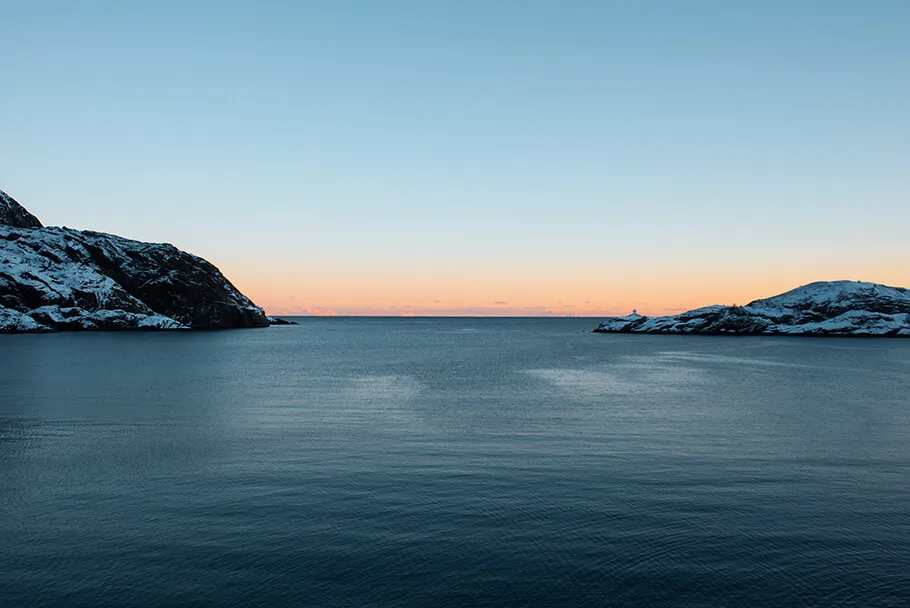
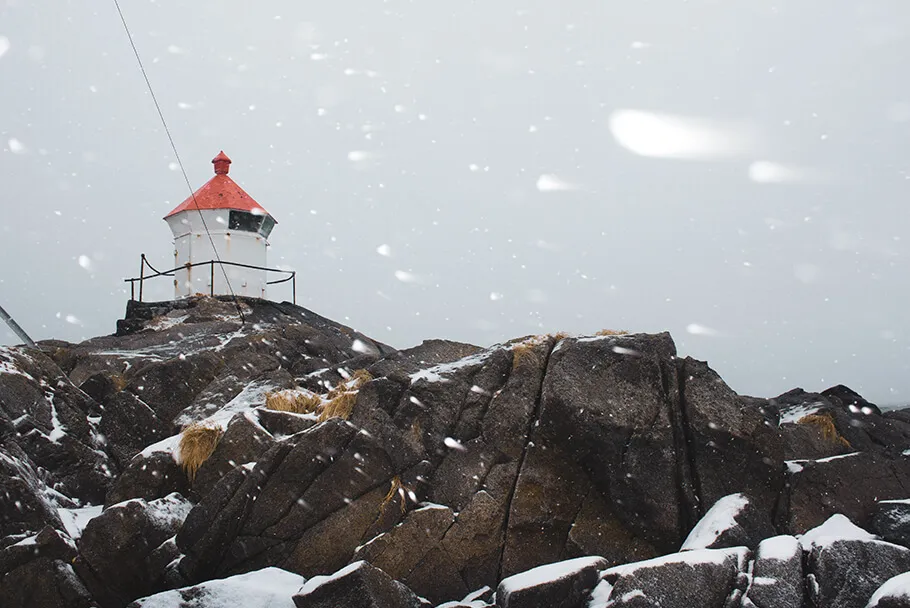
The next morning, we collected the sauna keys from reception and enjoyed the facilities for a good hour. Then we had lunch in the ship's cafeteria. The atmosphere was very peaceful, the pace a little slow for us. We spent the rest of the time in the lounge, admiring the landscape gliding past: the sea, the mountains, the snowy fjords. Around 2pm, we arrived in Tromsø, where we washed the car at the petrol station, filled it up and returned it to Europcar next to the tourist office. Then we dropped our bags at the Smarthotel Tromsø and set off straight away for a new activity.
That morning, we had booked a night dog-sledding trip with the company Active Tromsø. This time it was not cancelled: in the end, the whale-watching trip in Andenes was the only one we could not do.
The guide picked us up outside the Radisson Blu hotel at 4:45pm. With a dozen other tourists, we drove for about twenty minutes to the centre on the island of Kvaløya. Then one of the guides kitted us out for the cold: an overall, boots, gloves and a hat. We then set off again in the van, as it was impossible to leave from the centre with the dogs because the rain of the previous days had reopened the streams. We found the dogs already harnessed to the sleds. For now, they were lying down and very calm. There were five dogs per sled and about 10 sleds.
Geoffrey drove and I stayed in the sled. The guide explained how to brake by pressing the brake with your feet, and I held an emergency anchor in my hands in case Geoffrey fell off the sled.
The dogs were getting impatient: they barked, howled and pulled at the sled. We set off one by one across the snowy valley. It was dark, but the sky was overcast, so we would not see any northern lights. We stopped regularly to wait for the group, and the dogs got very impatient, pulling hard on the sled, especially the two at the front, the liveliest. The others rolled in the snow, shook themselves or ate the snow. The dogs from the sleds behind us came up alongside, and we could stroke them; one of them spotted me and tried to climb into our sled. They are very affectionate. There are several breeds, including huskies.
The ride lasted 40 minutes, and it felt longer. In the end, we did a sort of loop in the valley, with the mountains visible all around. There were a few good descents where we got hit by tree branches: the dogs race ahead and do not care about us behind! Geoffrey was even thrown off the sled, but he managed to run alongside and climb back on. It was a great experience, and it would have been a shame to miss it.
The dogs were put in cages in the truck and driven back to the centre, and we followed in the van. At the centre, we each took a dog to lead it to its kennel. They are very powerful, and it takes some strength to hold them. We played with them for a while, then the guide, who owns the centre, invited us to sit around a fire in an open hut. He served us coffee and tea in rather rustic mugs. The warmth did us a lot of good, as it was still very cold that night. He told us about his passion for dog sledding, which started when he was 16; by 18, he already had several dogs. He told us about the races he used to do. The one that struck us was a race in Canada in -56°C! If you want to know more about these races, have a look at their website: it is quite interesting.
Like our road trip in Iceland, Norway is still very wild (especially in winter). You are often alone in vast open spaces, far from towns and villages. The landscapes are magnificent: a perfect playground for drones without disturbing anyone. We bought a DJI Mavic Air especially for this trip. We chose this model for its size and weight: small enough to be very easy to carry, it unfolds in a few minutes and is ready to fly very quickly. Also for its price (about €700), cheaper than the “pro” versions but with superb image and video quality (4K, RAW format…), and it is very easy to use with the DJI GO app. Today, Mavic 1 models sell for under 200 euros second-hand, and there are several ranges of drones at much gentler prices.
When travelling, you are advised to keep the drone with you in the cabin, both to protect it from knocks and to protect the batteries from sudden changes in temperature (which could cause a fire). We had no problems with security at Paris CDG, London Gatwick, Tromsø and Oslo airports. The practice seems to be becoming more common: at Tromsø airport, on arrival, a poster reminded travellers of the essential safety rules for flying a drone.
In 2019, we did not have to do anything. Since then, Norway has applied the European regulations, as a member of the European Economic Area. For a drone weighing 250 grams or more, like the Mavic Air, three requirements apply: an operator number obtained in your country of residence (on AlphaTango for France), to be displayed on the drone; an A1/A3 remote pilot certificate, obtained through a free online exam and to be carried with you while flying; and third-party liability insurance.
As for the camera, at the time I had a Canon 550D, an entry-level DSLR. Its high-ISO performance was not great for the northern lights, and images quickly became noisy. I used it with the kit lens, the 18-55, which only opens to f/3.5. Today I use a Nikon Z5; for astrophotography, I pair it with my Viltrox 16mm f/1.8.
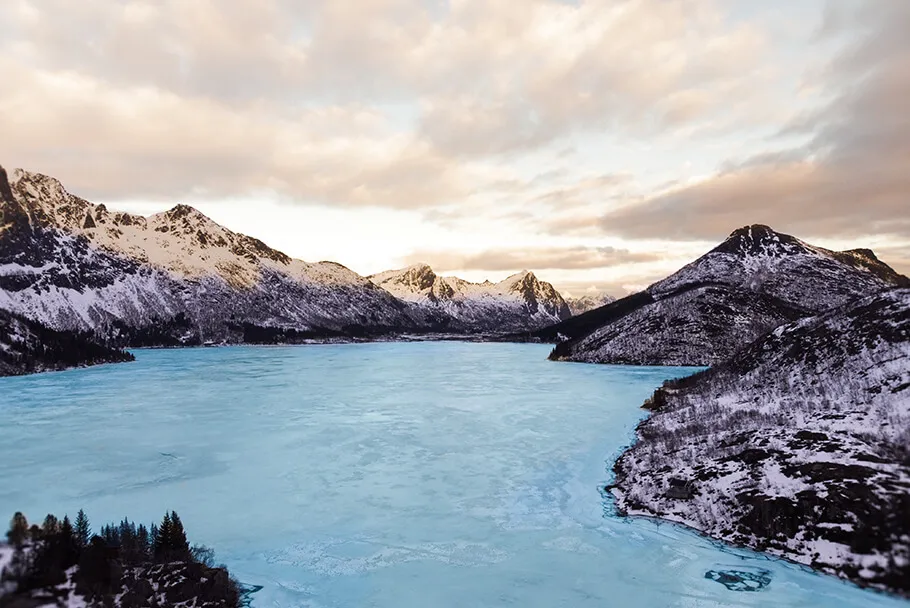
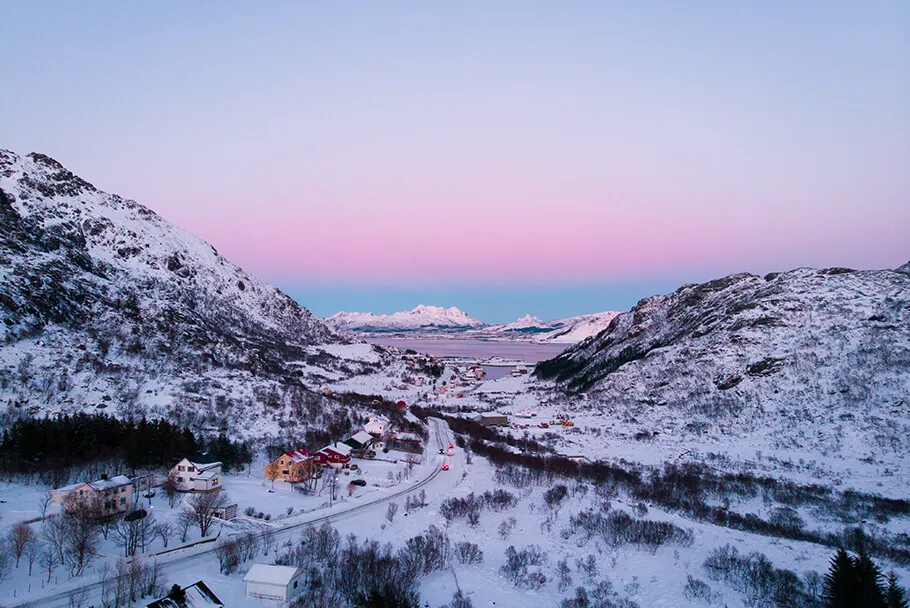
The outing lasted about 6 hours in all; we then went back to the hotel via Burger King, the only place still open.
It was already time to go home: we packed our bags and left for Paris the next morning. This time we went via Oslo, where we again had a wait of a few hours. There we had a bad experience with the airline Norwegian, which made us pay 65 euros to put one of our bags in the hold. At the gate, the staff called security and closed the boarding gate to put pressure on passengers: the message was clear, if you do not pay, you do not board. The pretext was the size of our bags: they fitted in the sizer, but the staff decided that was not enough… Several passengers had to pay this “tax”, and two French passengers were refused boarding because they dared to protest…
The journey home took all day, and we were in Paris around 9pm.
We were delighted with this trip: despite rather tricky weather on the first days, we managed to do almost everything we had planned. The goal of seeing the northern lights was achieved: we saw them on 3 evenings out of 9.
The season runs from late September to late March, when the nights are long and dark enough. We were there for nine days at the end of February 2019 and saw auroras on three evenings. That is about right: you need patience and a clear sky, and no date guarantees the show.
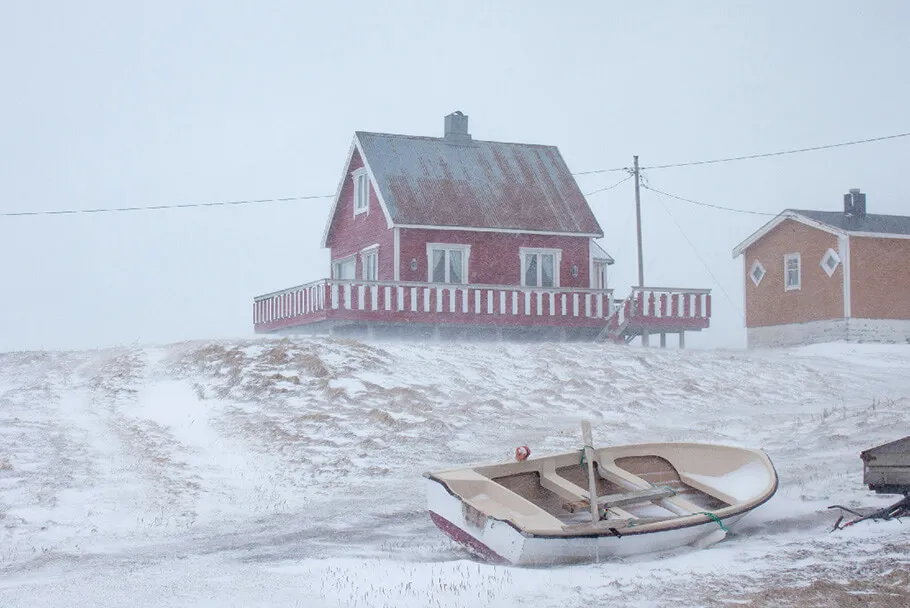
Less than you might think. The Gulf Stream softens the archipelago's climate, where temperatures are often around 0°C, while it is much colder inland. The real issue is not the thermometer but the wind and the damp, which make technical clothing essential.
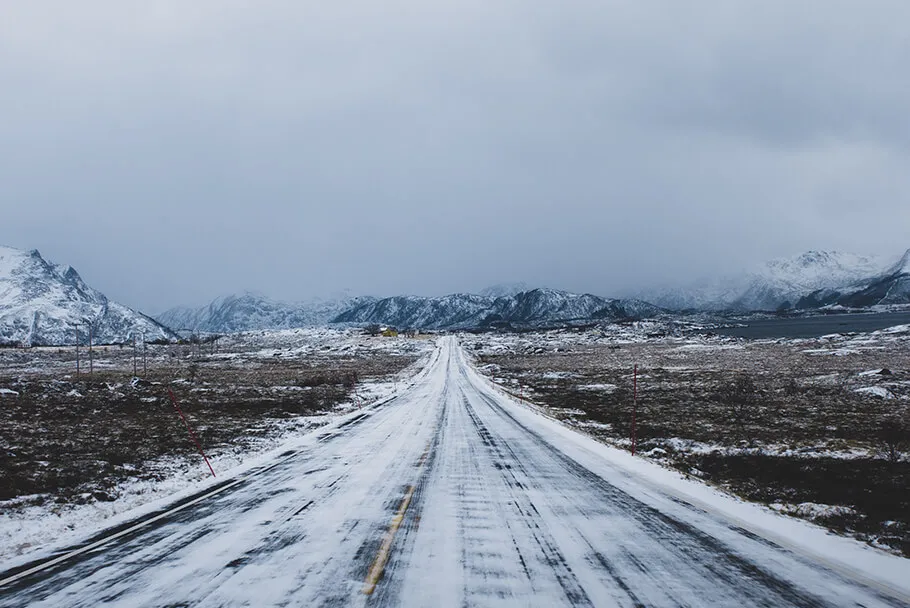
Rental cars are fitted with studded tyres, which are compulsory at this time of year. The main roads are kept clear at all times. What surprised us most were the very short days in February and the snowstorms that suddenly cut visibility: allow plenty of time for your journeys.
Yes, but the rules have changed since our trip. For a drone weighing 250 grams or more, you need an operator number obtained in your country of residence, an A1/A3 remote pilot certificate and third-party liability insurance.
Enjoyed this article? Pin it on Pinterest.
Follow us on social media to hear about our next trips. Feel free to leave a comment or ask a question at the bottom of the page. See you soon.