By Geoffrey Ménissier, published on , updated on
Also available in: 🇫🇷 🇪🇸 🇵🇹 🇩🇪 🇮🇹 🇳🇱
In short
The goal: discover Valencia as a family. On the programme: the aquarium, the Bioparc and the Spanish city itself, not forgetting tapas and sangria, plus a train trip to Xàtiva.
0 comments
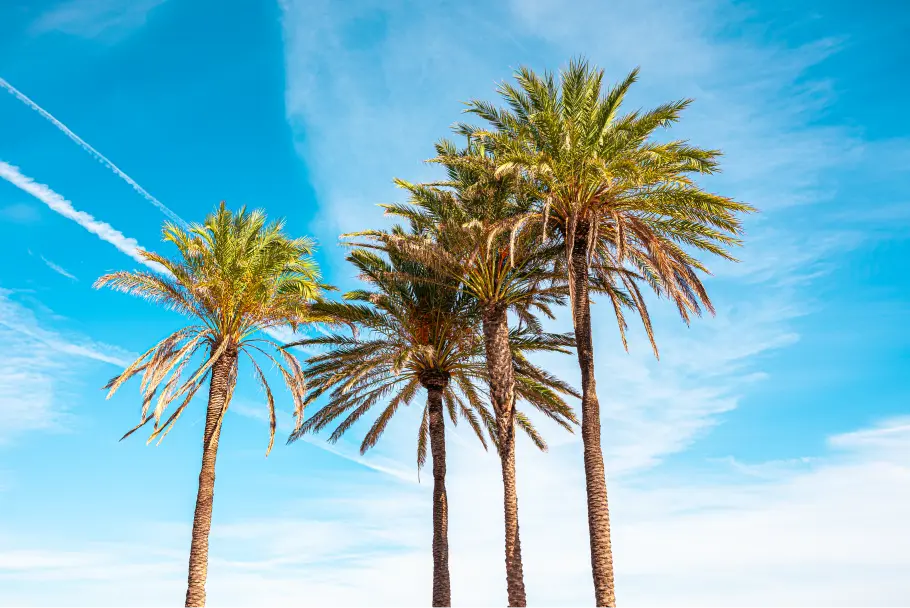
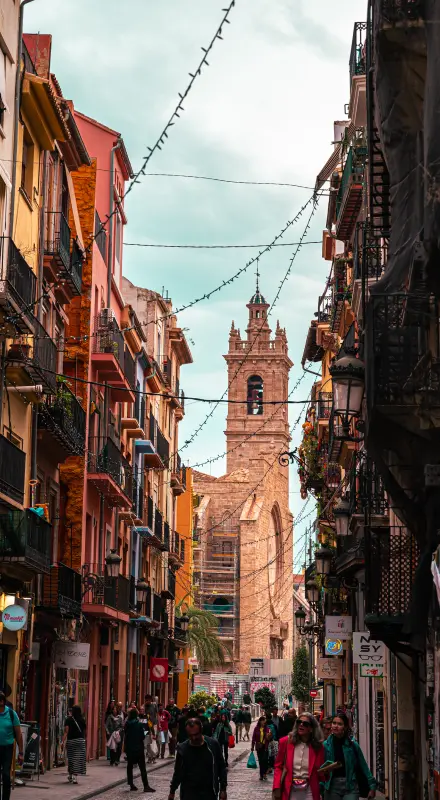
Welcome to our travel blog: in this article, we take you to Valencia, in Spain. It is a very pleasant destination to discover out of season: it was late October, and temperatures were around 20 to 25°C. For Sandrine, it was her second visit to the city. For me (Geoffrey), it was my very first time in Spain. As for Victor (5), it was also a first: taking a plane. We travelled with Sandrine's parents, her sister and her husband.
We rented a three-bedroom apartment through Booking, about fifteen minutes' walk from the historic centre. We arrived on a Tuesday morning around 11am and left on Sunday evening, so 6 days there.
After meeting the owner, who shared a few good addresses with us, we went out for lunch at “Los Toneles”. It is an institution, open for 50 years, right next to the station and the bullring. The restaurant offers a wide choice of tapas, which we shared with sangria. After lunch, we had dessert opposite, at “Cine Capitol”, a former 1930 Art Deco cinema that now houses restaurants and a tearoom. The place is worth a detour, and the pastries are delicious.
We then started exploring the city, beginning with the Town Hall square (Ajuntament), which houses the tourist office. We strolled north towards the covered market and visited the Silk Exchange (Llotja de la Seda), a commodities exchange built in the 15th century. It shows the economic power of the city at that time.
In the late afternoon, it started to rain and we took shelter in a bar. It was a chance to try Agua de Valencia (Aigua de València), the local cocktail made with cava or champagne, orange juice, vodka and gin.
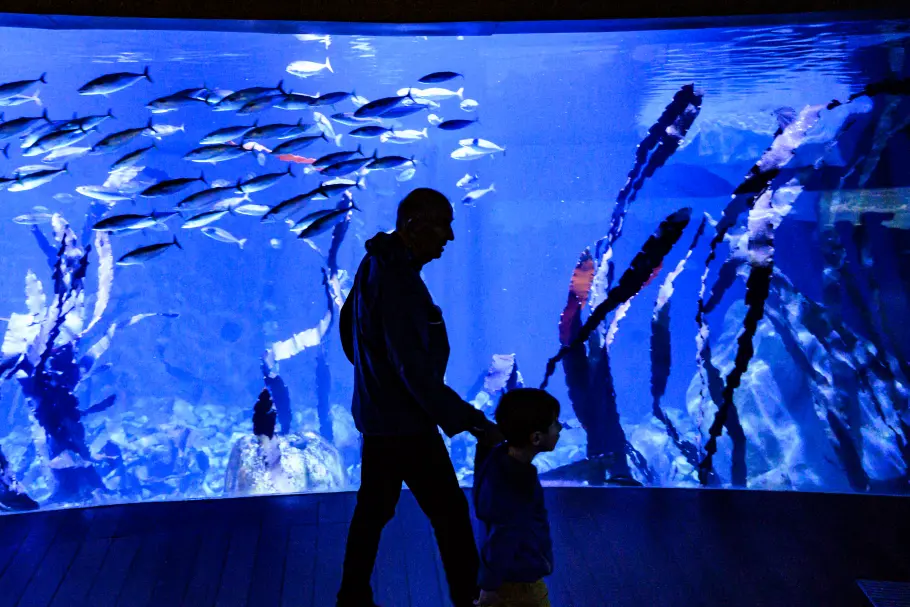
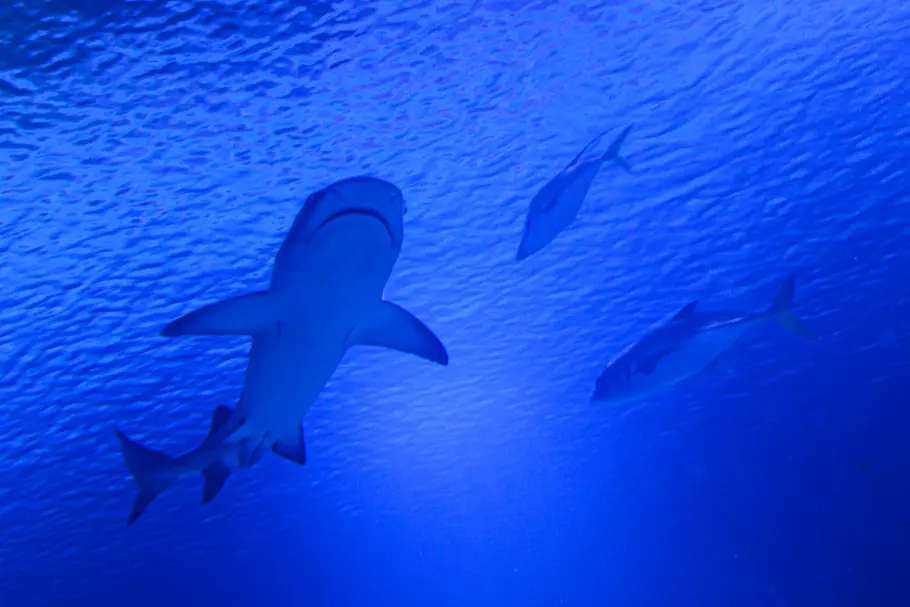
Our second day in Valencia was devoted to the aquarium. It is part of the City of Arts and Sciences, which brings together the Oceanogràfic, the Hemisfèric (a 3D cinema), the Science Museum, the Umbracle (a Mediterranean garden), the Palace of the Arts and the Ágora (an exhibition venue). These buildings are the work of the architect Santiago Calatrava and, with their futuristic style, they have become one of the symbols of Valencia.
The City of Arts and Sciences stretches for almost 2 km along the former bed of the Turia river, which used to flow through the city. The river was diverted to prevent floods like the one in 1957. The old riverbed is now a park of almost 9 km, opened in 1986.
The aquarium is quite large, and we spent almost 4 hours there. It is organised into several pavilions, some connected by tunnels where the animals swim above your head. We saw fish, sharks, turtles, belugas, walruses, rays, jellyfish, crocodiles, dolphins, birds… In all, about 500 species live there.
At the end of the day, we left the Oceanogràfic through the Umbracle and followed part of the Turia gardens to eat at “Gordon 10”, an Argentinian restaurant specialising in beef (fine 300 g cuts). The welcome is very warm, and they also offer a good selection of wines and beers.
(You sometimes need to zoom in quite closely on the area you are looking at for activities to appear.)
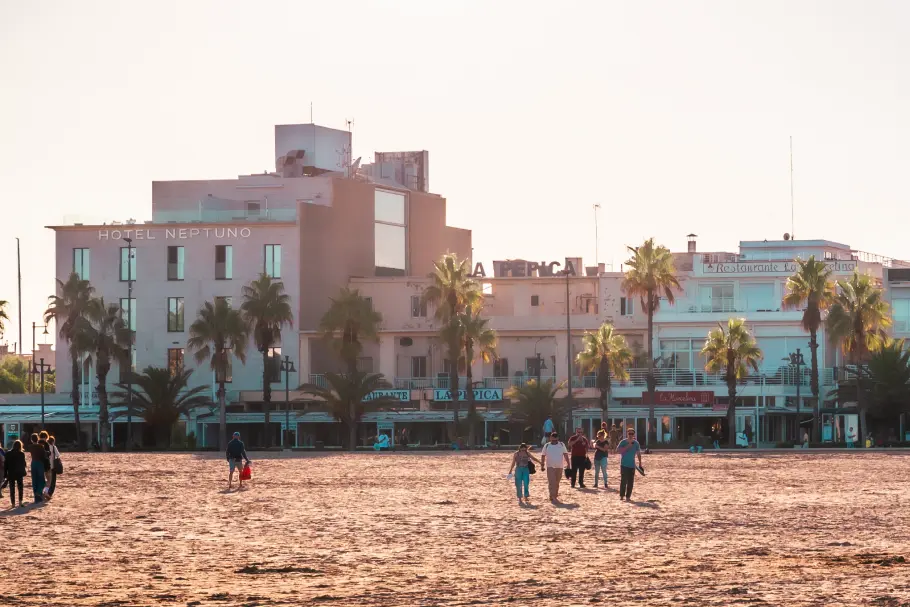
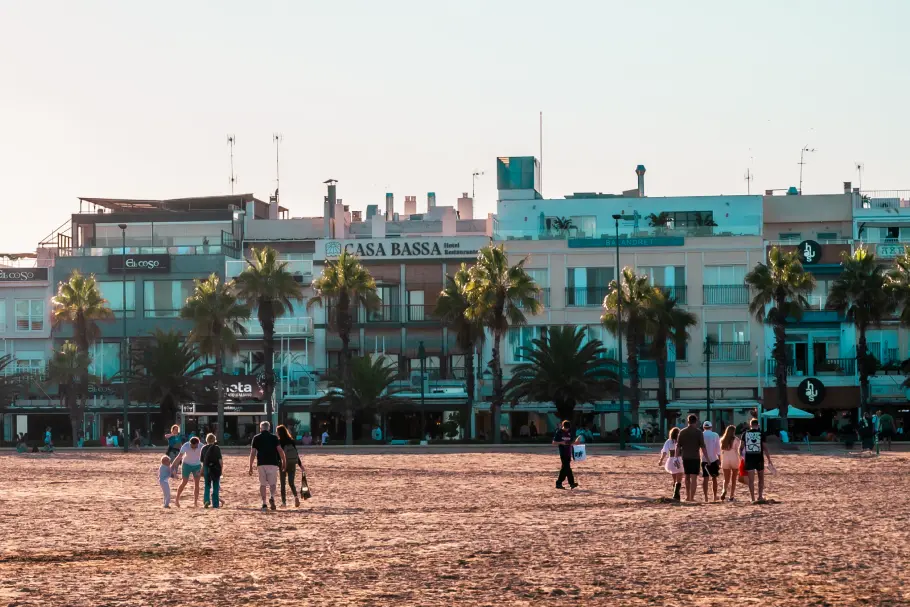
Our host had recommended lunch at “La Pepica”, facing the sea on Malvarrosa beach. Here, you can truly speak of an institution: the family restaurant, opened in 1898, will soon celebrate its 130th anniversary. We wanted to try everything on the menu. We shared a few tapas and oysters before ordering a paella (they bring a giant pan for 6 people straight to the table). Paella comes from Valencia, and the “real” recipe has no seafood, but chicken and rabbit.
After lunch, we walked a little along the seafront before settling on the sand. Victor played at the water's edge. We timidly went in up to our knees, but lots of people were swimming: the sea was around 20°C, with 25°C in the air.
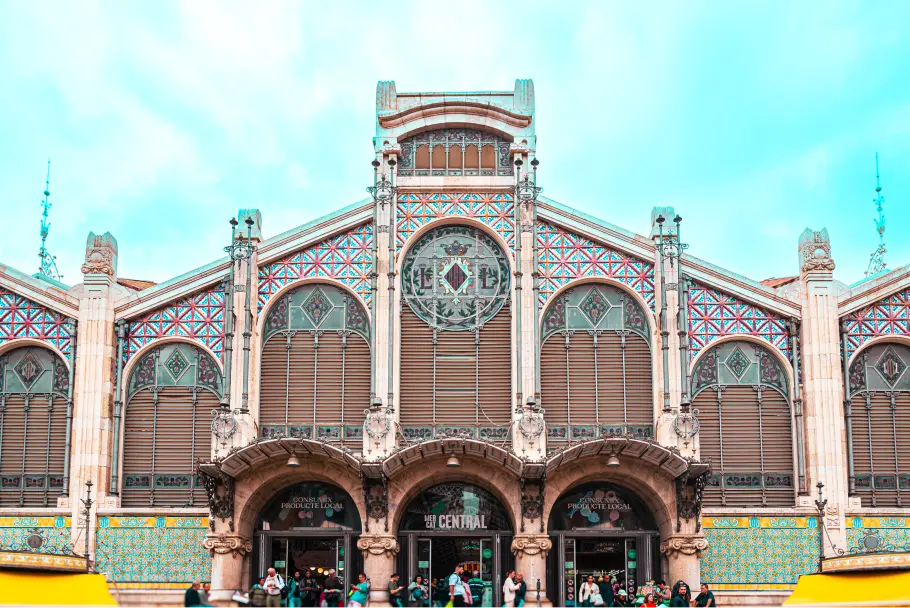
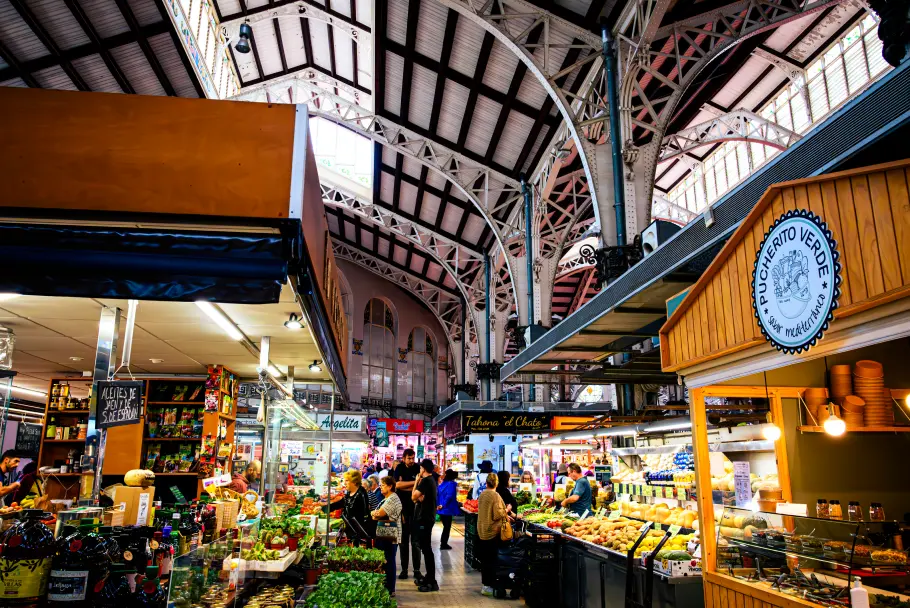
We set off to discover Valencia's Central Market, a covered food market. Its architecture is a large iron structure dating from 1928. If you love food and fresh produce, do not miss it. You will find lots of fruit and vegetables, butchers, delicatessens, cheese shops, pastry shops… and many seafood stalls. Between 300 and 400 stalls (depending on the source) share 8,000 square metres of space.
After our visit, we had tapas again in one of the restaurants facing the market entrance. We then resumed the city tour we had abandoned on Tuesday because of the rain. See our Mapstr map for more details on the places we visited.
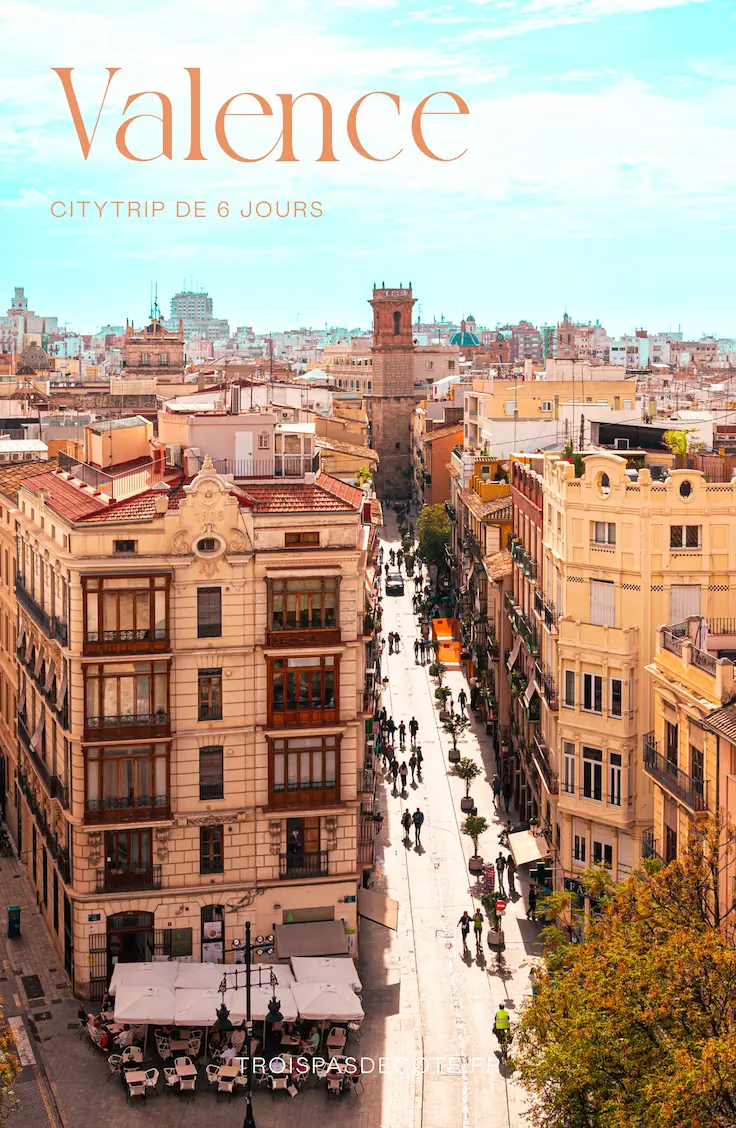
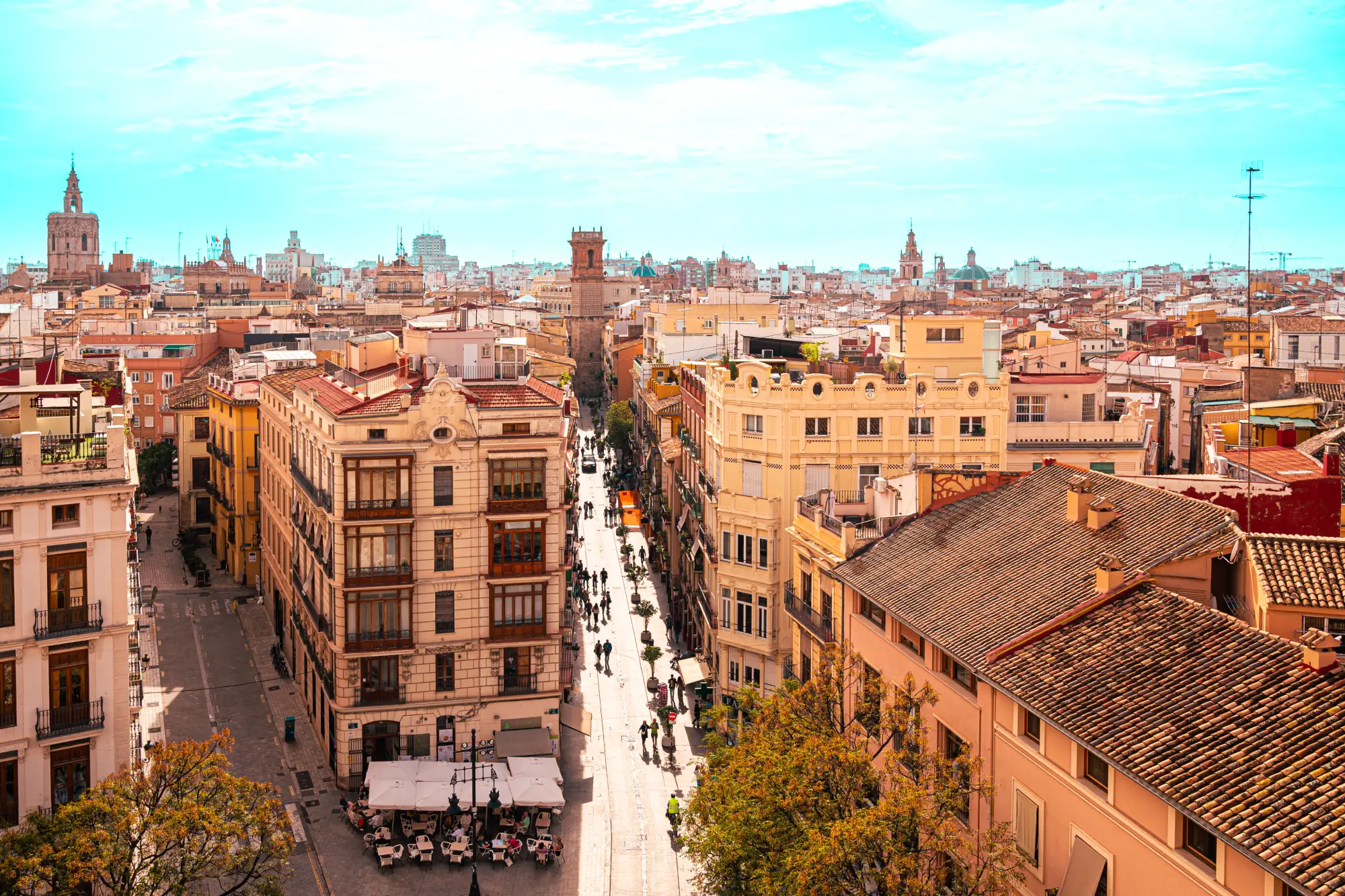
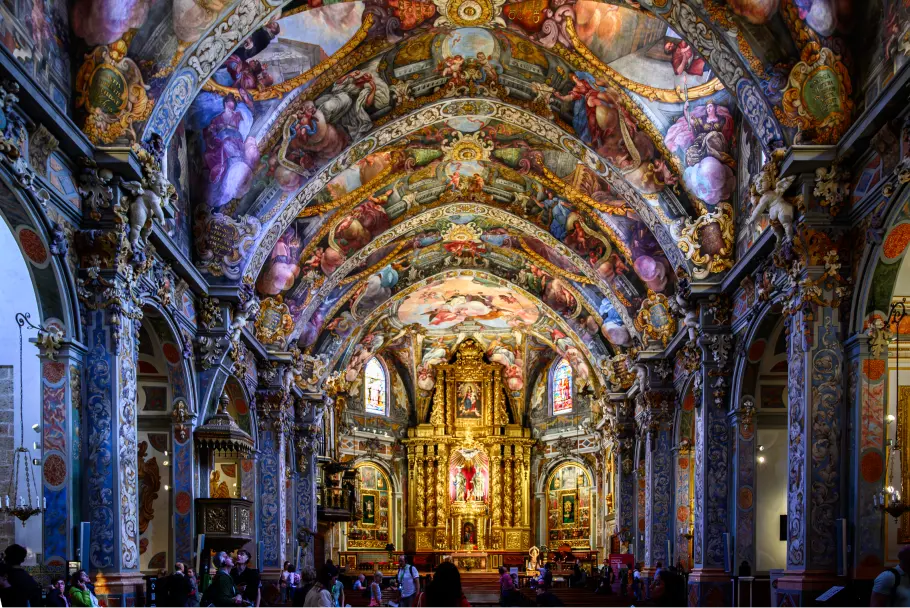
We started with the church of San Nicolás de Bari y San Pedro Mártir, modestly nicknamed the “Sistine Chapel” of Valencia. We visited the Serranos Towers, which offer a fine view over the city's rooftops and its many bell towers. The towers were one of the gates of medieval Valencia, which was surrounded by walls. They date from the end of the 14th century, and admission is €2.
We stopped for another Agua de Valencia at the “Café de las Horas”, an unusual place in rococo style: thick, colourful curtains, a starry ceiling, ceramic tiles and more.
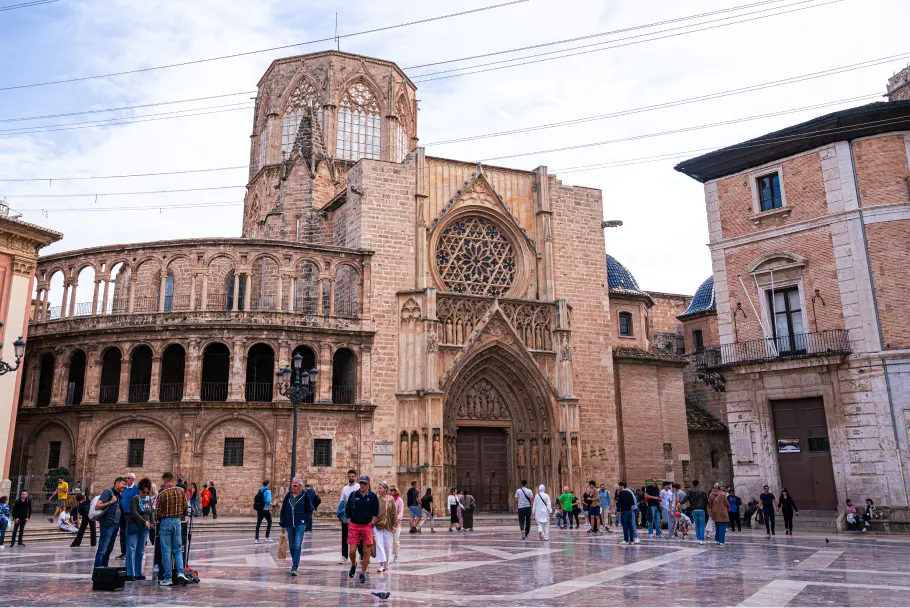
To finish the day, we visited the Plaça de la Mare de Déu, home to the Basilica, before crossing the Plaza de la Reina, where you will find the imposing Cathedral of Saint Mary of Valencia.
With 6 days in Valencia, we wanted to make a trip outside the city. We first looked into the Albufera Natural Park, just south of the city, where you can take a boat to see the wildlife and plants of the lagoon. You will visit rice fields, as this is where paella comes from, and the park is also famous for its sunsets.
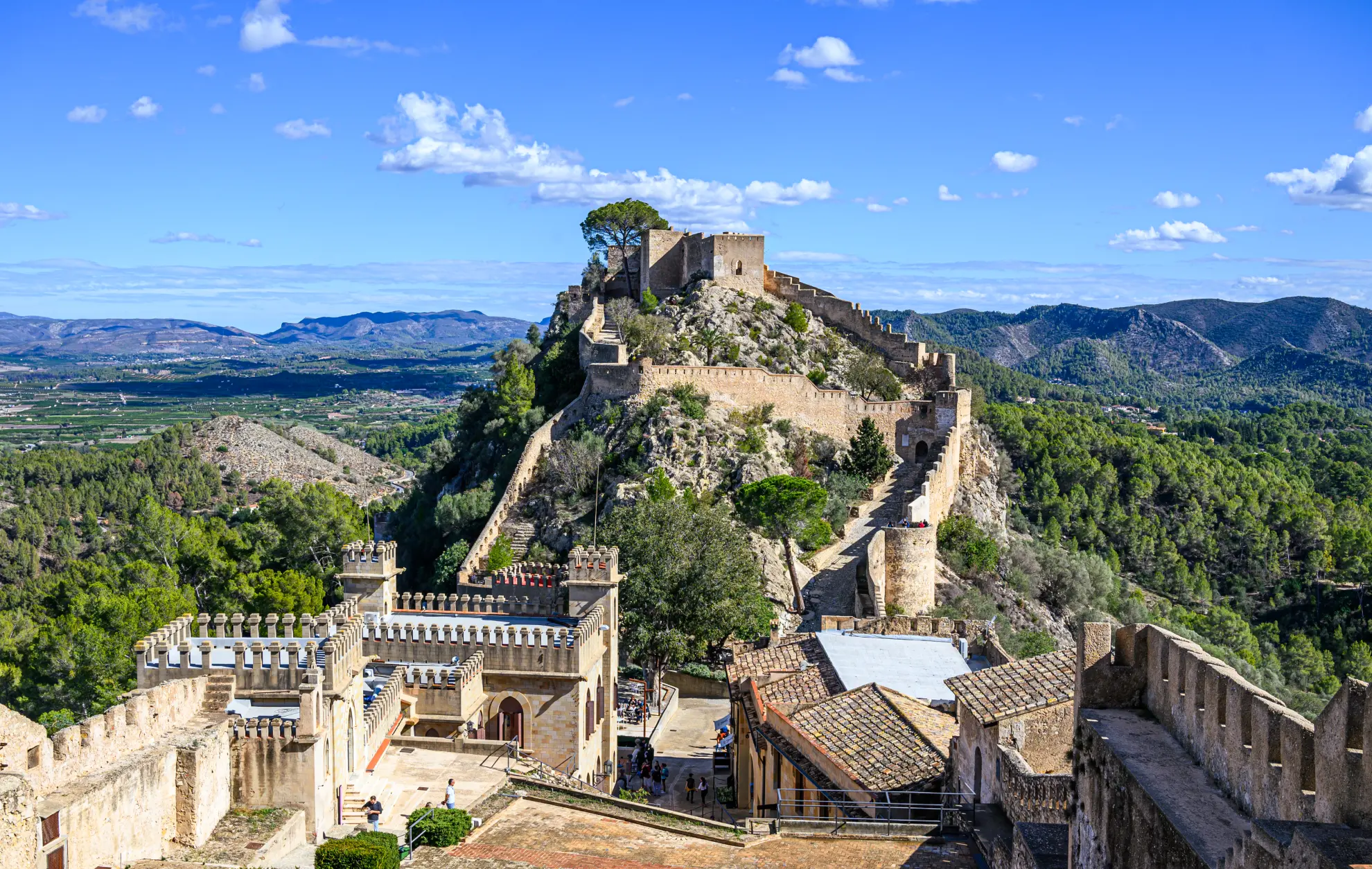
In the end, we chose Xàtiva and its castle. To get there, allow an hour by train from the Estació del Nord. The medieval fortress, on a hill, overlooks the town and offers a panoramic view of the surrounding mountains. The castle is divided into two parts, the Castell Menor and the Castell Major, linked by walls.
When we arrived, we found that the shuttle bus to the foot of the castle only runs on Sundays out of season. So we walked up, and it only took us about twenty minutes to climb the hill.
Our visit started with the Castell Menor, of Iberian and Roman origin. The castle is imposing and shows the strategic importance of the site in Antiquity. We then carried on to the Castell Major: this higher part developed during the Muslim period and was then strengthened under Christian rule. The viewpoint is also popular for its sunsets. After the visit, we had time for an ice cream before catching the train back. As it was Saturday, the train quickly filled up with people heading to Valencia for the evening.
In the evening, we ate at Entrevins, a very good fine-dining restaurant near the Plaza de la Reina. The owner is a French sommelier, hence a very fine wine cellar on display in the middle of the dining room.
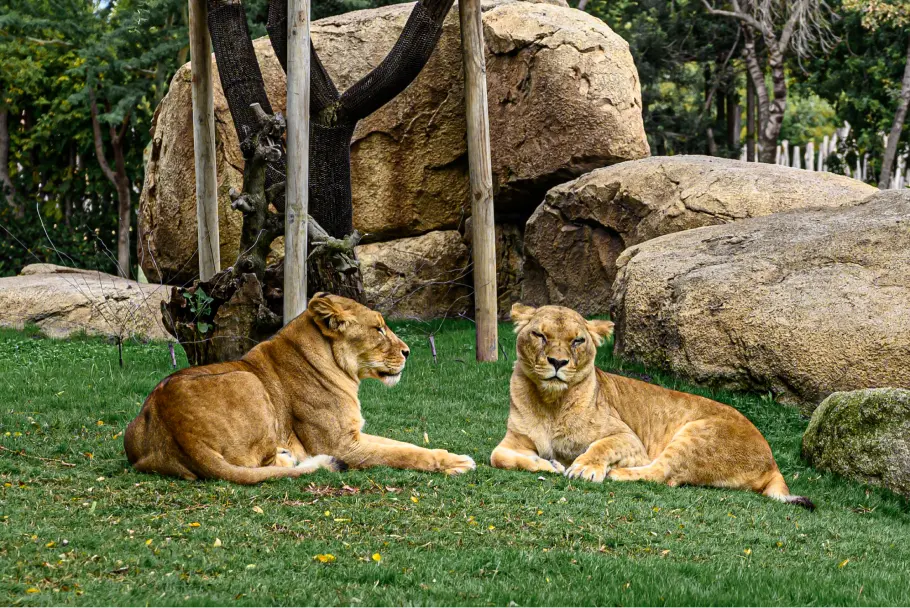
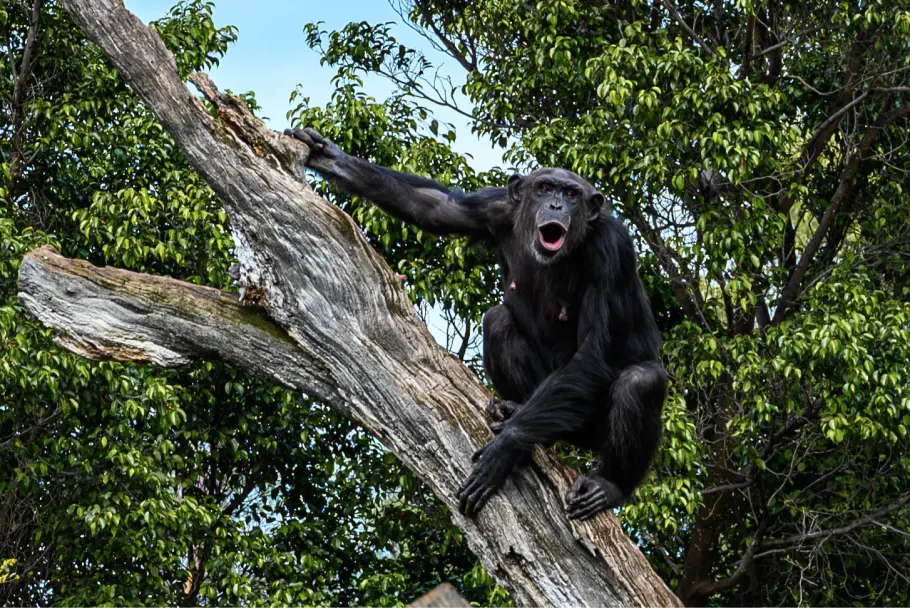
Our last day was devoted to Valencia's zoo. We left our apartment after a chat with the owner and had brunch right next door, at the Panacid café.
It was a rainy day, but not enough to put us off. The Bioparc is known for its commitment to species conservation. There are no fences or bars here: ditches or rocks separate you from the animals. The animals come from African ecosystems: the savannah, Madagascar, the equatorial forest and the African wetlands. Victor loved the experience, and we recommend it if you visit Valencia as a family.
Around 5pm, we headed for the airport: the end of our stay in Valencia. The plane was about twenty minutes late but, as we live in Antony, we got home fairly quickly: it is only about twenty minutes from Orly. Thank you for reading, and feel free to ask your questions in the comments. See you soon.
Enjoyed this article? Pin it on Pinterest.
Follow us on social media to hear about our next trips. Feel free to leave a comment or ask a question at the bottom of the page. See you soon.