By Geoffrey Ménissier, published on , updated on .
Also available in: 🇫🇷 🇪🇸 🇵🇹 🇩🇪 🇮🇹 🇳🇱

In short
A week in the Cézallier, the great volcanic plateau straddling the Cantal and the Puy-de-Dôme. On the programme: waterfalls, peat-bog lakes, the Plomb du Cantal by cable car and one of the finest starry skies in France, with a 6-year-old and our beagle.
0 comments


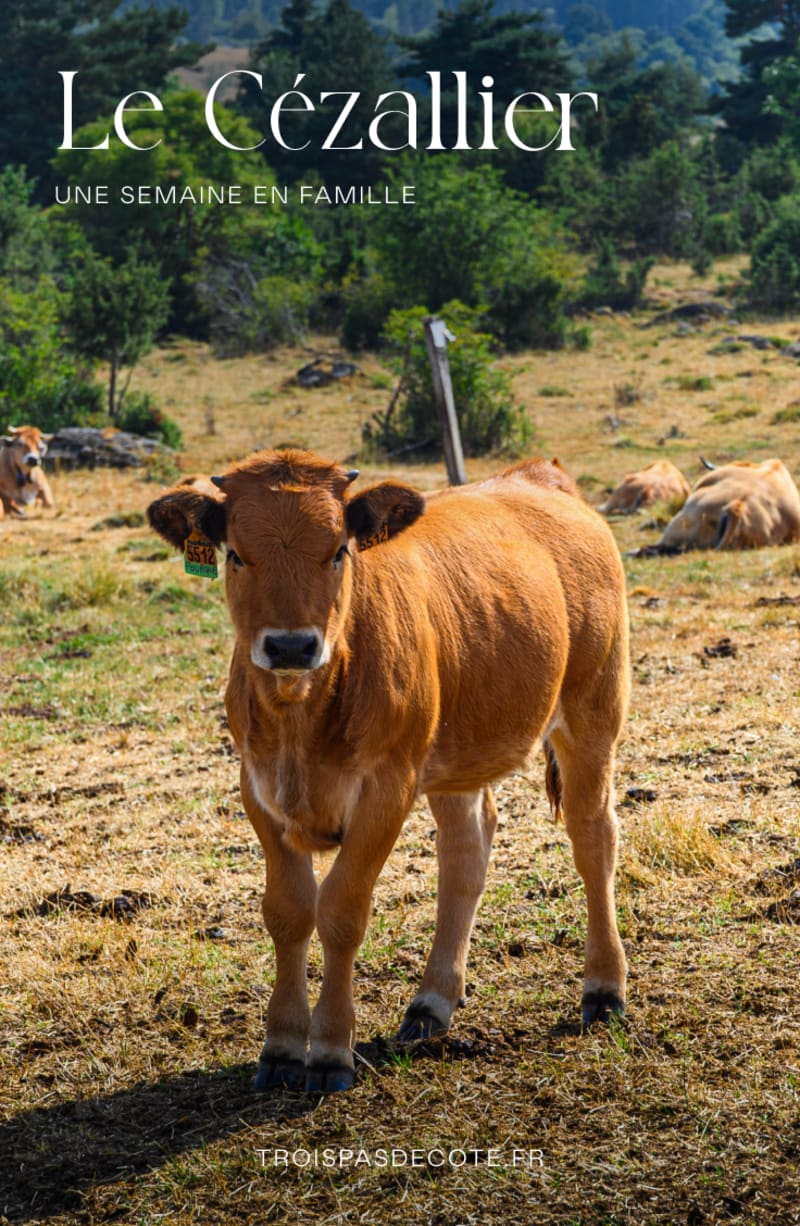
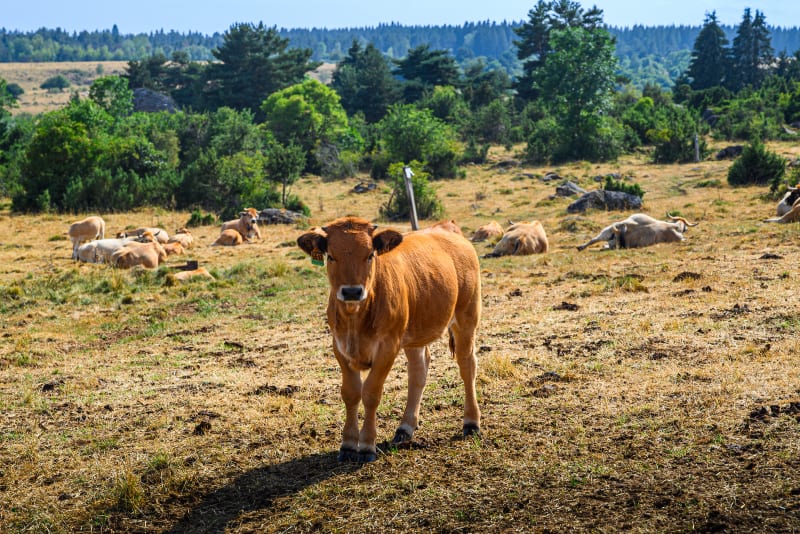
We set off to spend a week in the Cézallier, in the Auvergne. We stayed in Vèze, in the north of the Cantal, on the border with the Puy-de-Dôme. It was our second stay in the area: we had spent a week in La Godivelle (on the Puy-de-Dôme side) 3 years earlier. We were with our son Victor, who is 6, and our dog Glasgow, an 18-month-old beagle. The Cézallier is a rolling landscape, a great plateau linking the Sancy massif to the north with the Cantal mountains to the south. It has many lakes, peat bogs and herds of Salers cattle. The nicknames that keep coming up are “French Mongolia” and “French Tibet”.
Our first stay had focused mainly on the Puy de Dôme and the Chaîne des Puys, then the Monts Dore, Saint-Nectaire and Murol, with only one trip into the Cantal (to the Pas de Peyrol). This time it was the other way round: we hiked in the Cézallier and the Cantal mountains.
So we spent a week there in summer 2026, before discovering the Queyras, in the Alps, the following week.
We were welcomed by Jérôme and his wife, who showed us their gîte, booked for the week. It is a small house attached to theirs. On the ground floor, a large open-plan kitchen and living room, and upstairs 3 bedrooms and the bathroom. The house is well equipped and well insulated from the outside heat. Outside, there is a small barn with a table football and a table-tennis table, to Victor's great delight. Add to that a large, fully fenced garden: when you travel with a dog, it is one of our first search criteria, and for Glasgow it was perfect. Our host had also prepared a map of the area for us, with the walks not to miss and the good restaurants. In the evening, we took a first walk on the heights above the village: apparently you can see a dozen deer at the edge of the wood.
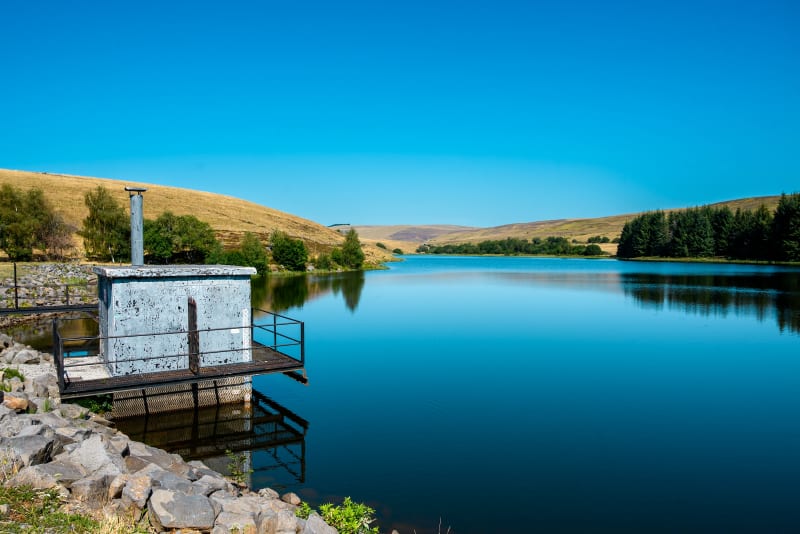
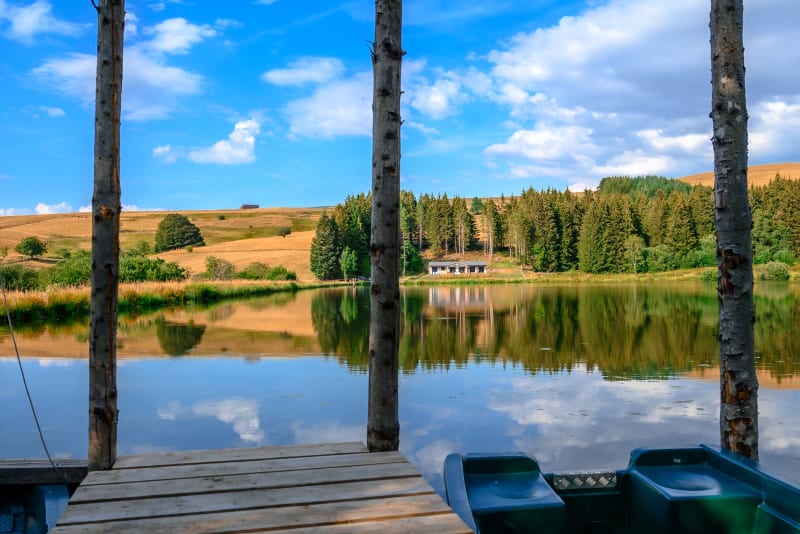
On Sunday, we started our stay gently with walks near Vèze. In the morning, we went up to the Terisse waterfall, then carried on to the lake of the same name. The waterfall is about 2.5 km north of the village, along the Sianne river. You can also get there by car: a small car park leaves you about 350 m from the falls. For the lake, we drove a little closer and finished on foot; it took us about 45 minutes' walk there and back. Swimming is not allowed in the lake, and there are a few picnic tables by the water. On the way, we saw cows, lizards and birds of prey: red kites, but also short-toed snake eagles, large raptors that specialise in hunting snakes. We saw them on every outing. In the late morning, we did some shopping in Allanche.
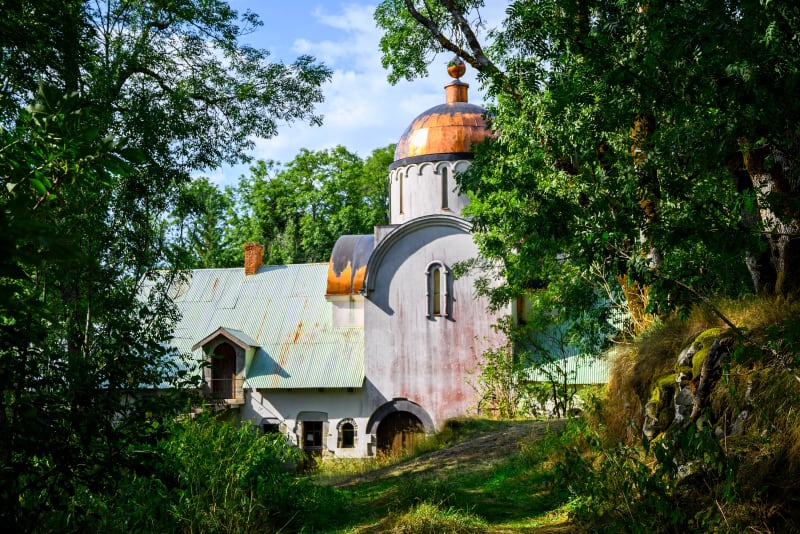
In the afternoon, we went a little further north. Our first stop was the Orthodox monastery of the “Mother of God Znaménié” in Marcenat. Its architecture is unusual, and the nuns sell honey and gingerbread there. Admission is free. On the way out, we meant to go to the Saillant waterfall, but a wrong turn sent us towards the little Lac des Estives instead. The viewpoint is interesting because, quite high up, it lets you admire the Chaîne des Puys on one side and the Cantal mountains on the other. At the end of the day, a storm was approaching; we headed home and came across a pizza van, perfect to end this first day.
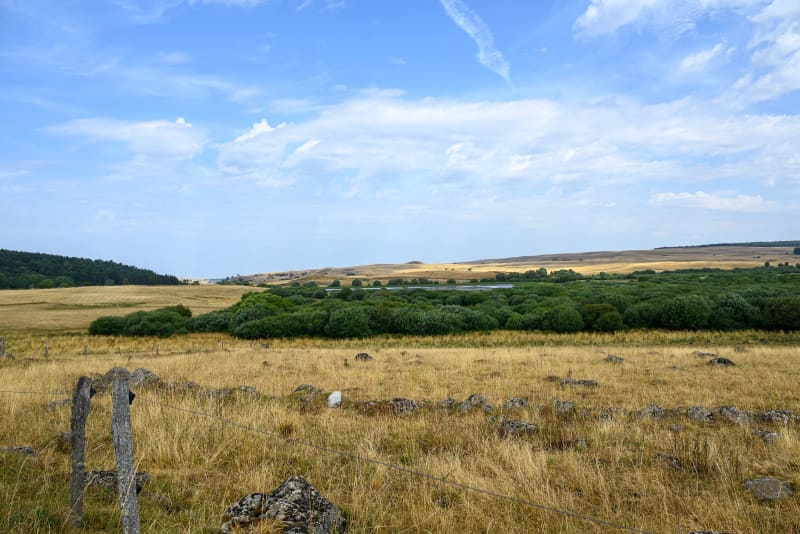
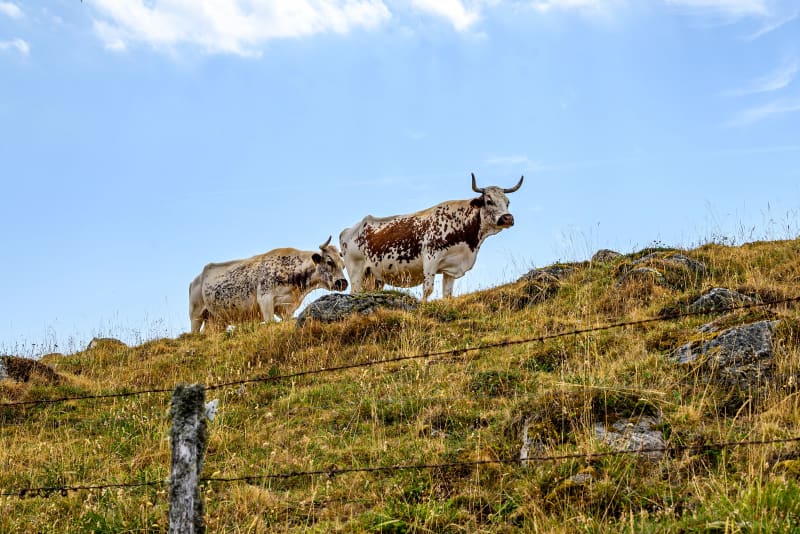
On Monday morning, we visited the Jolan and Gazelle peat bogs, a protected natural area (Espace Naturel Sensible) in Ségur-les-Villas. A peat bog is a wetland marked by the build-up of peat, organic matter from dead plants that do not fully decompose because of the lack of oxygen in the stagnant water. Peat bogs are rich in biodiversity: insects, migratory birds and even otters. To protect the site, the walking path does not run right along the lake but around it, which makes for a change of scenery. We walked round the lake, then climbed a little higher through meadows with herds of cows and horses, before coming back down through a more wooded section. In all, we covered about 6 km.
Good to know with a dog: peat bogs are fragile environments and the site is home to nesting birds. Glasgow stayed on the lead for the whole walk, which is the rule anyway in these protected natural areas.
In the afternoon, we went to the Font Sainte. The site offers a fine panorama over the Limon plateau and the Cantal mountains to the south, and there is also a chapel. It is believed to have been a place of water worship in ancient times: the “holy” or miraculous spring, which heals and protects, has been associated with the Virgin Mary since Christianisation. On the heights, you will find a sound trail: carved stone benches fitted with a kind of audio guide tell the history of the region. It is a loop of about 1.5 km.
Last stop of the day: the Lac du Pêcher. The place is worth a visit, and several paths radiate around the lake. We walked part of the 3 km “eco-walk” of this site, listed as an Espace Naturel Sensible (natural sites designated by the departments for protection). However, do not be surprised if the lake level seems low. Leaks were found in the dam in 2024, and the lake was partly drained from January 2025 so that teams could work safely. The repairs took place in spring 2026, so the lake is gradually rising back to its normal level. During the works, the accessible fishing platform and the birdwatching hide were refurbished; the hide lets you discreetly watch little grebes, coots and red kites.
The Lac du Pêcher is a former high-altitude peat bog, at about 1,140 metres on the edge of the Cézallier plateau and the Pinatelle massif. Two educational trails of 1.5 and 3 km go round it.
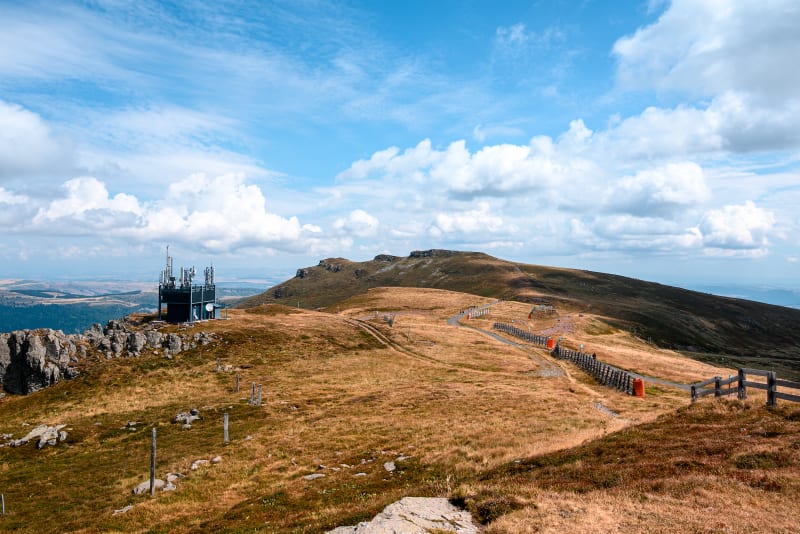
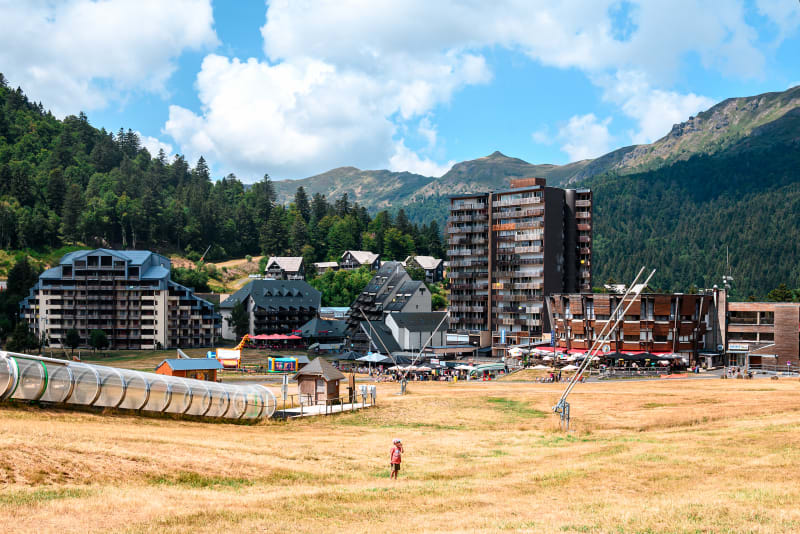
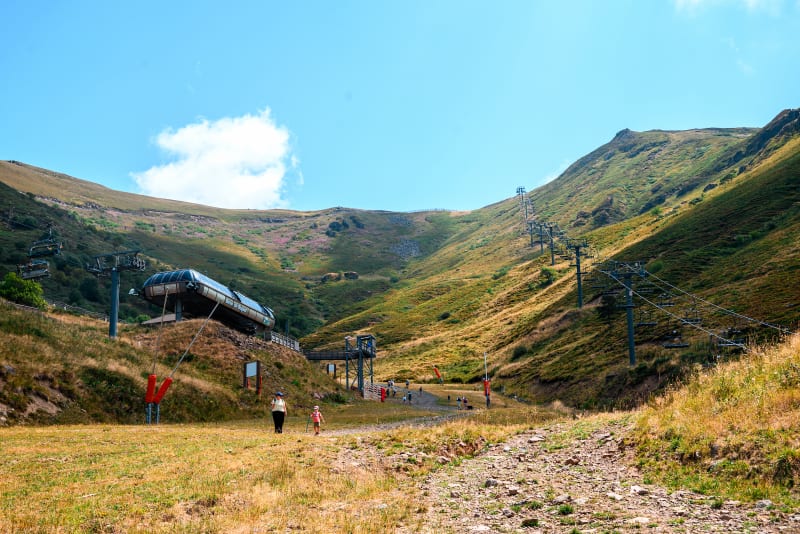
On Tuesday, we headed for the Le Lioran ski resort to climb the Plomb du Cantal, the highest point of the Cantal mountains at 1,855 metres. For a hike that suits families and dogs, we chose to go up by cable car and come down on foot. The top station is slightly below the summit, hence the remaining ten minutes' walk. The Volcans d'Auvergne Regional Natural Park has put up information panels there on the history of the Cantal volcano, its wildlife and its plants.
Prices in detail: adult single €12.40 · adult return €16.90 · child single (5-11) €8.80 · child return €11.90 · free for under-5s. There is a junior rate for 12-17-year-olds (€10.80 single in summer). From 11 July to 23 August, the cable car runs every day from 9:30am to 6:30pm, with the last trip up at 6:20pm. Departures every 15 minutes depending on demand. Dogs on a lead are allowed at no extra charge, and a lift on the meadow side makes it accessible to people with reduced mobility.
At the top, there is a viewpoint indicator… and lots of flies that stick to you, so we did not stay very long. In the distance, you can see the Col de Prat de Bouc, a road pass that offers another way to reach the summit.
Climbing up from the resort: 686 m of ascent and 10 km there and back.
Climbing up from the pass: 468 m of ascent and 8 km there and back.
The descent took us about 1 hour 30 minutes along the ski runs, including a picnic break (Sandrine was slowed down a little because the sole of her walking boot had come off).
The terrain is fairly easy, even for children. We met a few people running down, as well as lots of mountain bikers; bikes can be rented in the resort's sports shops. Towards the end, a long zip line passes overhead. We also spotted a summer toboggan run among the fir trees, but Victor did not really want to try it. He preferred the bouncy castles and trampolines at the bottom. The resort's Intersport was having a clearance sale: Sandrine took the opportunity to buy new boots, and I bought a T-shirt. The resort is very family-friendly: lots of cafés and restaurants, an ice rink, a bike park and more.
On the way back, we stopped in Murat, a small medieval town full of character, overlooked by its statue of the Virgin and Child on the Rocher de Bonnevie. We did some shopping for the evening and had an artisan ice cream at the market.
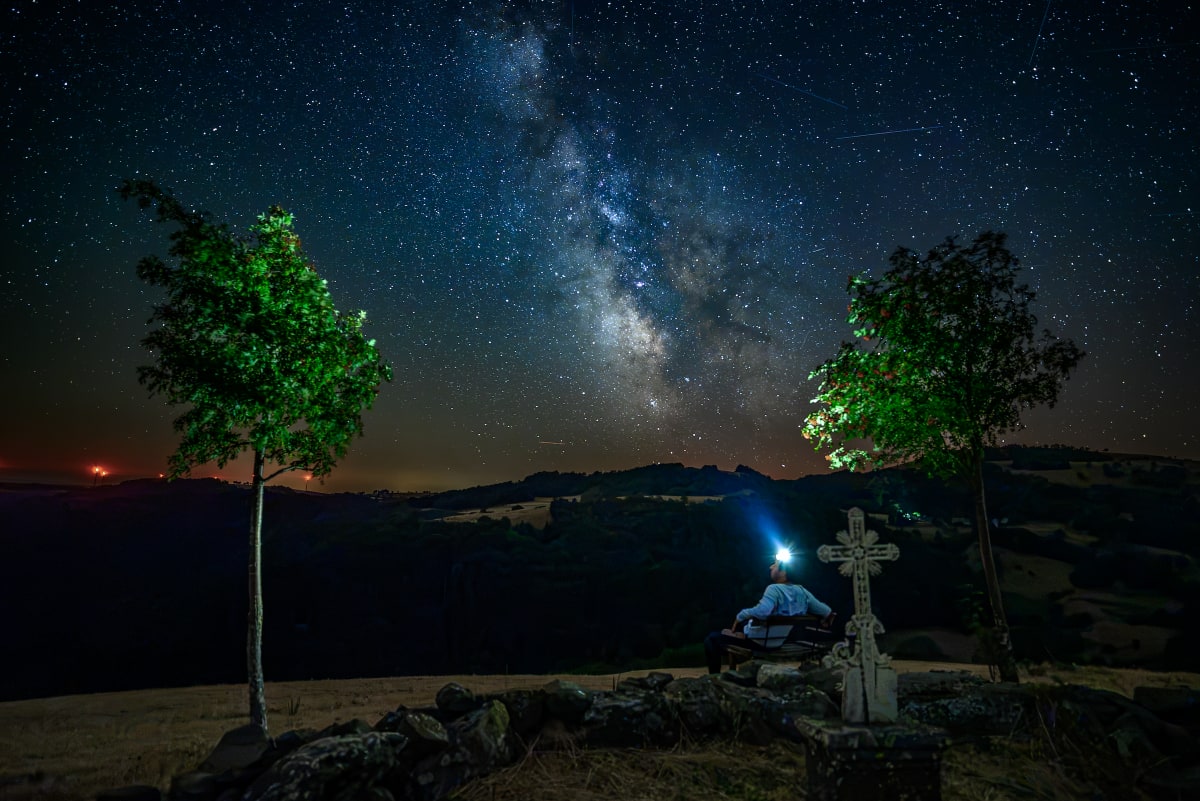
That night, I took a few photos of the stars, with the Milky Way rising over the Cantal, from the heights above Vèze. On the way out of the village, past the cemetery, there is a bench and a cross. That is where I photographed the Milky Way, facing south. In August, the Moon rose late enough not to give off too much light. The Cézallier has one of the finest skies in mainland France, and the villages switch off their street lighting from 11pm. Between midnight and 2am, I had plenty of time to enjoy the starry sky with my Nikon Z5 and a Viltrox 16 mm f/1.8 lens (and a tripod).
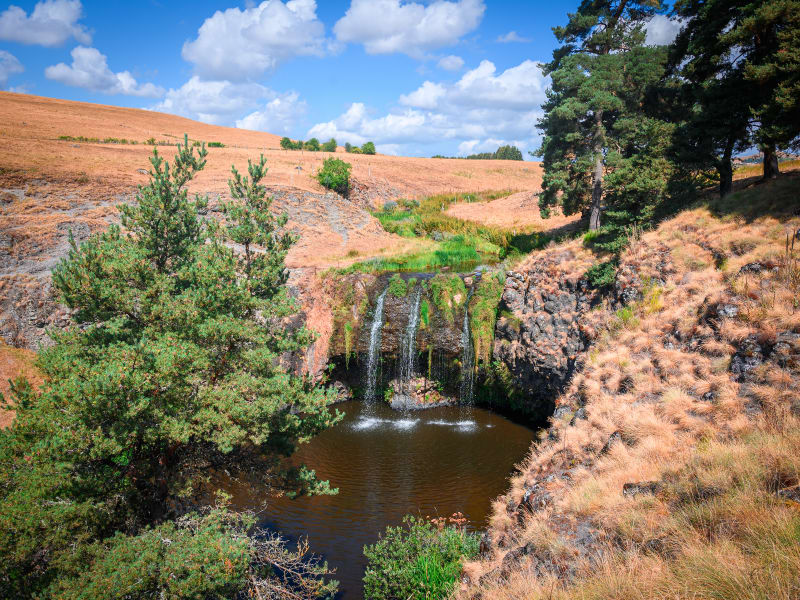
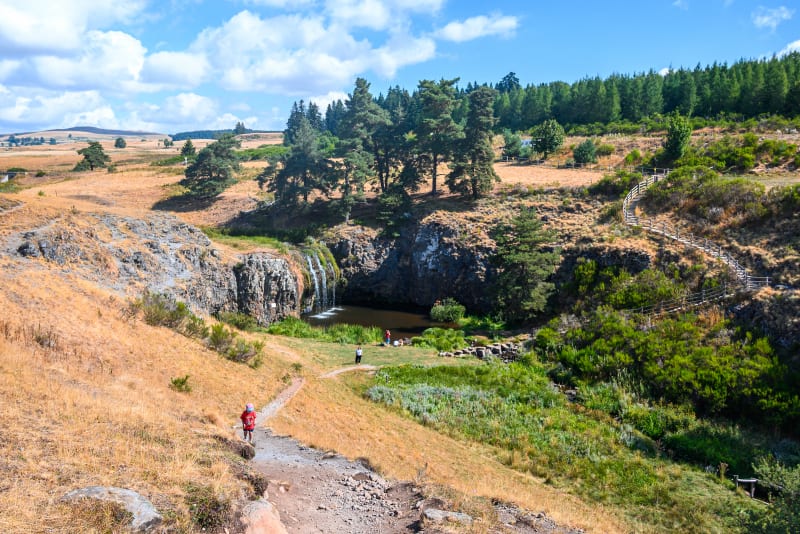
As I had gone to bed a little late, Wednesday morning was quiet: we enjoyed the house. We still visited the Veyrines waterfall, in Landeyrat. It is about a fifteen-minute drive from Vèze, north of Allanche. Unlike Sunday's, it is not in a forest but in a small gorge that you cross. On the other side, we were soon stopped by a patou (a livestock guardian dog) watching over a flock. With Glasgow getting agitated, we turned back.
When you hike with a dog and meet a patou, the rule is simple: do not run away, do not shout, do not use your poles. Stop, put your dog on a short lead and go round the flock with a very wide berth, staying calm. The patou is not aggressive, it is assessing you: once it understands you are not a threat, it loses interest. If the way is blocked, turning back is still the best decision, and that is what we did here.
Right next to the waterfall is the starting station of the Vélorail du Cézallier: as the name suggests, you pedal along the rails of a former railway line through the summer pastures, and several routes are available. We did not try it, as we preferred to stick to activities we could do with our dog.
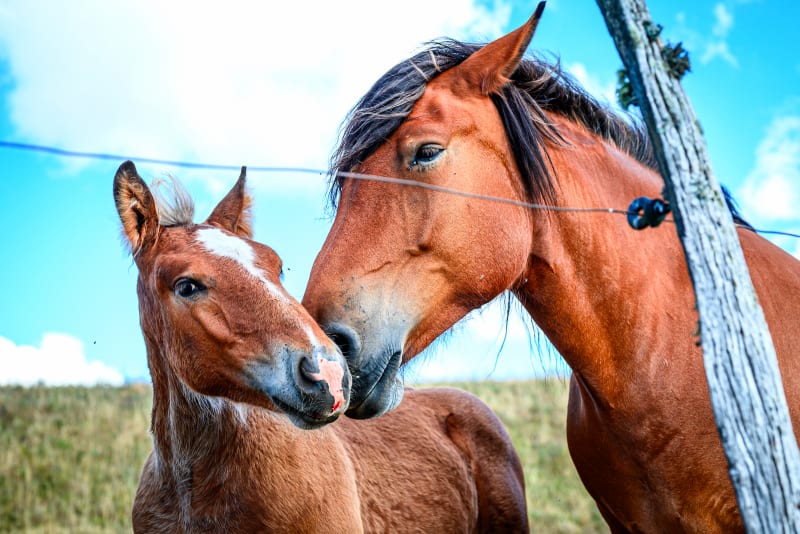
In the afternoon, we went for a walk in La Godivelle, where we had stayed last time. It is both the least populated and the highest commune in the Puy-de-Dôme department. Its circular fountain is also the widest in the department: it was built so that 30 cows could drink at once. The commune's special feature is its two lakes. We started by walking along the Lac d'En Bas, a peat-bog lake that forms the Sagnes de La Godivelle nature reserve; you cannot walk all the way round it. We then climbed up to the Lac d'En Haut, a volcanic crater lake 44 metres deep. On one shore, a herd of cows was drinking; on the other side, I photographed two young foals and two mares, who were not afraid and came closer out of curiosity.
We went back to Vèze via the Col de Chanusclade, which marks the border between the Puy-de-Dôme and the Cantal. It also offers a fine view over the Cézallier. In the hamlet, cows were heading back to the barn; they surrounded the car and we moved forward at their pace. They were quite impressive.
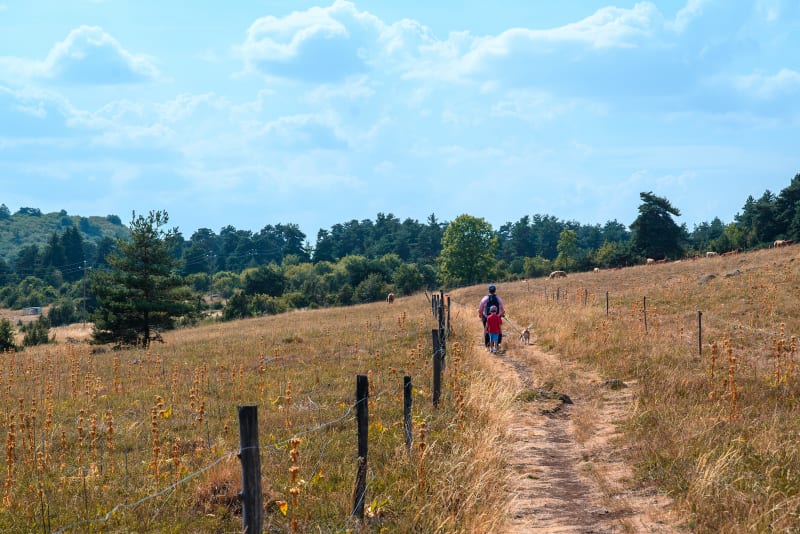
Thursday was devoted to an 8 km walk with about 300 m of ascent. It passes 3 waterfalls (Vergnes, Prés Longs and Prapsou), starting from the village of Albepierre-Bredons. The path is pleasant, as it runs mostly under the trees, in the shade. The most impressive is the first of the 3, the Vergnes waterfall, as you can go down along the river and reach the foot of the falls; there is also room for Victor to enjoy the river. That is where we had our picnic. Next comes the highest, the Prés Longs waterfall, 7 metres high, but there is no path to get close to it. The last one, Prapsou, is at the very end of the walk, below the village. With a dog, it is very pleasant: we did not have to cross any areas with herds.
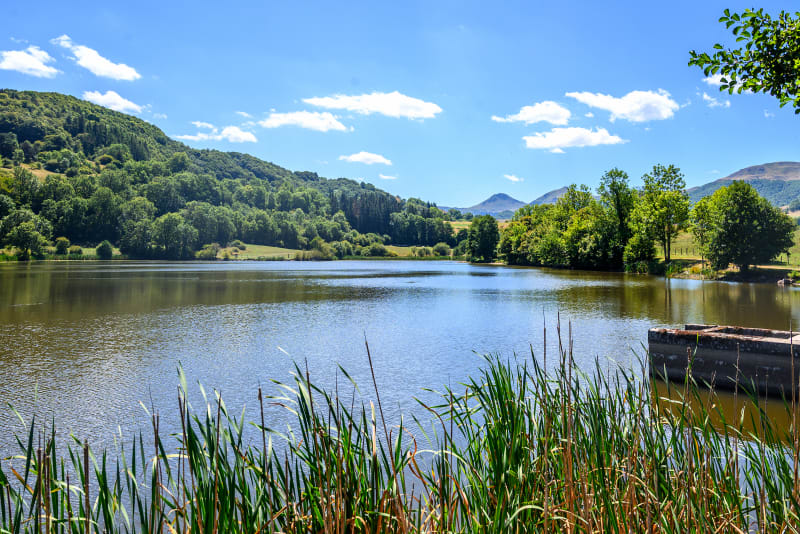
Friday, our last day in the Cantal, was rather quiet. We headed for the Lac des Cascades, in Cheylade, and had lunch at the restaurant of the same name. The place is very peaceful: the tables under the willows, by the lake, make a magnificent setting. After lunch, we walked round the lake. There is also a slightly longer, 4 km walk through the glacial valley of the Petite Rhue. Later, we made a detour to Ségur-les-Villas to see the chapel of Notre-Dame de Valentine and its viewpoint.
Our last day in the Cézallier and the Cantal. After packing the car and chatting a little with our hosts, we hit the road for our second week of holidays, heading for the Hautes-Alpes and the Queyras Regional Natural Park, more precisely Ceillac. Although it is not that far geographically, the drive is quite long: Clermont-Ferrand, then Lyon, Grenoble and Briançon, arriving at the end of the day. Read the rest in our week of hiking in the Queyras.
We chose our activities for the week around one simple constraint: everything had to be doable with Glasgow. Here is what we took away.
First, the gîte. A fully enclosed garden is our first search criterion, even before the location. Over a week, it changes everyday life: the morning and evening outings are done off the lead, and you can leave the dog somewhere cool when an activity does not suit her.
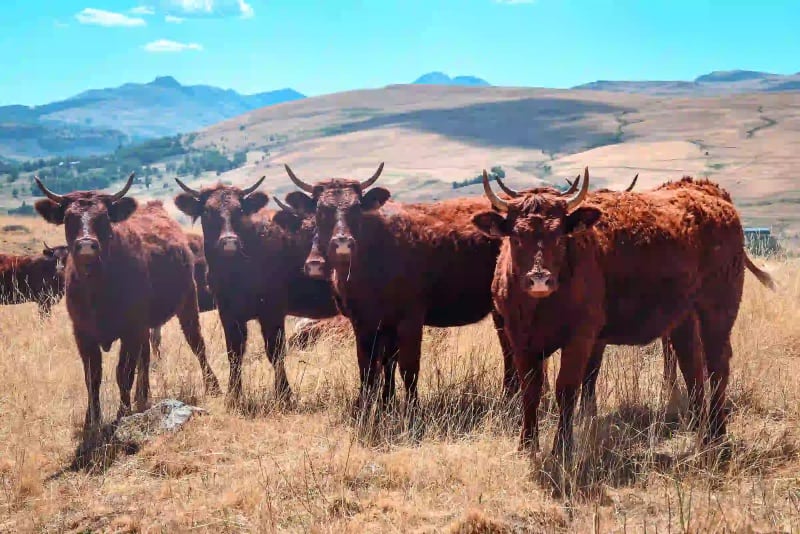
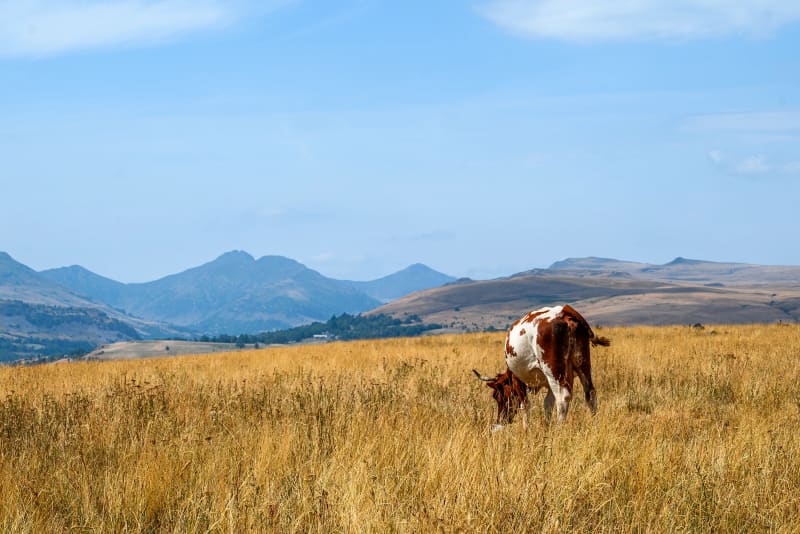
Herds are everywhere. That is the reality of the Cézallier: the plateau is a vast summer pasture. Over our seven days, we came across cows on almost every outing. Glasgow is rather impressed by them, and it never caused a problem on our walks. Goats, on the other hand, are often guarded by a patou. When possible, we went round them with a wide berth; otherwise, we turned back.
In the protected natural areas, at the Jolan and Gazelle peat bogs as at the Lac du Pêcher, dogs stay on the lead: these are fragile wetlands with nesting birds.
The Plomb du Cantal cable car accepts dogs on a lead at no extra charge. That is what allowed us to reach a 1,855 m summit with a 6-year-old and an 18-month-old dog, keeping only the descent on foot.
The easiest walk of the week: the 3 waterfalls of Albepierre-Bredons. 8 km, in the shade, along the water, with no herds to cross. If you only remember one walk with a dog, make it this one (though there is still a bit of climbing).
What we left out: the Cézallier rail bikes, which start right next to the Veyrines waterfall. We were tempted, but we had decided to do only activities we could share with Glasgow.
An unexpected bonus: there is always water. Between the Sianne, the waterfalls, the streams and the troughs, drinking water was never an issue, even on hot days (although we always carry a dog water bottle).
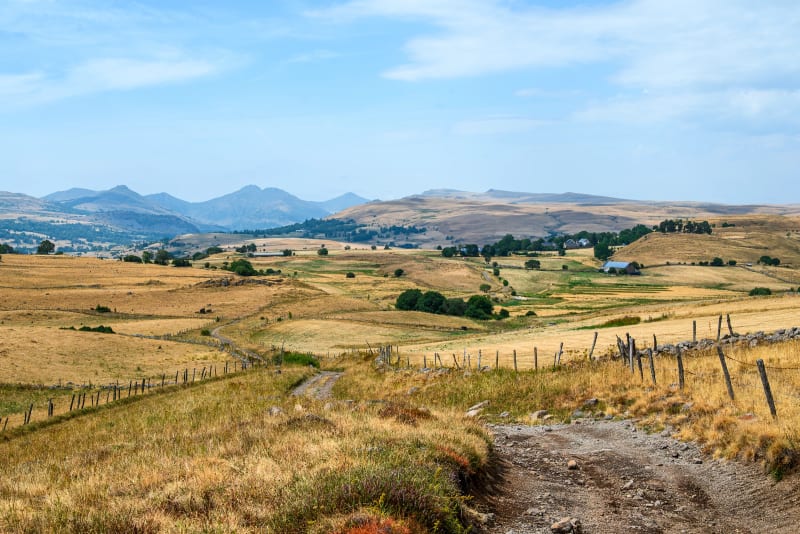
A week is the right length for the Cézallier. We spent seven days without ever driving more than 40 minutes from Vèze, and without feeling that we had exhausted the area: the Saillant waterfall that we missed, the rail bikes, the Puy Mary… There is enough left for a third stay.
What works particularly well with a 6-year-old is the scale of the distances. Walks in the area range from 1.5 to 8 km with modest climbs, often with water at the end: a waterfall, a lake, a stream. Victor walked every day. The only real climb of the week, the Plomb du Cantal, was done downhill thanks to the cable car.
What you need to know before you come: the Cézallier is not a swimming destination. The lakes are peat-bog or crater lakes, where swimming is often not allowed.
What struck us most was the peace and quiet. During a week in the middle of August, we never had to look for a parking space or met any crowds, except at the Le Lioran resort. And the nights are of a darkness you no longer find in many places in France.
Three years after our stay in La Godivelle, we left with the same impression: the Cézallier is a magnificent, restorative plateau.
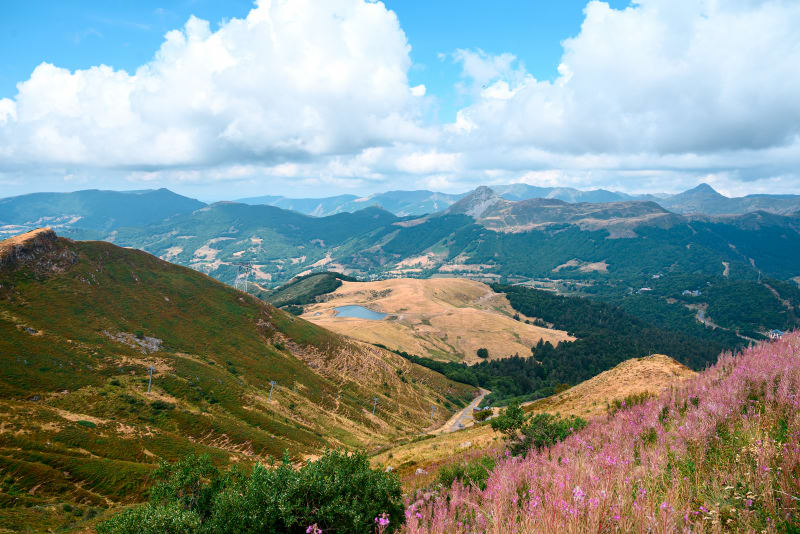
The Cézallier is a great volcanic plateau in the Auvergne, straddling the Cantal and the Puy-de-Dôme. It links the Sancy massif to the north with the Cantal mountains to the south. We stayed in Vèze, in the north of the Cantal, on the border between the two departments.
A week lets you discover the plateau without rushing, staying within a thirty-minute drive. We filled seven days with waterfalls, lakes, peat bogs and a climb up the Plomb du Cantal, while keeping quiet mornings at the gîte.
Yes. Walks in the area range from 1.5 to 8 km with modest climbs, and often end by the water. Our 6-year-old son walked every day without difficulty. The Le Lioran cable car even lets you reach a summit while only walking down.
Yes, but the plateau is a vast summer pasture: you will come across herds and sometimes patous (livestock guardian dogs), which may force you to turn back. Dogs stay on the lead in the protected natural areas. The 3-waterfall walk at Albepierre-Bredons is the easiest in that respect.
The Le Lioran cable car goes up close to the summit, leaving a ten-minute walk. Allow €12.40 for an adult single and €8.80 for a child single (5 to 11). Dogs on a lead are allowed at no extra charge. We went up by cable car and walked down the ski runs in 1 hour 30 minutes.
The Terisse waterfall, 2.5 km north of Vèze along the Sianne, can be reached on foot or from a car park 350 m away. The Veyrines waterfall, in Landeyrat, lies in a small gorge. And the Albepierre-Bredons walk links three waterfalls over 8 km, including the Vergnes waterfall, which you can walk down to.
The Cézallier has one of the darkest skies in mainland France, and the villages switch off their street lighting from 11pm. We photographed the Milky Way from the heights above Vèze, on the way out of the village past the cemetery, where a bench and a cross mark an open viewpoint facing south.
The Cézallier is not a swimming destination. Swimming is not allowed in the Lac de la Terisse, and the Lac du Pêcher is a protected natural area whose level is rising again after work on the dam. Children will have more fun in the rivers and at the foot of the waterfalls.
Enjoyed this article? Pin it on Pinterest!
Follow us on social media to hear about our next trips. Feel free to leave a comment or ask a question at the bottom of the page. See you soon.