By Geoffrey Ménissier, published on , updated on .
Also available in: 🇫🇷 🇪🇸 🇵🇹 🇩🇪 🇮🇹 🇳🇱
In short
Our first holiday as a family of three: we chose the Dordogne to visit Lascaux and the medieval châteaux, and to enjoy the food. Here is what to do in the Dordogne for a successful family holiday.
0 comments
As we mentioned in our article about the Fontainebleau forest, Victor was born last December, so this summer was our first family holiday. Given how young he was, we had planned not to fly this year, and the health situation only confirmed that choice. We chose to spend 8 days in the Dordogne, in Issigeac, south of Bergerac and not far from the Monbazillac vineyards. The Dordogne is an ideal region for resting while offering plenty of activities.
On our list, visiting Lascaux IV was one of the first things to do, along with other caves and cave art sites. The Dordogne is also famous for its food, which we made the most of. Finally, we were able to admire all the châteaux, medieval villages and cave dwellings the region has to offer.
We also chose the Dordogne so that we could visit family on the way back, in Poitiers and then in Saint-Nazaire.
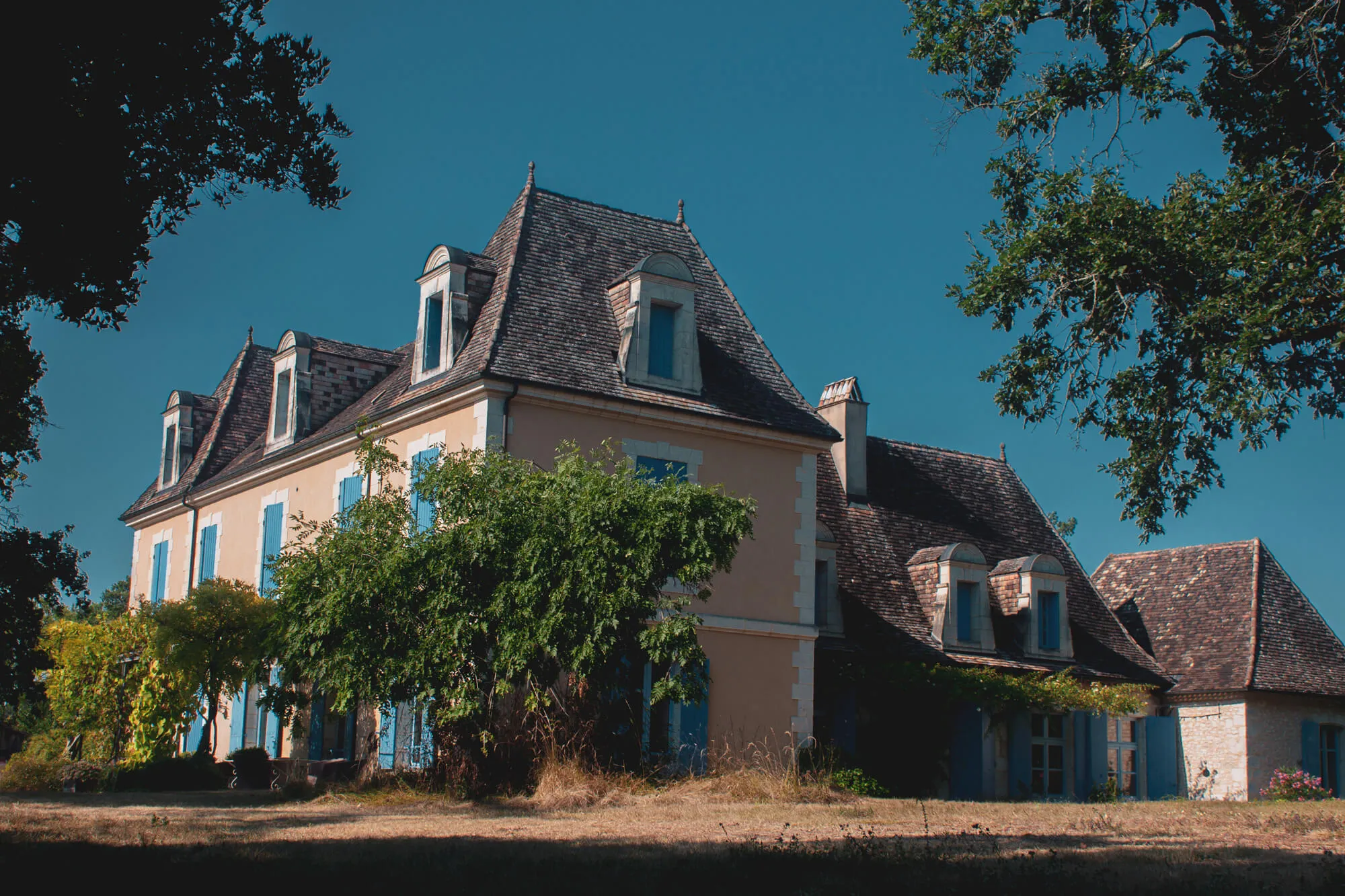
This year, we left it to the last minute. After the lockdown, we waited for the end of the 100 km travel limit to be sure we could go. We hesitated between the Landes and the Auvergne before finally settling on the Dordogne. We were looking for somewhere to stay along the river, halfway between Bergerac and Sarlat-la-Canéda, but could not find what we wanted. We looked again on Sawdays (we had already mentioned this website in our article on the Loire Valley châteaux) and finally found the Château Gauthié, near Issigeac, further south than planned, on the edge of the Lot-et-Garonne.
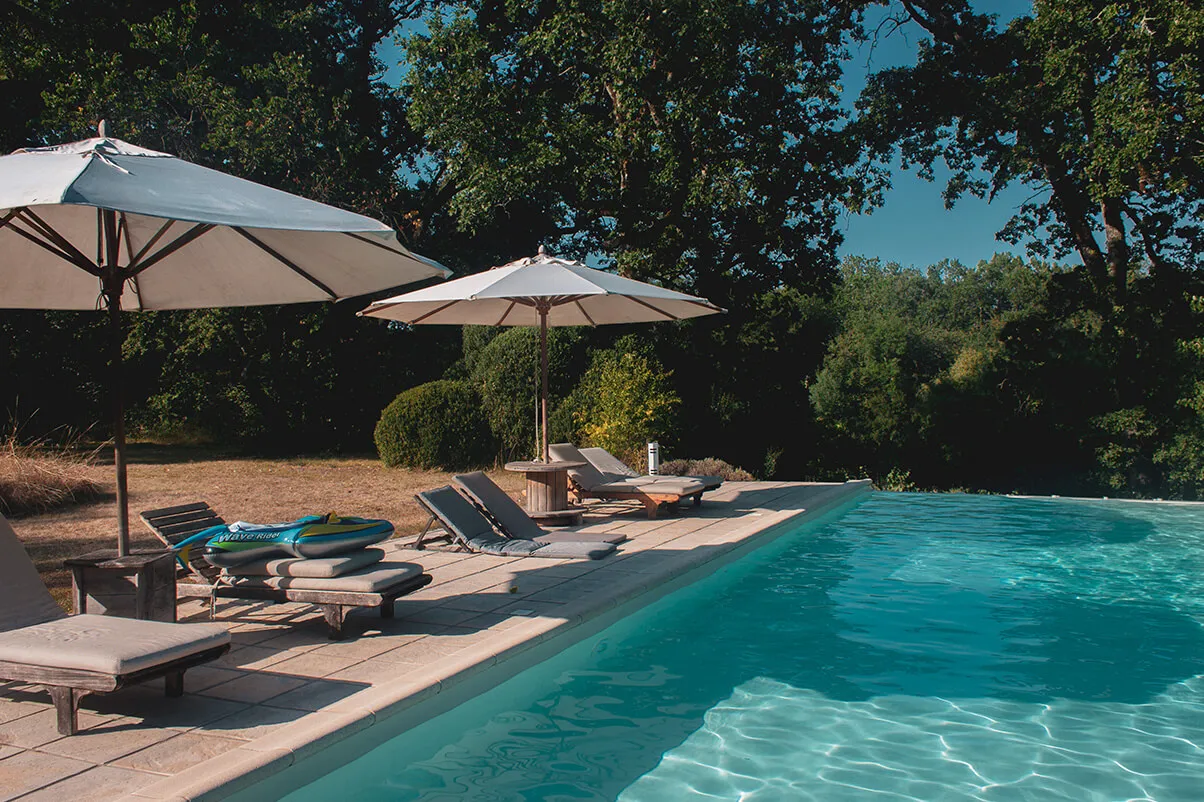
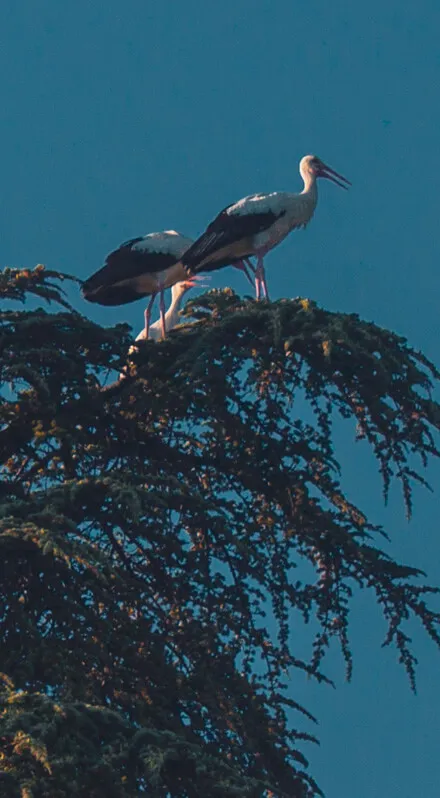
It is a B&B in a building whose different parts date from the 15th, 17th and 19th centuries, surrounded by a large 8-hectare park with an infinity pool overlooking a pond. There are 5 bedrooms in the manor house and a few treehouses. As not all the rooms were occupied at the same time, we enjoyed the pool and the park in perfect peace. We saw Highland cattle and, more surprisingly, 5 storks that have made their home in the park.
As for our hosts, Florence and Stéphane are very welcoming. Every morning, over a hearty breakfast, we chatted a little and they helped us fine-tune the day's itinerary. In the evening, we ate on the terrace; a microwave is available, handy for heating baby food. Given the heatwave, a drink and a salad were enough. Our room was large and comfortable, and we were lent a cot for Victor. You can also borrow outdoor games and bikes on site. Next to the pool there is a jacuzzi too but, given the heat, that will be for another time. Prices are around €100 a night, a little more than we usually pay when we choose hotels, but the setting is well worth it.
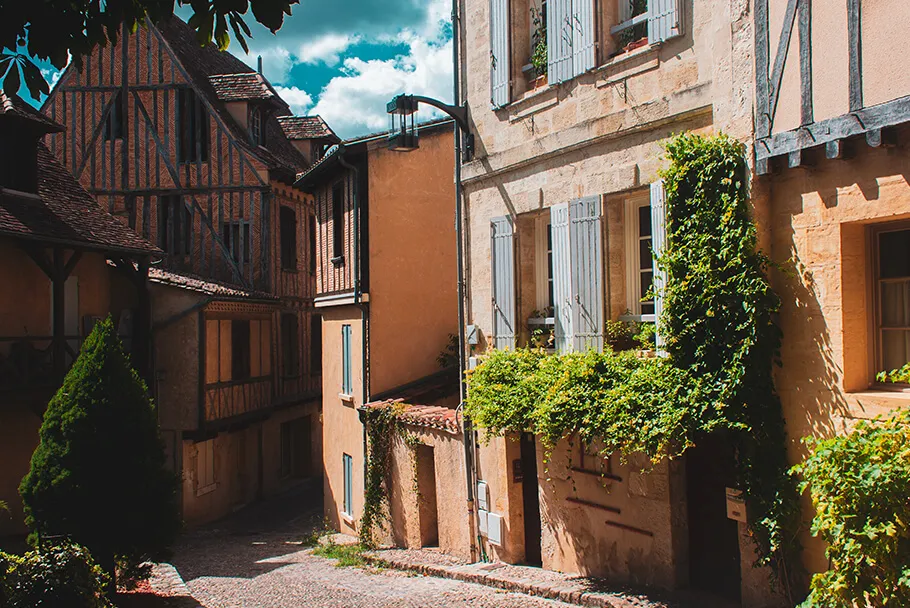
Stéphane, our host, told us that the Issigeac market takes place every Sunday. You need to get there early, as it was voted the most beautiful market in Aquitaine in 2018, so it gets very crowded. In summer, the stalls spread through almost every lane of the medieval town. You will find both food and crafts. The local specialities are of course foie gras and duck (in a Périgord salad or as confit), but also walnuts (which can be made into a cake) and black truffles (which can be enjoyed in an omelette or a risotto). The town is 3.5 km from the B&B.
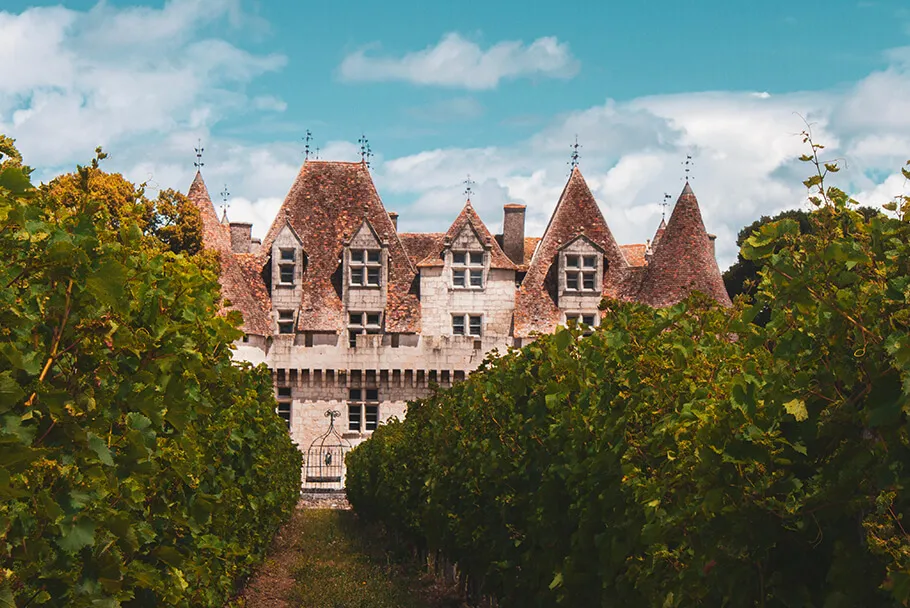
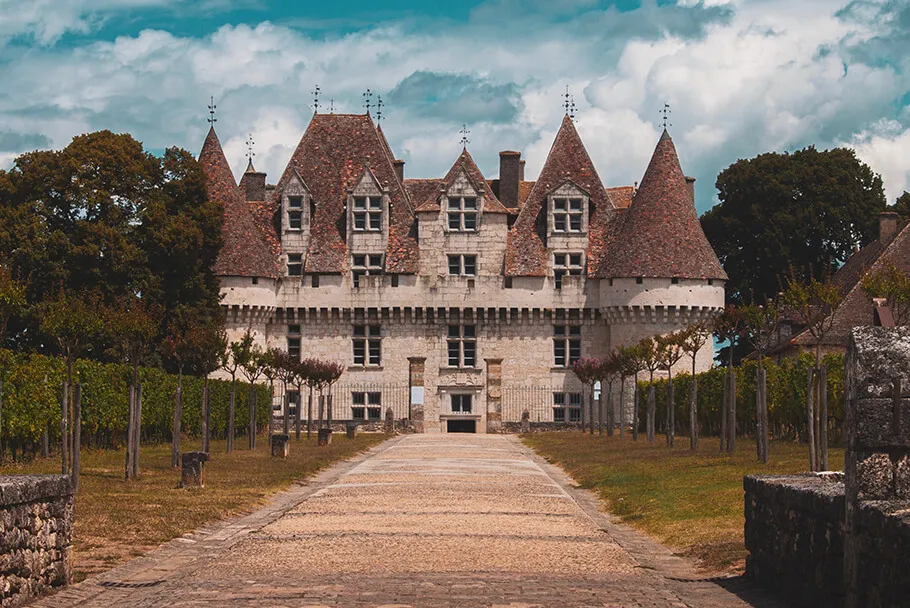
After the market, we drove about ten kilometres north to visit the château of Monbazillac. It was built in 1550, and its plan is quite simple: a rectangle with four round towers at the corners. Inside, on the ground floor, you will find 17th-century furniture, objects showing the old trades linked to winegrowing and archives on the Wars of Religion. In the cellar, you will see the 16th-century kitchens and, above all, a wall of 6,000 golden-yellow bottles of Monbazillac. On the first floor, admire more furniture and original drawings by the Périgord caricaturist SEM (1863-1934). As in the other châteaux we visited, Victor was in a front baby carrier and his pushchair stayed in the car.
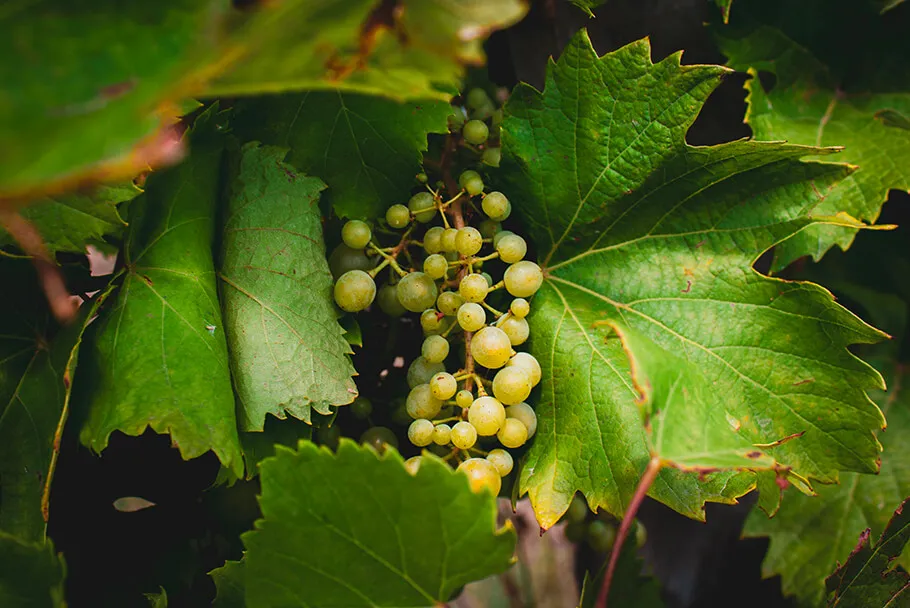
Since 1960, the château has belonged to the Monbazillac cooperative winery. It owns 25 hectares of vines around the château, and from the terrace you get a lovely view over the vineyard all the way to Bergerac. Monbazillac is famous for its sweet white wine, but they also produce reds and drier whites. At the end of the visit, you are entitled to a small wine tasting. In total, the Bergerac vineyard covers 12,600 hectares across 12 appellations, including Côtes-de-Bergerac, Monbazillac and Pécharmant…
On the way out, we looked for somewhere to eat in the village of Monbazillac, about a hundred metres from the château. There was not much, and the village is of no particular interest, so we went to Bergerac for the afternoon. As it was Sunday and already 3pm, most restaurants had stopped serving, so we had a sandwich from a bakery before strolling around the town. At the end of the day, we went back to enjoy the pool.
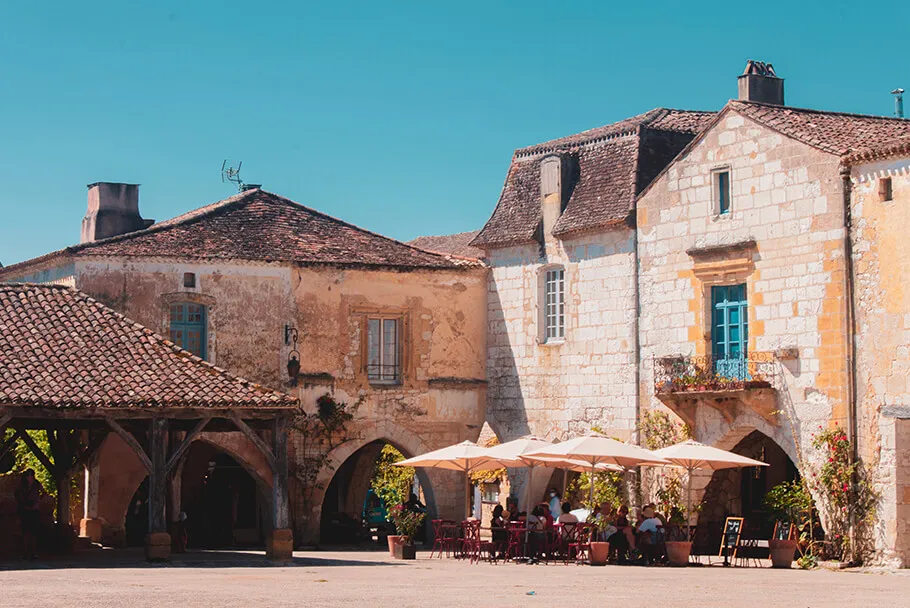
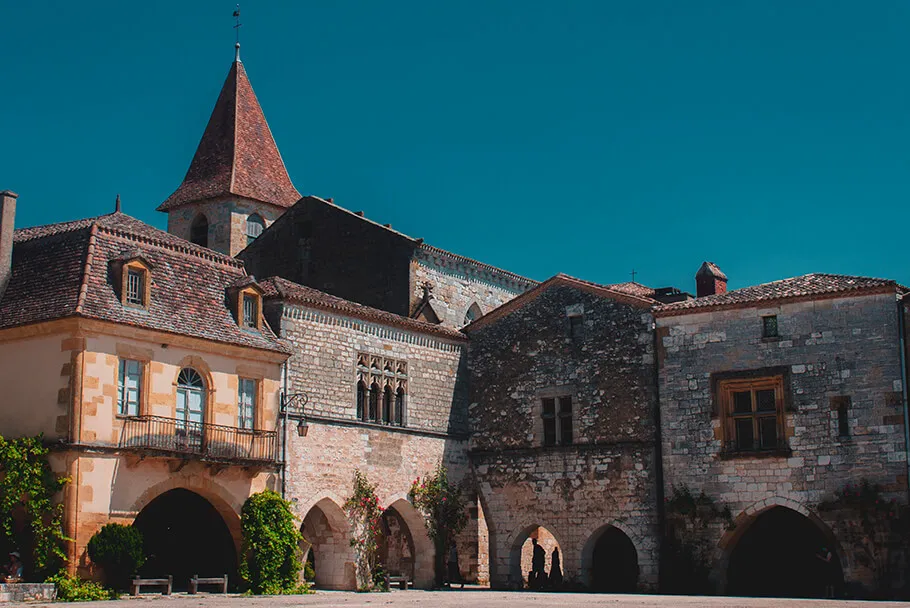
In the Périgord Pourpre, many towns are what are called bastides: “The bastides were all founded a novo, in a single stroke, on a specific date, to a preconceived and generally uniform plan, within a period of about a hundred years (1250-1350)” (Alcide Curie-Seimbres). The bastides we visited often share the same layout: a square or rectangular fortified wall, pierced by gates at the 4 points of the compass. From these run the two main axes of the town. The streets are at right angles, with a large square in the centre.
We set off to visit Monpazier, about thirty kilometres from Issigeac. The town is considered the “model” bastide, with a perfect grid plan, and it has remained almost intact since it was founded in 1284. Its central square is surrounded by arcades called “cornières”. After the visit, we ate in one of the restaurants on the square. Unfortunately, the terrace was full, so we sat inside. What followed was a bit of a farce: the waitress criticised customers in front of others, we waited nearly an hour and a half to be served, half the ingredients were missing from the plate because they had run out, not to mention the (long) power cut…
After this adventure, we sat in the shade of the fortifications to let Victor have a nap, then gave him his afternoon snack. We then decided to go back and enjoy the pool again. On the road from Issigeac, you can also stop at Beaumont-du-Périgord, another English bastide, founded in 1272. At the end of the day, Geoffrey flew the drone over the countryside to take a few photos of the sunset.
(You sometimes need to zoom in quite closely on the area you are looking at for activities to appear.)
The Périgord is a historic French region that roughly corresponds to today's Dordogne department, so here is a word about its colours, the four tourist designations. Our visit was mainly in the Périgord Pourpre and the Périgord Noir.
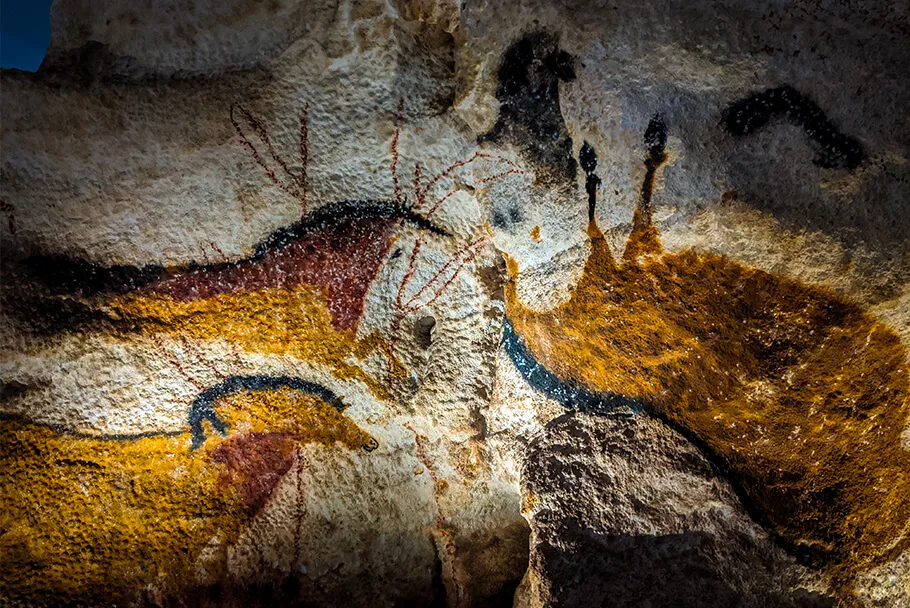
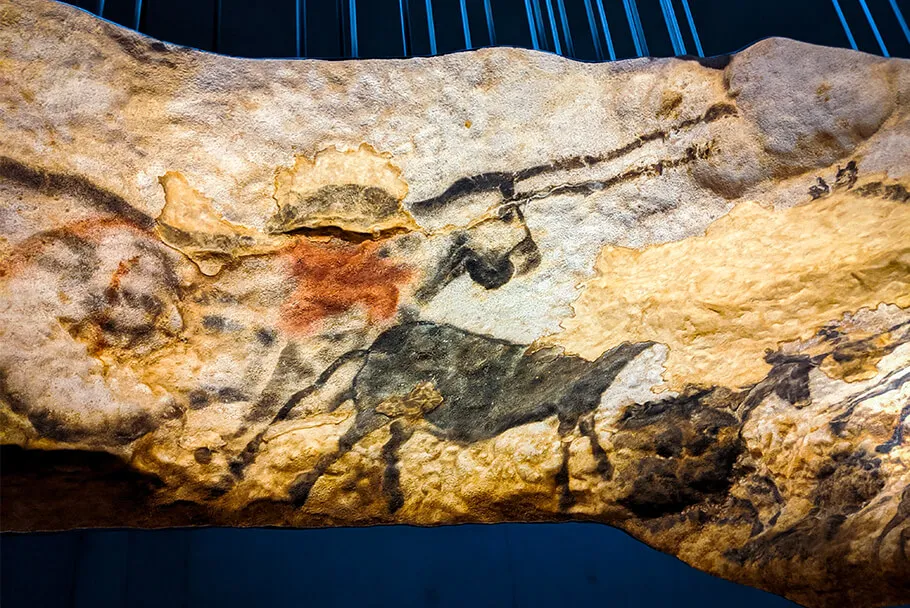
We had booked tickets in advance to see the Lascaux cave. As a reminder, the original cave has been closed to visitors since 1963, because the paintings were being damaged by the many visitors. Lascaux 2 is a replica, a “facsimile”, opened in 1983. It can still be visited, but the techniques of the time were less precise than those used for Lascaux 4. Lascaux 3 is a touring exhibition that also presents facsimiles of Lascaux. We visited Lascaux 4, a new, more accurate and more complete copy of the cave, opened to the public in 2016.
Lascaux 4 is an international centre for cave art. Unlike Lascaux 2, the facsimile lets you see the whole of the original cave. Afterwards, the museum takes you behind the scenes. Lascaux is nicknamed the “Versailles of Prehistory”, and its Hall of the Bulls the “Sistine Chapel of cave art”. Even without seeing the originals, it is a fascinating experience. It is hard to imagine how and why people came to paint here, deep inside a cave, some twenty thousand years ago. The centre also tells the story of Marcel Ravidat and his friends, the group of teenagers who discovered the cave in September 1940.
We learned that, thanks to modern 3D modelling, the Lascaux 4 facsimile is an exact replica, to the centimetre, of the original cave, which is a few hundred metres from the centre. It is 13°C in the cave. Victor was dressed warmly, the semi-darkness did not seem to bother him and, as often in the baby carrier, he ended up falling asleep.
After the visit, we went to Les Eyzies-de-Tayac-Sireuil. We only stopped briefly for a snack along the Vézère, but the town is nicknamed the “World Capital of Prehistory”. In the area, you will discover a wealth of cave dwellings and medieval architecture, the National Museum of Prehistory, the Font-de-Gaume cave (the last decorated cave still open to the public) and more. We learned that this is where human bones were discovered: the bones of the first modern humans, Cro-Magnon man. The name simply comes from the Cro-Magnon rock shelter where the bones and tools were found (Cros means hollow in Occitan).
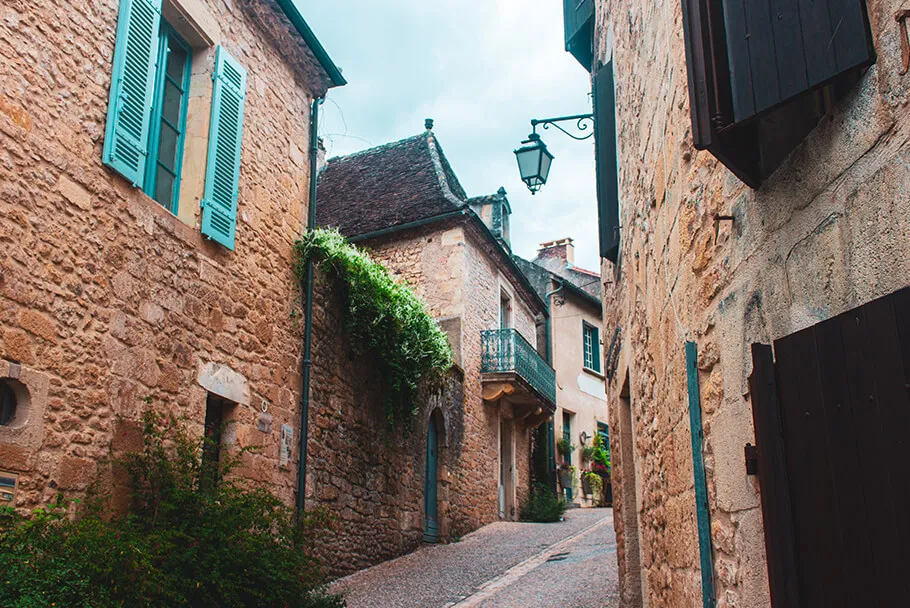
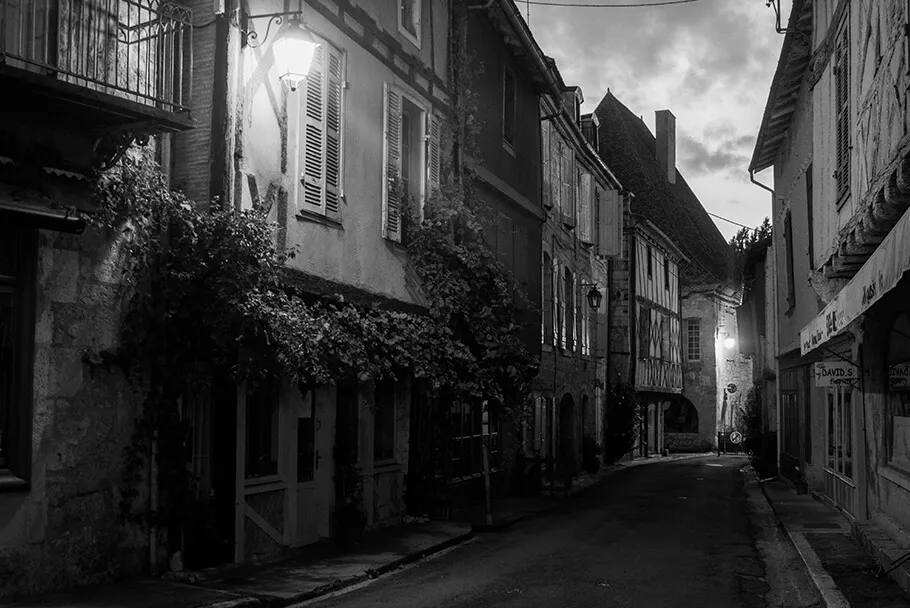
To finish the day, we stopped in Limeuil to visit the panoramic gardens at the confluence of the Dordogne and the Vézère. To reach the gardens, you first have to climb the steep slope of the medieval village, which is quite a workout with a pushchair. At the top, the view is worth it. The visit is divided into several themed gardens, with scent games among other things. Younger children can keep busy with a riddle trail along the way.
In the evening, we ate on the main square in Issigeac, where a food truck recommended by our hosts serves good burgers.
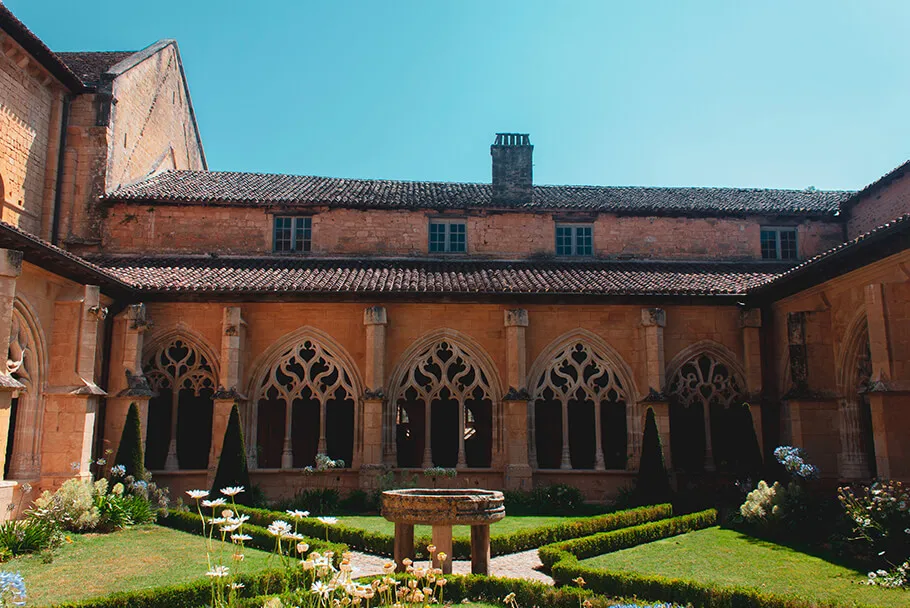
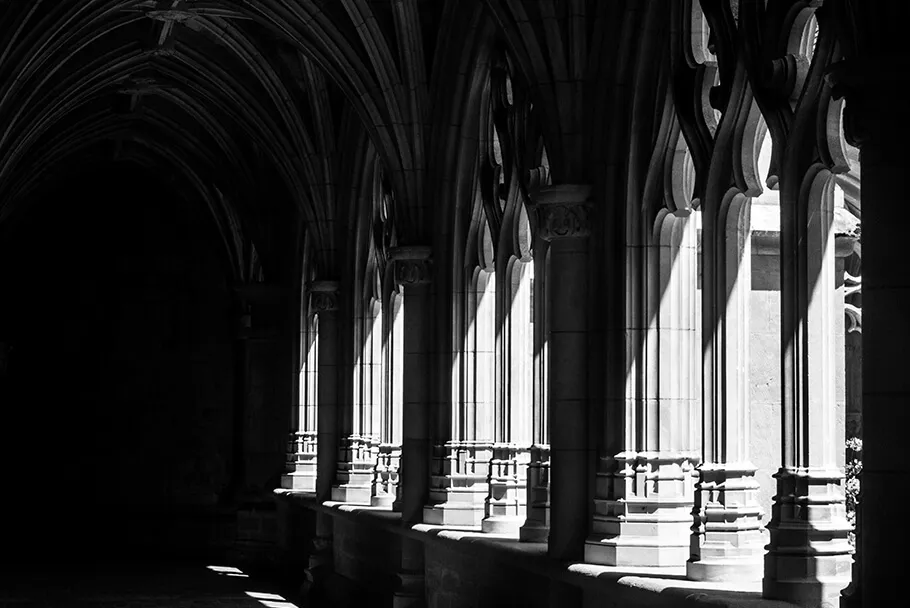
To start the day, we visited the cloister of Cadouin Abbey. The abbey dates from 1115, and the cloister, destroyed during the Hundred Years' War, was rebuilt in the 15th century. Its style is known as “Flamboyant Gothic”. It is a listed Historic Monument and a UNESCO World Heritage Site. You can visit with an audio guide, and getting in with a pushchair is no problem. Note that there are also night-time visits in summer. On the way out, we had lunch at the market in front of the abbey.
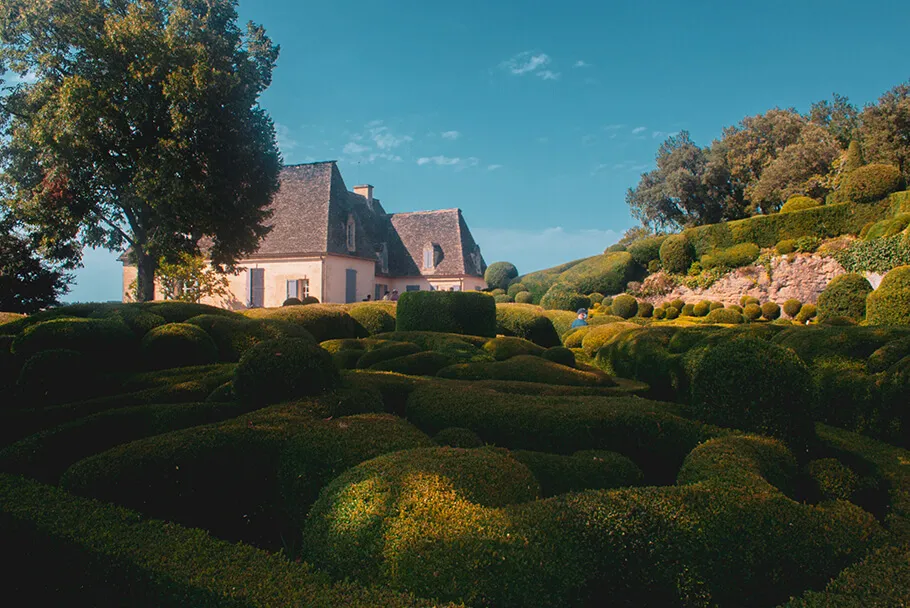
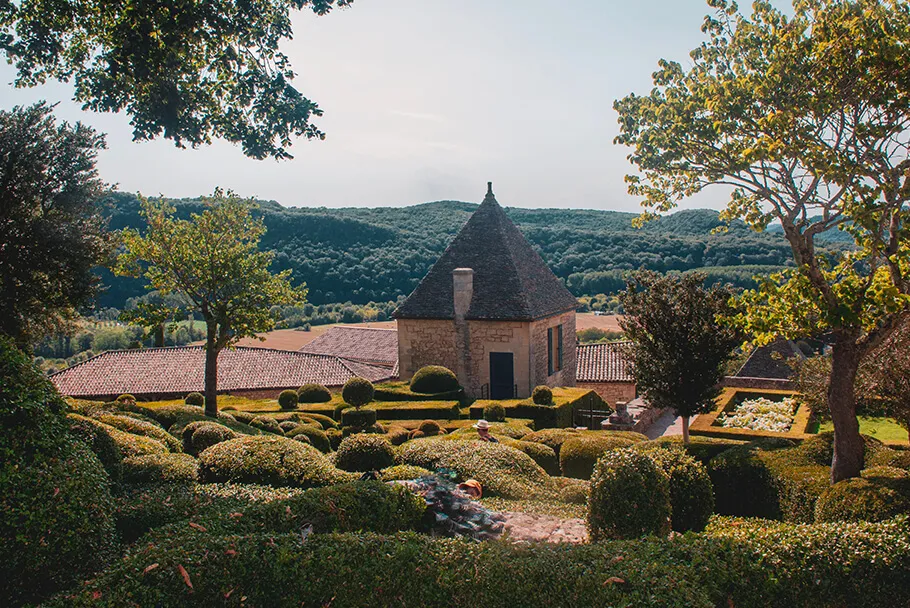
The afternoon was devoted to the hanging gardens of Marqueyssac. They stand on a rocky spur, rising to 130 metres and offering one of the finest views of the Dordogne. They were designed lengthwise, with more than 6 km of shady paths lined with 150,000 hand-clipped box trees. In all, the park covers 22 hectares. You get a magnificent view over the châteaux of Castelnaud and Beynac on one side, and over the loops of the Dordogne and the village of La Roque-Gageac on the other.
“At Marqueyssac, box is showcased with a playful fantasy full of movement, all in curves and cloud pruning.”
A few peacocks, the emblem of the place, roam freely in the park. You can also admire a perfectly preserved Allosaurus skeleton (7.5 metres long and 2.5 metres high); this dinosaur lived about 150 million years ago.
That day, the forecast was 38°C. With a 7-month-old baby, we preferred to play it safe and stay cool. We enjoyed the pool and the shade of the hundred-year-old trees in the garden of our B&B all afternoon.
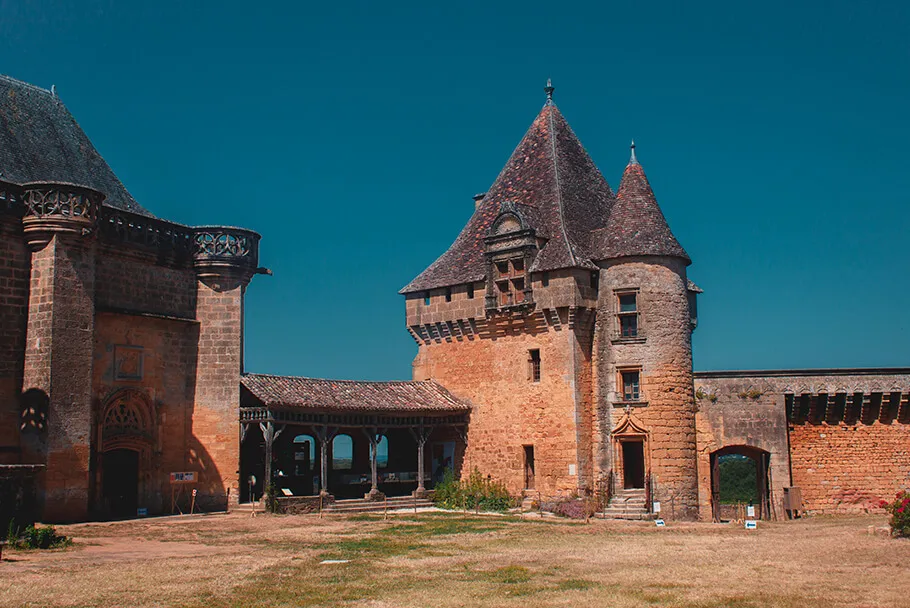
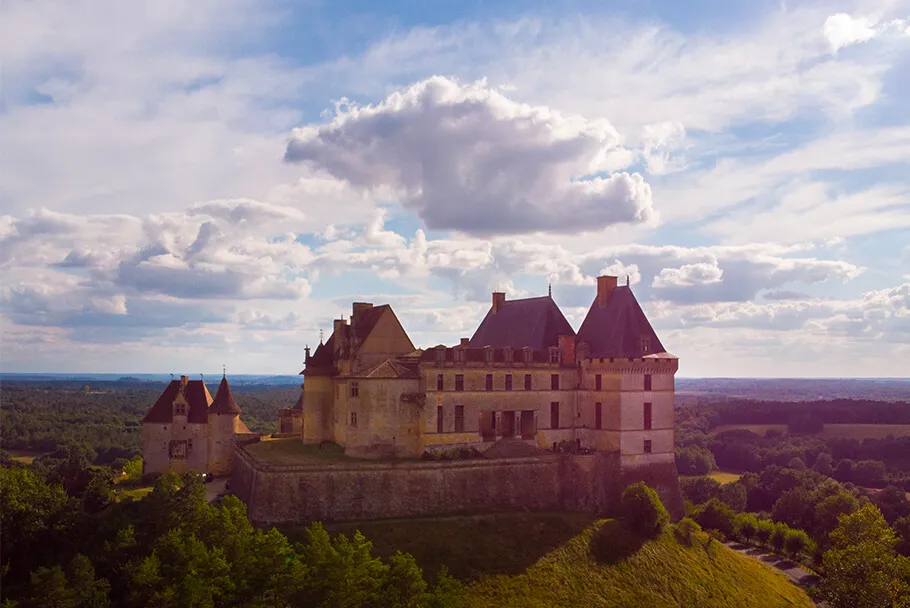
In the morning, before the temperature rose too much, we still visited the château of Biron. It is next to Monpazier, and we had not had time to go on Monday. It is a medieval château dating from the 12th century that evolved over the centuries: you can admire the different architectural styles side by side, from the Middle Ages to the Renaissance. Standing on a hill, it offers a view of more than 30 km. It is also a contemporary art venue with temporary exhibitions.
In the evening, we ate in Issigeac, at Les Dîmes, a French-Brazilian tapas restaurant. To finish, still in the village, we had some good artisan ice creams to take away from Le Bouchon Médiéval.
Same temperature as the day before, so same plan: we went out in the morning before enjoying the pool in the afternoon.
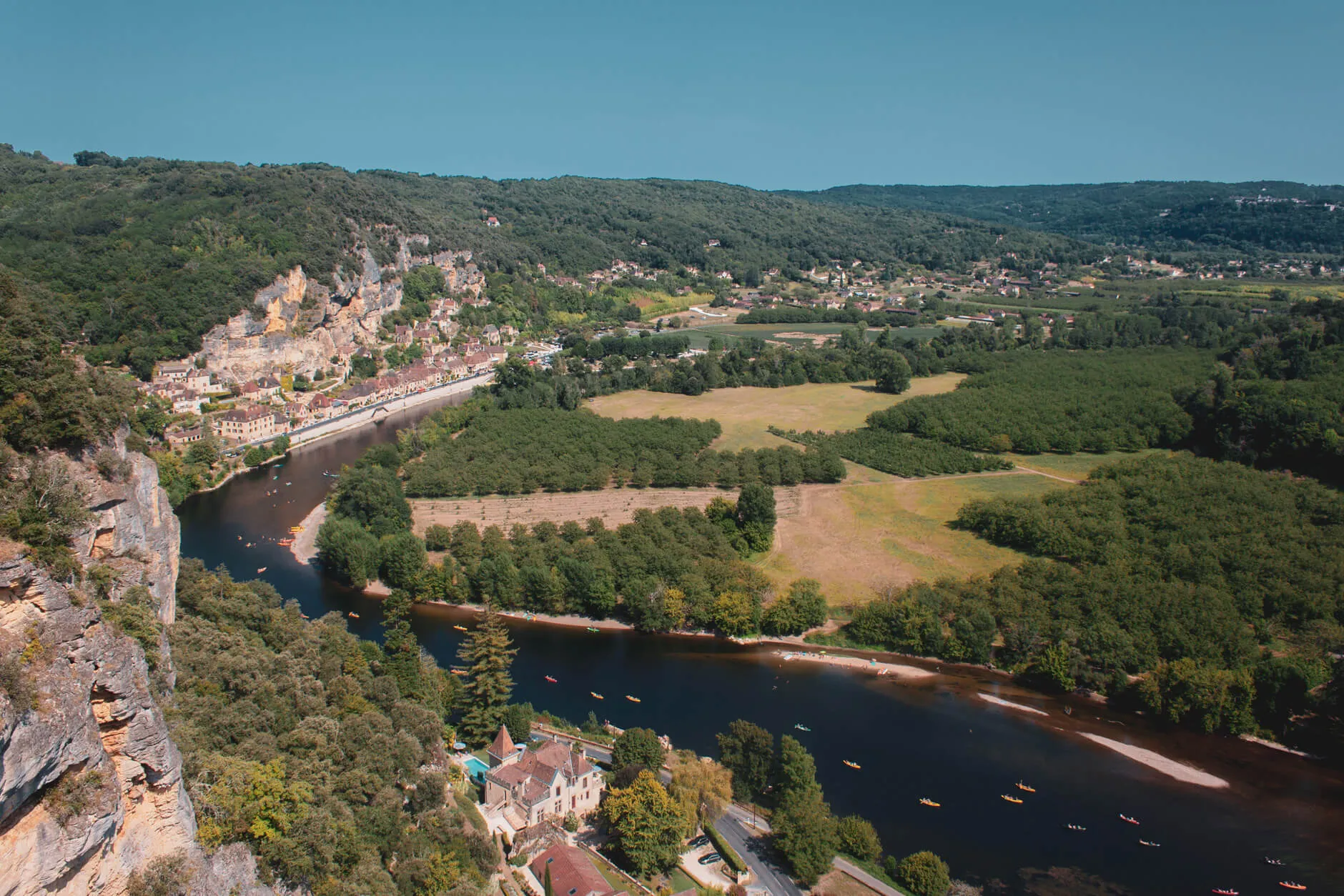
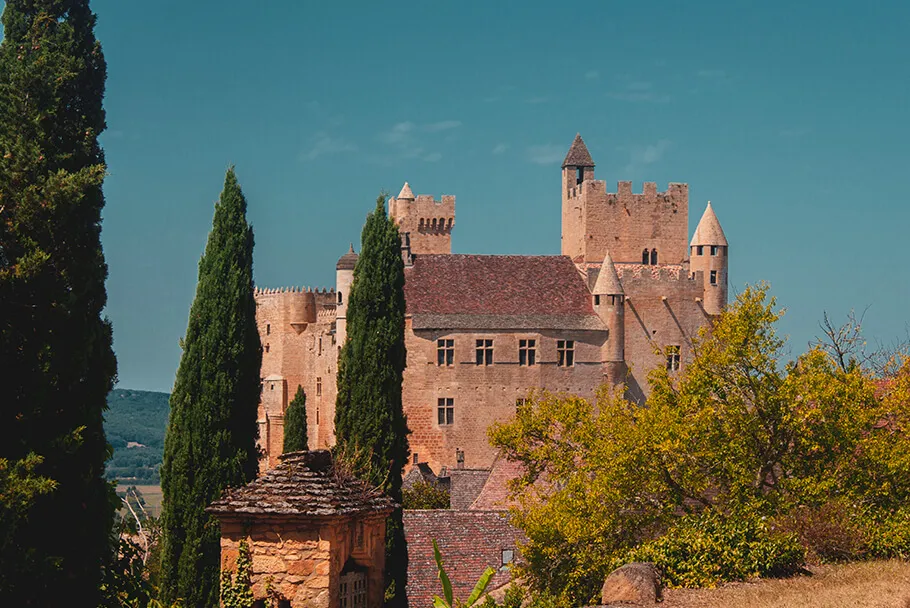
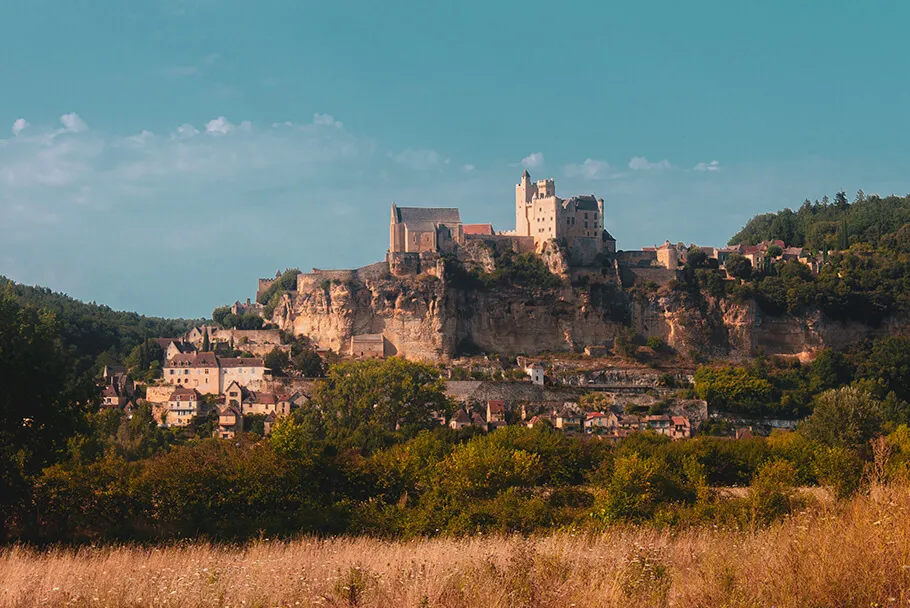
Like Limeuil, Beynac-et-Cazenac is listed among the most beautiful villages in France. It starts on the banks of the Dordogne, with its typical houses with stone-slab roofs, then the lanes climb the cliff up to the château. With a pushchair, it is not easy, as the street is so steep and, to make matters worse, there are steps to climb before reaching the château. On the way back, we discovered that a road leads to a car park right at the top of the cliff.
The château is a group of buildings from the 12th to the 18th centuries, restored in the 20th century. As we had not brought the baby carrier, we did not visit it, and settled for admiring the view over the Dordogne valley.
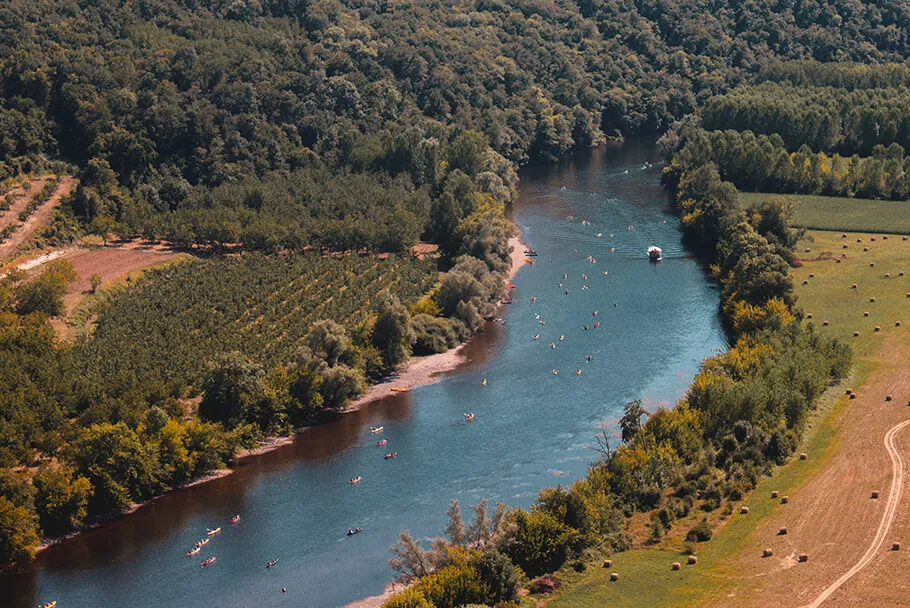
If you like canoeing, the stretch from Beynac-et-Cazenac to La Roque-Gageac is a great spot. You can paddle along the loops of the Dordogne with superb views of the villages and four of the most prestigious châteaux in the Périgord. You can also take a guided trip aboard a gabare, a small traditional boat once used to carry goods.
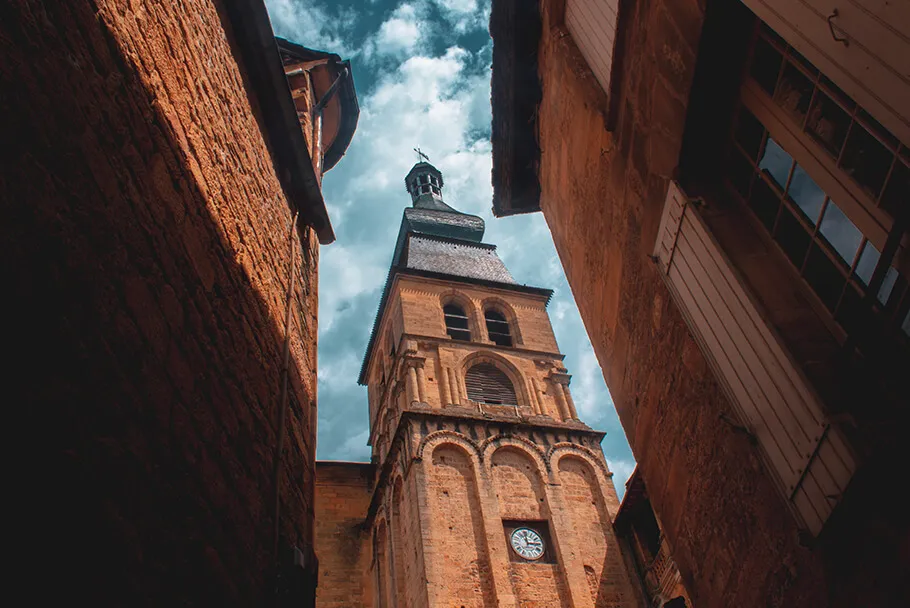
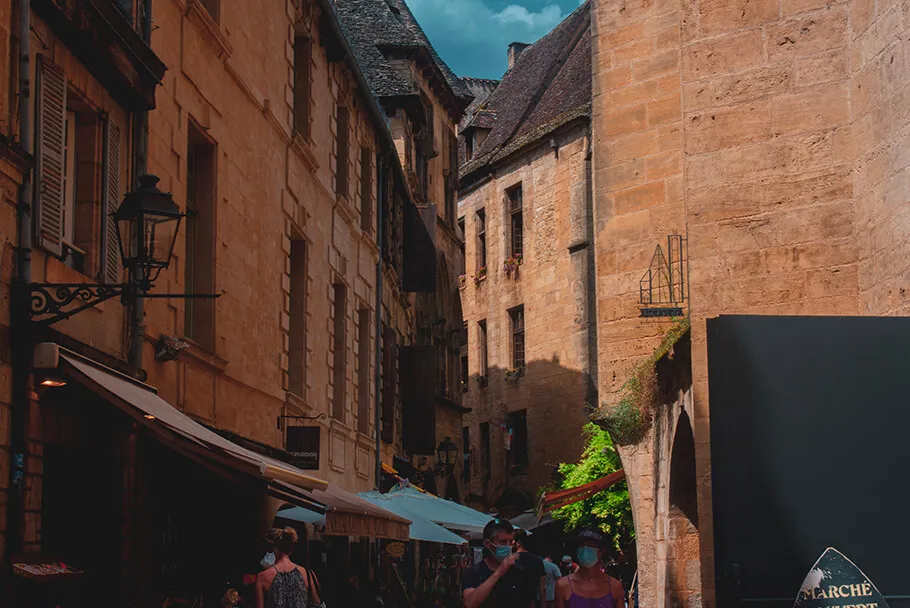
Sarlat-la-Canéda, more simply called Sarlat, is nicknamed the capital of the Périgord. We visited on a Saturday, market day. The town was packed with tourists, and every lane of the medieval town was taken up by market stalls or restaurant terraces. The problem: a big thunderstorm broke out just after we arrived, and everyone tried to take shelter in a joyful chaos.
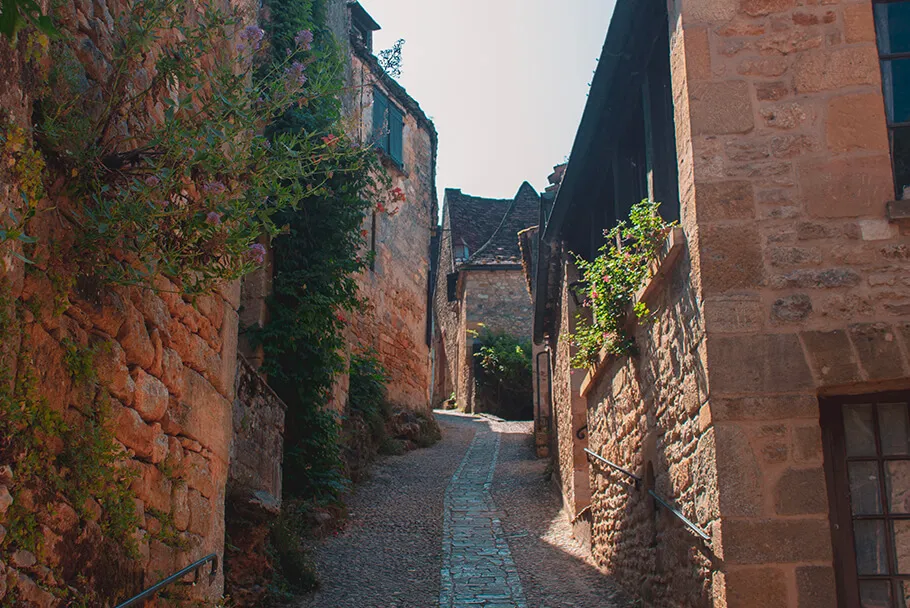
The town developed from the 12th to the 16th century. Its centre is made up of narrow lanes and small squares lined with mansions with stone-slab roofs. At the market, you will find all the specialities (foie gras, walnuts, truffles and figs). The church of Sainte-Marie, transformed by Jean Nouvel, now houses a covered market. Its doors, each a single piece 15 metres high and weighing 2 tonnes, are impressive.
We ate at a restaurant called La Cour des Poètes. We were lucky to find a sheltered table big enough for us and the pushchair. There were queues outside every restaurant, as many terraces had closed because of the rain. After lunch, we carried on wandering through the lanes.
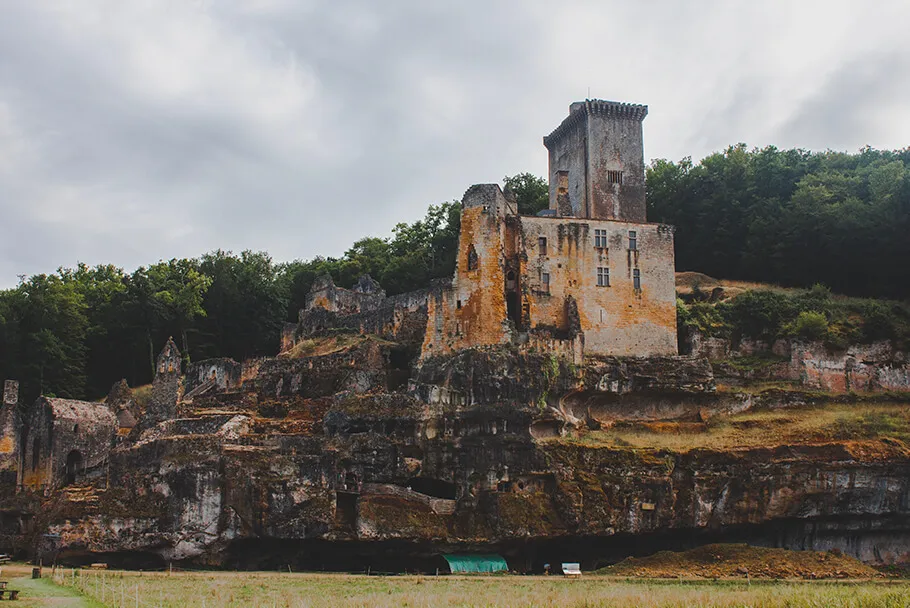
We then visited the château of Commarque. It is in the commune of Les Eyzies-de-Tayac-Sireuil, mentioned above. The car park is a few hundred metres before the château, which makes for a short walk in the forest before the visit.
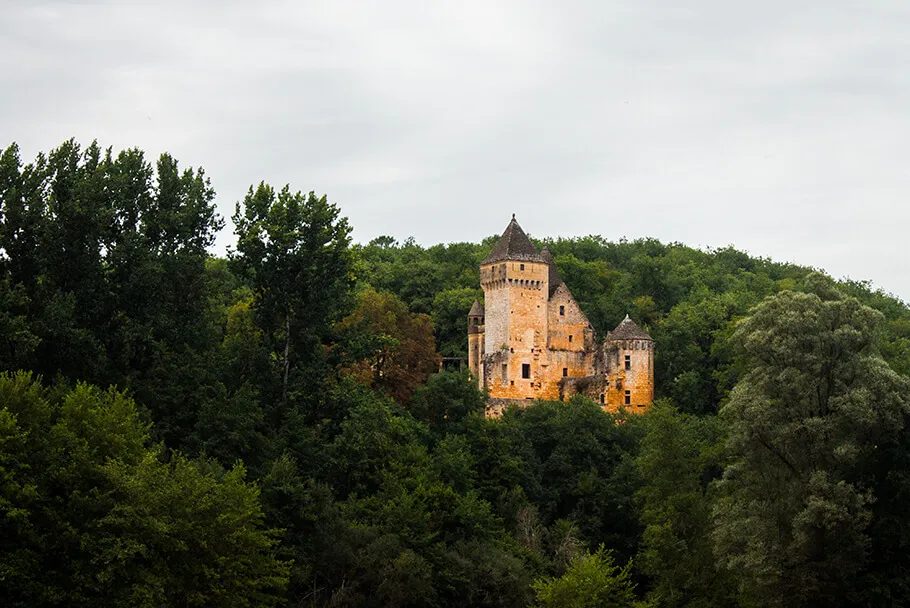
The site is rich in history, as the château overlooks a rock that holds a troglodyte fort and a prehistoric decorated cave. Facing the château, on the other side of the valley, stands the château of Laussel (see the photo above, the one in the woods).
The 12th- and 14th-century fortress was a “co-seigneury”: the noble families lived in the different towers of this fortified village. It still belongs to the Commarque family. What is interesting is that the château was forgotten for nearly 400 years. Hubert de Commarque has been working on its restoration since 1962; before that, the château was almost completely buried under vegetation. The 80-metre tower offers a lovely view, despite the tiny spiral staircase leading up to it. A little stressful with the baby carrier.
The cave dwellings are at the foot of the château, on the cliff face. Archaeological digs have uncovered marks in the rock and objects dating from the 9th to the 16th century, proving continuous human occupation during those periods.
The cave shows a human presence since the Magdalenian (between 17,000 and 12,000 BC; the word Magdalenian comes from the cave of La Madeleine, also in the Dordogne). It is decorated, and its most emblematic image is a life-size horse carved into the rock, with a strikingly realistic head.
In the evening, back in Issigeac, we ate at La Brucelière, an excellent restaurant with a lovely terrace. The meal included an amuse-bouche, a starter, a main course, dessert and petits fours. Everything is traditional and local. We recommend it.
In the late morning, we stopped at the Issigeac market again to try to bring back a few souvenirs. We then set off to visit the Maxange cave. It does not seem to have been inhabited by humans, or at least no trace of their presence has been found. However, scratches in the rock are attributed to a cave bear during the last ice age.
The name Maxange combines the names of Maximilien Caballero, who discovered the cave on the site of his stone quarry, and Angel, his son, who continued the work after him to open it to visitors. The cave was only discovered in 2000. Its special feature is its large number of geological formations: you probably know the classic stalactites and stalagmites, but here you can see thousands of what makes the cave so rare, helictites (called “excentriques” in French). These are limestone growths that sprout in all directions and seem to defy gravity.
After the visit, we stopped by the Dordogne near Siorac-en-Périgord for an afternoon snack. Geoffrey took the opportunity to fly the drone over the river. Then we went back to enjoy the pool at the Château Gauthié one last time.
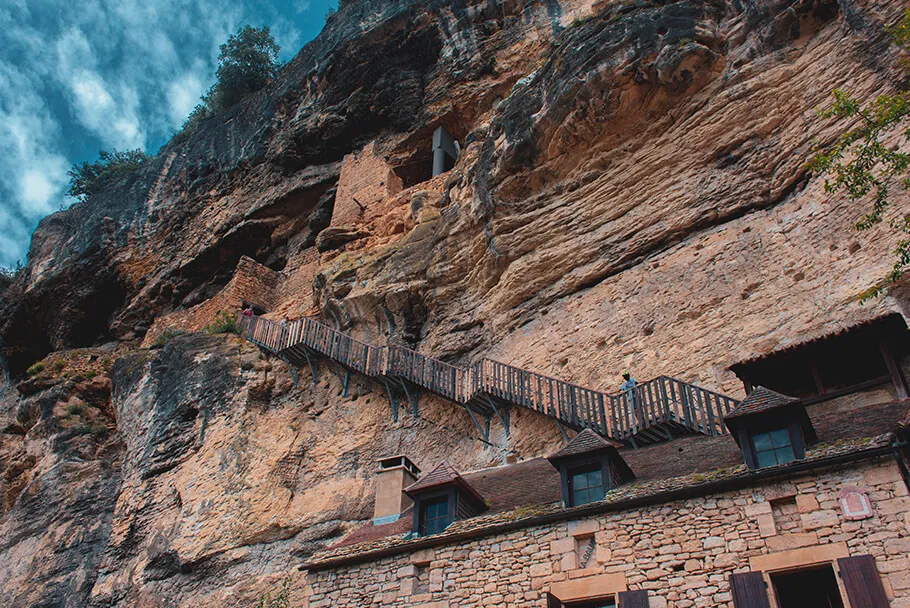
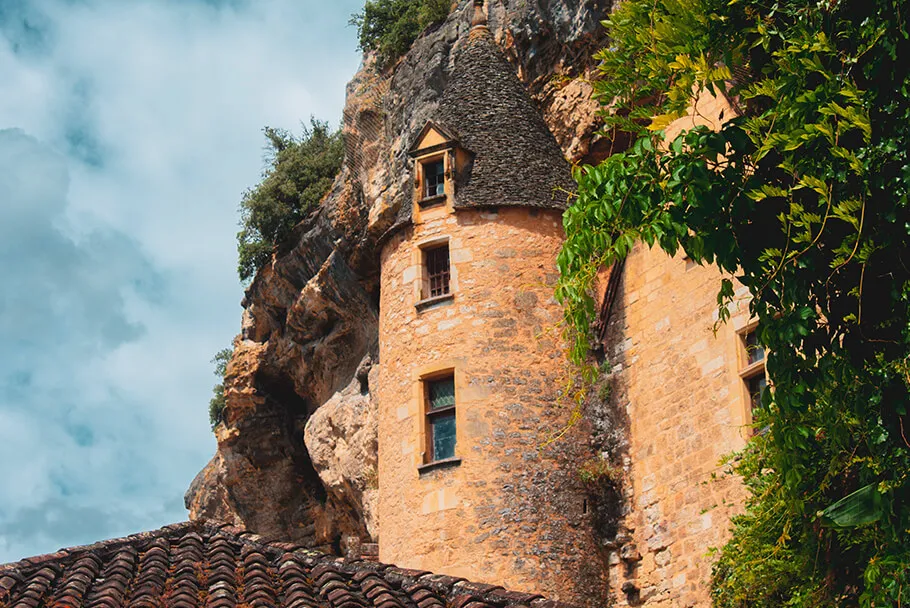
Monday was departure day: we set off towards Poitiers to spend a few days with Sandrine's parents. Before leaving, we stopped at La Roque-Gageac, which we had admired from afar from the gardens of Marqueyssac. Like Beynac-et-Cazenac, this village, listed among the most beautiful in France, is on the banks of the Dordogne.
It nestles against the cliff and has a troglodyte fort dating from the 12th century. Later, during the Renaissance, dressed-stone houses came to embellish the village. The cliff forms a natural suntrap, which makes room for an exotic botanical garden of palm trees, banana trees, bamboo and more.
For us, it was the last stop of the trip. We had so loved how much the Dordogne reveals about our ancestors that we filled the next few hours on the road with the audiobook of “Les Enfants de la terre, tome 1 : Le Clan de l'ours des Cavernes” (The Clan of the Cave Bear, the first book in the Earth's Children series).
Before going home to Paris, and after a few days in Poitiers, we also went through Saint-Nazaire to visit Geoffrey's brother, and took the opportunity to visit Pornichet and Guérande. Feel free to leave a comment or ask a question at the bottom of the page. See you soon.
Enjoyed this article? Pin it on Pinterest.
Follow us on social media to hear about our next trips. Feel free to leave a comment or ask a question at the bottom of the page. See you soon.