By Geoffrey Ménissier, published on , updated on .
Also available in: 🇫🇷 🇪🇸 🇵🇹 🇩🇪 🇮🇹 🇳🇱
In short
A family camping week in the Lot, in the Dordogne valley. We explored the Causses du Quercy Regional Natural Park and discovered, among other places, the villages of Rocamadour and Saint-Cirq-Lapopie, the Pech Merle cave and the Gouffre de Padirac. Here is what to do in the Lot for a successful family holiday.
0 comments
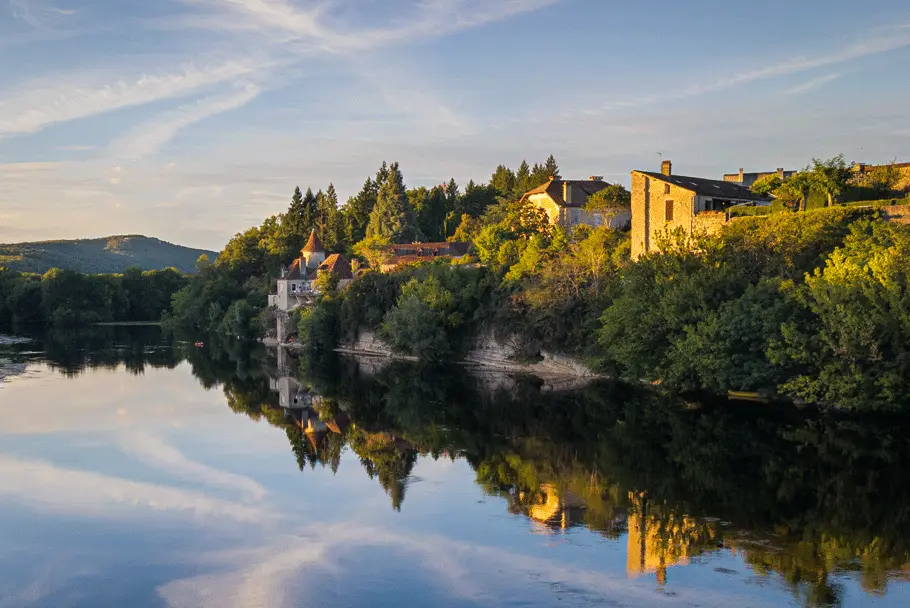

In 2020, we set off to discover the Dordogne: it was our first holiday with our son Victor, born in 2019. You can read that first article here: The Dordogne with kids. We had loved the area, there is so much to do: nature, medieval villages and castles, food and caves, especially Lascaux. This year (2023), we headed back along the Dordogne, but a little further east this time, in the Lot department. This let us visit places that were a bit too far away last time, in particular Rocamadour, the Gouffre de Padirac and the decorated cave of Pech Merle.
It was also a first for us as a family: we chose a campsite, the “Village du Port” in Saint-Sozy. We picked it because it is shady, by the water and quiet: cars are not allowed inside. For the children, there are horses, ponies and hens. For us, a wine bar and a few local specialities.
When we arrived on Saturday evening, after a quick check-in, the first goal was to pitch the tent. It is one of the family models from Decathlon, and it was also the first time we used it. In less than an hour, everything was ready and the mattress was inflated. The pitch is quite big, about 100 m², with a water point and an electric hook-up.
We could then move on to our second goal: finding something to eat! The campsite welcomes a different food truck every evening, and that Saturday it was Vietnamese (spring rolls and samosas). The first night went almost without a hitch: Victor must have played with the mattress valve, and around 2am we were almost on the ground. I pumped it up again, hoping not to wake too many people…
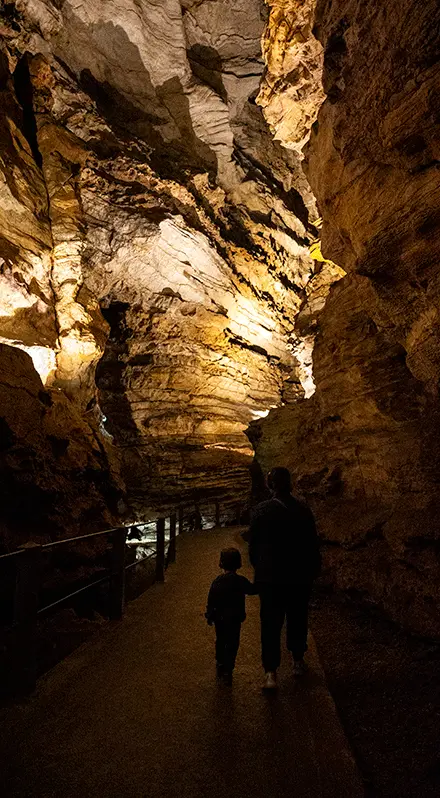
When we woke up, we tried the campsite showers, a very satisfying part of the stay: they were always very clean! We then set off for our first activity, a visit to the medieval town of Rocamadour. On the way, we made a first stop at Dino-Park to please Victor. It is a short walk in the woods, with life-size scenes from the dinosaurs to the first humans. The site also has its own cave (the Carbonnières cave), about 300 metres deep, with a few light effects.
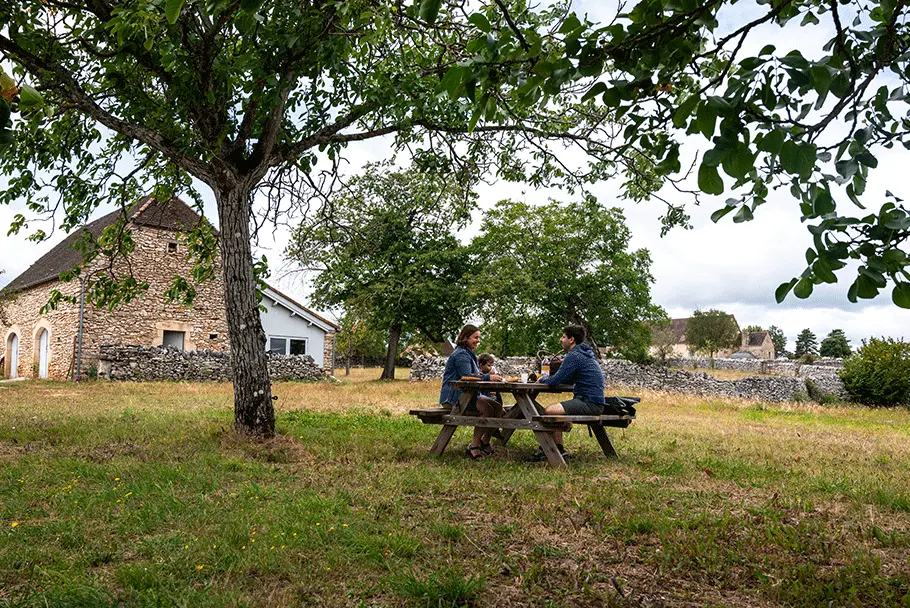
We set off again towards Rocamadour and, as it was almost noon, we stopped at the Borie d'Imbert. It was not planned, but it was a nice surprise: we ate good local produce. Everything is well thought out: they provide baskets and cutlery, and you will find picnic tables in the meadow. After lunch, we visited the farm (goats, cows and pigs).
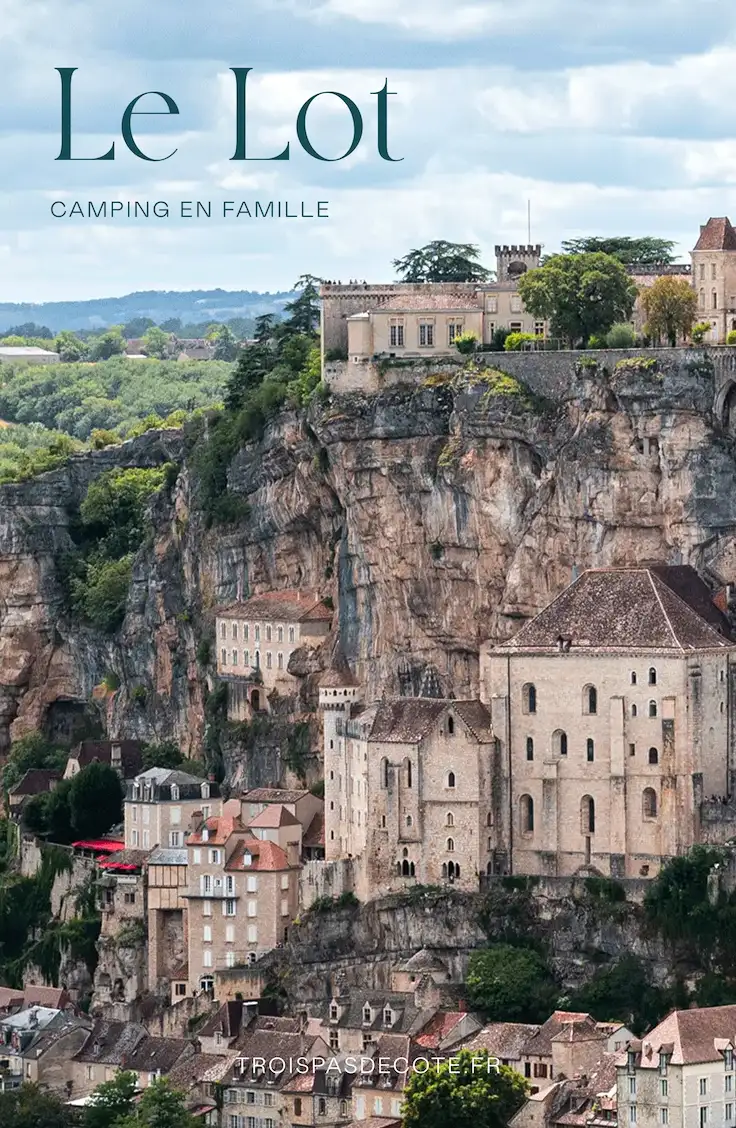
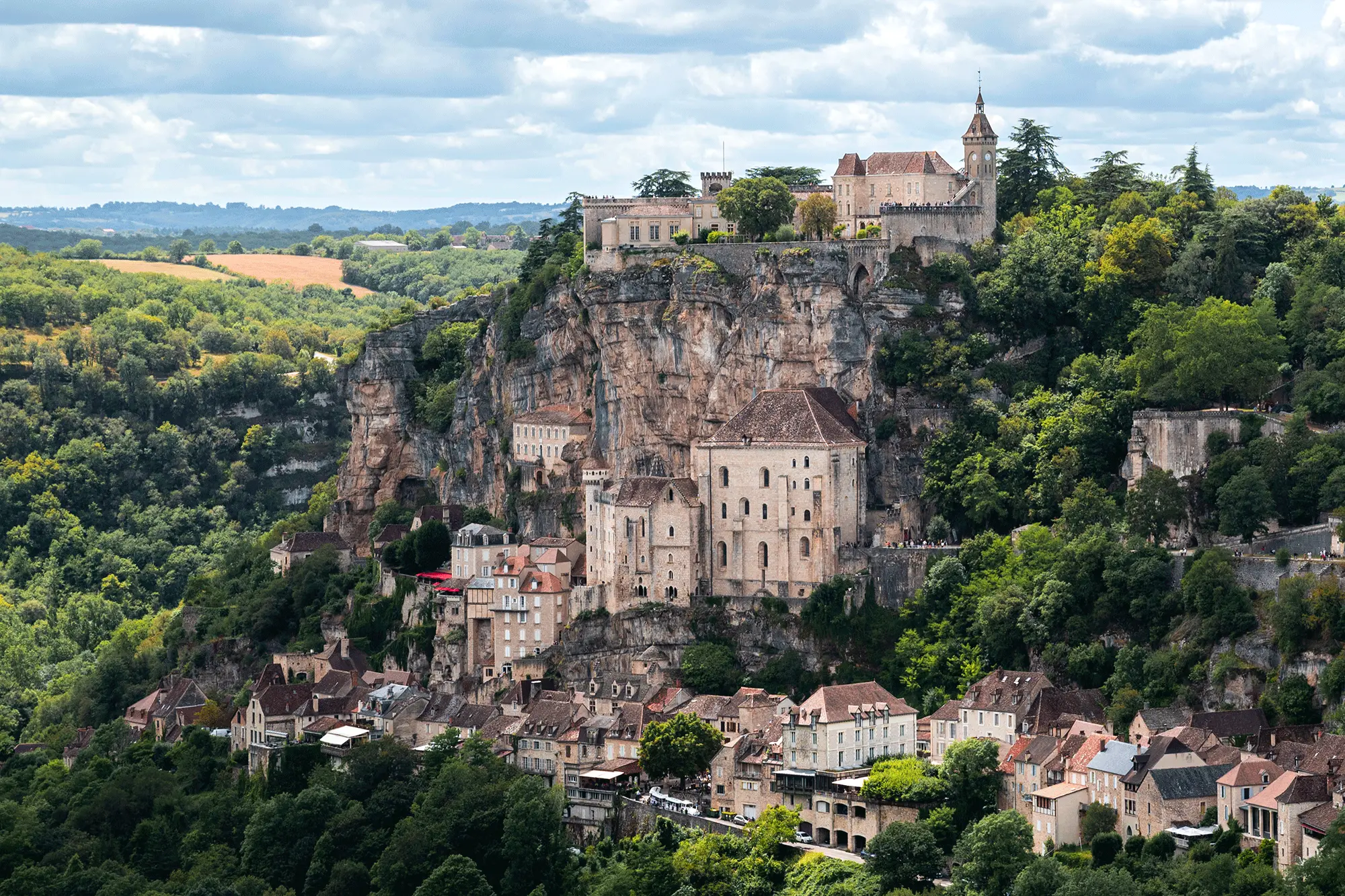
When we got to Rocamadour, we found the site very busy. We found a parking space next to the valley viewpoint and, after a few photos, started our visit. It is a small village clinging to the cliff. At the bottom, you will find winding lanes guarded by a series of fortified gates. A great staircase of 216 steps leads to the Sanctuaries, about a hundred metres higher up. The town dates from the Middle Ages, but it was partly rebuilt in the 19th century after falling into serious disrepair. We started with the Bishops' Palace at the top before walking down into the town. There is now a system of lifts, but we preferred to walk. We took the “holy way” to avoid the staircase, as Victor had fallen asleep in his pushchair. We took the opportunity to have an ice cream, given the heat.
We did not get the chance to visit it, but Rocamadour also has a decorated cave, the “Grotte des Merveilles”, where you can see engravings and paintings of negative hands, six horses, a deer and a feline. They are estimated to be more than 20,000 years old.
(You sometimes need to zoom in quite closely on the area you are looking at for activities to appear.)
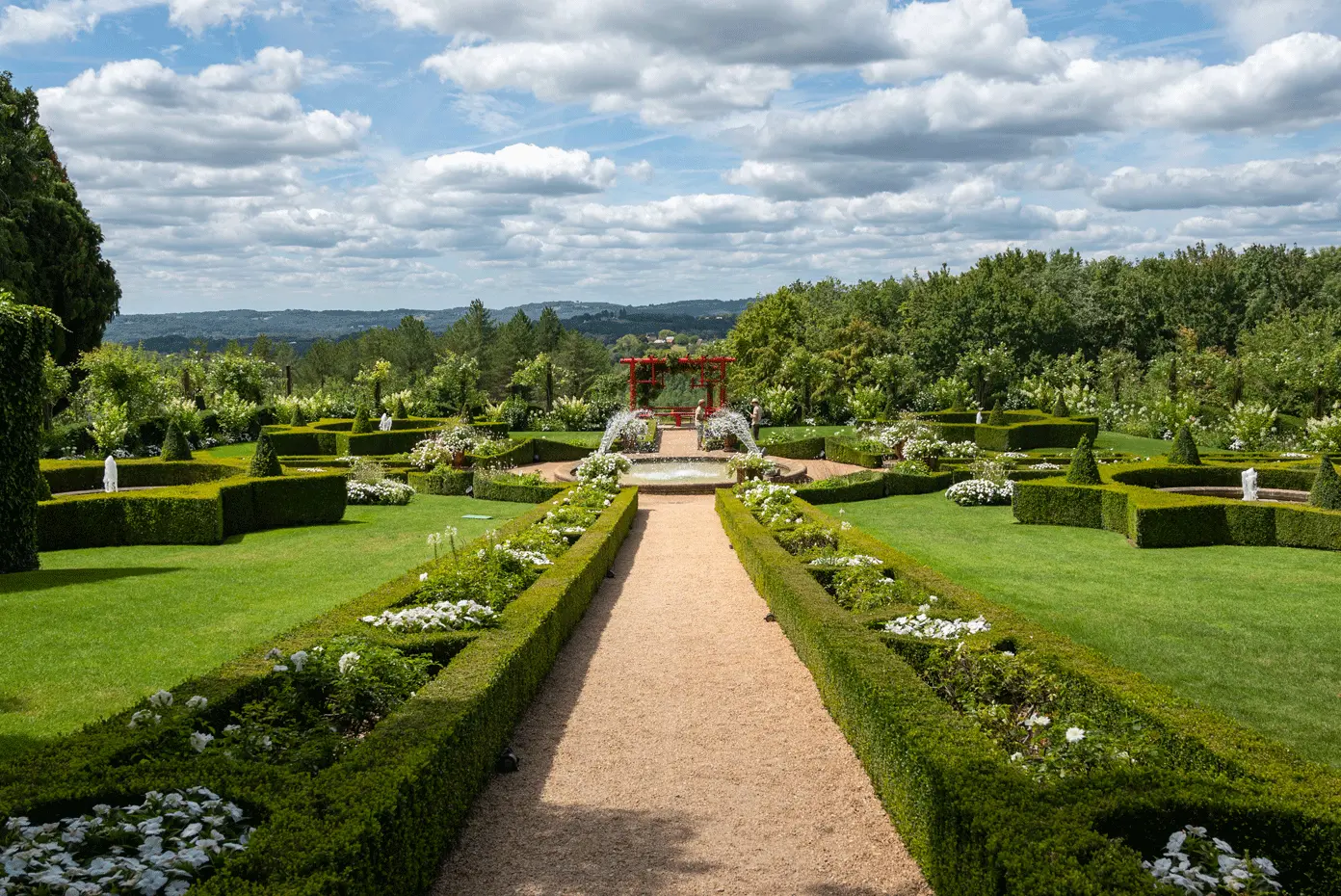
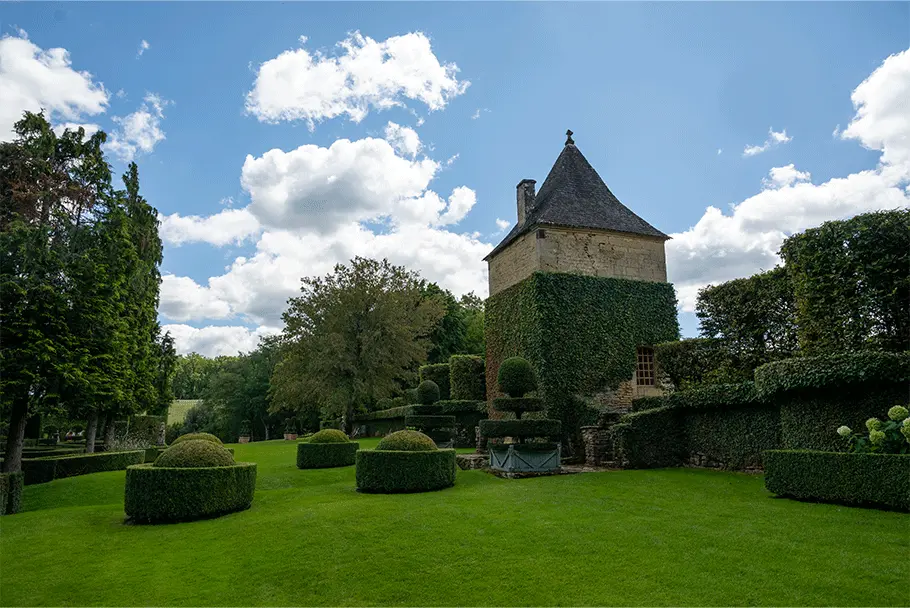
In 2020, we had visited Marqueyssac and its garden, which holds the “Jardin Remarquable” (Remarkable Garden) label. We left the Lot to go back to the Dordogne (Périgord Noir) and, this time, discover the gardens of Eyrignac, which also hold the label. On the way, we came across a village fête, with a few dances in period costume and food for lunch.
The visit to the garden took us about two hours. You can discover the art of topiary there: sculpting plants into geometric or animal shapes, for example. A team of 6 gardeners looks after the garden's 200 hectares all year round. Eyrignac is also a water garden: with 7 springs, you will discover many pools and fountains. The gardens of Eyrignac are privately owned and have belonged to the same family for 500 years. Admission is €12.90, free for under-5s.
At the end of the day, back at the campsite, we tried the swimming pool but, as it had rained a lot the week before, it was rather cold!
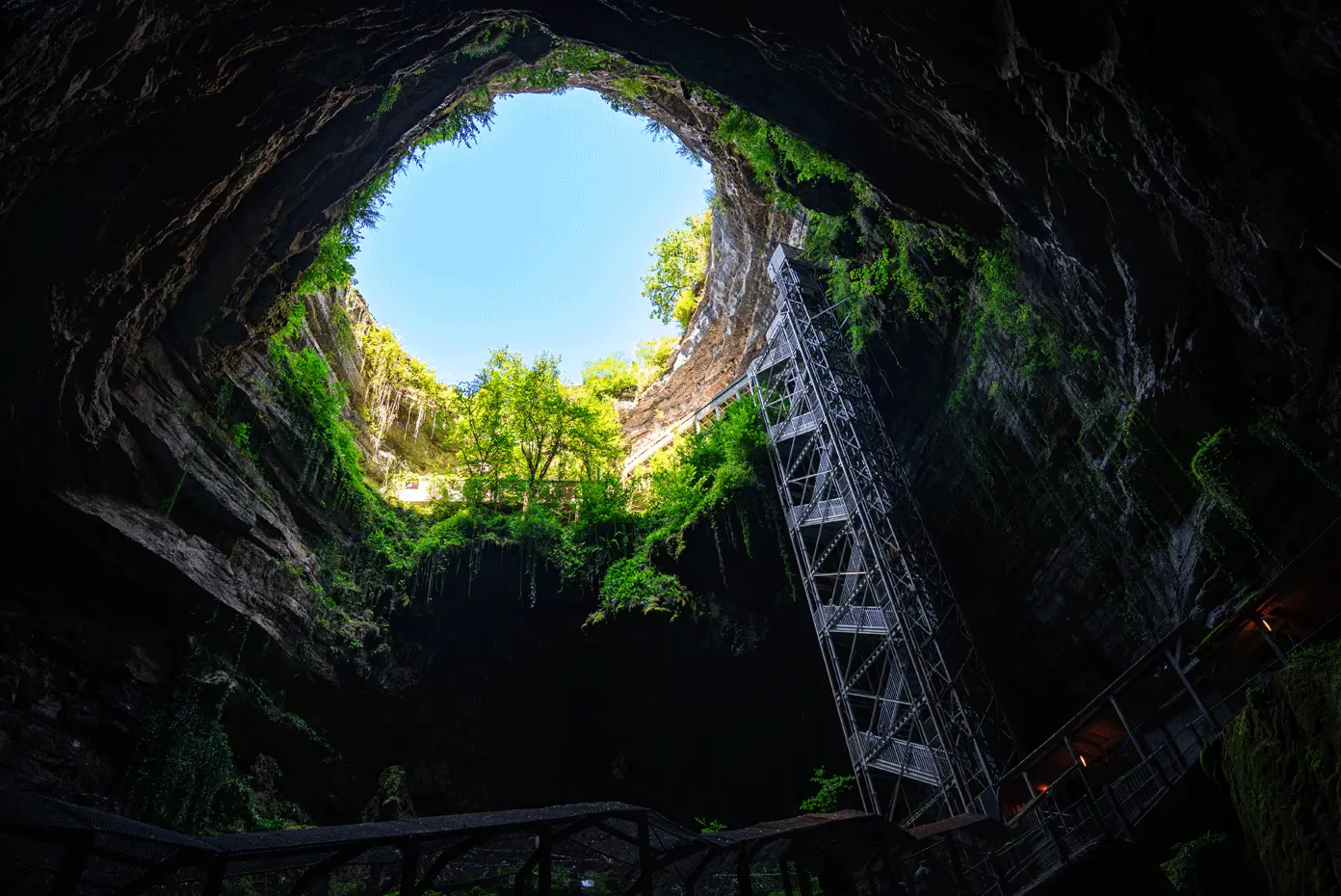
We had booked our tickets for the Gouffre de Padirac a few weeks in advance, as the site is so popular. It is indeed one of the jewels of the Lot. You go down 103 metres, by the stairs or the lifts as you prefer, then walk about 1 km through the chasm. A good part of it is done by boat on the underground river. This river carries on for another 19 km before joining the Dordogne. In total, 42 km of galleries have been mapped, some of them completely flooded. The guide tells you the story of the site and its discovery and, at the Lac de la Pluie, you can see the 60-metre-high “Grande Pendeloque”, one of the largest stalactites in the world. Here, water has carved the rock for millions of years, giving ceilings 94 metres high in some “cathedral” chambers.
The visit is a round trip: we boarded the boat again to head for the exit. We had gone down by the stairs but, as Victor was getting hungry and heavy in my arms, we took the lift to get back up more easily. For more information about the discovery of the Gouffre de Padirac, visit the official website.
At lunchtime, we found a small village with an open bakery and had a picnic. Then we headed for Autoire to discover the village and its waterfall. The cirque of Autoire is formed by 200-metre-high limestone cliffs. The waterfall drops about 30 metres. Further down, the little village is listed among the “Plus Beaux Villages de France” (Most Beautiful Villages of France). We had another good ice cream there, Victor's new passion. The cliffs also hold the ruins of the Château des Anglais, a remnant of the Hundred Years' War.
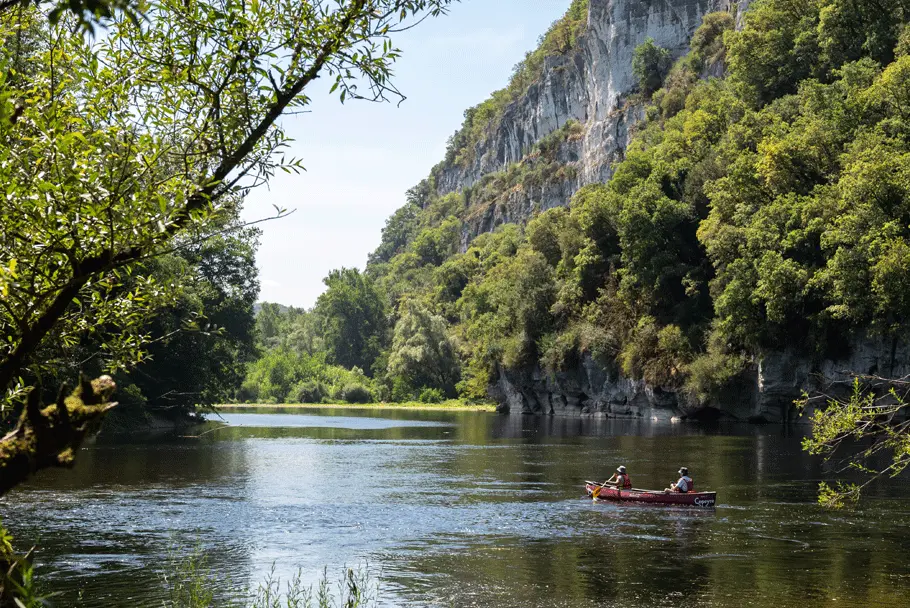
At the end of the day, we sat by the Dordogne to dip our feet in the water. We were right at the end of the campsite and, on the other side of the river, we could see the village of Meyronne and its old houses. Lots of canoes went by on the Dordogne but, unfortunately, Victor was not old enough to try.
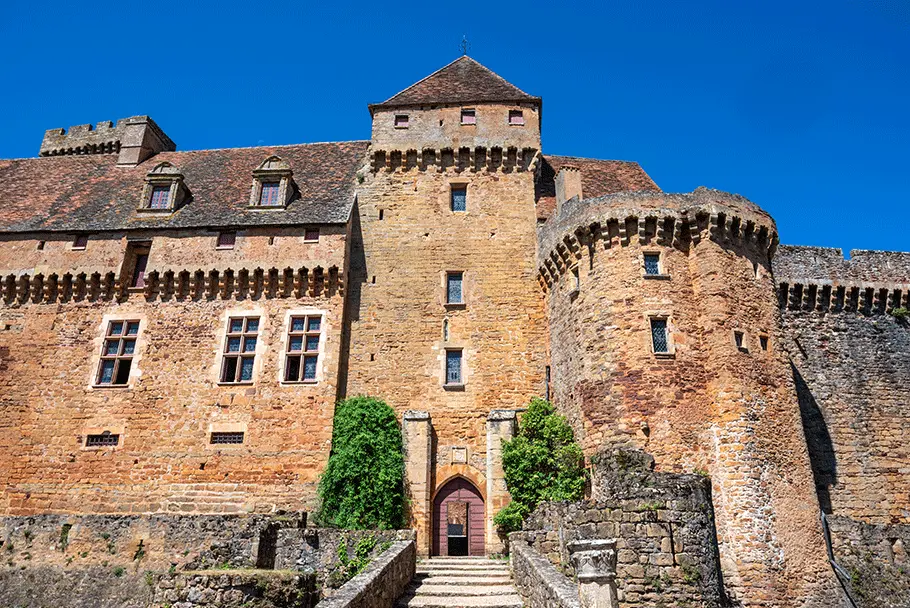
This day was devoted to the château of Castelnau-Bretenoux. It is in the commune of Prudhomat and is about 800 years old. It stands impressively on top of a hill, and its red-tinted stone gives it a unique look. We visited the great courtyard, then a few well-decorated and furnished rooms. Discover the history of the place on the official website. A “play” area lets children build the château walls with cardboard bricks: Victor loved it, and it was hard to get him to leave!
After the visit, we had lunch on the terrace of the restaurant at the foot of the château, “Les Remparts”. The regional dishes are good and the staff are friendly: we recommend it.
Before setting off for Collonges-la-Rouge, we stopped in the shade by the Dordogne. Victor had a little nap, and we took the opportunity to rest and digest.
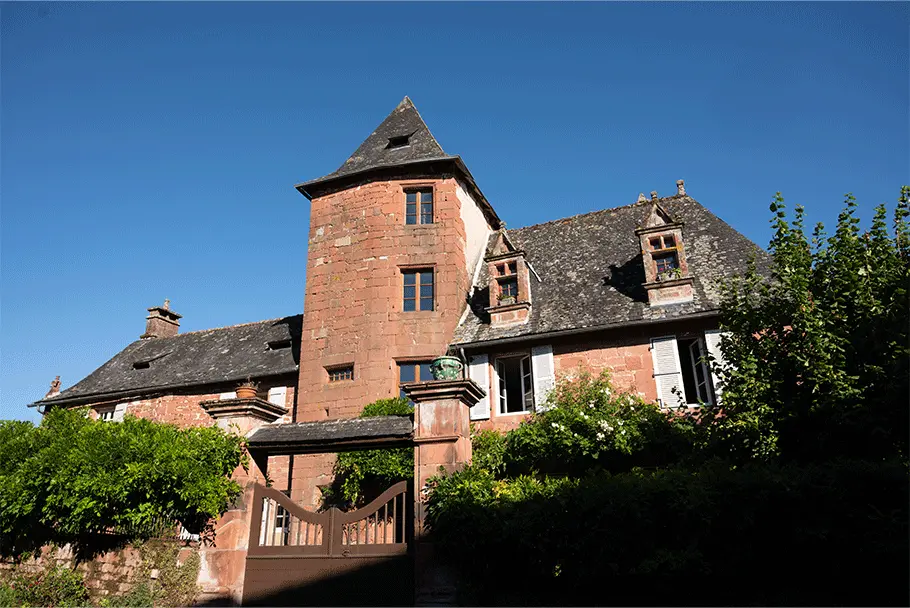
Collonges-la-Rouge is in the Corrèze. Its name comes from the colour of its building stone, a red sandstone. We wandered through the medieval lanes and looked around a few craft shops. We admired the fortified towers that earned it the nickname of “town of 25 towers”.
At the end of the day, we enjoyed the campsite pool again, which had had time to warm up (a little).
On Thursday morning, the campsite held a small activity for the children to collect eggs from the henhouse, so the morning was very relaxed before we set off further south. We left the Dordogne valley for the Lot valley, heading for the decorated cave of Pech Merle. Along with Lascaux, which we saw in 2020, it is one of the great sites of cave art in the region. Except that here, it is not a replica: you see the original works! This means quite few visitors per day, and only a short time in front of the works, to preserve them.
The visit starts with a short talk about the cave and its discovery, then we went down the stairs with our audio guides (the guide comes with you, the earpieces simply help you hear them better). I have no photos here, as photography is not allowed in the cave. There is a lot to see at Pech Merle: geological curiosities, traces of cave bears and of human activity (fossilised footprints, cave paintings and engravings). 700 painted or engraved motifs have been recorded here. Among all these wonders, two panels are particularly impressive. The first shows 11 mammoths, 5 bison, 4 horses, 4 aurochs and a group of red dots: this is the “Black Frieze”. The second, the panel of the “Spotted Horses”, shows several horses and negative hands; the artist used the shape of the rock to paint the horse's head. Booking ahead is essential.
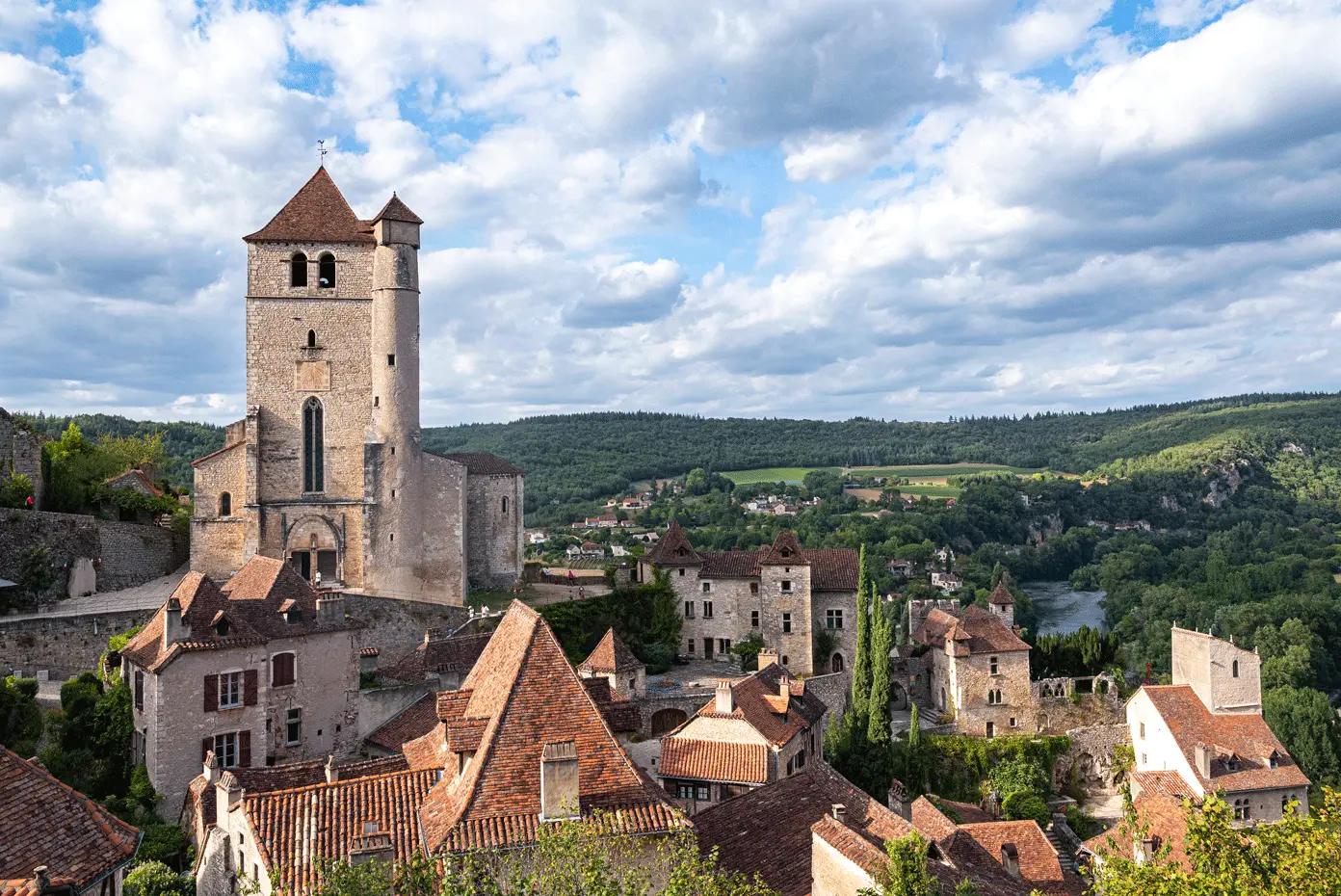
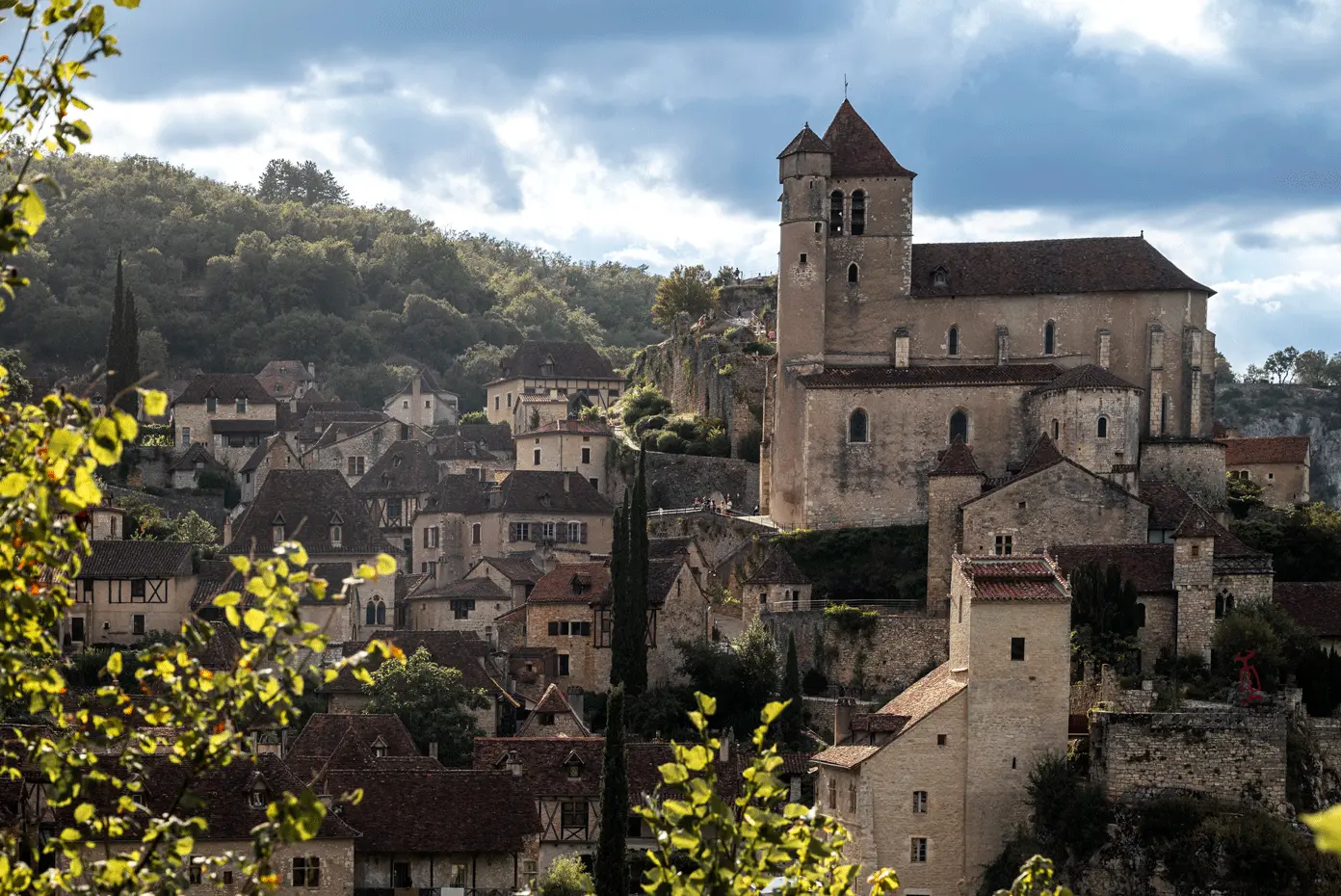
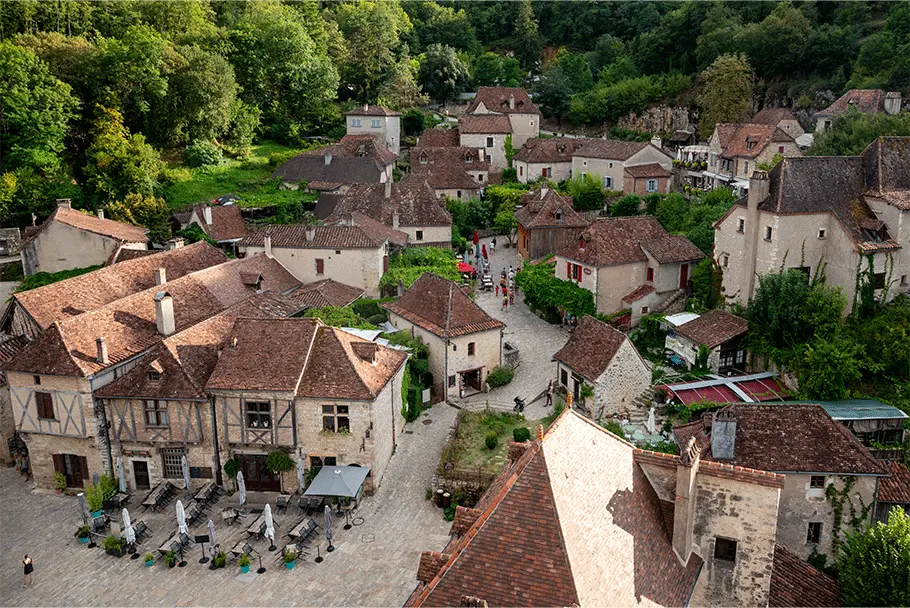
Once the visit was over, we set off to discover the village of Saint-Cirq-Lapopie. Perched about a hundred metres above the Lot river, the medieval village is a maze of winding lanes, which we explored for a short hour. It is also listed among the “Plus Beaux Villages de France”. Climb up to the Rocher de Lapopie for a 360° view over the valley and the village, and do not miss the church. We decided to eat there, at the restaurant Lou Bolat. It is very good, with local dishes, and the terrace has a lovely view over the village.
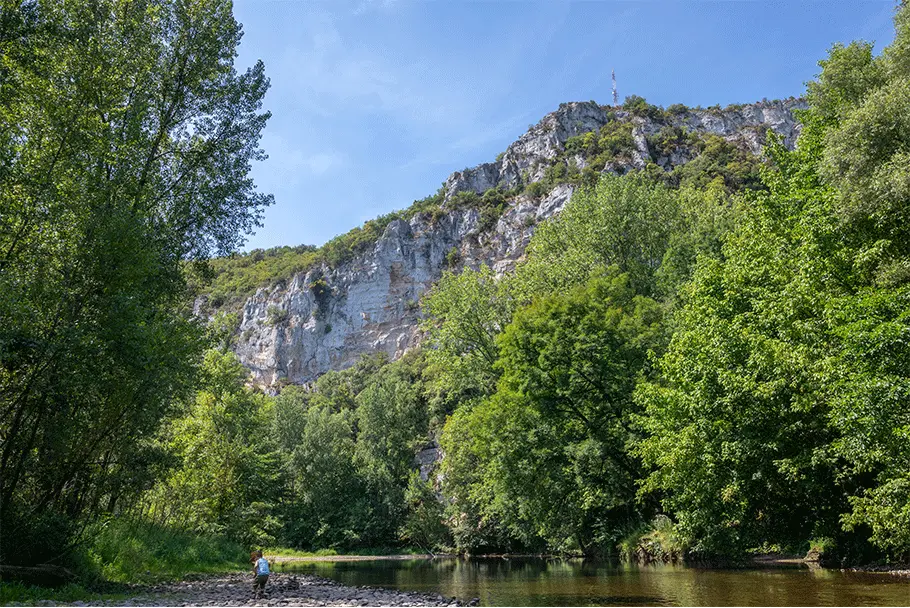
As we had come back quite late the evening before, we had a bit of a lie-in that morning. Then we set off to explore the area around Saint-Sozy. Several walks start from the village. We chose a fairly short one, as it was already hot. It took us to a branch of the Dordogne surrounded by limestone cliffs. We took the opportunity to swim, and I even found the water warmer than the swimming pool! The path is a 6 km loop, but we only did part of it. If you carry on, you can climb the cliffs to reach the Roc Coulon viewpoint.
At the end of the day, we relaxed again at the campsite bar with cold drinks. The place is nicely set up: a few tables, benches with comfortable cushions and, after dark, they light small campfires. The atmosphere is very relaxing.
There are many other things to see in the area, but we had decided not to rush around and to take our time. During your stay, you can visit many charming towns and villages (such as Loubressac, Carennac, Cardaillac…), cross the Pont Valentré in Cahors, discover the caves of Lacave (right next to Saint-Sozy) and many other places. Feel free to leave a comment at the bottom of the page to tell us where you went.
As for us, we are now off for a second week of holidays in the Auvergne. See you soon.
Enjoyed this article? Pin it on Pinterest.
Follow us on social media to hear about our next trips. Feel free to leave a comment or ask a question at the bottom of the page. See you soon.