By Geoffrey Ménissier, published on , updated on .
Also available in: 🇫🇷 🇪🇸 🇵🇹 🇩🇪 🇮🇹 🇳🇱

In short
We set off to discover the 3 Abers of Finistère: the Aber Benoît, the Aber Wrac'h and the Aber Ildut. On the programme, a week's camping near Landéda. We explored the Île Vierge and its lighthouse, and took a trip to Ouessant.
0 comments
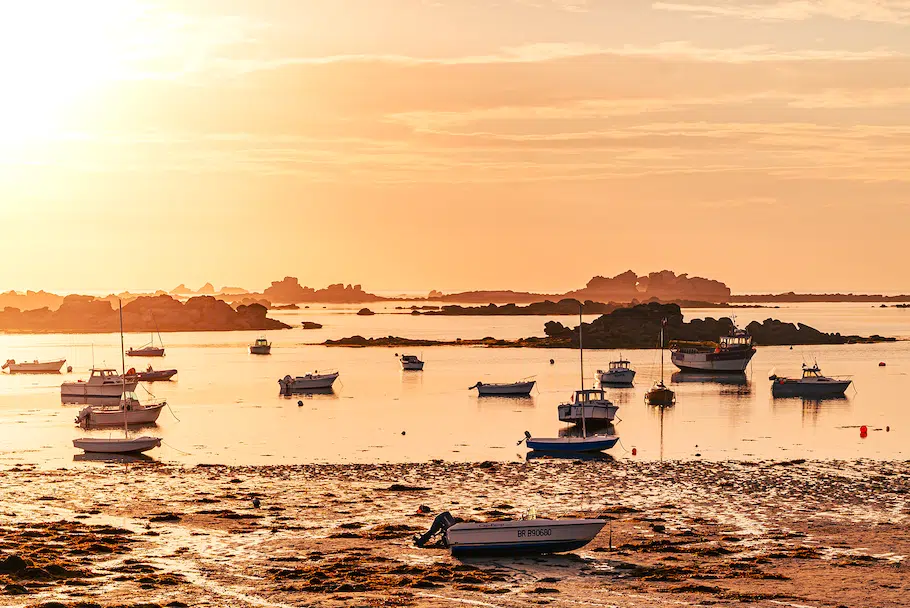
This summer, we chose Brittany for our holidays. Our plan: a first week camping in Finistère, between the Aber Wrac'h and the Aber Benoît, before a second week in the Morbihan.
Before you go, have a look at the Tout commence en Finistère website, a good reference for planning your stay in the department: ideas for walks, activities, events calendar… it is all there.
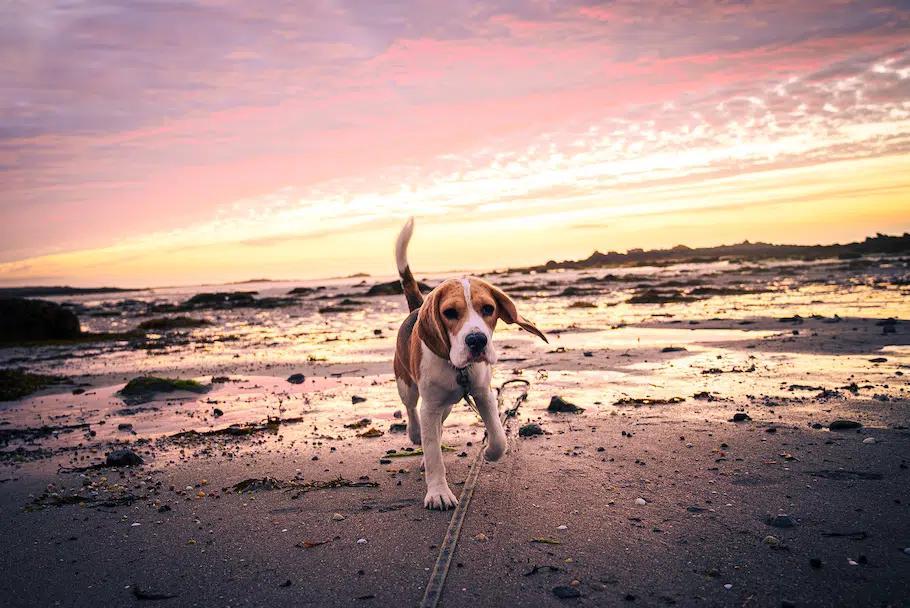
It was our second stay at the Penn Enez campsite. We had stopped there for a few days after our week in New York in 2017. But this time the experience was different: we came back with our son Victor and our young dog Glasgow, a ten-month-old beagle. The campsite is by the sea, on the dunes, between two abers. The setting is wild, facing the Atlantic and the Channel. I read that the position of the Île Vierge lighthouse marks the boundary between the ocean and the sea.
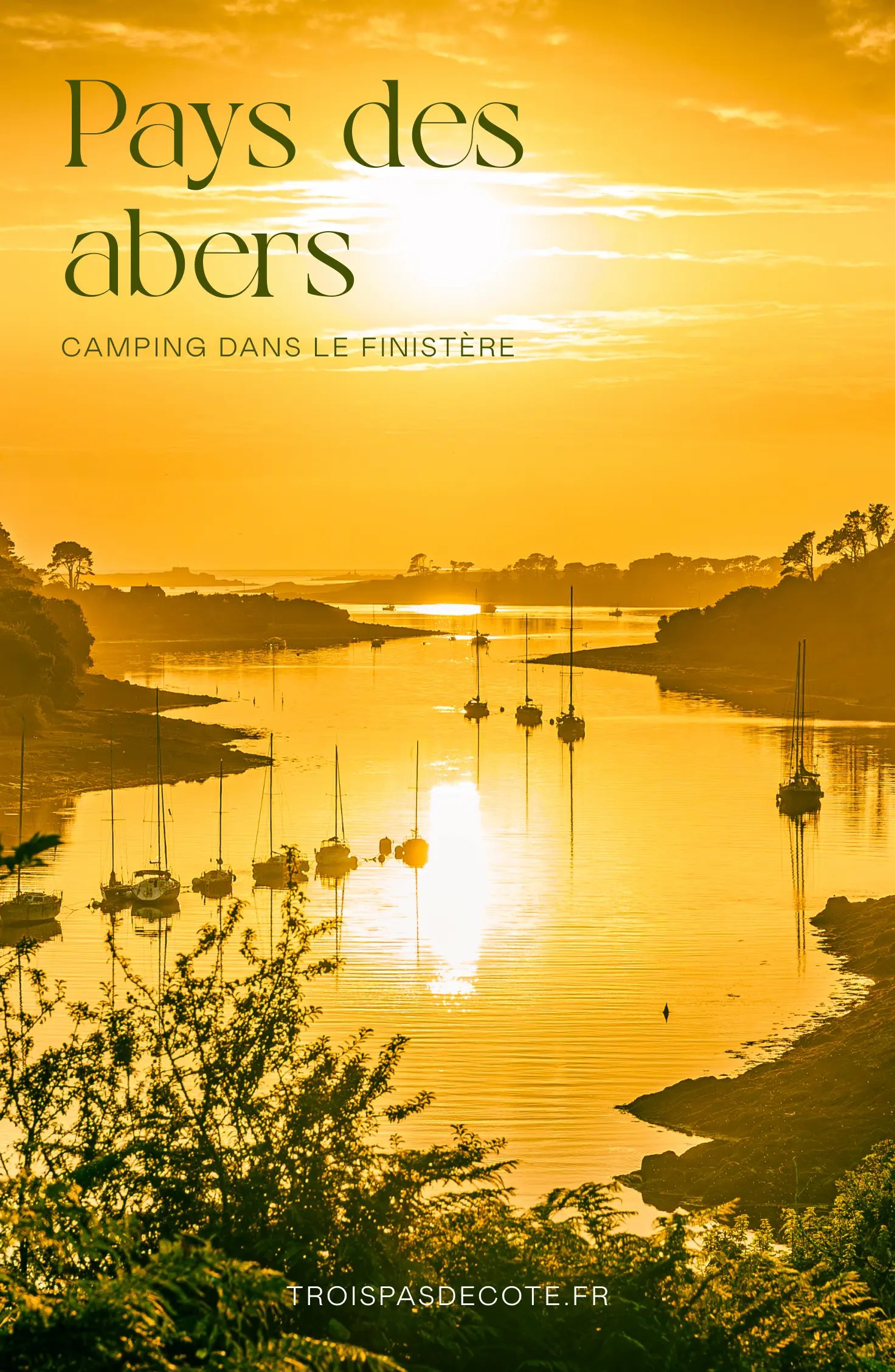
Before telling you about our week, we need to explain what the Abers are. These estuaries, typical of the north coast of Finistère, look like Breton fjords. The ocean reaches far inland, creating landscapes that change with the tides. The Aber Wrac'h, the Aber Benoît and the Aber Ildut are the best known.
The Abers area stretches around Lannilis, Landéda and Saint-Pabu. It is an authentic Brittany, where fishing harbours sit alongside quiet villages, spectacular lighthouses and fine sandy beaches. Less crowded than the south coast, the Crozon peninsula or the Pink Granite Coast, this part of Finistère is ideal for a family camping holiday or a trip with a dog, as it offers both natural areas and many accessible coastal paths.
We arrived at the Penn Enez campsite at the end of the day. It was our first time camping with Glasgow. We have a Decathlon Arpenaz 4.1 tent, already tested in the Lot a few summers ago. It goes up quite quickly, which is welcome after the drive. The campsite is simple: it is a municipal campsite with toilet blocks, a few pitches along the dunes and a small grocery at reception. It has the essentials, nothing more. In the evening, we took a first walk on the dunes, between Penn Enez beach and Plougouri beach. Glasgow discovered the sand with boundless energy. At night, we tried to make her sleep at the foot of the bed, but she insisted on joining us on the mattress. In the end, we gave in. And this week of camping did her good: still young, Glasgow finally fell into our rhythm and slept until 6:30 or 7am, real progress compared with home, where she woke up at 5.
At sunrise and at sunset, lots of rabbits come out of the dunes. Glasgow could smell them and could not keep still. It became a ritual: every morning and every evening, a little jog in the dunes to try to catch them, without success, of course.
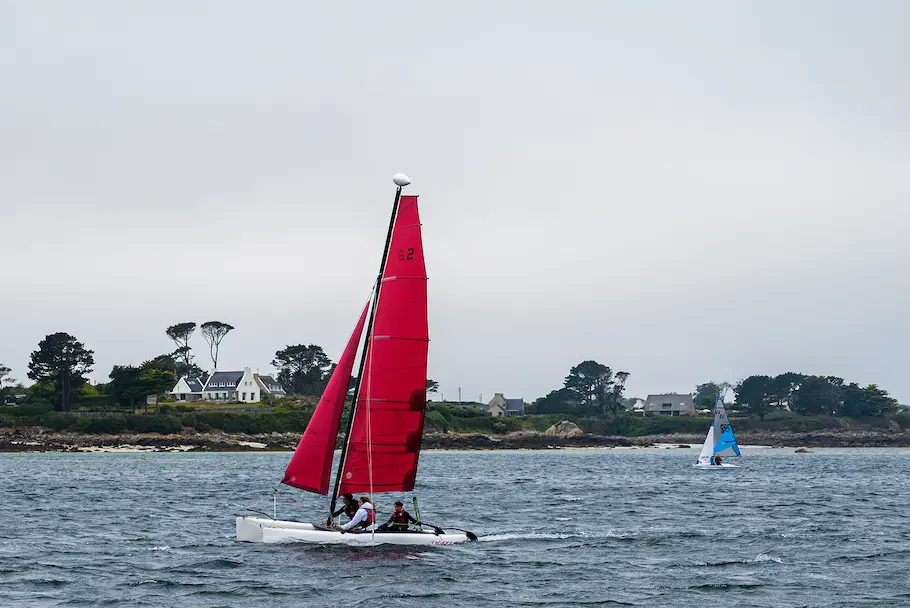
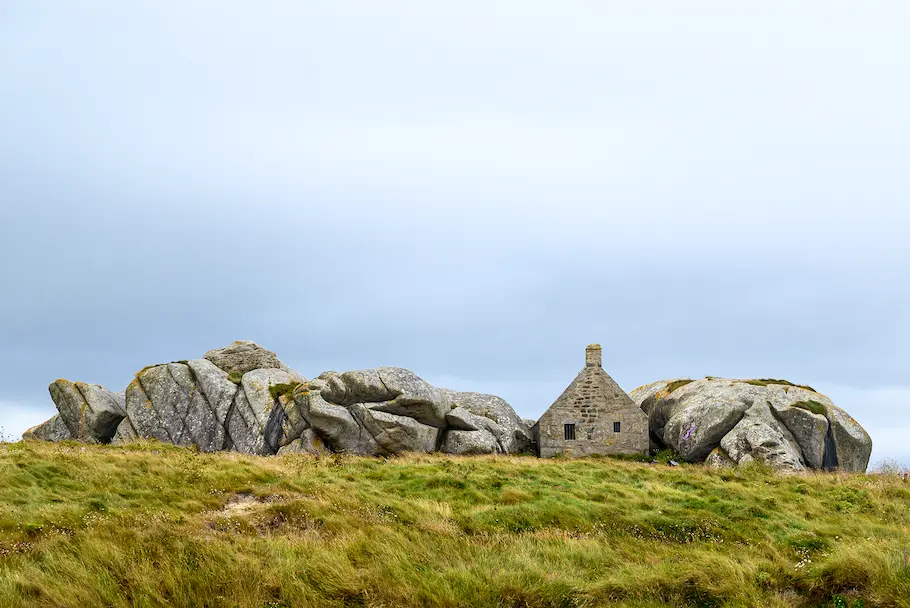
On Sunday, we kept things simple. We headed for the port of Landéda, in the heart of the Aber Wrac'h. Here, sailing boats bob in the harbour, sheltered by the sea walls. It is small but lively, with cafés and restaurants. We had lunch on the terrace at Ty Billig Ar Mor: the first galette of the week, enjoyed facing the boats. The atmosphere is relaxed and family-friendly.
After a stop at the tourist office to find out about the area, we spent the afternoon on Plougouri beach. Victor played in the sand while Glasgow explored around.
In 2017, we had tried the Captain restaurant on the harbour, excellent but without a terrace. With a dog, that is more complicated, so this time we favoured places with outdoor seating.
The Aber Wrac'h is one of the largest abers in Finistère. It stretches for 33 km, and its port long played a strategic role for trade and fishing. Today, it mainly attracts sailors and water sports fans. The Île Vierge lighthouse, visible offshore, is its emblematic guardian.
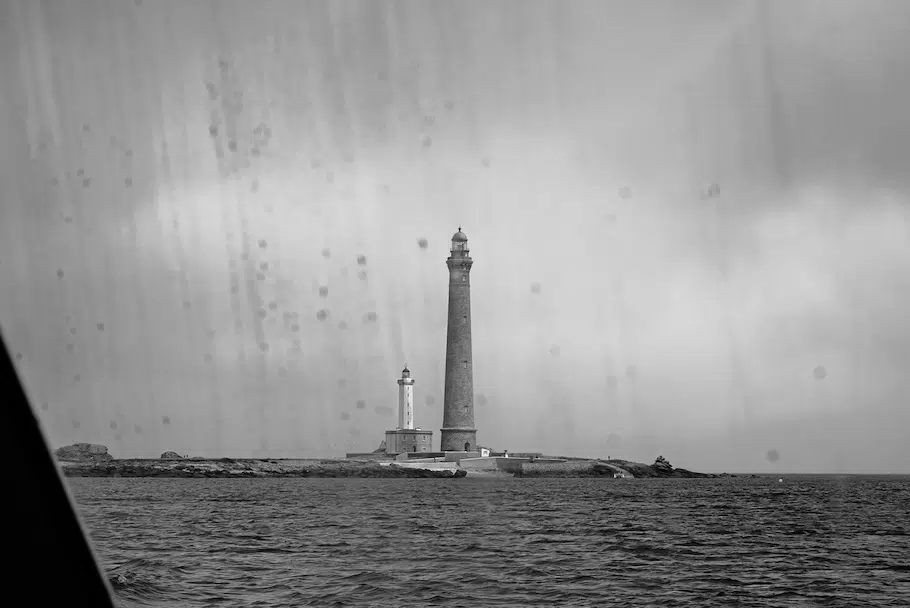
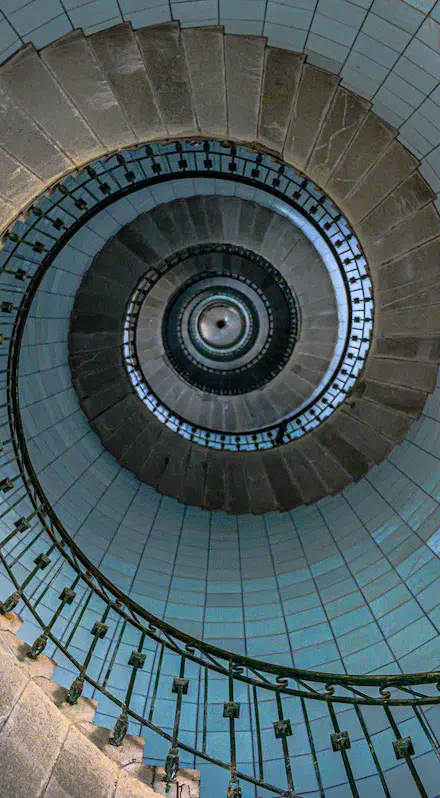
Monday was rainy, but that did not stop us. We boarded a boat from the port of the Aber Wrac'h for the Île Vierge. Good news: dogs are allowed on board and on the island. The crossing is short but feels like a real change of scene. Sandrine stayed to walk around with Glasgow, while Victor and I climbed to the top of the lighthouse after listening to the guide.
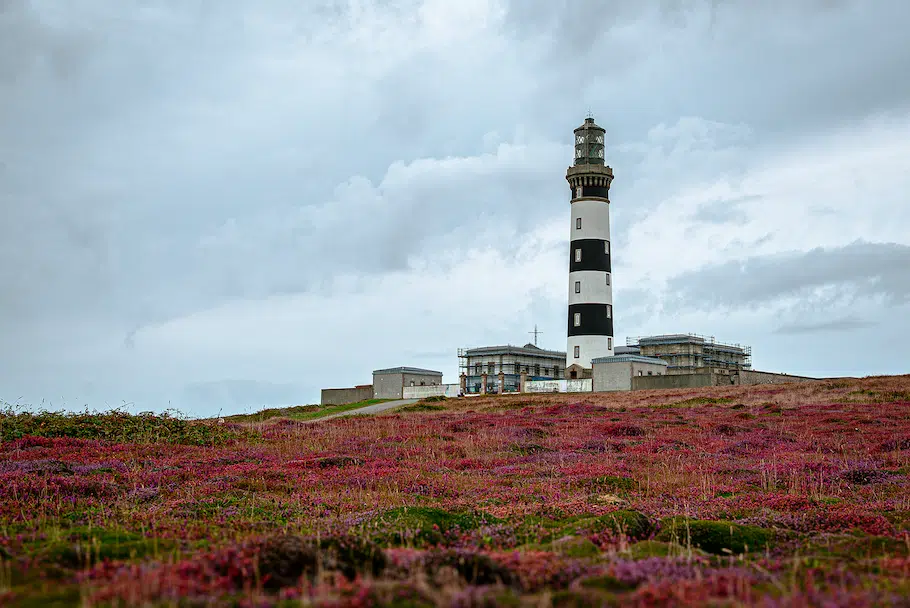
Built in the 19th century, the Île Vierge lighthouse is the tallest dressed-stone lighthouse in Europe, at 82.5 metres. You reach the top by a staircase of 365 steps. Once at the top, the view is spectacular: the ocean stretches as far as the eye can see, dotted with reefs and small islands. The guide tells the story of the keepers, the difficulty of the construction and the storms that batter this coast.
Back on land, we were hungry. We stopped at La Palue. From the outside, it looks like a simple pizzeria, as written on the front. But inside, we found a small hidden, shady terrace. The French-Asian inspired cooking was a lovely surprise. A place we highly recommend.
In the afternoon, we drove to the village of Meneham, a former hamlet of fishermen and seaweed gatherers. The low stone houses, huddled against the rocks, feel like a timeless setting. Now restored, the site hosts craftspeople and exhibitions. It is a visit that appeals to adults and children alike.
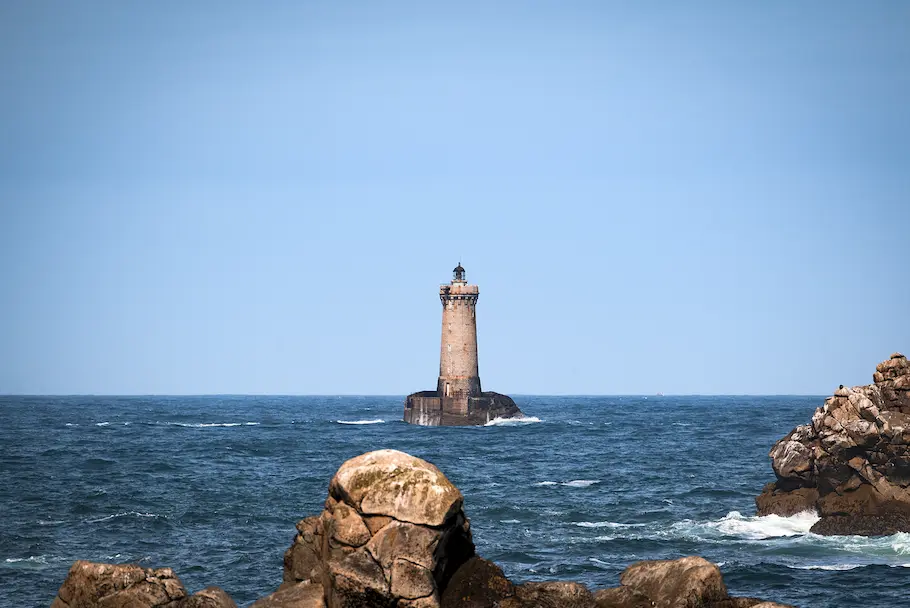
On Tuesday, we went for a walk on the Saint-Laurent peninsula. From the point, we photographed the Four lighthouse, standing in the middle of the waves. Like the Kéréon lighthouse, it is what is called one of the “hells” (a lighthouse out at sea), as opposed to the “purgatories” (lighthouses on small isolated islands) and the “paradises” (lighthouses on the coast).
We had lunch at Le P'tit Cintré sandwich bar, simple and effective, with delicious chips. On the way back, we came across an antique shop, where we found a small old frame with an engraving of a boat, which now hangs in our living room.
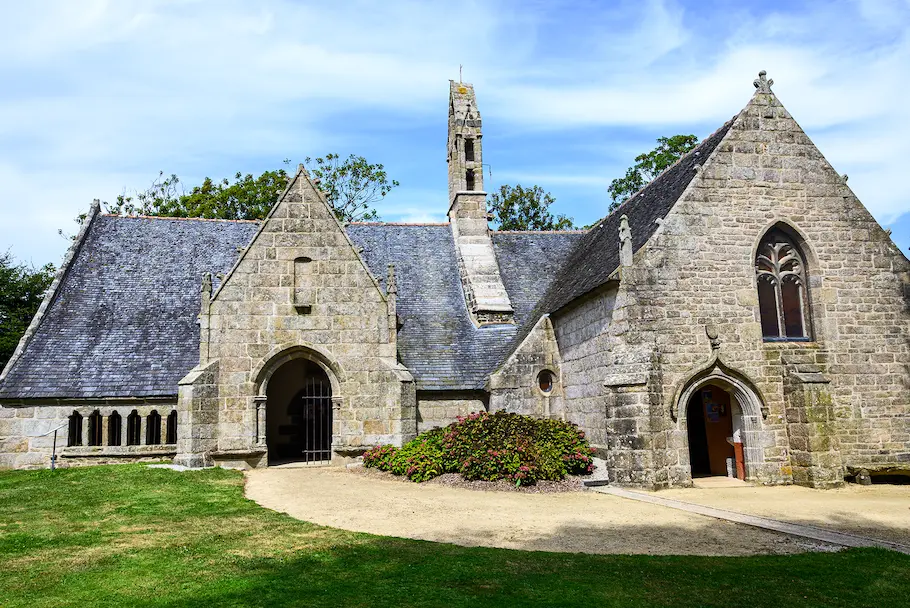
We also stopped at the Saint-Jaoua chapel in Plouvien. Finistère has more than 1,000 chapels. Many were built during Christianisation, sometimes on the sites of former pagan places. This unique density gives the department its nickname, the “land of saints”.
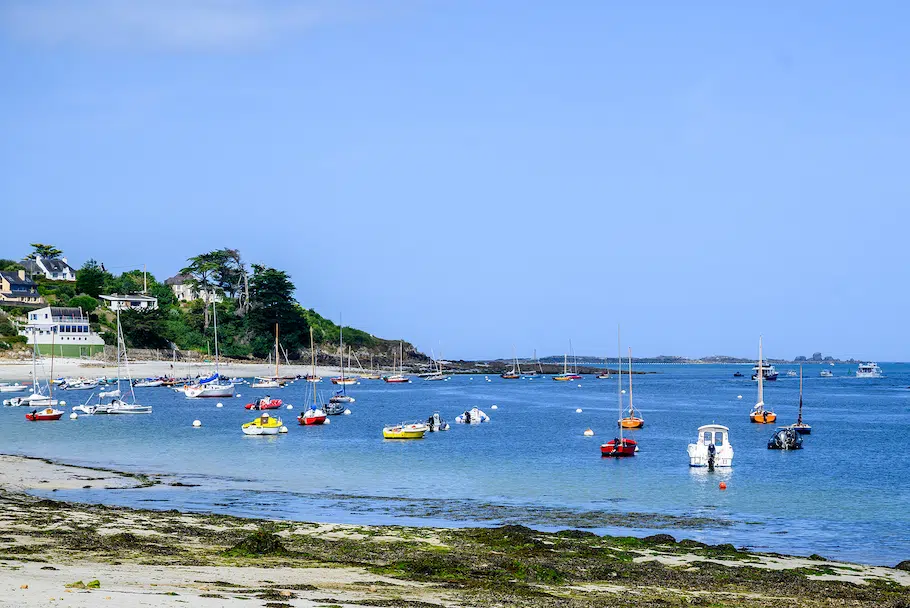
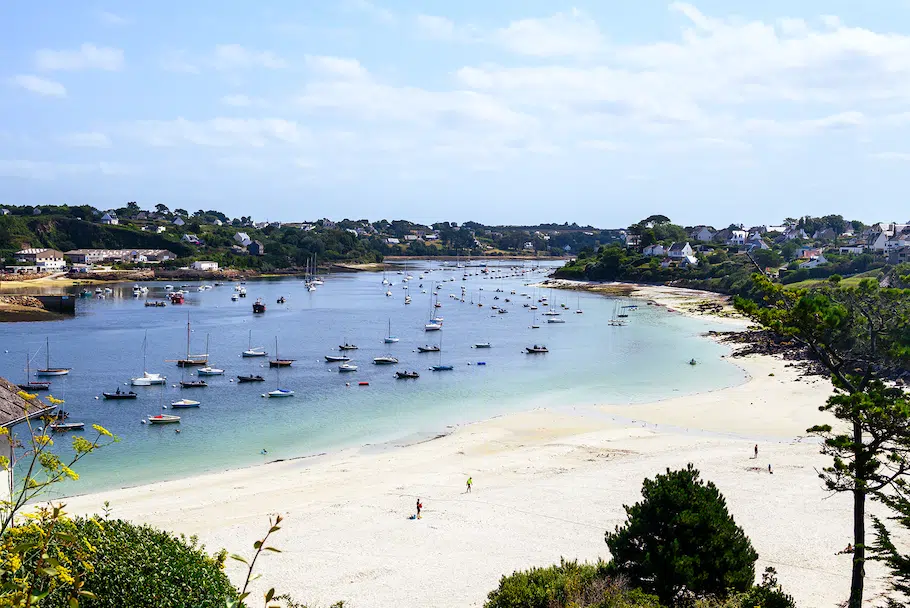
In the morning, we set off to walk along the Aber Benoît, near Saint-Pabu. Korn ar Gazel beach stretches as far as the eye can see. From the heights, beautiful houses overlook the estuary, and we dreamt of owning one for our holidays. At 31 km long, the Aber Benoît is more intimate than its neighbour, the Aber Wrac'h. Its waters are famous for the quality of the oysters farmed here. The site also has a military history: during the Second World War, it was used as a base for German submarines.
In the afternoon, we visited the Iliz-Koz archaeological site, the substantial remains of a parish close abandoned in 1729 because of the advancing sand. There are even knights' tombs, which fascinated Victor. It is interesting to discover that local legends (about a church swallowed by the sand in a single night) have a basis in historical fact, gradually forgotten.
In the evening, we had dinner at the Mémé Lilia crêperie, facing Kervenni beach. The galettes and crêpes are excellent, and the sunset over the sea adds to the magic. In 2017, we had tried Castel Ac'h, a seafood restaurant right next door but more upmarket. This time, with Victor and Glasgow, we were looking for something simpler and more relaxed.
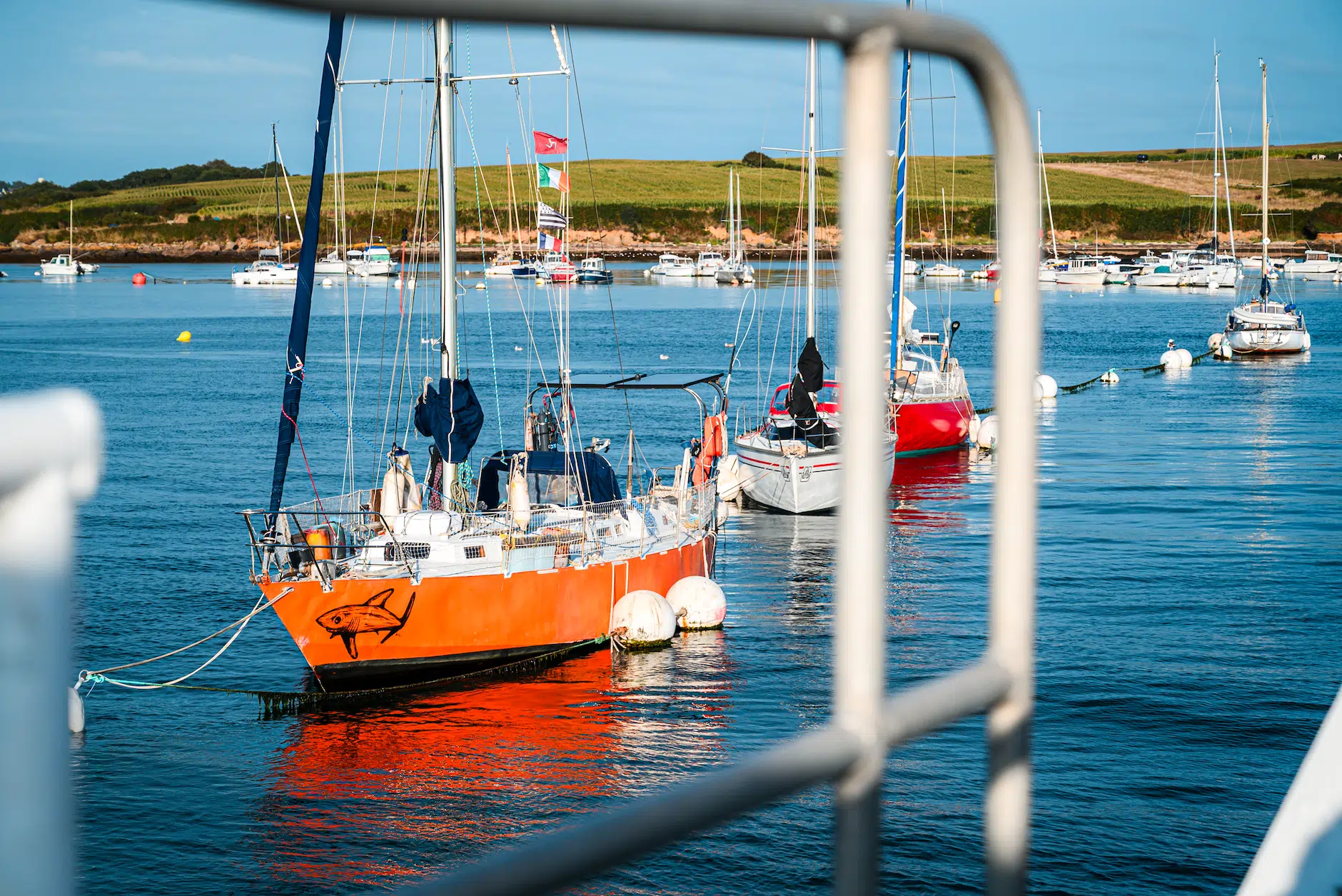
On Thursday, we took it easy. Victor enjoyed the nearby beach and played with a kite found at an antique shop two days earlier. We had lunch on the harbour in Landéda, this time at L'Escale, with moules-frites. In the afternoon, we wandered around without any set plan. These breaks are also part of the pleasure of a family camping holiday.
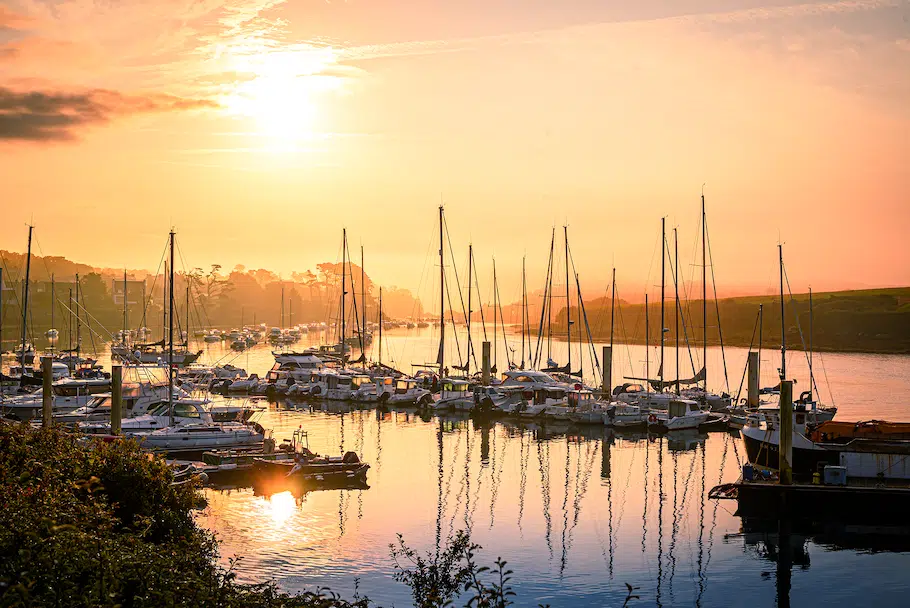
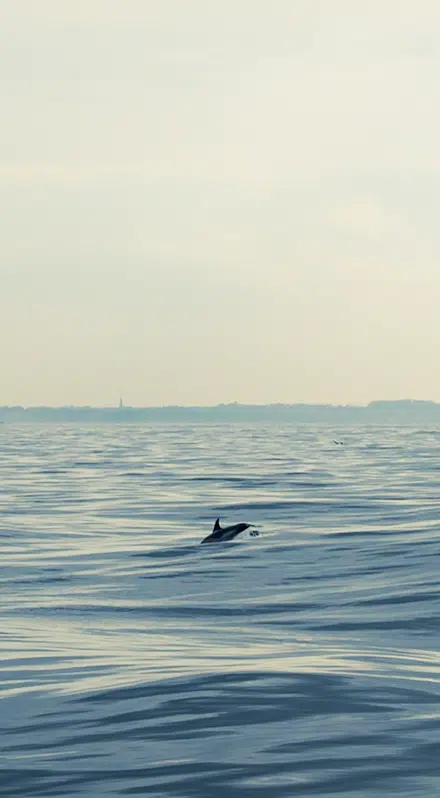
Our last big outing of the week: we took the boat from Lanildut to Ouessant. Crossing the Iroise Sea is already an adventure: out at sea, we were lucky enough to spot dolphins. Victor was amazed, despite rising seasickness. We focused on the south-west of the island. The Lighthouse and Beacon Museum (Musée des Phares et Balises) tells the story of these structures, essential for safety at sea (the museum is closed for renovation from 2023 to 2026). The windswept Pointe de Pern offers an impressive panorama.
On the way, we picked wild blackberries. The coastal path took us back to the village, a walk of about 8 km in all. A fine achievement for Victor, proud to have walked so far. Before boarding, we treated ourselves on the terrace at Roc'h ar Mor, facing the sea. Then back to Lanildut. No dolphins this time, but a calmer sea.
Lanildut is the starting point of the Aber Ildut, another of Finistère's abers. At 20 km long, it is known for its granite, quarried since Antiquity. The stones used for the base of the Luxor Obelisk on the Place de la Concorde in Paris came from here.
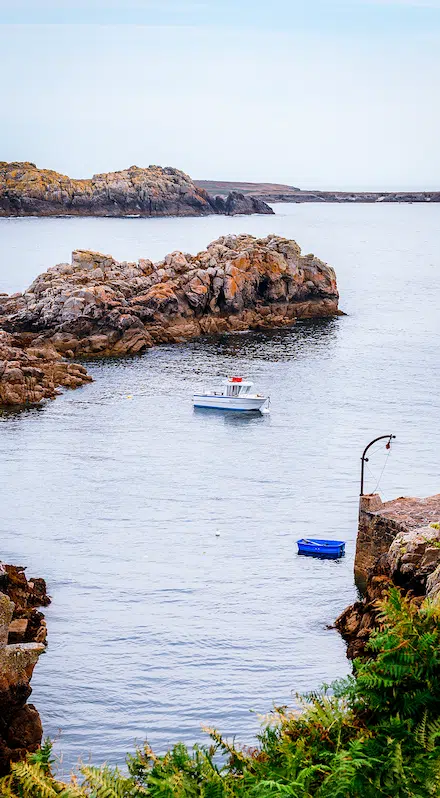
This week in the Abers showed us a wild and authentic Brittany. It is perfect for a family camping holiday: nature, beaches, walks and unspoilt villages. Travelling with a dog is easy: most paths and boat crossings accept them, even if access to some beaches is restricted.
Between the Aber Wrac'h, the Aber Benoît, the Aber Ildut and the trip to Ouessant, we discovered varied landscapes of estuaries, lighthouses and fishing villages. An ideal destination for anyone looking to combine nature, heritage and a family holiday in Brittany.
Enjoyed this article? Pin it on Pinterest.
Follow us on social media to hear about our next trips. Feel free to leave a comment or ask a question at the bottom of the page. See you soon.